We are increasingly seeing assessments by analysts, including European and now American ones, that Russia has lost the war. And the end of the war is near.
The reason for this is the direct interpretation of the events by the Ukrainian and European information space, which is full of mentions of successes on the battlefield and strikes on Russian logistics and critical infrastructure. The media focuses on tactical achievements, and this is natural.
More details about whether there are really prerequisites to expect an imminent end of the war, whether there can be winners in it, and why NATO's current approaches have no prospects – in the article https://t.co/LxY5gD4Hg4
Bonkers video from earlier today in St. Petersburg, where Russian police try to shoot down a Ukrainian drone, while bystanders casually video the effort (and the burning oil terminal in the background).
Lavrov called Rubio, asking the U.S. to evacuate the American embassy and American citizens from Kyiv because Moscow intends to launch a campaign of systematic strikes on the Ukrainian capital.
Like they haven’t been doing it for more than four years now!
This represents a huge diplomatic success for Ukraine.
Russia’s entire game was to just have the White House blame Ukraine for the failure of the talks and take punitive action. That was thankfully avoided
Top Swedish spy told FT that Russia’s economy is far weaker than it appears, that the Kremlin manipulates its data etc. He is weong, and in his eagerness to paint the picture blacker still, doing Putin an inadvertent favour. Me for @spectator
https://t.co/c8fNcIePv8
"The Pentagon is considering whether to divert weapons intended for Ukraine to the Middle East as the war in Iran depletes some of the U.S. military’s most critical munitions, according to three people familiar with the matter.
Although a final decision to redirect the equipment has not yet been made, the shift would highlight the growing trade-offs required to sustain the war with Iran, where U.S. Central Command has hit more than 9,000 targets in just under four weeks of fighting.
The weapons that could be diverted away from Ukraine include air defense interceptor missiles, ordered through a NATO program launched last year in which partner countries buy U.S. arms for Kyiv, the three people said, speaking on the condition of anonymity to describe the Pentagon’s sensitive deliberations...
Since last summer, the official said, the [PURL] initiative has supplied 75 percent of the missiles for Ukraine’s Patriot batteries and nearly all of the ammunition used in its other air defense systems."
@noahjrobertson@ellen_fra
https://t.co/nyRhteQcPf
"Recent scholarly work, such as the 2022 analysis on the “Rational Origins of Revisionist War,” suggests that throughout history, states often launch aggressive wars when they perceive a closing window of opportunity. Putin’s fear that Ukraine was slipping permanently into the Western orbit created a “use it or lose it” pressure on his regional influence.
This risk-taking is further lubricated by resource wealth. Research by Maria Snegovaya has found a direct correlation between rising oil revenues and the aggressiveness of Russian foreign-policy rhetoric. High energy prices provided the Kremlin with a “geopolitical war chest” that increased risk tolerance and reduced accountability to domestic constituencies." https://t.co/sdp0CQqxDo
Lifting sanctions on Russian oil will hardly bring down the oil price, it will just reduce the discount on Russian oil. It will benefit the Kremlin, but it will not lead to additional supply on the market, because sanctions haven't really hurt Russian export volumes.
Russia profits from the Iran war that depletes Patriot missiles vital for Ukraine’s air defence and pushes oil prices up. Production bottlenecks in the U.S.-made Patriot system have drained Ukraine’s reserves and left European allies on yearslong waiting lists. Those shortfalls have allowed Russia to devastate Ukrainian power infrastructure, casting cities into blackouts. https://t.co/ffv5w4BgaK @WSJ
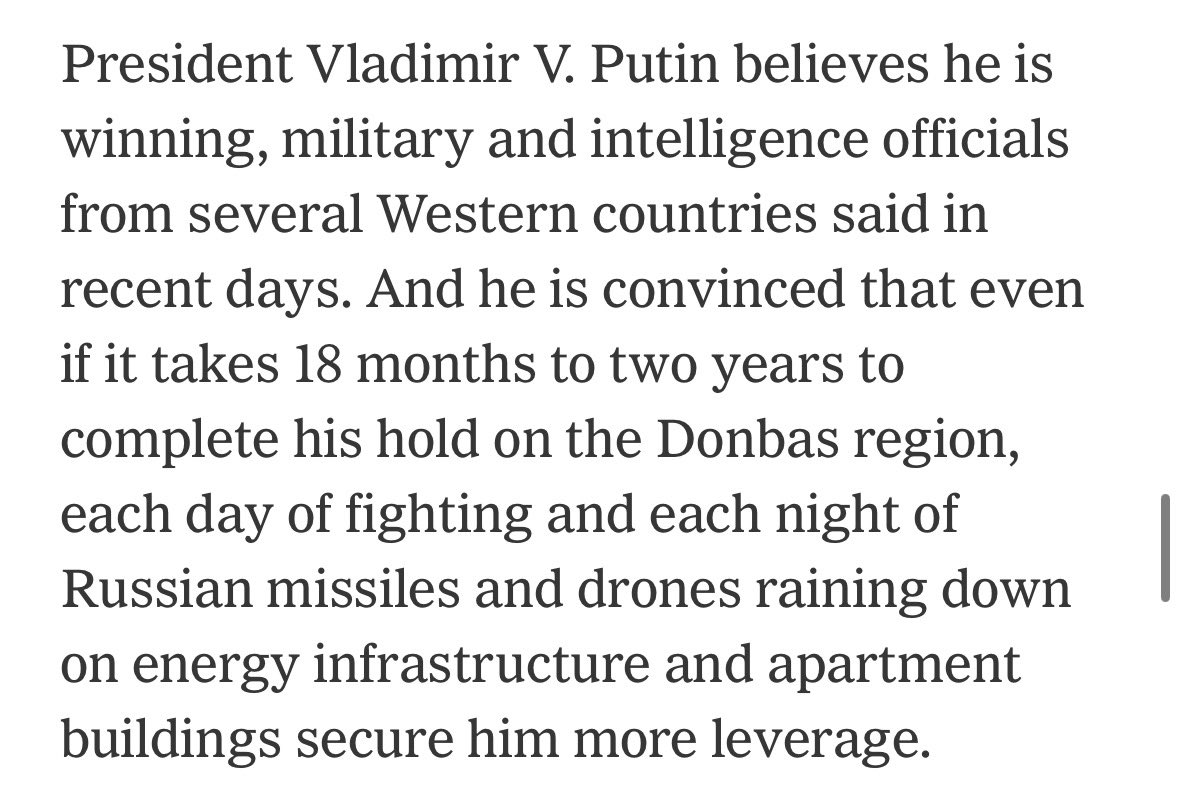
“President Vladimir V. Putin believes he is winning, military and intelligence officials from several Western countries said in recent days. And he is convinced that even if it takes 18 months to two years to complete his hold on the Donbas region, each day of fighting and each night of Russian missiles and drones raining down on energy infrastructure and apartment buildings secure him more leverage.”
@SangerNYT@antontroian
https://t.co/8mT61iFhD9
NEW: Ukraine has begun planning presidential elections alongside a referendum on any peace deal with Russia, after the Trump administration pressed Kyiv to hold both votes by May 15 or risk losing proposed US security guarantees.
w/ @maxseddon@HenryJFoy
https://t.co/jayx4kBAm9
During Putin's visit to Kyrgyzstan, the Ukrainian embassy was hidden by a giant screen so Putin wouldn't see it.
(The embassy is right across the presidential palace where Putin was).
In Russia, the flagship of the defence industrial complex, tank manufacturing giant “Uralvagonzavod” (UVZ) in Nizhny Tagil, Sverdlovsk region, has announced a large-scale personnel reduction of about 10%.
https://t.co/lKHvNxi7Rg
I agree. I think Russia is approaching an inflection point in the coming months about whether to continue the war. In order to capture all of the Donetsk region (which is of questionable actual strategic value for Russia), Moscow may need to conduct another mobilization or otherwise change its current approach, which has not achieved a breakthrough despite Ukrainian manpower issues. Infiltration tactics will likely be less effective over the winter as well. Ukrainian deep strikes are increasing the costs of the war for Russia, and increased support from the US could further strain Russia's ability to sustain the war. If Moscow decides to continue the war well into 2026, it will be demonstrating that it is willing to accept growing risks of lasting damage for questionable strategic gains. With such a cost-benefit analysis, we should not be surprised to see further risky and aggressive moves by Russia intended to deter or compel reduced support to Ukraine.
🇺🇸🇺🇦 This got 74 votes last year. Support for Ukraine among the Congressional GOP is increasing, reversing the steady downward trend seen during the Biden Admin.


![RALee85's tweet photo. "The Pentagon is considering whether to divert weapons intended for Ukraine to the Middle East as the war in Iran depletes some of the U.S. military’s most critical munitions, according to three people familiar with the matter.
Although a final decision to redirect the equipment has not yet been made, the shift would highlight the growing trade-offs required to sustain the war with Iran, where U.S. Central Command has hit more than 9,000 targets in just under four weeks of fighting.
The weapons that could be diverted away from Ukraine include air defense interceptor missiles, ordered through a NATO program launched last year in which partner countries buy U.S. arms for Kyiv, the three people said, speaking on the condition of anonymity to describe the Pentagon’s sensitive deliberations...
Since last summer, the official said, the [PURL] initiative has supplied 75 percent of the missiles for Ukraine’s Patriot batteries and nearly all of the ammunition used in its other air defense systems."
@noahjrobertson @ellen_fra
https://t.co/nyRhteQcPf](https://pbs.twimg.com/media/HEVYO0FbYAMauBm.png)