I think we have lost some sense of judgment and moderation when it comes to product building currently.
The moment you turn something into a universally celebrated metric, whether that is token burn, prototype count, or percentage of agent-written code, you start losing sight of what actually matters.
I have felt the same way for a long time about overusing data and A/B testing to build products. The moment you reduce product quality or productivity to a metric, you stop shipping value and start shipping numbers.
A lot of what people are doing with AI makes directional sense. The missing piece is counterbalance:
1. AI should help engineers build better products. Leaderboards and adoption metrics can be useful as directional signals. They do not tell you what is being built, whether it is good, or whether it should exist at all.
2. Users do not care what percentage of your code was written by agents. They care about the outcome. Faster output is useful. Like usually, faster doesn't seem to add to quality, clarity, or stability of products. Power to build should not become an excuse to lower quality bars.
3. LLM-generated prototypes can feel like late-night whiteboarding sessions. They look exciting in the moment and feel productive very quickly. Then a few days later you realize the idea was shallow, distracting, or simply wrong. The same trap shows up in jumping straight to code and solutions more broadly. You may just be building the wrong thing more efficiently. Prototyping has its place. So do clear thinking, good design, and a real understanding of the user’s problem. In terms of activities or momentum, the main quest and the side quest can both feel productive but only one actually moves the mission forward.
4. Adding more to products is still dangerous as ever even if time or effort to add it has gone down. Every addition creates complexity, maintenance cost, and user confusion. New features should be pushed back unless they clearly show it should exist and how it improves the product.
5. Not everything needs to be an agent shaped. A simple scheduled task does not need a full LLM sandbox. Making something agentic because it feels current or impressive does not make it right-sized, correct, or effective.
The core ideas are:
- even if you can, maybe you should not.
- more power we have to build should not reduce our need to think, it should increase it.
it’s official - Anthropic just refused the Pentagon’s demands, dario’s statement is doesn’t fuck around:
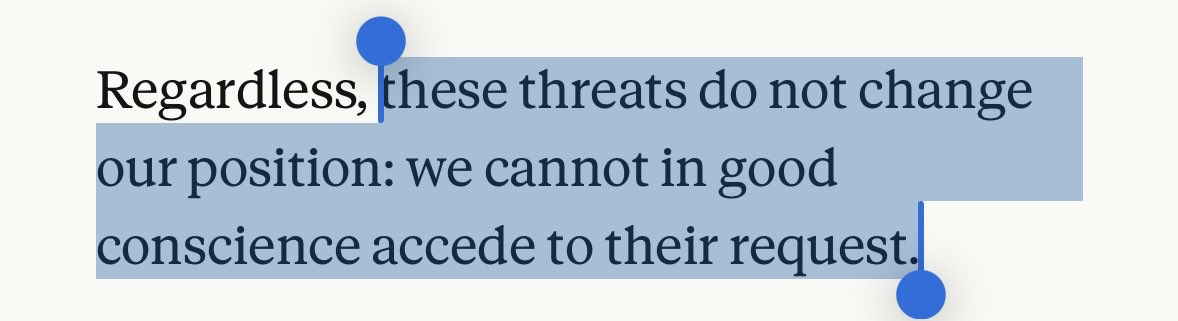
- “these threats do not change our position: we cannot in good conscience accede to their request.” - dario
- he described the pentagons efforts to force him to enable claude for mass surveillance and autonomous killing weapons
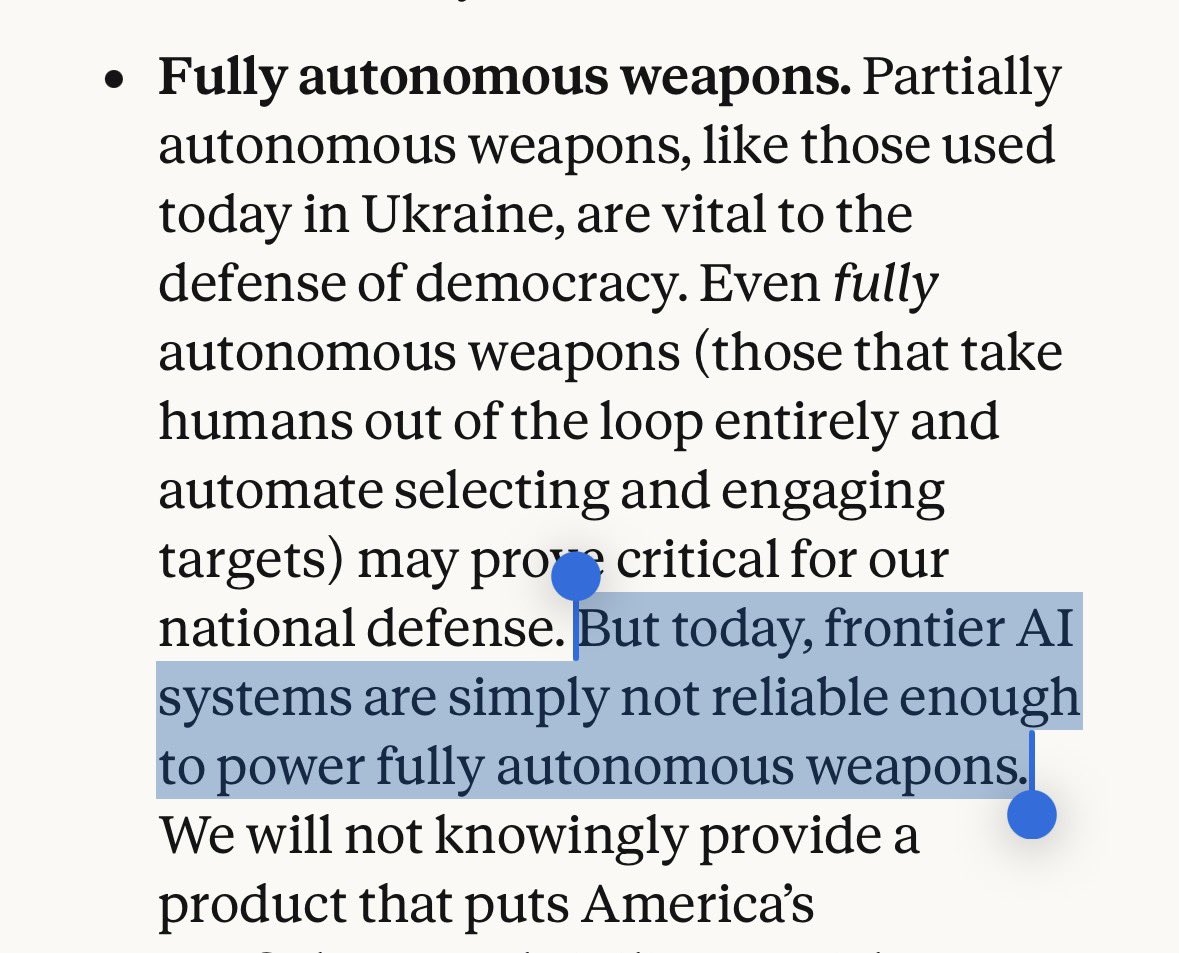
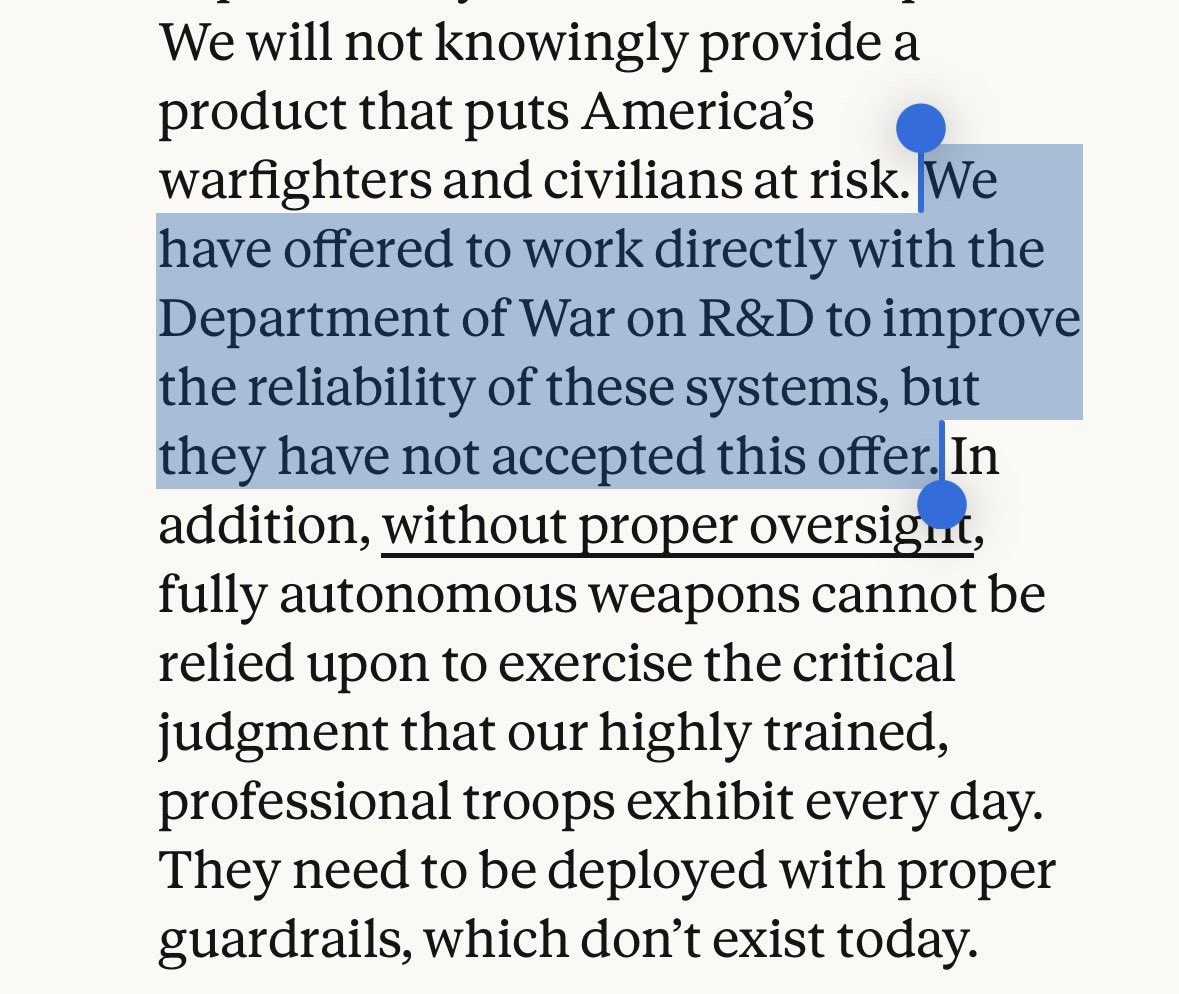
- dario’s response: mass surveillance is not democratic and Claude isn’t good enough to enable autonomous weapons - we won’t cave
- dario will help governmenr transition to a NEW provider if they choose to blacklist anthropic.
fucking wild - fair play for sticking by their code of honor.
This is a great articulation of the agentic services opportunity right now. Most areas of professional services will have AI agent opportunities that are similar in scope to when we had a SaaS buildout for every major area of work, or consumer marketplaces get built out for every category economic activity.
These are categories of work that historically have been lighter on workflow automation as most of the work deals with unstructured data, like contracts, financial records, filings, and more. These are perfect areas for agents because they can process unstructured data at scale. And each space needs domain expertise on the workflows, specialized implementation, deep context engineering, and more.
As a result of agents, some enterprises will choose to bring these capabilities in-house, new AI native services firms will emerge, and existing professional services firms will be some of the biggest customers of these tools as they will allow them to take on more business or offer more services to customers. Huge opportunity.
@KatieMiller I can’t imagine racing to the Internet to admit to everyone that you don’t know the difference between “classic liberalism” (individual liberty, limited government, private property, free markets, and the rule of law) and modern liberalism.
This take matches my observations extremely well. The more things change, the more they stay the same… just faster and (for now) a little lower quality. IMO, much of this is because human psychology doesn’t change much. Today, tools like static analysis, compilation, and automated tests give us confidence to ship. I wonder how long this will remain the best practice vs what future tools will be invented which supplant these.
We must repudiate the idea that "speech can be violence" once and for all. @glukianoff and I wrote about the dangers of promoting this idea on college campuses back in 2017, in @TheAtlantic:
https://t.co/BkFKx2d1Y6
@jackunheard You got your feelings hurt because she said something you disagree with, and your response is to call for her deportation? I miss the old days when the right at least pretended to care about the constitution.
@xMikeMac Because it feels like an assault on our democratic values of free speech and debating/settling political differences peacefully. Unlike those holding formal positions of authority, he only held a microphone. It’s not just about the individual. It’s about what it symbolizes.
The murder of Charlie Kirk is part of a disturbing rise in political violence that threatens to hollow out our public life.
A free society relies on the premise that people can speak out without fear or humiliation.
No more political violence.
@paulg The bigger cost is the communication overhead as soon as you have to work with a second person. And it just gets more expensive with more people.
AI generated 90% of the initial code for a feature I’ve long wanted in 15 minutes, on my phone, while at the gym tonight. But I know it will take me at least a couple of days to get it fully operational. Maybe I’m bad at AI, but the 90-90 rule still holds, IMO. Plenty of coding ahead.
@piq9117@notnotstorm lol I used to share this sentiment. Once I got pyright configured correctly, I finally felt the stress melt away. I now feel comfortable using the python ecosystem for lightweight data engineering—and it seems more than adequate for most companies.
@notnotstorm Does mypy still offer much value in 2025 for greenfield development? ChatGPT advised me to use basedpyright and not to bother with mypy unless I’m working with legacy code, and so far it seems to work well. I’m coming from TypeScript with strict types.
@snowmaker I agree. Technical founders should do sales. Still, I would love to play to my strengths and spend 80% of my time on engineering with a co-founder who is better than me at sales and wants to handle 80% of that. Don’t know many engineers who love sales.
@paulg I left politics in 2016 for exactly this reason--after running against Lamar Smith in TX-21 (remember SOPA/PIPA?) and attending the RNC convention as an alternate delegate for TX-32 in 2016. Both parties are the problem. Would love to work on actual solutions.