After a postdoc @Harvard, I joined @univienna as a tenure track Asst Prof in Responsible AI this spring!
Hiring PhD candidates to work on Data-centric AI & AI Safety.
Apply: https://t.co/0C03dYqOmE
🚨 Deadline: May 20
🗓️ Start: June-Sept '26
👇 Details
#MLTwitter#PhDposition
I am excited to announce our Workshop on Causality in the Age of AI Scaling in AISTATS 2026!
- Is scaling sufficient for intelligent systems?
- Can causal abilities emerge from scale?
- What can causal modeling bring that scale cannot?
https://t.co/whrrbFUaw0
RTs appreciated
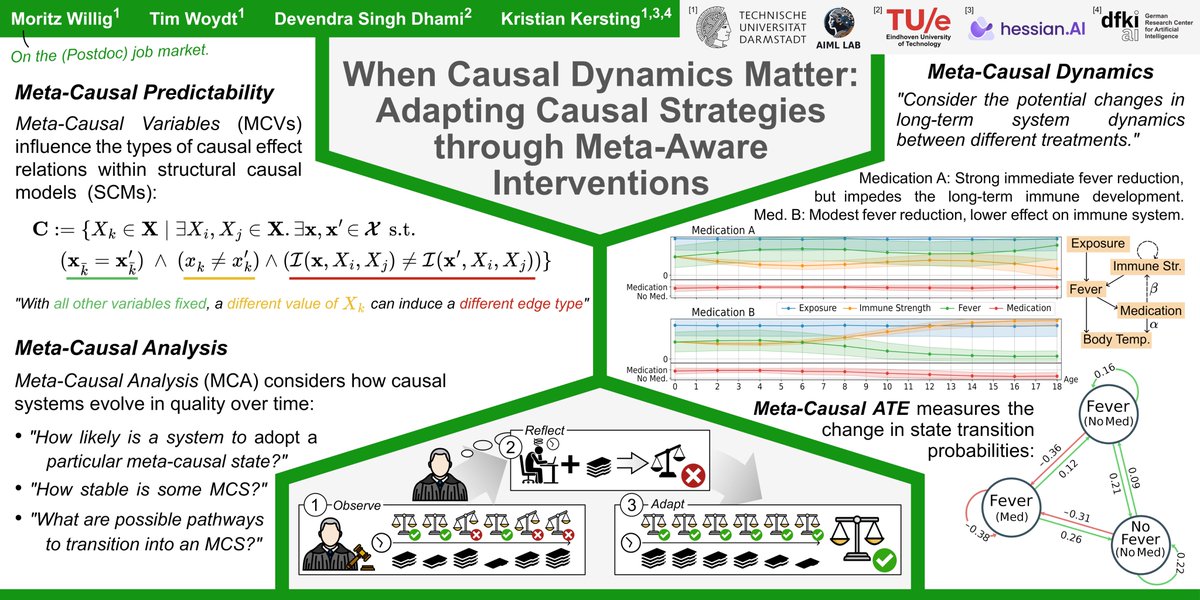
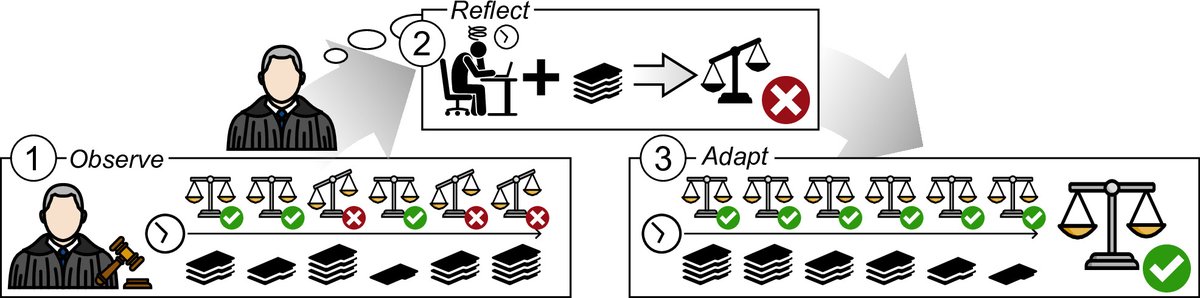
Our poster, “When Causal Dynamics Matter: Adapting Causal Strategies through Meta-Aware Interventions” will be presented during the second poster session of today, #2513 at #NeurIPS2025 .
Looking forward to the discussions!
I'm excited to share some updates:
1) Our paper "When Causal Dynamics Matter: Adapting Causal Strategies through Meta-Aware Interventions" (https://t.co/JyhpPh5qMt) will be at #NeurIPS2025
We introduce Meta-Causal Analysis to model qualitative transitions of causal systems. 1/4
@philosotim@devendratweetin@kerstingAIML 3) Entering the final phase of my PhD, I’m looking for postdoc or similar research positions related to (meta-)causality, applications to general/reflective AI, or similar.
If your group or lab is interested, I’d love to connect!
Find all info here: https://t.co/yyOF1GzdmU 4/4
I'm excited to share some updates:
1) Our paper "When Causal Dynamics Matter: Adapting Causal Strategies through Meta-Aware Interventions" (https://t.co/JyhpPh5qMt) will be at #NeurIPS2025
We introduce Meta-Causal Analysis to model qualitative transitions of causal systems. 1/4
@philosotim@devendratweetin@kerstingAIML 2) I gave a talk at the Causality & XAI Winter School (https://t.co/xtYnoY3T6b), in which I make the argument for meta-causality towards 'truly' causal AI models!
Slides on “Beyond Causal Parrots” are available here: https://t.co/sEklIG4E5o 3/4
Can the new GPT-5 model finally solve Bongard Problems? 👉Not quite yet!
Using our ICML Bongard in Wonderland setup, it solved 64/100 problems - the best score so far! 📈
However, some issues still persist ⬇️
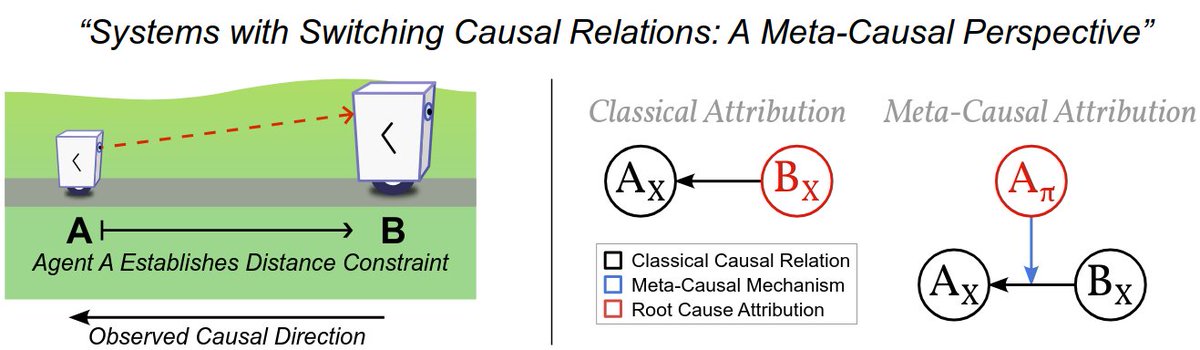
@yudapearl@AndrewLampinen The meta concerns factors that lead to the establishment of causal edges. Think of the necessary condition of two physical objects being close to interact. Here, proximity is a meta-causal factor. In our robot example, robot A's decision to follow B establishes a causal link.
@yudapearl@AndrewLampinen Things are still in progress as we try to pin down more rigorous definitions and conditions for inference. Every feedback or thought is welcome.
@yudapearl@AndrewLampinen While these examples can be approached with contextual deps., MCM model how these causal relations change/activate over time. Every meta-causal state (MCS) represents a set of currently active structural eqs. A MC analysis considers how these MCS transition into each other [WIP].
@yudapearl@AndrewLampinen No worries, great to see the topic featured. Based off of this, we developed Meta-Causal Models (https://t.co/uubDoOV5Mk) that model causal change within SCMs. I think it might have slipped your weekly lists, but I'm curious if you've had any previous thoughts on meta-causality?
There is some confusion among readers of #Bookofwhy regarding the impressive "causal understanding" LLM's, which seems to defy the theoretical prediction of the Ladder of Causation.
The Ladder predicts that, regardless of data size, no learning machine could correctly answer
queries about interventions and counterfactuals unless supplemented with causal knowledge, external to the data.
LLM programs circumvent this prediction by smuggling causal knowledge into the training data; instead of training themselves on observations obtained directly from the environment, they are trained on linguistic texts written by authors who already have causal models of the world. The programs can simply cite information from the text without attending to any of the underlying data. The result is a sequence of linguistic extrapolations which, in some remote and obscure sense, reflect the causal understanding of those authors. @GaryMarcus@eliasbareinboim@soboleffspaces@geoffreyhinton@DavidDeutschOxf
@yudapearl I'm very thrilled to read the new additions to The Book of Why! Will it rather focus on behavior 'causal parroting' as in our 2023 paper (https://t.co/HblLAABiUD), or also present pragmatic perspectives on passive learning of as, e.g. by @AndrewLampinen (https://t.co/knGAvlnkIH)?
Not at #ICML2025 myself, but Florian & Roshni are presenting our spotlight poster on continual confounding + our respective ConCon dataset on Thursday 17 Jul 4:30 pm - 7 pm PDT in East Exhibition Hall A-B: E-3309 https://t.co/BrYCcQdNaD
Please talk to them! :)
Details below ⬇️
Hesse plans major cuts to university funding. This article, featuring my colleague Stefan Roth (TU Darmstadt), highlights the serious consequences. It risks widening the gap with states like Bavaria & Baden-Württemberg—and with leading high-tech nations: https://t.co/vVvF3H8or9
🧠Foundation models are powerful—but what happens when they remember too much?
Join us at #ICML2025 for our workshop on
“The Impact of Memorization on Trustworthy Foundation Models”
👉https://t.co/30iXWO5n1D
Let’s talk about memorization & what it takes to build trustworthy AI!
I'm excited to present our spotlight on meta-causal models at #ICLR2025 next week.
We model evolving causal graphs in dynamic systems. Applications to inference and attribution of agent actions. Paper: https://t.co/ZknmqOXzlt
Visit our poster #441 during the Sat 3pm session.