We're hiring! Exciting new opportunity to head the IT infrastructure team @PlymUni and administer our new #HPC cluster! Much opportunity for innovative, cross faculty/institution #healthdatascience research! Apply here:
https://t.co/93VDfdfcsK
@NIHRSW @PlymUniCHT@UHP_NHS
🚨 Fully-funded 3-year PhD Studentship.
👉 The position is associated with a research project entitled: " Effects of the menstrual cycle on muscle and tendon mechanics, neuromuscular control, and locomotor capacity in female athletes".
More info 👇
https://t.co/2QZnVaPPnK
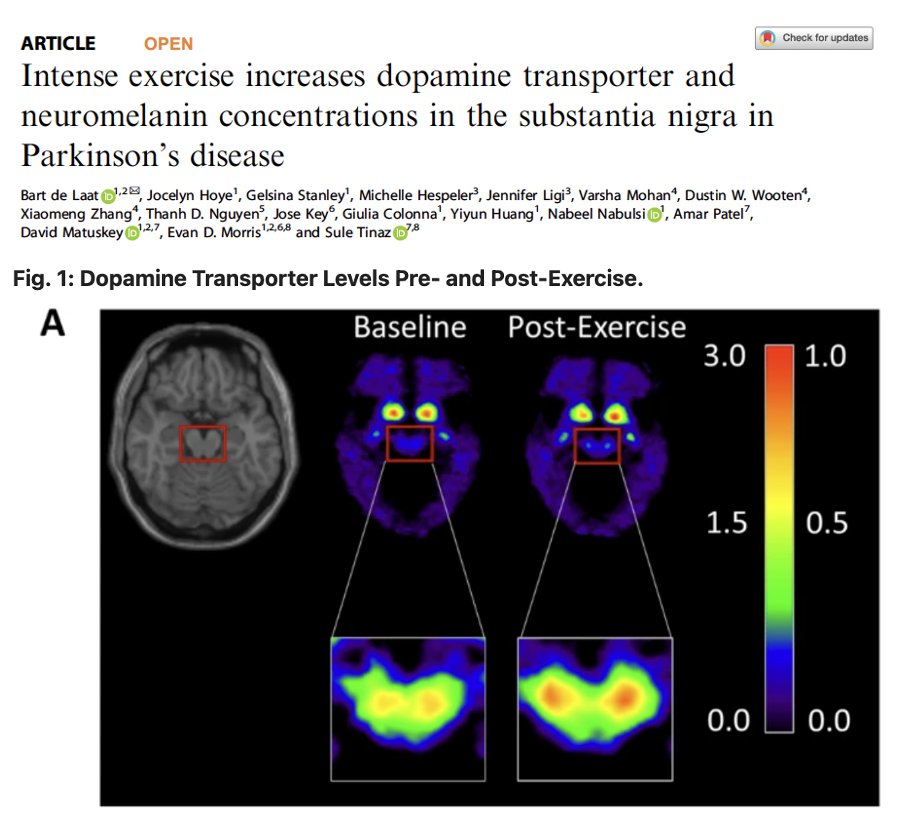
Does exercise slow Parkinson's disease progression?Check out what happened to the dopamine transporter levels pre- and post 6 month intense exercise. Thanks @lvolpic for sharing this study from de Laat and colleagues in @Nature_NPJ@Nature
Key Points:
- The authors employed 18F-FE-PE2I PET imaging.
- Dopamine transporter (DAT) availability could be calculated in the striatum and substantia nigra.
- The authors employed NM-MRI to look at neuromelanin content in the substantia nigra.
- They report that exercise 'reversed the expected decrease in DAT availability in both the substantia nigra and putamen.'
- Exercise reversed an expected decrease in neuromelanin in substantia nigra.
My take: The findings are intriguing, however alone they do not translate into neuroprotection or disease modification. I agree with the authors that there is an
'improved functionality in the remaining dopaminergic neurons after exercise.' This study included only 13 subjects with high functioning mild Parkinson's. There was no control group. I think the most interesting finding was that 'sustained intense exercise' produced brain changes in areas of interest to all of us in Parkinson's disease research and care. Let's see where this imaging work goes next. https://t.co/tzPNukdoHa #Parkinsons
Check out the unusual gait pattern worsened by levodopa in this case of a PARKIN gene related Parkinson's. This is why we call it Parkinson's diseases plural as there are so many different manifestations, with or without known gene mutations. Nice case by Mehta and colleagues in @MDCP_Journal.
Key Points:
- 26 year old Parkin gene-related early-onset Parkinson's.
- Paradoxical response to levodopa, dopamine worsened dystonia.
- Amantadine seemed to help.
- Complaint was tightness of lower limbs when walking.
- Had heterozygous PRKN mutations, w/ a 'missense pathogenic mutation in exon 7 (c.850G > C (p. Gly284Arg) and a deletion mutation in exon 3 (241 bp),'
- 'Forward walking was characterized by bilateral hip flexion and abduction, flexed knees, ankle inversion and plantar flexion rebound during the stance phase on the left foot and reduced arm swing bilaterally.'
My take: Some of these PARKIN and genetic PD cases may respond to anticholinergics or dopamine agonists, however in this case this was not helpful. The improvement w/ amantadine was humbling and unexpected. The authors suggest to us to try amantadine, if dopamine is worsening dystonia or gait in the setting of PARKIN. 'Parkinsons diseases, every day we learn something new.' A close look at the video suggests the amantadine helped however did not resolve the challenge. DBS may be a reasonable next step to consider.
https://t.co/jnKMyfS9Zz #Parkinsons
@TheHandLab It would depend on the time duration that papers are submited. Also, depend on the protocol and questions. In some cases would be. Personaly, I expect 3 to 5, but 8 🤔
@StelPsycharakis Freedom is every individual's right and at the moment many guys in I+r+a+n have to fight for social freedom ... That is ridiculous that a woman is not allowed to walk without headdress or ride a bicycle ...
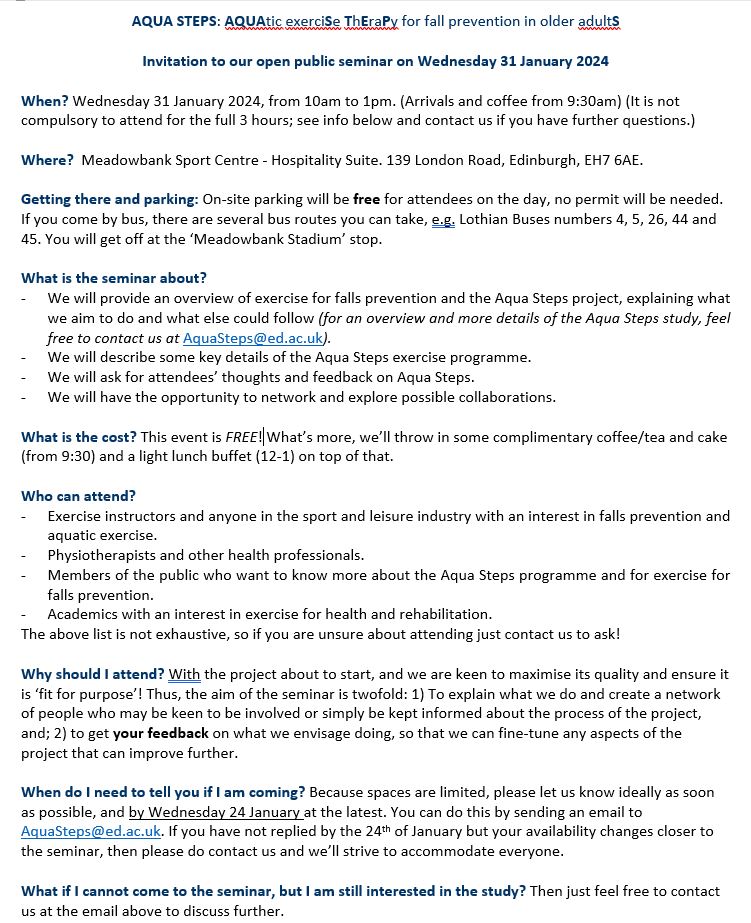
Interested in aquatic exercise for falls prevention? If yes, then our open public seminar on Wednesday 31 January in Edinburgh may be of interest to you. See below for more info and get in touch if you are interested! #aquaticexercise#fallsprevention#health
Abnormalities in skeletal muscle structure/function in COPD patients 👇🏼
⤴️atrophy
⤵️strength
▶️muscle fibre type changes
⤵️oxidative capacity
▶️mitochondrial dysfunction
👉🏾 combination of dynamic & resistance exercise is recommended
#COPD#muscle
https://t.co/auDpNXKp4D
If you have a background in neuroscience and are interested in the neural control of movement please send us a message.
We will do some crazy exciting stuff in the in-vivo human with single neural cells in DeMOTUS! @dfg_public https://t.co/UaY1GW6WF8
Hello everyone,
our second call for applications for non-Brazilian students to join our Research Program in Movement Sciences as PhD students. It is a nice opportunity to live and study in Brazil!
Please, spread the word and do not hesitate to contact me!
https://t.co/5Vz81RIhsU
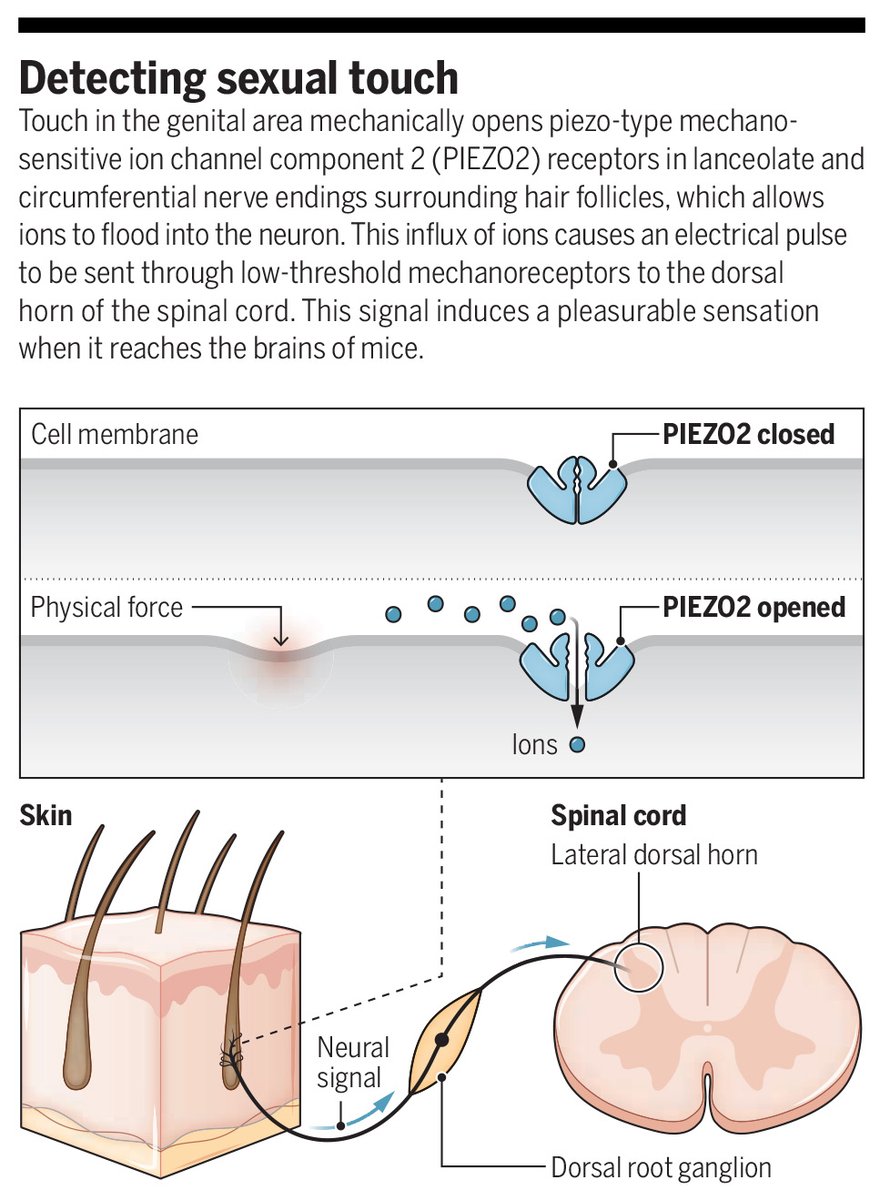
New research in Science reveals the necessity of the mechanoreceptor PIEZO2 for sexual touch and copulation in mice and humans.
Learn more ⬇️
📄: https://t.co/D88JWWuwT6
#SciencePerspective: https://t.co/Bhg1x9mypy
How can occupational therapy help me if I have Parkinson's?
Emma Bracher, an independent occupational therapist, tells us more about the therapy.
👉 https://t.co/0KiQSnWoWu
Take a look at this video
https://t.co/TMh8hUJQ3T
@MariusOsswald shows relatively large samples of motor units during dynamic movements of the hand. The results are quite unexpected and contradict the classic view of synergistic neural inputs to human extrinsic hand muscles.