PhD of Biology, NIH, Hattar lab. Former University of Virginia, Guler lab. Circadian, feeding, metabolism, dopamine, and now ipRGC! Opinions are my own
Check out our new article. Neuron signals often mix slow+fast components over long recordings. We introduce a standardized framework to record and analyze them.
A collaborative piece with @jojoNcook and @jonesjeffr. Also big support from @MariaEYurgel and boss @SamerHattar 😉
A new article from @jojoNcook in our lab and @Mouse_QT in the Hattar lab: best practices in long-term fiber photometry recording. We argue that the field needs a standardized framework for experiments and analysis. https://t.co/Ol2ahpTnsv
We’re entering a new era in brain modulation where we may able to treat brain disease and improve mental health with no wires and no genetic engineering.
This study shows that it’s possible to noninvasively rewire neural activity using near-infrared light and systemically delivered nanoparticles. No viruses. No opsins. Just light.
This marks an exciting turning point in #Neuroscience. Photons are joining electricity and magnetism as core biophysical modalities the brain may use to shape awareness, plasticity, and function.
🔗to full paper: https://t.co/F6DhH9cB5f
Check it out! Input from PVT to SCN. The first glutamatergic input I know besides retina. Has to be special! Kudos to @MariaEYurgel and the team. Honored to contribute a little.
A new study in mice uncovers a stress-sensing circuit that interacts with light to influence circadian outputs. The work offers a roadmap for exploring the circuits linking light, circadian/sleep, and stress-related psychiatric disorders. https://t.co/lJsbBx3C8L
@SamerHattar this is the pro (@Mouse_QT) you are getting: Mind Over Mealtime: Research Reveals How the Brain Sets Your Body’s Dinner Clock https://t.co/upnWDiEbPC
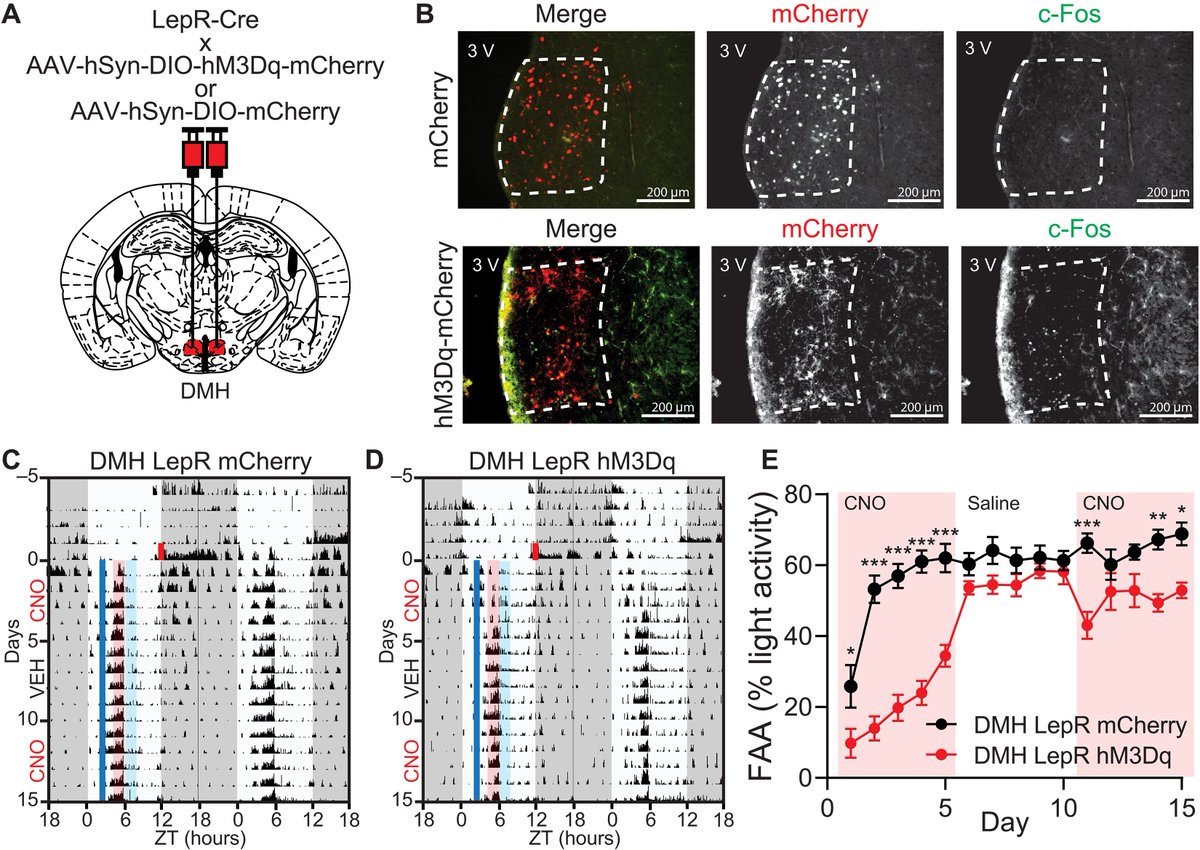
This direct DMHLepR-SCN connection is well situated to integrate the metabolic and circadian systems, facilitating mealtime anticipation.
https://t.co/uZAX8F2vMX
DMH-LepR neurons are to circadian feeding what a skilled chef is to dinner time! It's a mealtime mystery served with a side of science! Dig in: https://t.co/dA8Co0ypyK
Neuronal mechanism of input to the food clock? Our work is now on Science Advances https://t.co/b8yVgxOdTf
Big collaboration among labs @GulerLab@deppmann@AliDGuler@AUGCsoup, great thanks to co-first authors @LizzieGodschall@BrandonPodyma, all other authors, and collaborators
Introducing the Allen Brain Cell (ABC) Atlas [ʙᴇᴛᴀ] representing ~5,200 newly transcriptomic-defined cell types and their spatial locations across the whole mouse brain. 🧵
Access ABC Atlas data visualization & pre-publication #openscience datasets: https://t.co/7ogBtSMb14
Arcuate #dopamine signal in response to food! Dopamine receptor 1 (Drd1) signaling in AgRP neurons promote food intake. Work led by talented @qizhang1219; you can find details here: https://t.co/zelQFhldQr @CellReports funded by @NIGMS
We are hiring a postdoc to study circadian output circuits! Experience with neuroscience preferred, but not required. Opportunity to learn cellular, circuit, and behavioral methods and develop your own projects. If interested DM me or contact me here: https://t.co/MFLjpEwzu4
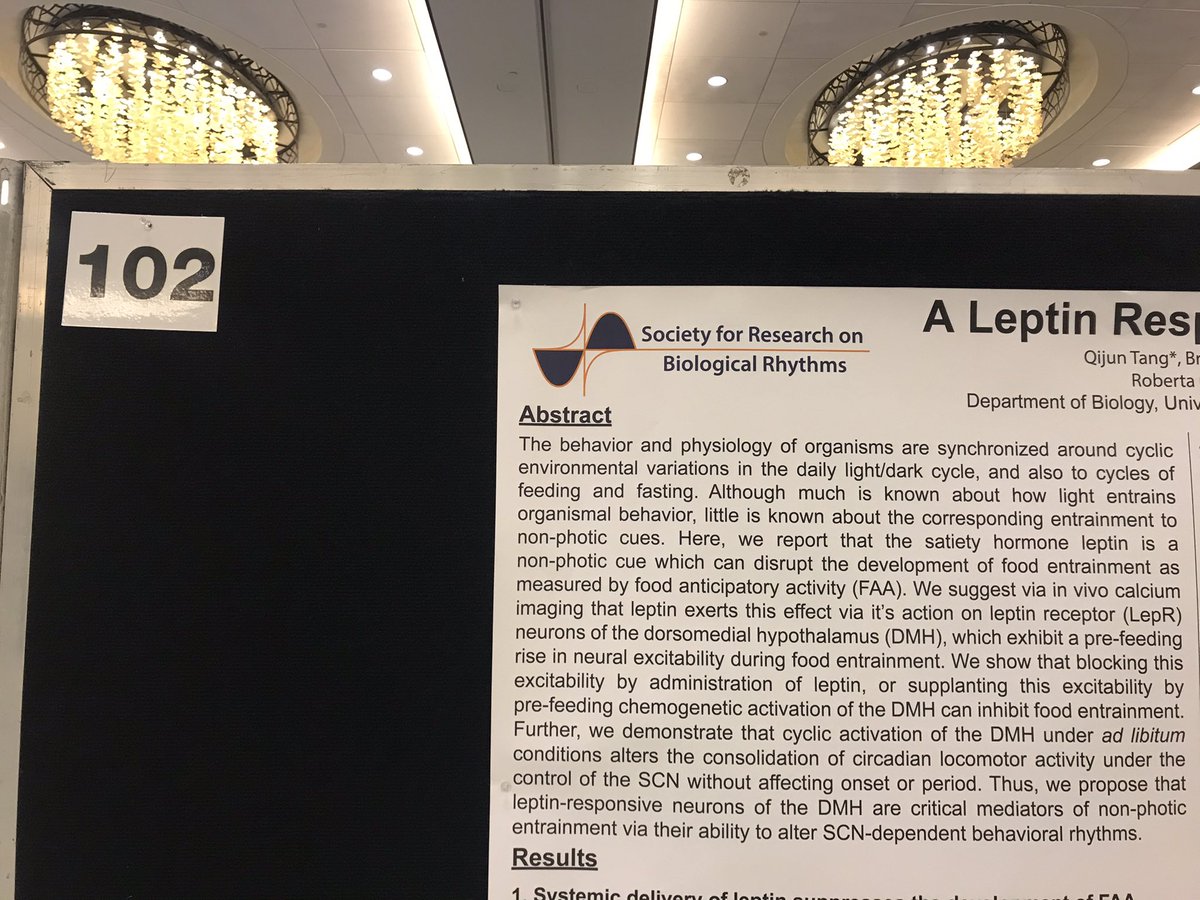
My poster is up! Wondering where and how food time entrain the brain? Please stop by my poster 102. #SRBR2022
A centery since the discovery of food anticipatory activity. 🤪