Why should we care? Understanding what makes particular areas of the landscape suitable or desirable for different animals is critical - not only for insights into theory, but also for the application of said theories into conservation efforts like habitat restoration
11/11
Some accidents are trivial and have no discernible impact on the animal. Others can be more severe, potentially resulting in injury or even death, and these are accidents we would expect animals to try their best to avoid
7/11
The speed an animal moves matters as well. Animals are more likely to have accidents when travelling at high speeds, as they have less control over their movement and less time to react to changes in the landscape and adjust their movement accordingly
5/11
Of course, morphology matters a lot too! Animals typically have evolutionary adaptations (e.g. claws, foot or toe pads, body shape and size, etc) that help them move around their habitat, which also make them less likely to have accidents on certain landscape features
4/11
The likelihood of having an accident depends in part on features of the physical landscape the animal is moving through. Things like surface narrowness, incline, compliance, frictional properties, penetrability, and topography can all affect the likelihood of accidents
3/11
We define locomotor accidents as errors in movement that lead to physical instability and a temporary loss of movement control. Think slipping on a patch of ice while you're walking along a footpath
2/11
Do wild animals care about slipping, tripping, falling, and other locomotor accidents? Our new ideas & perspectives piece in @Ecology_Letters discusses when and why the answer is "yes" https://t.co/4819PwHTys
@JBuettel@BraveNewClimate@ecol_evo@MovingAnimals
1/11
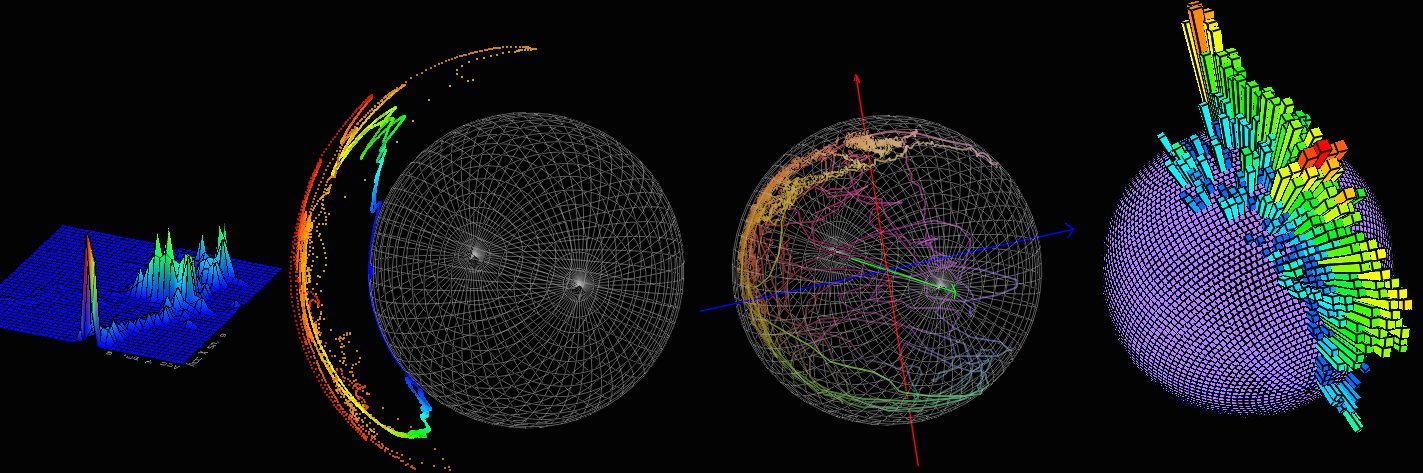
Congratulations Richard & team!! The first of a flurry to come from him showing the ecological insight from angular velocity, magnetometers & dead-reckoning, watch this space!
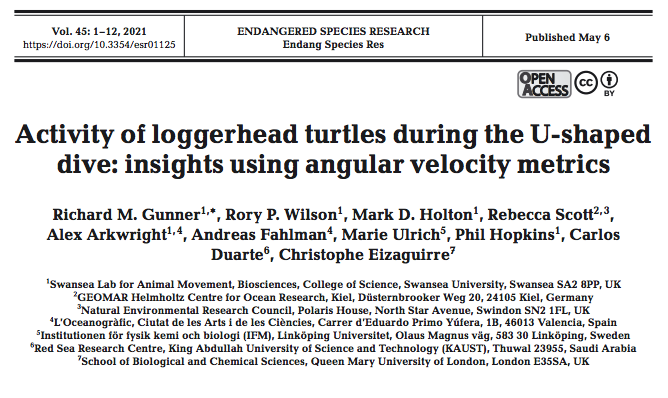
Using angular velocity metrics Richard Gunner and colleagues research U-shaped dives in loggerhead turtles. Variations in putative resting behaviours indicate that these are actually complex and relevant for energy budgets.
Read full article: https://t.co/nnVCwseUX5
3/3. 60% of attempts to land at cliff nests fail in a strong breeze, 80% in near-gale winds. Razorbills (open circles) are better at landing than guilles (closed circles). Strong winds impose costs on both spp, as adults make multiple landing attempts to provision young. #flight
2/3. We assess the ability of auks to land at cliff nests & show birds cannot land in strong winds, most likely as wind reduces flight control. Runway size also matters; bigger ledges have more airspace for manoeuvring & better chances of landing. #ornithology@BES_Move_SIG
One of our current pro-VCs @lappinscott unveiling a picture of Prof. Florence Mockeridge, our first female pro-VC back in 1932. Nice to know women have had a strong hand in shaping STEMM @SwanseaUni for almost 100 years
Unveiled today! 🖼️👩🔬
Portrait of Prof. Florence Mockeridge, head of biology at Swansea & a key university figure from 1922-54. Painted by local artist Kenneth William Hancock. His daughter Lowri pictured with @lappinscott.
See it: Wallace building, Singleton.
#WomenInSTEM
It's online now in @AnimalEcology ! Estimates of energy expenditure in free-living animals using accelerometers - led by Rory Wilson and us at @MovingAnimals. #movecol https://t.co/AVgh0b1FTo
Seeking historic records of #seabird mass mortalities (winter wrecks) around the world but particularly in the North Atlantic to aid my MSc research. If possible, please provide:
1. Date
2. Location
3. Number dead
4. Species
Please RT!
Come to the European Vulture Conference in Portugal this October - we have some great keynotes lined up + many interesting abstract submissions so far. Submit yours by 27th May - regular presentations, speed talks or posters. More info here: https://t.co/JkFcAlOBDC #ornithology