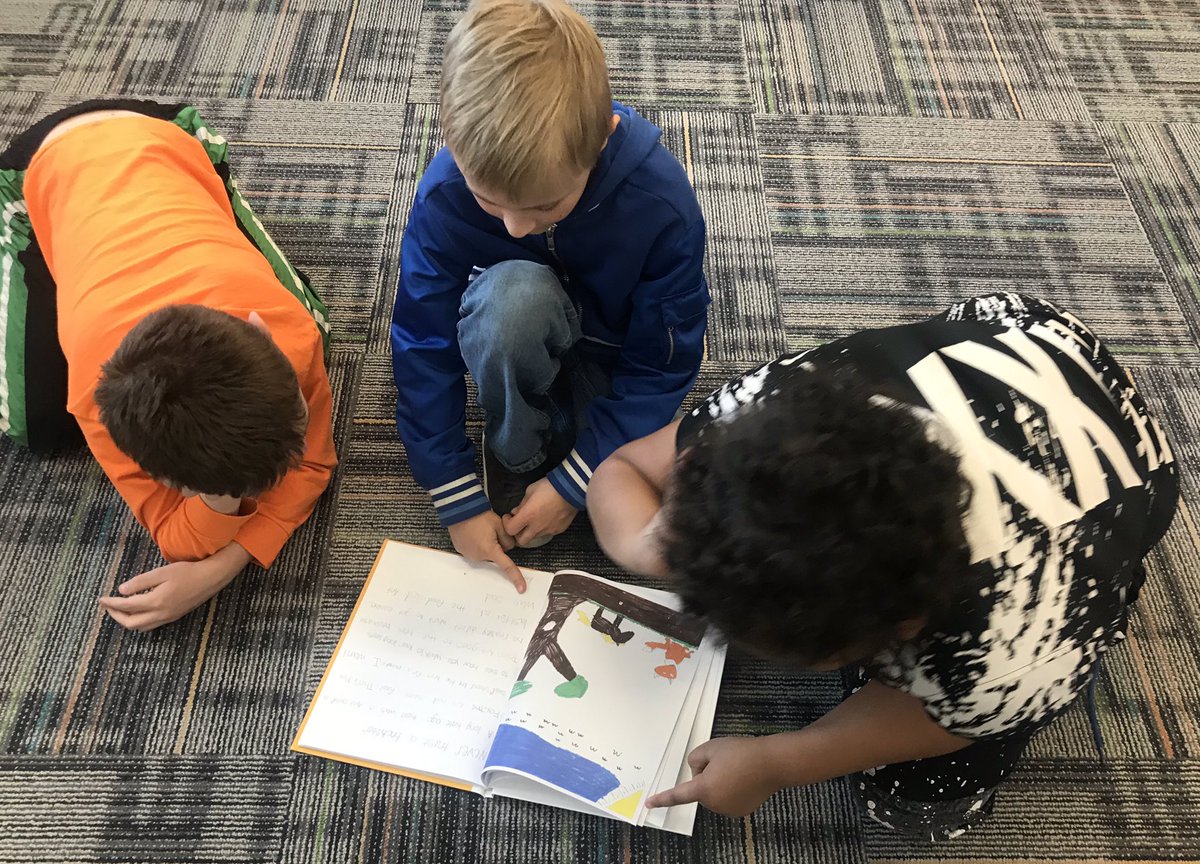
A preschool student at Dublin City Schools was recently diagnosed with Leukemia. A fundraiser was created for her family to try and help offset the costs of her medical needs. Click on the link to learn more: https://t.co/huGwzgG6oJ
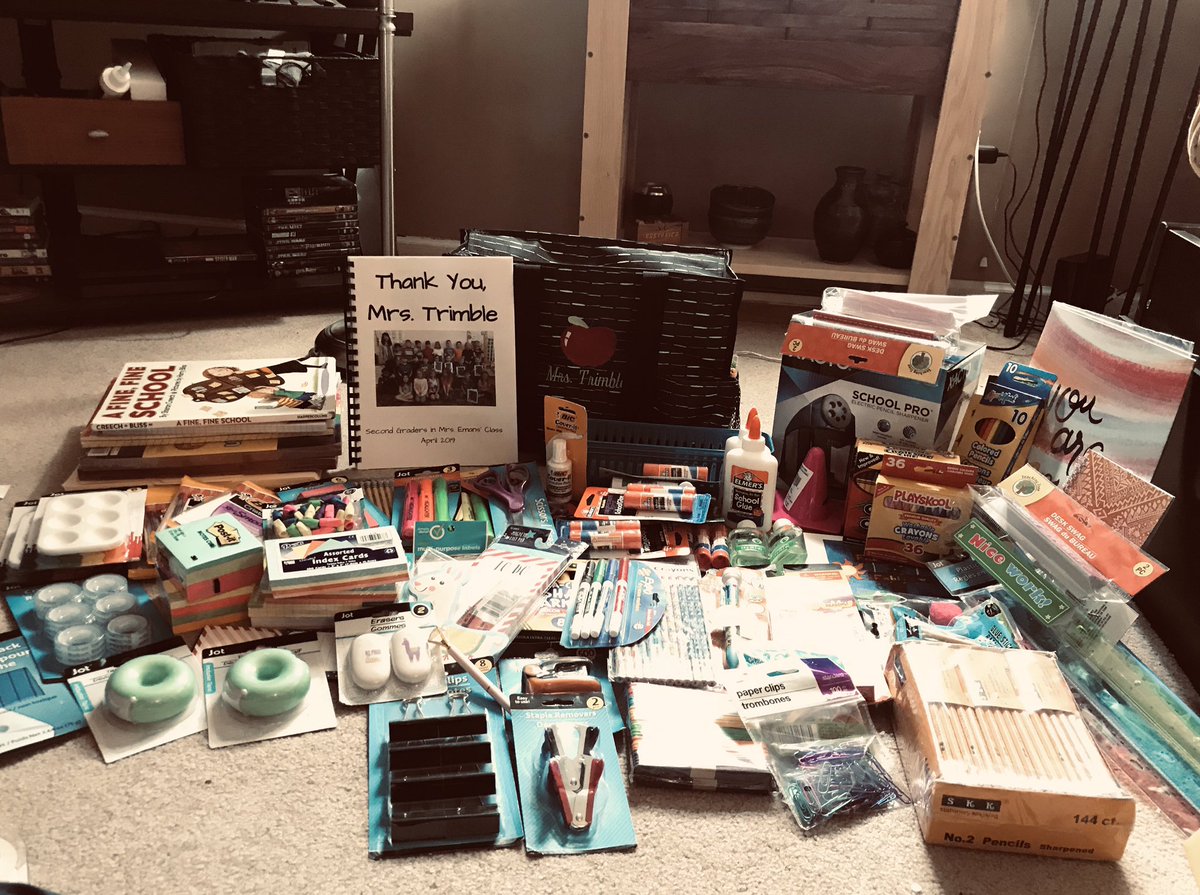
It’s safe to say, I had the best group of kids and cooperating teacher for my student teaching experience. They surprised me with this gift today, after secretly bringing in supplies for weeks! #beyondGrateful#futureTeacher#feelingthelove#2ndgrade
@YeseniaCortes01@RauMiss Yes! There are so many concepts and terms that seem so common sense to us, but which are foreign to kids. In my Kindergarten class it was “before” and “after”. It took a long time for them to grasp which one was which, spatially (e.g. in a number line or objects in a line)
@themissahmad @missaljacksy Q23 I’ve been reflecting on this at placement bec there is such an emphasis on specific strats, and it feels like the focus is on being fluent in the procedure, but not the actual prob solving. Then they end up using it wrong bec they don’t really understand the prob #OSUElemath
@Michellelorene1@DelaneyMathews1 Very true! I loved geometry because it was visual and just kind of came naturally to me, but then those proofs were like this chore that sucked all the fun out of it.
@MsLutterloh@Miss_Heck Oh I didn’t see your comment... but I wrote about the same thing! It’s really a concept that is best served by actual drawings and visual representations, otherwise it’s so hard to wrap your head around!
@Miss_Heck Q17: I always remember learning division of fraction as multiplying the reciprocal. But I don’t think I truly understood and modeled it until MATH 1125. Before 1125, while I was subbing, I had a lesson on dividing fractions, and I had a hard time teaching without that shortcut
@DelaneyMathews1 Q18: in my placement, so far, I’ve seen mostly explicit strategy instruction and guided invention (usually during number talks). We haven’t had sheets with many basic facts to solve - at least not yet. #osuelemmath
@ClovettaC@themisspeppers Yes! And I think it’s important for them to be able to use multiple strategies so that they can check their own work. I’ve seen kids use derived facts incorrectly. Then when I ask them to solve in another way, they realize that they’d done something wrong and can fix it
@AnnRoFlo @MissTrigg_Cbus Well we have an anchor chart with some strategies that we’ve used in the past, so they can choose to look to the chart, or not. I will also have a few students pulled with me that will have manipulatives available so they can use direct modeling.
@Mr_Louwers@themisspeppers I agree that a variety of methods or strats is important. Also they need to become familiar with different types of problems (like part unknown and start unknown). Exposure to such problems through story allows them to understand and visualize how the numbers relate
@AnnRoFlo Q13 One prob was of a boy’s sticker collection with some truck stickers and some car, 10 total. How many of each might there be? They were given 2sided counters, but no directions. I liked that there wasn’t one correct answer and it allowed them to explore. #osuelemmath
@TheMissHirsch Q14 At Highland, I saw a bunch of math drawings in my student’s journal, showing groups with tallies in them. Not sure what type of problems she’s working with, but looks like she’s working with double digit numbers.
@MissMantel@iamfeeny I agree that the broad approach is beneficial for a diverse group of learners! Unfortunately I’m finding that their workbooks and quizzes require one specific strategy. So even if they could get the answer, they don’t understand the strategy, so they get it wrong :(
@Mr_MullCbus@Miss_Heck@MissMantel I was having this conversation with my CT. We can teach and encourage a variety of strategies. But kids should be able to use strategies that work with their understanding. E.g. some kids in my class aren’t ready for make a 10 strat, but they may work up to it in time