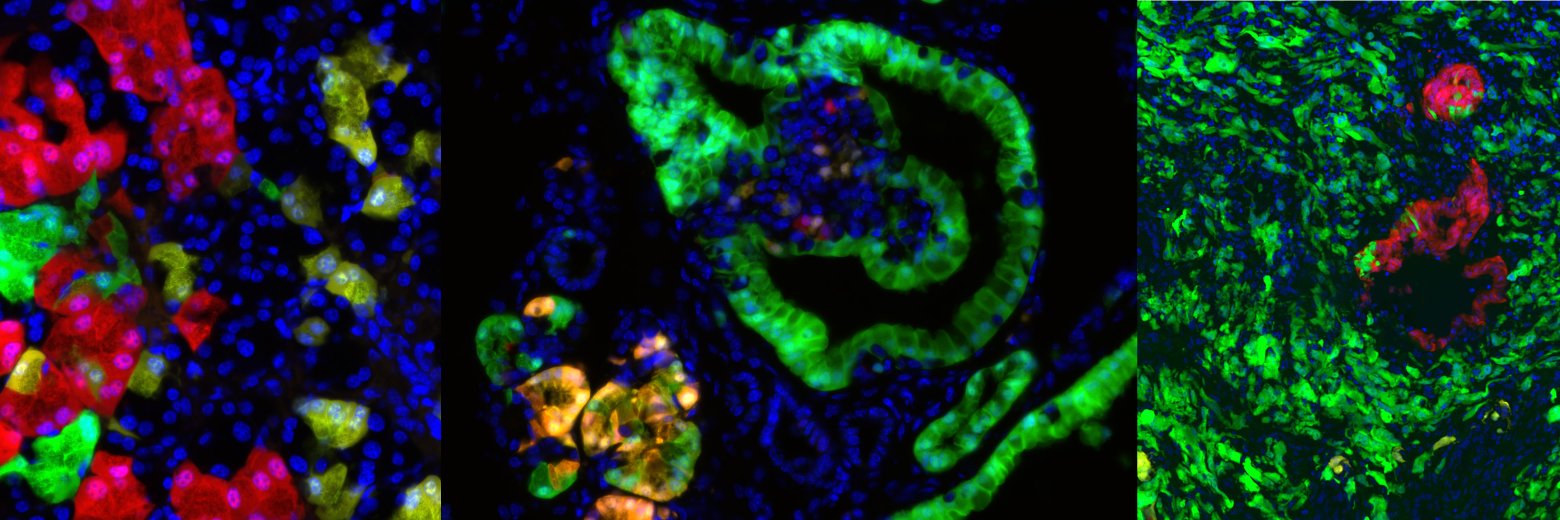
Studying genetic, environmental, and host factors in tumor progression of #PancreaticCancer and #LungCancer @YaleGenetics @YaleCancer @CancerYale @YaleMed
Thank you, Yale Medicine Magazine, for highlighting my lab and my amazing colleagues Professors Etienne Caron, Liza Konnikova, Smita Krishnaswamy, and Sai Zhang in this nice article introducing the diverse and fundamental biomedical research at @YaleMed.
https://t.co/JncvWmXhmu
Dr. Luisa Escobar-Hoyos @Escobar_Lab explains the challenges within #pancreaticcancer treatment, how patient outcomes can be improved, new drugs offering hope for patients, and more in this Q&A.
https://t.co/i9WDUZbIje
@SmilowCancer@YaleRadOnc
Pancreatic #cancer is among the deadliest cancers, with a five-year #survival rate of just 13%. In a @Yale Q&A, YSM's Luisa Escobar-Hoyos, PhD, explains what makes this "silent disease" so hard to detect – and so challenging to treat after #diagnosis: https://t.co/w0Y8k5TLAy
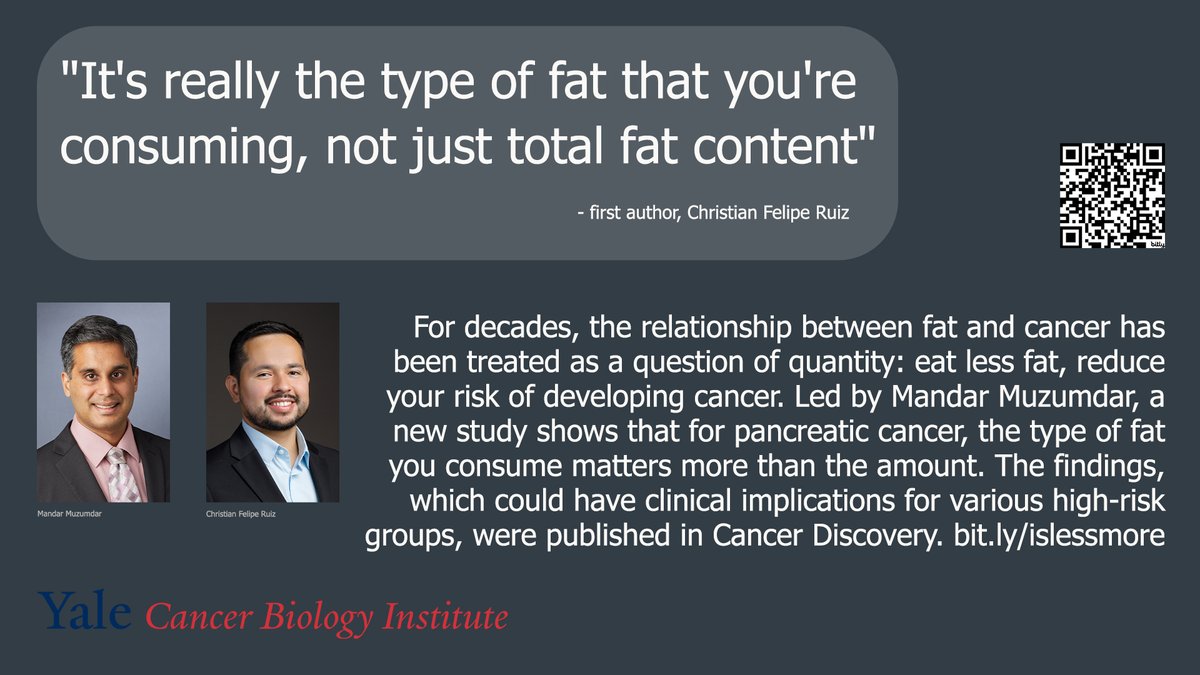
It's not how much fat you eat, it's what kind 🥑
@YaleMed Prof. Mandar Muzumdar @MuzumdarLab shows how monounsaturated fats protect pancreatic cancer cells from ferroptosis, while polyunsaturated fats increase their vulnerability.
See more here👇https://t.co/iXOLQTjKJg
Research from @Escobar_Lab + team identified a metabolic vulnerability in an aggressive subtype of #pancreaticcancer. Targeting the #K17-driven pathway improved chemotherapy response and doubled survival in preclinical models.
https://t.co/TnFfS2LxH1
@SmilowCancer@CR_AACR
Join us for a MORNING seminar: “From mouse to man: Genetically engineered mouse models reveal conserved mechanisms of metastasis in human cancer” with Cory Abate-Shen, Columbia University, Friday June 5 @ 9:00AM, at YCBI #YCBI@YaleCancer@YaleMed@YaleWestCampus
New research from @MuzumdarLab identifies PI3K-driven wild-type RAS activation as a key mechanism of resistance to KRAS inhibition in #pancreaticcancer. Combining PI3K and KRAS inhibition may help enhance therapeutic response in PDAC.
https://t.co/kYgAleWKp9
@SmilowCancer@CR_AACR
🧩Mechanistically, PI3K activity promotes PIP3-dependent membrane recruitment of GAB1 to form an EGFR/SHP2/SOS1 signalosome, enabling wild-type RAS/MAPK signaling. What’s more? This leads to resistance to KRAS inhibition, providing a rationale for co-targeting PI3KI and KRAS. 🎯
In a new study, @YaleGenetics researchers report that when it comes to your risk of pancreatic #cancer, the types of #fat in your #diet matter more than the amount of fat consumed: https://t.co/ZoTZ9Ctlvh
New findings from @MuzumdarLab@CancerYale suggest that, for pancreatic cancer, the type of fat you consume matters more than the amount. https://t.co/klqdhd0tkc @CD_AACR
How does diet causally influence tumor development?
Fat composition—not amount—rewires the pancreatic lipidome to control ferroptosis sensitivity and tumorigenesis.
Grateful to all collaborators and excited to build on this! 👇