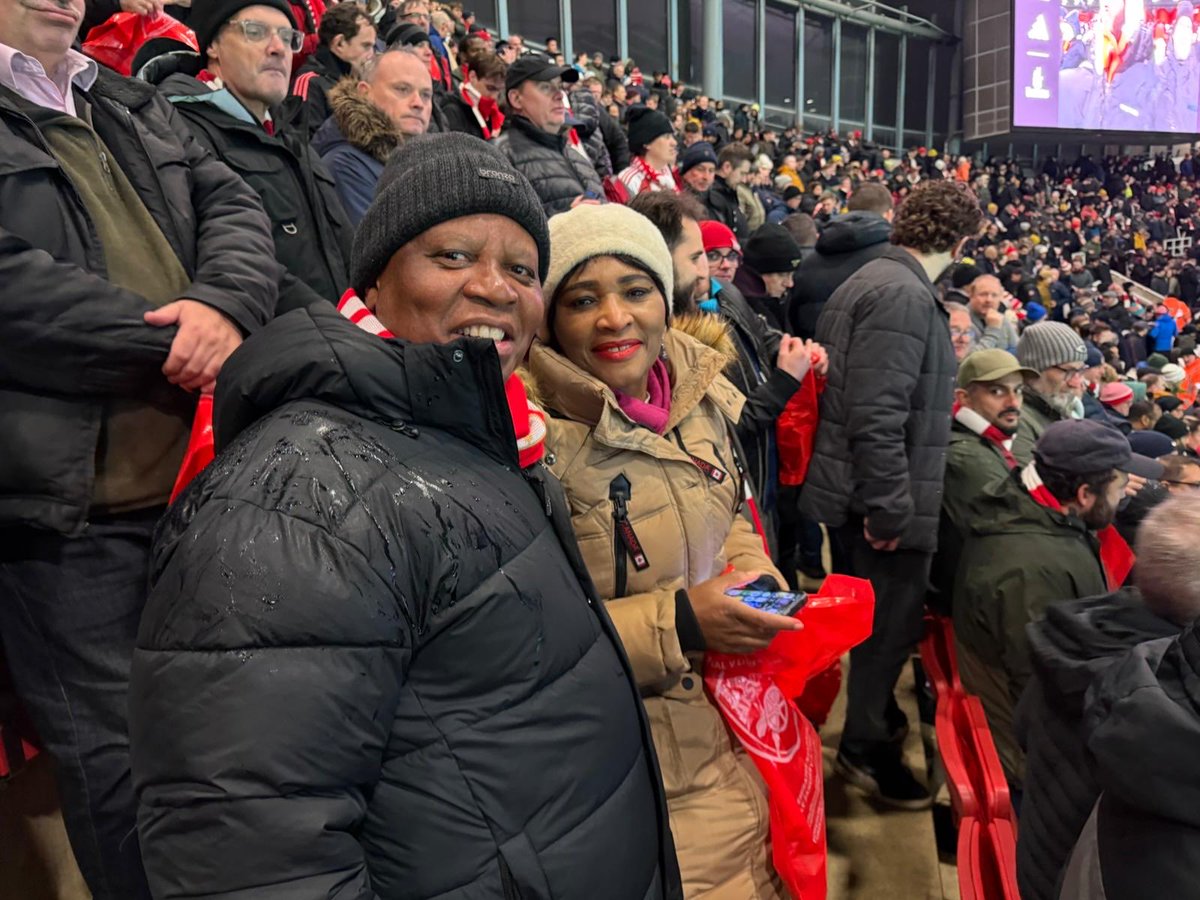
My wife and I had an awesome experience last night in London. Had the time to watch Arsenal and Liverpool live at Emirates Stadium. Though the weather was brutal, but survived and had lots of fun.
This is a perfect illustration of how, ever so subtly, mainstream media like the NYT actually enable and normalize US aggression.
So the question the NYT ask Trump (src: https://t.co/XiQQdNYjwo) is whether he doesn't think his actions in Venezuela set a dangerous precedent for what they frame as the genuine bad actors out there, namely China and Russia.
Sounds relatively innocuous at first glance but, when you think about it, the entire premise of the question is positively obscene.
It installs the notion that what the US did is exempt from moral evaluation. It only becomes bad to the extent it might encourage others - the real "bad guys" - to do the same thing.
But, that's the thing, it'd be the *same act* and THEY presumably would be judged on it alone - no one would ask "fair enough, you did this, but aren't you afraid this might encourage the US to do the same?"
All the more obscene given that China, for one, hasn't fought a single war in 46 years. In that same timeframe, the US launched well over 250 military interventions (https://t.co/07ah8EP1gm). Heck, in the first week of January alone, the US did two (Venezuela and Somalia).
So this is effectively the moral equivalent of asking a serial killer, in the midst of yet another bloody rampage, whether he isn't setting a bad example for a neighbor who's been quietly gardening for half a century. Because that's the REAL bad guy we should all be worried about 🤦
I'm excited to share this new @emancipations_ episode on Chinese Marxism from Mao to Xi. This is a deep dive into Chinese Marxism with a scholar who has studied it for many years. We discuss Soviet vs. Chinese paths, reform & opening up, contemporary class struggle in China & more. Hope you all benefit from this.
▶️ https://t.co/b4Eam4YMbF
The best video evidence right now shows ICE shot a woman while she was attempting to drive away from rather than run over a federal agent. Unless something else comes out, a trigger happy fed just executed an American citizen and the Trump admin wants to cover it up. This isn’t partisan. If you think it’s partisan to demand transparency and accountability from the government in cases like these, you have terminal brain worms.
🇻🇪🇺🇸🇨🇳 The Bloomberg analysis makes one thing painfully clear: The U.S. didn’t capture Venezuela’s oil, it captured a geopolitical illusion.
For years, Washington convinced itself that:
• Venezuela was sitting on “300 billion barrels of the world’s most desired reserves”
• China depended heavily on Venezuelan crude
• Cutting Maduro off would create a global shock
None of that is true.
1. Venezuela’s so-called “massive reserves” are mostly paper barrels.
The oil is ultra-heavy, ultra-costly, and requires massive refining capacity.
2. China wasn’t the loser.
China’s strategy was structural.
For years it:
• shifted refining toward lighter Middle Eastern crude
• reduced reliance on heavy oil from 38% → 27%
• diversified importing channels
• built massive floating and onshore storage
• upgraded refineries to handle any blend
3. The real winners?
OPEC middleweights, who happily fill the gap and stabilize prices.
4. The real losers?
U.S. consumers, now tied to ultra-heavy crude with massive processing costs.
Meanwhile, Venezuela’s bonds pumped, floating-storage oil soared, and exports quietly redirected to India, Spain, even the U.S. itself.
It was a repeat of the Iraq playbook without the gold to show for it.
America grabbed the headline.
Everyone else grabbed the profit.
"The tagline 'News, commentary, and analysis from the Black left' was chosen with great intent when Black Agenda Report (BAR) was founded in 2006."
Black Agenda Report gives special emphasis to Venezuela this week.
https://t.co/GDtkOmvrHp
TWO THINGS WHICH ARE NOT TRUE:
- Trump has snatched the world’s biggest oil reserve!
- And cut China off from its top energy source!
That’s what the world is being told – but neither is true, oil analysts said this week.
In the summer of 2024, China GUESSED that the US would invade or "regime change" Venezuela and started dramatically lifting its purchases of oil from that country.
It then further diversified its suppliers to have multiple oil sources. (Details in video.)
As a result, Trump's latest move will have "no effect" on China's economy, western analysts say.
.
WORLD'S BIGGEST RESERVE?
Furthermore, a number of analysts say that the claim that Venezuela has the world's biggest proven oil reserves is unlikely to be true.
It comes from claims made by the exact same members of the Venezuelan government that the west keeps criticizing. Rather than 300 billion barrels of oil, the real number is more likely just one third of that, several specialists say. (See video for details and estimates.)
And what oil the country does have is thick, heavy, tar-like and increasingly unwanted in the US and elsewhere. Saudi Arabia even cancelled its plans for a heavy oil processing plant.
So that's what Trump is left with.
And that's at a time when the world is transiting away from fossil fuels towards clean energy, renewable resources, and safe, modular nuclear power plants.
.
THE IMPLICATIONS
From Trump's point of view, the Venezuela operation shows that the U.S. has LOTS of guns and helicopters and CIA agents and soldiers and stuff and can do anything it likes, whenever it likes, wherever it likes, without regard to morality or the rule of law.
From the rest of the world's point of view, THAT is the problem.
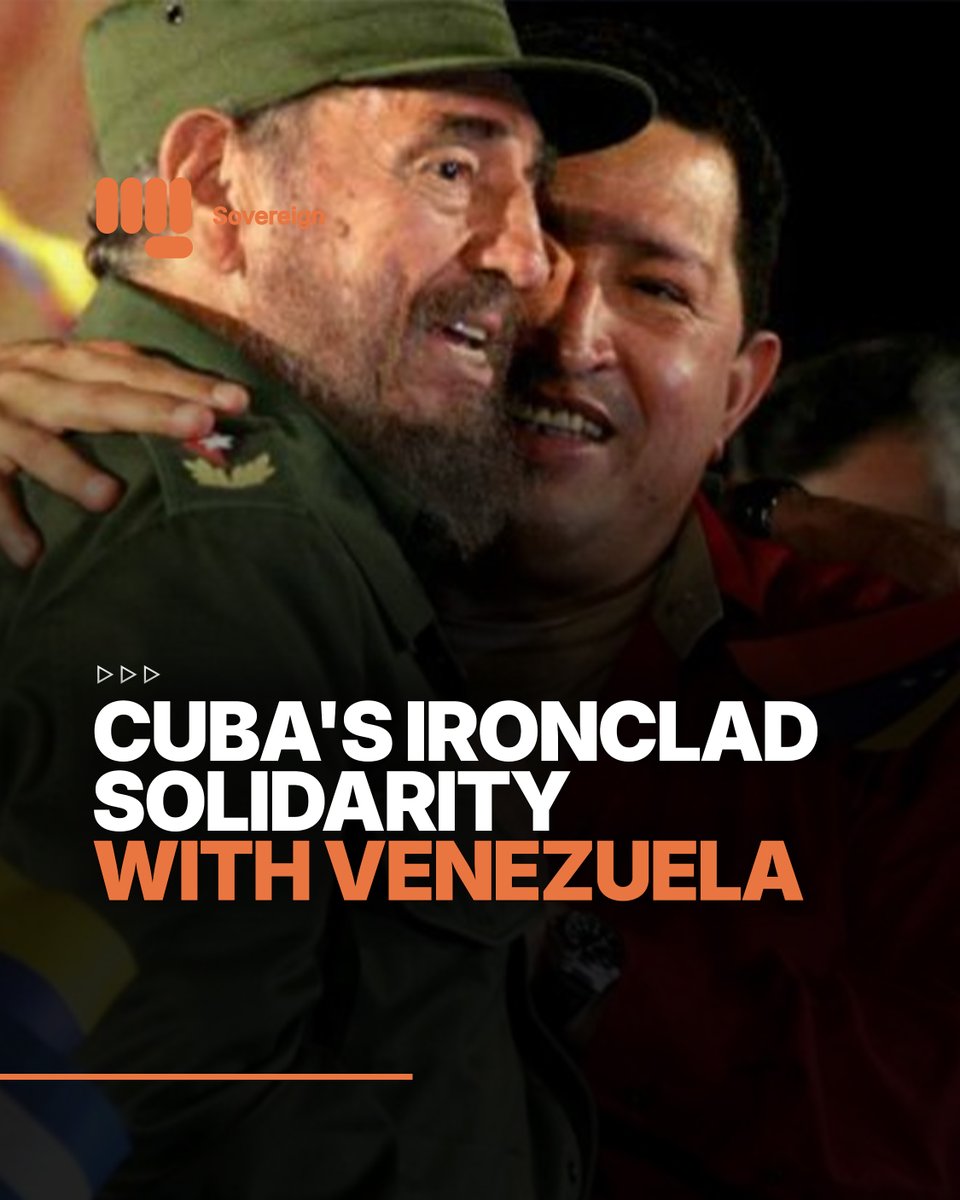
Mere hours after US forces bombed Venezuela and illegally abducted the country’s elected President Nicolás Maduro, Cuba forcefully denounced the attack and reaffirmed its “absolute support and solidarity with the sister Bolivarian Republic of Venezuela.”
A Thread 🧵
As the fog begins to clear around the murderous US assault that kidnapped Venezuelan President Nicolás Maduro and his wife on 3 January, its gruesome toll is becoming grimly apparent. Venezuelan authorities have confirmed at least 80 soldiers and civilians slain in cold blood by US airstrikes or special forces. Alongside them fell an astonishing 32 Cuban troops: martyrs for the cause of their Caribbean neighbor's sovereignty.
The Cuban death toll, confirmed by authorities on 5 January, stands as a solemn affirmation of a commitment made by President Miguel Díaz-Canel the day of the attack. "For that sister nation and its people," he insisted, "we are prepared to give, as we would for Cuba, even our own blood."
This is not a commitment born of expediency or a transient alignment of interests. It is not and has never been, as Western media claim, a transactional exchange of oil for security. The solidarity between Cuba and Venezuela has been the one unshakeable constant amid the turmoil of revolution and counter-revolution, the ebbs and flows of the Pink Tide, since Hugo Chávez was first elected President in 1998.
But its ideological origins predate the modern Bolivarian Revolution by many decades, if not centuries. The founding fathers of independent Venezuela and Cuba, Simón Bolívar and José Martí, bitterly resisted the United States' imperialist Monroe Doctrine and its Roosevelt Corollary respectively. As Donald Trump tries to cement his own "corollary" of unrestrained hemispheric domination, Venezuela and Cuba once again form the vanguard of Nuestra América's resistance.
A lot of people seem unaware of the achievements of the socialists in Venezuela 🇻🇪 before US sanctions wrecked the economy. Here's a rundown by the numbers (taken from the United Nations and quoted in my book, "Bad News From Venezuela, 20 Years of Fake News and Misreporting"):
GDP per capita:
1999: $5150
2012: $6434
Poverty:
1999: 49.4%
2012: 25.4%
Extreme Poverty:
1999: 17.9%
2012: 7.1%
Unemployment:
1999: 15.0%
2012: 8.1%
School Enrollment:
1999: under 50%
2012: Almost 75%
Undernourished population:
2000-2002: 3.8 million
2010-2012: "Not statistically significant number" [i.e.: close to zero]
Doctors per 10,000 inhabitants:
1998: 18
2012: 58
Number of free health clinics built, 1999-2012:
7,000
Number of people receiving old age pensions:
1999: 0.39 million
2012: 2.1 million
During the years of Hugo Chavez (1999-2012/2013), the government built a nationalized healthcare and education system from scratch. In 2005, UNESCO declared Venezuela free of illiteracy.
This doesn't mean everything was perfect by any means, but the gigantic and extraordinary successes the country was making attracted academics, statisticians, and epidemiologists from around the world to study it. Indeed, in 2013, the UN awarded Venezuela special recognition in combatting poverty and achieving rapid human development.
They were able to do this because Chavez nationalized the country's resources (oil) and used the profits to fund social programs, rather than enrich foreign billionaires.
It was precisely this threat of a good example that precipitated a massive US economic blockade of the country, which crippled the economy, and led to mass emigration and hardship. The United States is and was terrified that such a successful example of socialism would inspire people across the planet into believing a better world is possible.
John Mearsheimer says President Trump is "pursuing a reckless foreign policy" in Venezuela:
"This demonstrates that the US is a rogue state. This has nothing to do with the Monroe Doctrine. Basically what Trump is doing here is overthrowing a government he doesn't like."
THE BRITISH, FRENCH AND DUTCH EMPIRES WERE THE WORST!
In this exchange on Mehdi Hasan's Head to Head with Nigel Biggar, post-colonial sociologist Gurminder K Bhambra dismantles a core myth used to rehabilitate empire: the idea that all empires are essentially the same. Her intervention is historical, precise, and deeply human.
Bhambra challenges Nigel Biggar’s claim that empire is a universal and morally neutral feature of human history. She argues that this framing deliberately erases a crucial distinction between empires of incorporation and empires of extraction. The Ottoman, Mughal, and Chinese empires governed through incorporation, integrating populations into administrative, economic, and social systems. European empires, by contrast, were built around extraction; wealth was siphoned out, societies were reorganised for profit, and human life was treated as expendable.
She grounds this distinction in one of the most basic measures of governance: food and survival. Famines occurred across history, but their causes matter. Under Mughal rule, Bengal did not experience mass famine deaths over the course of four centuries. Under British control, the East India Company presided over a famine that killed more than 10 million people while continuing to extract taxes. During World War II, under direct British rule, another famine killed an additional 3 million. These were not natural disasters; they were policy outcomes.
Bhambra’s point is simple and devastating. Empire is not an abstract idea. It has material consequences. Who eats, who starves, and who profits are political decisions. To flatten all empires into a single category is not scholarly neutrality; it is moral evasion.
Her analysis exposes how colonial violence is often rewritten as inevitability, progress, or tragedy without perpetrators. By restoring historical specificity, Bhambra refuses that erasure. This is not about guilt or virtue. It is about truth, accountability, and recognising that millions died not because of scarcity, but because extraction was prioritised over human life.
@VoxUmmah@venanalysis@qiaocollective@ProgIntl@KawsachunNews@OrinocoTribune
@blkagendareport
@SoberaniaPod