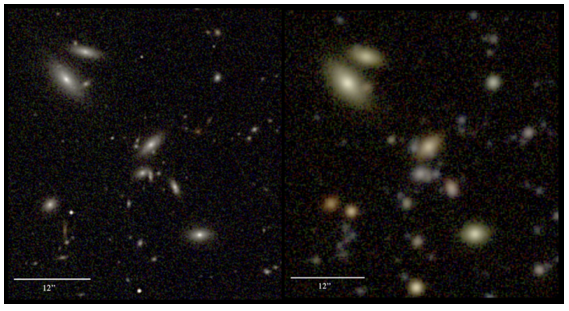
This video is on the Euclid Data Explorer and searching catalogs that don't have RA/Dec! In order to find objects in those catalogs, you have to search by object ID. This movie shows you how. As always, the video is in HD and has English subtitles https://t.co/oFbeNxn6oT
This video talks about the Euclid Data Explorer -- you may have noticed that the images may seem to be "jumping around" and it might not be immediately obvious why it's doing that. This video explains it! The video is in HD and has English subtitles. https://t.co/8qW6c9ti7r
This video is an intro to the Euclid Data Explorer, now using DR1 data. As always, the video is in HD and has English subtitles (click on the 'cc' button in the lower right of your YouTube window to turn on the closed captioning). https://t.co/O6hetlQKwk
This video is an overview of how to use IRSA Viewer to explore the all-sky SPHEREx HiPS map to explore the first year of SPHEREx data in DR1. As always, the video is in HD and has English subtitles. https://t.co/FLHOw93pFz
The first installment of Euclid Data Release 1 (DR1) is now available at IRSA! ~1.8 PB of imaging, catalogs, and spectra covering ~1,900 square degrees of the Euclid Wide Survey, as well as observations of the Euclid Deep Fields and other fields. https://t.co/nIqdcShfAr
SPHEREx Data Release 1 (DR1) is now available at IRSA. DR1 includes reprocessed spectral images that form a uniformly processed dataset with Quick Release 3 (QR3). It includes an all-sky spectral cube covering 102 spectral channels from 0.75 to 5.0 um. https://t.co/ag6RCZO0Xm
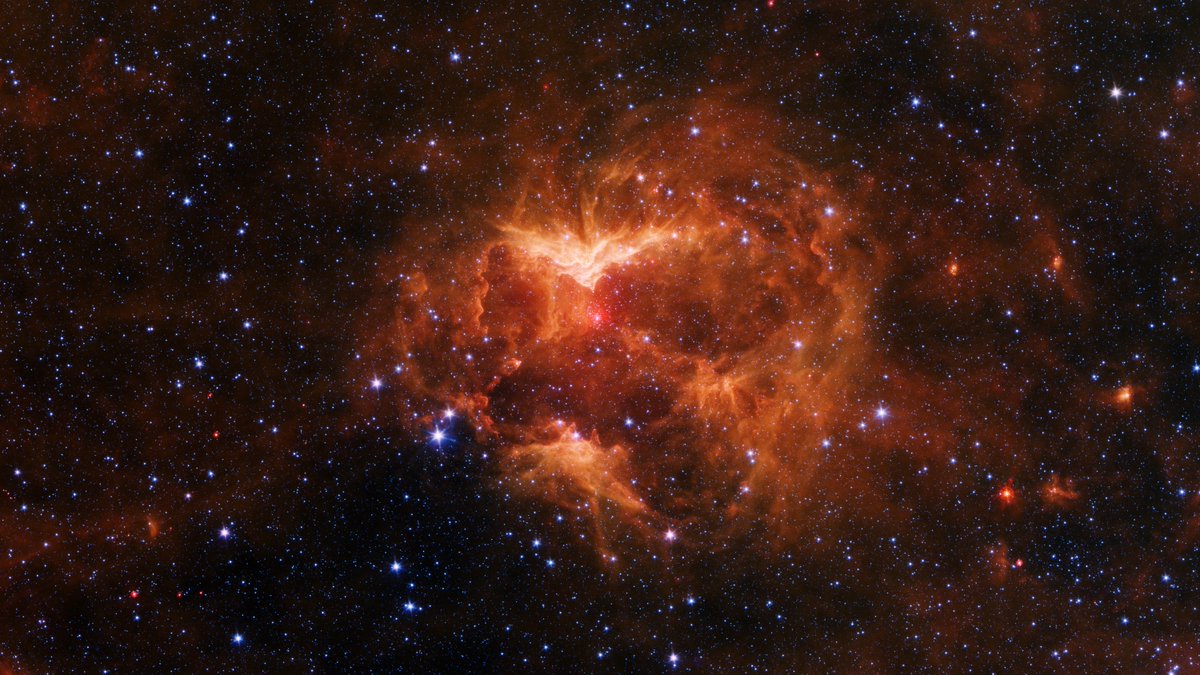
Something’s grinning in the dark! 🎃
The Jack-o’-Lantern Nebula was carved by a star 15-20x the Sun’s mass, whose radiation hollowed out this cosmic pumpkin. The data now haunts @caltechipac's @NASA_IRSA, free for anyone to explore!
#Astronomy#Halloween
https://t.co/0CGdvOT8pD
IRSA has begun distributing SPHEREx Quick Release 3 (QR3) spectral image data, processed with substantially improved PSF and other calibrations. The Spectrophotometry Tool is updated. New calibration products and an updated Explanatory Supplement too!
https://t.co/12gtNrGKg3
We hosted an online workshop today called "Hands-On Science with OpenUniverse2024 Roman and Rubin Simulations."
The website for it is https://t.co/uCQ7xCCMcF and the recorded videos for the standalone talks are here:
https://t.co/l8nU3MARGd
Reminder: NASA IRTF Call for Proposals - Open until Oct. 1 for Semester 2027A (Feb. 1 - July 31)
For full information, see https://t.co/0T0LeaJZYr
The IRTF web services are recovered from the impacts of the recent extreme weather events and observatory operations have resumed.
👏IRSA Appoints New Leadership👏
Huge congrats to Anastasia Laity on her new role as @NASA_IRSA Task Lead at @CaltechIPAC! She’ll be guiding the science archive's cloud evolution and data operations for major NASA missions ahead.🚀https://t.co/RDI9HHWZy3
There is a brand new SPHEREx assistant available to help you with your SPHEREx-related questions! Look for this at the lower right of SPHEREx-related web pages at IRSA. Click on the icon to start a conversation with it. https://t.co/ag6RCZO0Xm
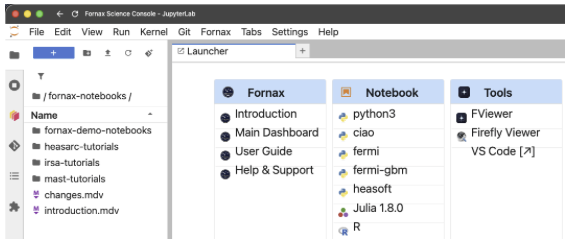
Fornax, NASA's cloud-based science platform for astrophysics, is now available in beta. https://t.co/LFXUVbNIEi It provides access to NASA astrophysics data, analysis environments, and scalable cloud computing, allowing you to work with large datasets.
We invite you to join us for this free virtual workshop to explore OpenUniverse2024 data. Deadline Aug 31!
https://t.co/0JG0719igX
OpenUniverse2024 is a collection of simulated observations designed to resemble future data from Roman & Rubin. We'll use Python Jupyter notebooks.
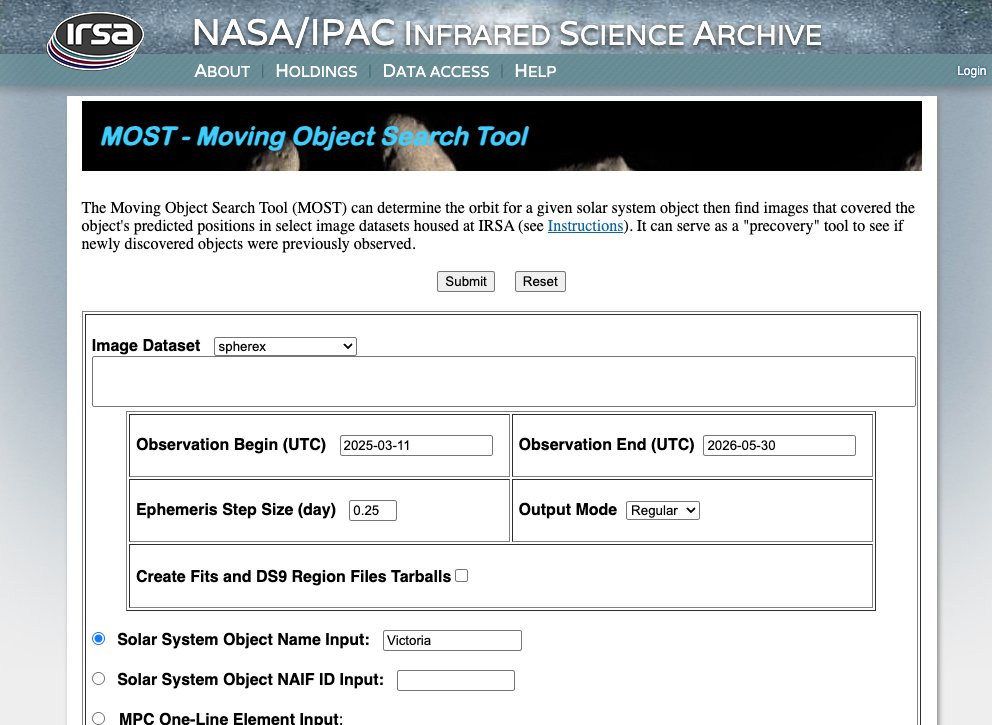
SPHEREx is now available in the Moving Object Search Tool (MOST)! You can use MOST to calculate the tracklet and identify which SPHEREx frames contain your moving object.
https://t.co/znaNf5SIIe
IRTS images and spectra are now available through IRSA's Data Collection Explorer. The data were previously accessible through an older interface, and are now integrated into DCE for easier access and discovery.
https://t.co/6Bhz2Nfq86
SPHEREx science data downloaded from IRSA now exceeds 20 PB, and archive database queries exceed 1 million. 🎉😍🥳
Have you played with SPHEREx data yet? https://t.co/ag6RCZO0Xm