We develop, demonstrate, and infuse transformational technologies that enhance NASA’s efforts to explore the unknown in space and benefit life on Earth.
Registration for the Deep Space Food Challenge: Mars to Table closes in one month! Join NASA and other experts for a webinar on July 9 at 12pm ET to answer your questions and get final reminders.
Learn more: https://t.co/VmF2G6wIAw
NASA has issued a draft solicitation to advance critical lunar and cislunar technologies.
The focus: closing gaps in vertical solar arrays, ISRU oxygen production, Stirling radioisotope generators, in‑space manufacturing, and advanced nanomaterials.
These efforts aim to mature key systems, accelerating progress toward NASA’s Moon Base and near‑term missions.
https://t.co/fHcXHsUgCo
📢 Calling all innovators with Phase II contracts!
The NASA SBIR STTR Civilian Commercialization Readiness Pilot Program is open now for qualifying small businesses and has its own distinct guidelines and requirements. https://t.co/ZsZ4dw4vrA
A successful demo is just the beginning. 💫
NASA is extending operations of its Polylingual Experimental Terminal (PExT), a demo designed to improve connectivity in space. PExT will now pursue additional demonstrations to support next-gen communications.
https://t.co/hG9qR0ihEp
🛰️ Help bridge today's mission needs with tomorrow's commercial ecosystem. 🚀
NASA is seeking proposals from industry to demonstrate backwards compatible Ka-band relay services for legacy missions; ensuring mission continuity while stimulating the commercial marketplace. 📡🌎
More: https://t.co/l6lEzby69M
Hello, Griffin-1! We’re pleased to have helped advance the Hazard Detection Lidar technology that will scan and analyze the Moon’s terrain in real-time to map and select the safest landing site.
Learn more: https://t.co/LvGS1JbOuO
Credit: @astrobotictechnology
A Moon Base lander is one step closer to the lunar South Pole.
@astrobotic recently unveiled the Griffin-1 lunar lander, now ready for environmental testing at @nasajpl ahead of its late-2026 launch. Griffin-1 will deliver payloads supporting Moon Base Phase One.
The performance of our AstroPix gamma-ray sensors will be tested on @NASA’s FFR (Fly Foundational Robots) mission set to launch in late 2027. In the future, these sensors could detect light from black hole-powered galaxies and cosmic explosions. More: https://t.co/HFF80Hgipo
Introducing Artemis III.
Four astronauts. Three launches. Two dockings. One splashdown.
In 2027, the Artemis III mission will practice docking the Orion spacecraft with two lunar landers in low Earth orbit — the capability we need to return humanity to the Moon’s surface.
On last week's Houston We Have a Podcast, Space Communications and Navigation Program's deputy program manager for capability development Greg Heckler discusses how his team is planning communications to support missions to the Moon and beyond.
🎧 Listen here: https://t.co/VAjTMRGt3y
Congratulations to the winners of the Revolutionary Aerospace Systems Concepts – Academic Linkage (RASC-AL) competition! 🏆
University students were challenged to bridge gaps in aerospace technology by innovating new system concepts and prototypes. Read more: https://t.co/BbvsrB4zaH
✅ Apollo-inspired engineer
✅ Artemis II interface manager
✅ Deep Space Network mission support
Meet Kathleen Harmon, Artemis II interface manager for the Deep Space Network. Kathleen ensured the network was ready to support Artemis II spacecraft operations: https://t.co/RXy3hX3Msm
Today at 1 p.m. ET, learn about NASA’s latest TechLeap Prize: the Robotically Manipulated Payload Challenge. Up to three winners will be selected to receive up to $500,000 each and the opportunity for a flight test. Join to hear tips for preparing an application: https://t.co/d2VRyRHHFL
There's still time to register for NASA's Mars to Table Challenge! Join the webinar on Thursday, June 4, with experts from NASA and the organization behind BioSim, who will answer questions about the challenge's expectations, rules, and deliverables.
Learn more: https://t.co/aO1F8XshAo
Join us today for a live event where we'll share our @NASAMoonBase plans! At 2pm ET (1800 UTC), we'll update you on our progress toward a long-term presence on the Moon. Watch right here on X.
This Memorial Day, we honor the brave men and women who made the ultimate sacrifice in service to our nation.
Their courage secured the freedoms that make great endeavors possible and continues to inspire generations of Americans to serve something larger than themselves.
We remember them, and we remain forever grateful.
Could a jumping robot explore Saturn’s icy moon, Enceladus? 🪐
The LEAP robot is a bold mission concept that could hop across ice, jump through tall plumes and sample the subsurface ocean. See how LEAP could explore some of the most extreme terrain in the solar system: https://t.co/GZgswtZLFQ
Congratulations to the winners of NASA's 2026 Gateways to Blue Skies competition! This year's competition challenged student teams to address a critical element of U.S. aviation: aircraft maintenance.
Read more: https://t.co/UD4YP8X5DE
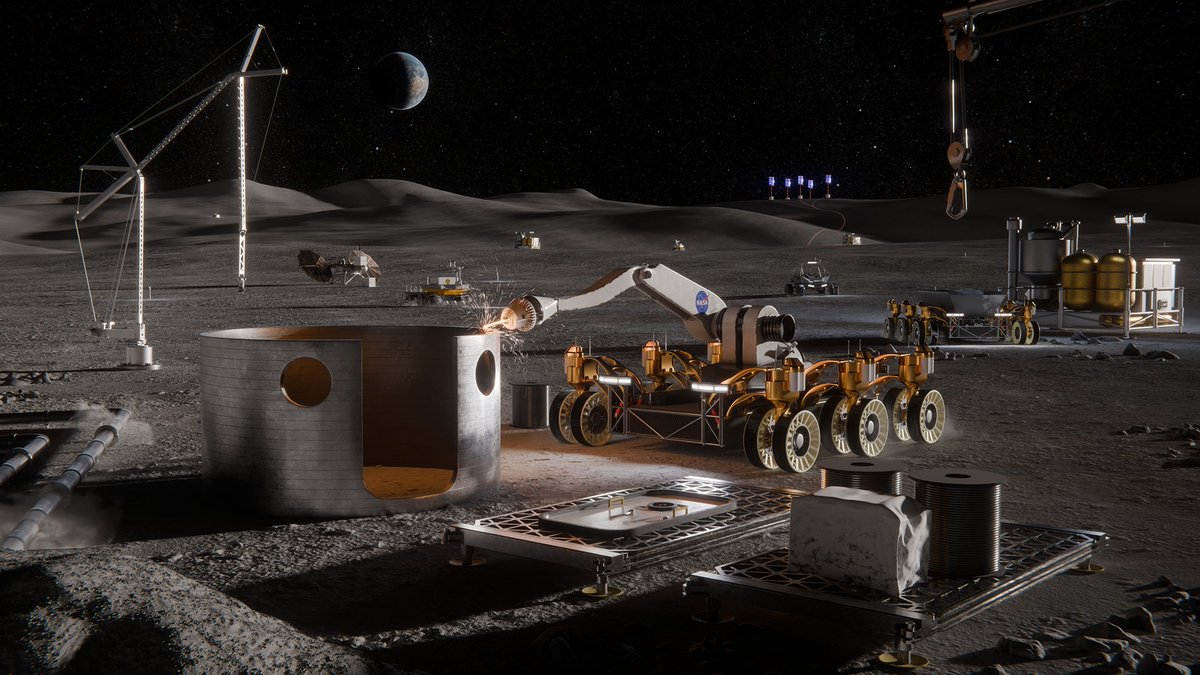
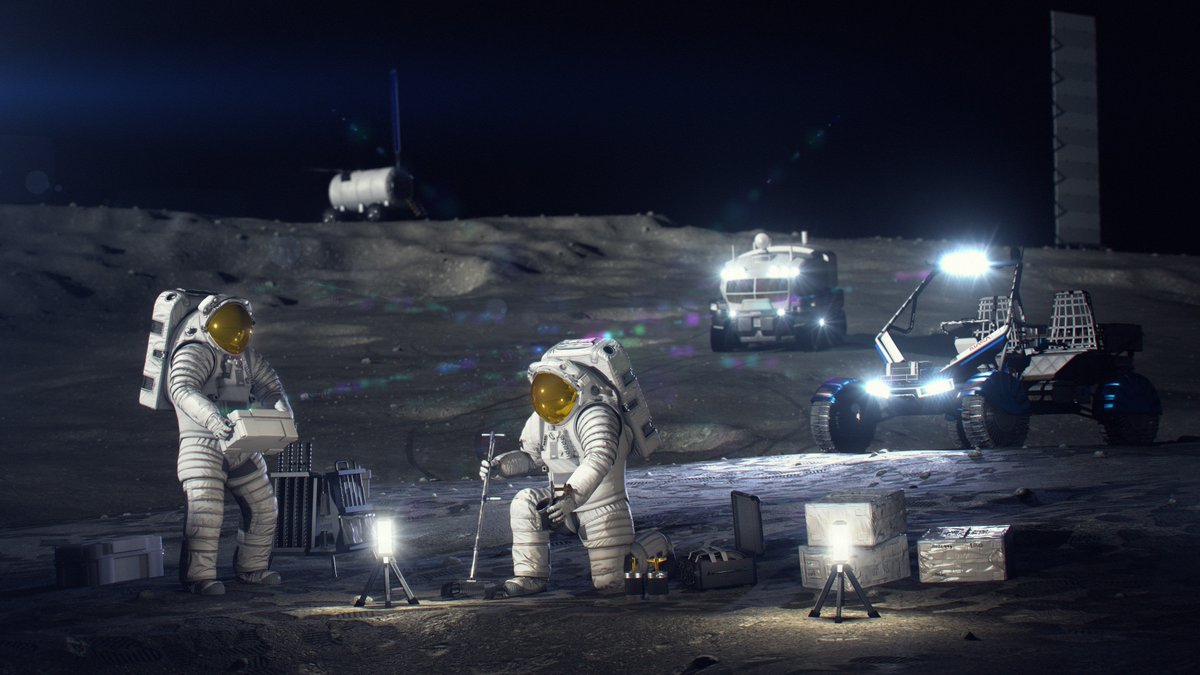
We're building a Moon Base!
@NASAMoonBase will serve as a habitat where astronauts live and work during long-term science missions.
Join us at 2pm ET on Tuesday, May 26, for a live news event where we’ll share updates on our lunar exploration plans: https://t.co/IJXA7xYwju
The AEPEX satellite was successfully deployed! 🛰️
This new CubeSat watches for X-rays from particles raining into our atmosphere. The data will improve space weather forecasts and protect the satellites and communications we rely on every day. 📡
https://t.co/bH2X6n7tLr