Williams et al. argue that the contribution of APOE to Alzheimer’s disease burden has been underestimated due to ε3 commonly being considered neutral, despite increasing risk relative to ε2. https://t.co/nfDJrJypTf
A positive α-synuclein test is not a Parkinson's diagnosis. But it can change a life.
This important paper explores the ethical challenge of prodromal PD: how do we discuss biomarkers, RBD and future disease risk without creating anxiety, stigma and loss of identity?
As biomarkers improve, communication skills may become just as important as diagnostic accuracy. https://t.co/uBQDDcjh7d
Gibson et al. analysed postmortem brains from over 7000 older adults. Lewy body pathology was present in more than one in four people, with anatomical distributions of pathology differing by sex and showing distinct associations with co-pathologies. https://t.co/8QBvkC1GnU
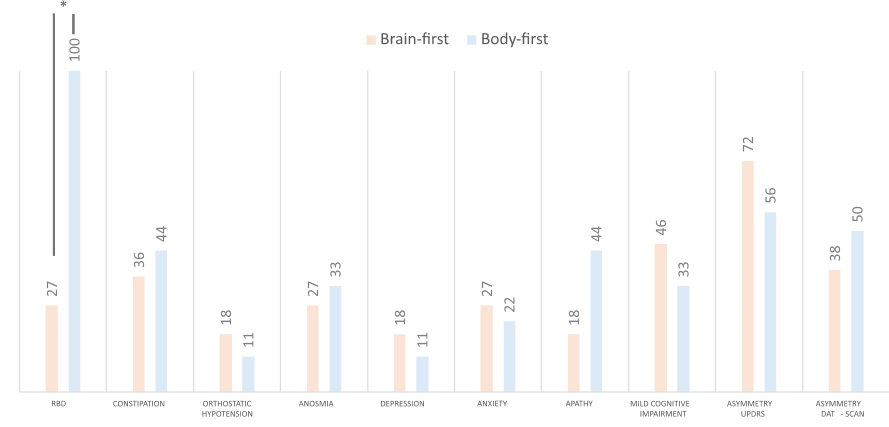
A new multimodal imaging & clinical approach asks whether the brain-first versus body-first hypothesis can be translated to the individual patient level in early #Parkinsons. MIBG & pRBD data seen at the individual level consistent with previous group data
https://t.co/F2OY7EJ1hs
New review in Parkinsonism & Related Disorders! We looked at depression in prodromal PD. Late-onset depression may be an early sign of PD, while early-onset depression may be a long-term risk factor. Thanks to Prof. Eng King Tan and Dr. Zhi Dong Zhou! https://t.co/WTdQTqpQMS
シンガポール国立神経科学研究所のTan先生、Zhou先生との共同レビューがParkinsonism & Related Disordersに掲載されました。パーキンソン病の前駆期にみられるうつについて、疫学、画像、バイオマーカー、遺伝の知見を整理しました。https://t.co/WTdQTqpQMS
Does physical activity modulate cognitive and motor progression in PD?
Analysis of longitudinal, observational data from @ccbpstudy demonstrated that higher levels of physical activity associated with slower cognitive decline and motor progression.
Link: https://t.co/AofcA4rJ8i
Are there really meaningful differences between α-Syn-SAA–negative and –positive Parkinson’s disease?
Brooker and colleagues report that, apart from greater hyposmia in the SAA+ group and more subcortical atrophy in the SAA− group, the phenotypes appear remarkably similar.
Here is the original article, along with a thought-provoking correspondence by @AlbertoEspay and colleagues. @ajlees https://t.co/k9GQLQYlhZ
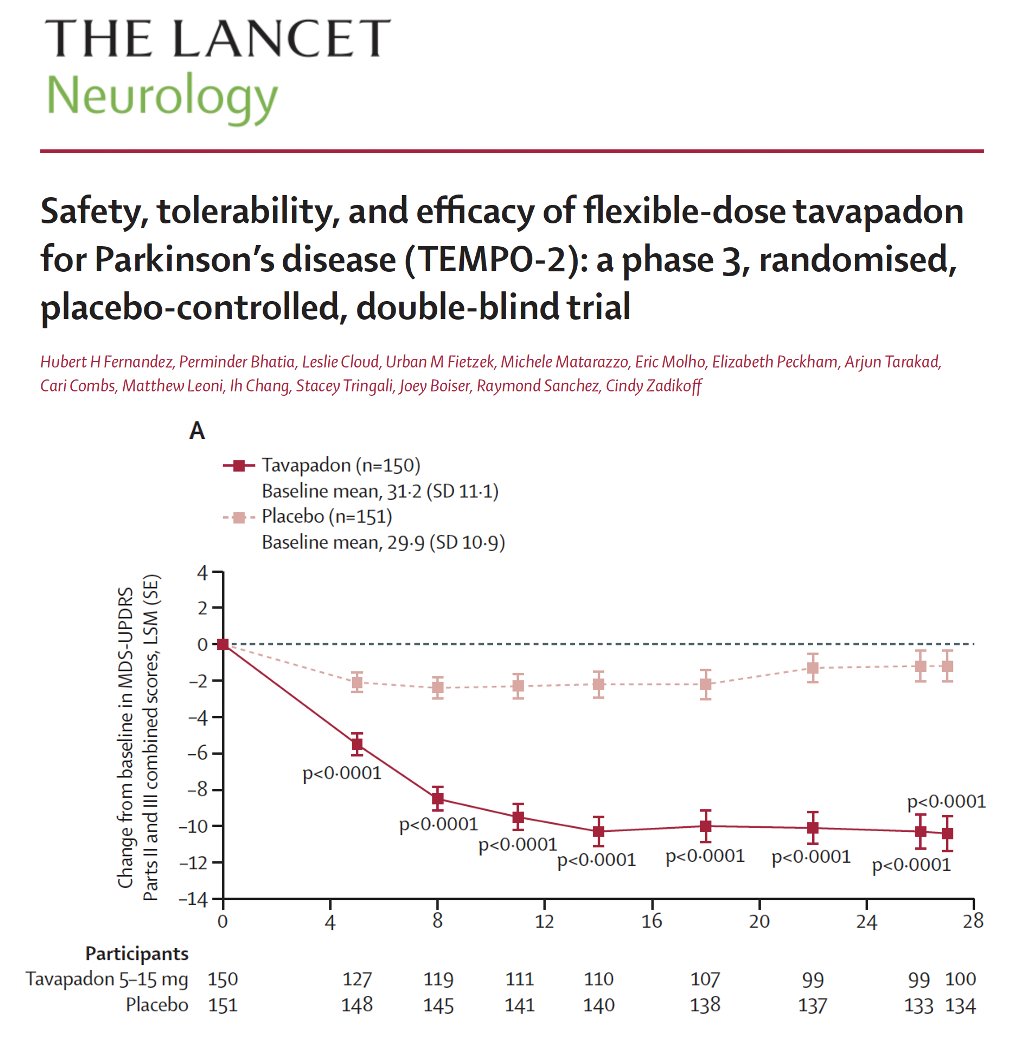
Could Tavapadon reshape early Parkinson’s treatment? Could selective dopamine signaling be the next step forward? A dopamine receptor agonist is a medication that stimulates dopamine receptors in the brain to help improve movement. Unlike currently available dopamine agonists that primarily target D2/D3 receptors, Tavapadon selectively targets D1/D5 receptors, an approach designed to preserve motor benefit while potentially reducing some troublesome side effects. Fernandez and colleagues describe in a new paper in The Lancet Neurology evaluating Tavapadon in early Parkinson's disease.
Key points:
- Tavapadon significantly improved motor symptoms and activities of daily living compared w/ placebo in folks w/ early Parkinson's disease, and benefits emerged as early as 5 weeks.
- Tavapadon was generally well tolerated, though nausea, headache and dizziness were more frequent than placebo, and adverse events were most common during dose titration.
- Rates of somnolence and impulse control disorders were low, suggesting a potentially differentiated safety profile compared w/ currently available dopamine agonists, though longer follow-up is still needed.
My take: We have been waiting for a new dopamine agonist strategy that attempts to separate motor benefit from some of the side effects that have limited the use of older agents. The results are encouraging; however this is not a home run yet. The study lasted only 27 weeks, and we still need long-term data on durability, tolerability, dyskinesias and impulse control disorders. If these findings hold up over time, Tavapadon could become an important new option for treating early Parkinson's disease.
Here are 5 points that resonated w/ me:
1- This study reminds us that innovation in Parkinson's disease is not limited to disease modifying therapies. Better symptomatic treatments can meaningfully improve daily life.
2- A once daily medication that improves motor function while maintaining a relatively low rate of sleepiness and impulse control disorders would be welcome news for many folks and their health care providers.
3- The titration period mattered. Many side effects occurred early, suggesting that careful dose escalation and close follow-up will be important if this therapy enters routine clinical practice.
4- We should avoid comparing this drug directly to older dopamine agonists until head-to-head studies are completed. Cross trial comparisons can be misleading.
5- The next chapter will be the most important one. Long-term extension studies will tell us whether the early promise of Tavapadon translates into durable benefit and an acceptable long-term safety profile.
https://t.co/gp3w3Ke6iO
Among amyloid-positive individuals, a 7-protein plasma panel improved identification of advanced neocortical #tau pathology compared with phosphorylated tau-217 alone. https://t.co/kyw68nJ52a
Can we predict Alzheimer's disease by measuring when biomarkers change, instead of simply measuring how much is there? Biomarkers are measurable biological signals, such as blood proteins or brain imaging findings, that help track disease processes before symptoms become obvious. Pelkmans, Bikou, and Salvadó describe in a new Brain commentary how modeling the timing of biomarker changes may move us closer to predicting an individual's risk of future cognitive decline rather than simply describing where they are today.
Key points:
- The commentary highlights new work showing that the timing of changes in plasma p-tau217, amyloid PET, tau PET, and cognition may be more informative than simply comparing biomarker levels at one point in time.
- Strong coupling between biomarker timing and cognitive decline was observed in the Alzheimer's Disease Neuroimaging Initiative (ADNI), while weaker coupling in the population-based Mayo Clinic Study of Aging suggests aging is influenced by multiple interacting pathologies.
- The authors argue that future prediction models should integrate Alzheimer's biomarkers w/ vascular disease, inflammation, α-synuclein, TDP-43, resilience, and other biological factors to better predict who will experience cognitive decline.
My take: This commentary captures an important shift in Alzheimer's disease research. We are moving beyond asking whether a biomarker is abnormal and beginning to ask when it becomes abnormal. Timing may ultimately prove just as important as the biomarker itself. The future will likely require integrating multiple biological pathways rather than relying on a single test to predict cognitive decline.
Here are 5 points that resonated w/ me:
1- Alzheimer's disease does not unfold the same way in every person, and understanding individual timing may improve prediction and personalize care.
2- Blood biomarkers such as plasma p-tau217 continue to emerge as powerful tools that may help identify disease years before symptoms become disabling.
3- Aging brains frequently contain more than one disease process, so cognitive decline cannot always be explained by Alzheimer's pathology alone.
4- Combining blood tests, imaging, genetics, vascular health, inflammation, and resilience measures may provide a much clearer picture of an individual's future than any single biomarker.
5- The future of Alzheimer's disease care will likely focus less on asking whether disease is present and more on predicting who is progressing, how quickly they are progressing, and when intervention is most likely to help.
https://t.co/VnLTqetb2o
Park et al. distinguish two subtypes of dementia with Lewy bodies based on distinct imaging biomarker trajectories. One is characterised by early striatal dopamine loss and more typical Lewy body features, while the other shows early amyloid accumulation. https://t.co/g1qVFX0ga0
New insights into the spectrum and frequency of co- and multi-pathologies in idiopathic and genetic PD and their impact on disease initiation and progression. https://t.co/H1F6Oq9u3B
A new systematic review & meta-analysis/regression confirms previous findings: Fecal microbiota transplantation may provide short-term improvements in motor & gastrointestinal symptoms in #Parkinsons, but effects appear to be transient; Small studies
https://t.co/8fbEt6UbXE
Researchers present the Prodromal Synucleinopathy Rating Scale (PSRS); In a large multicenter REM sleep behavior disorder (RBD) cohort, moderate to strong correlations were observed between PSRS domains & multiple independent measures of clinical burden
https://t.co/oX8MCMMgnc