Public Health Researcher | Environmental & Occupational Health Specialist | Health Tutor | Empowering Emerging Leaders for Purpose-driven Kingdom Impact
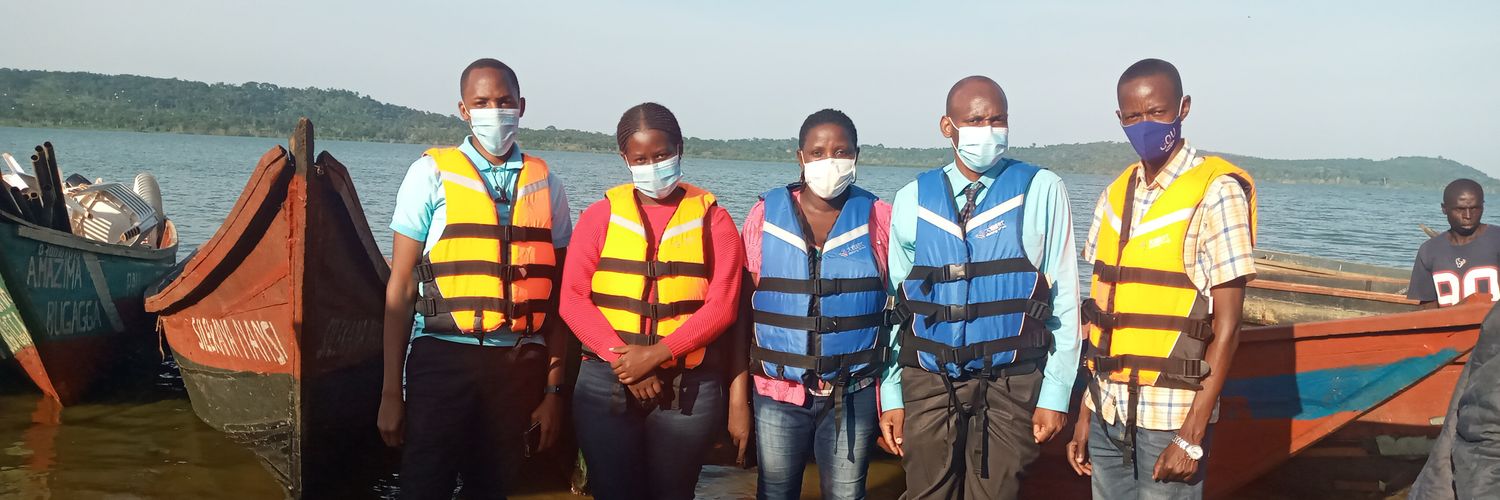
I had an opportunity to work with a team from @MakSPH and School of Hygiene Mbale in conducting Environmental Health Education focusing on floods and landslides in 2 primary and 3 secondary schools in Mbale District.
@rawleng@TIPHtweets@nemaug#ThisIsPublicHealth#ClimateChange
I will be speaking at School of Hygiene Mbale in Mbale City about raising awareness and building resilience to floods and landslides in the Elgon region in Uganda.
@TIPHtweets#ThisIsPublicHealth#ClimateChange
Grace Biyinzika Lubega (@lubegaluv) presented research on “Factors affecting antimicrobial stewardship in peri-urban communities in Wakiso district, Uganda.” 💊
🏆 Congratulations to her & the InnovatHers team for winning 1st place in the #IBTN Summer School Scavenger Hunt!
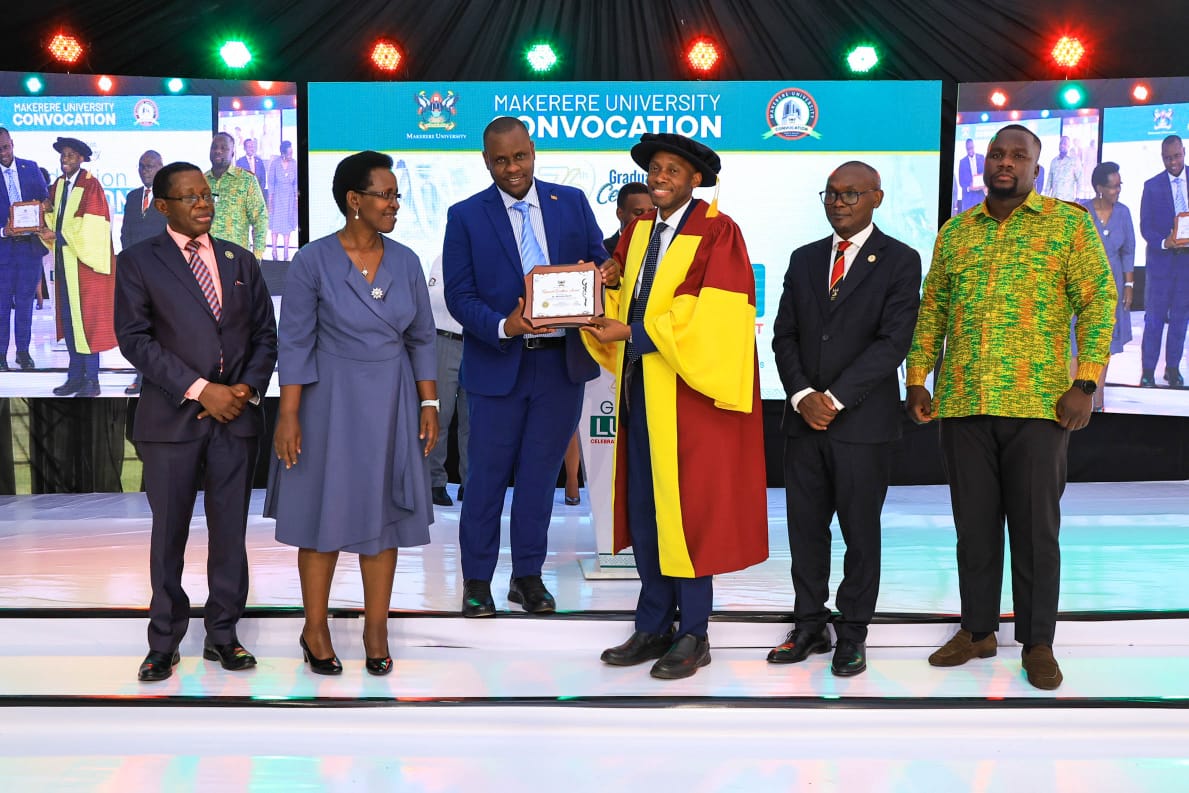
🏆 Congratulations to @DavidMusoke14 for receiving the LMIC Investigator Award at #IBTN2026 in Montreal, recognizing his contribution to behavioural and global health research.
He also presented work on integrated malaria prevention in rural Uganda. 🦟🇺🇬
#GlobalHealth#Malaria
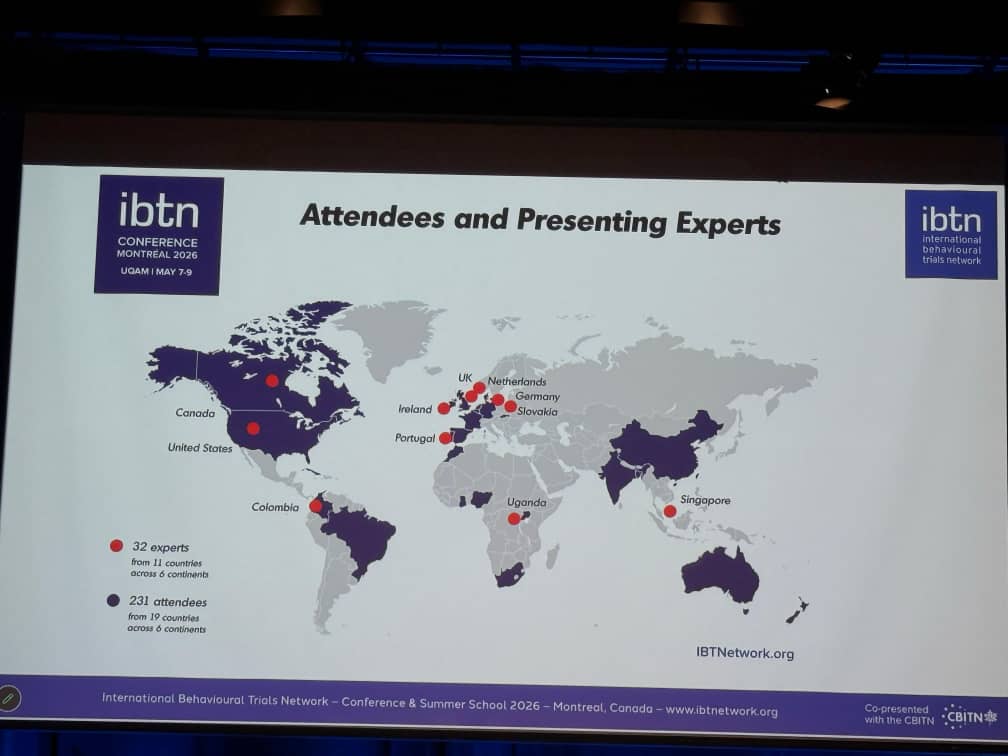
🌍 Great representation for Uganda🇺🇬 at the #IBTN2026 Conference in Montreal, Canada! 🇨🇦
Assoc. Prof. @DavidMusoke14 and @lubegaluv represented the #NTUMakPartnership at the International Behavioural Trials Network (IBTN) Conference & Summer School held from May 7–9, 2026.
Makerere University School of Public Health (MakSPH) congratulates Associate Professor David Musoke on his appointment as Head of the Department of Disease Control and Environmental Health, following a decision by the Makerere University Appointments Board at its 795th Meeting held on 6th May 2026.
Assoc. Prof. Musoke is a scholar of international standing with over 150 peer-reviewed publications and deep expertise in environmental health, malaria prevention, and community health systems. He currently serves as President of the International Federation of Environmental Health (IFEH) for 2026 to 2028, the first Ugandan to hold this global position, and is a Senior Visiting Fellow at Nottingham Trent University and an Affiliate Member of the African Academy of Sciences.
His appointment places MakSPH's environmental health agenda in the hands of one of Africa's most globally connected public health scholars, and we look forward to the leadership and momentum he will bring to the department.
Huge Congratulations, Dr. @DavidMusoke14!
From an environmental health lens, this reinforces how land use, agriculture, and ecosystem changes directly influence disease transmission. Cropping patterns, water retention and proximity of farms to households become critical determinants of vector ecology.
Research probes link between maize farming and malaria risk in Uganda
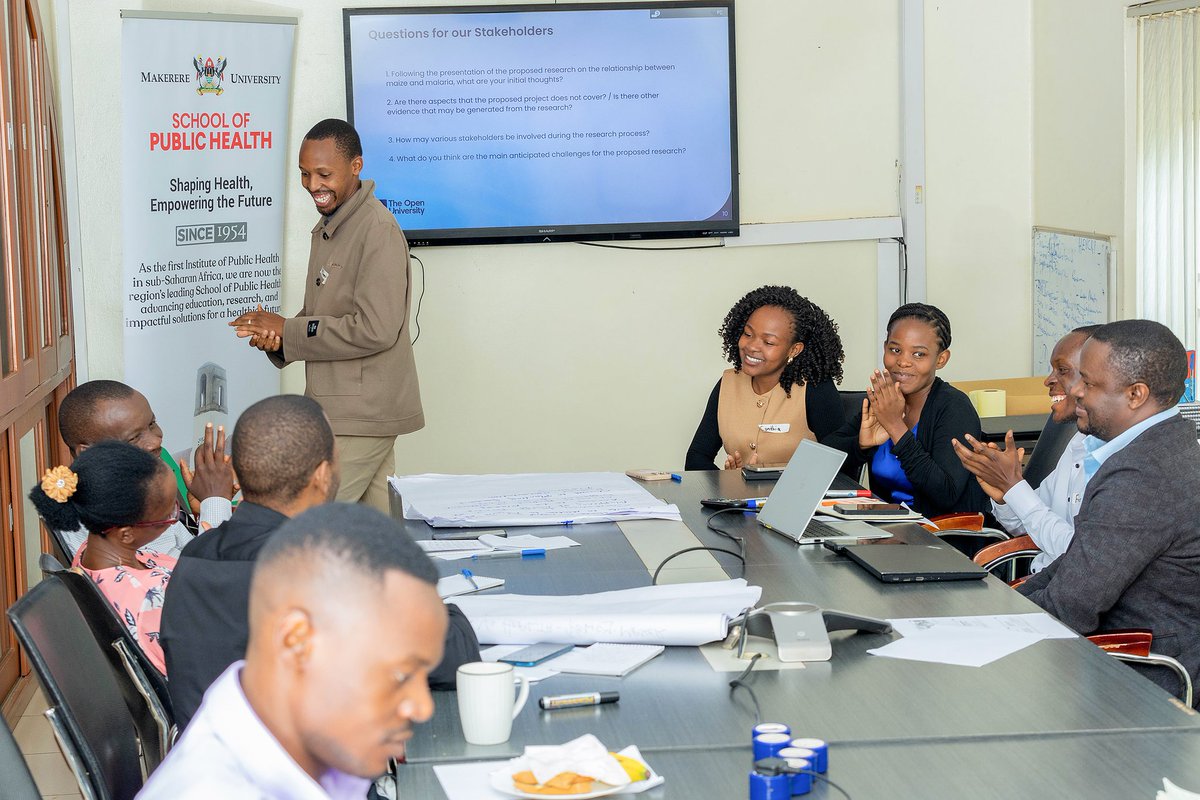
A joint study by @Makerere University School of Public Health and @OpenUniversity is examining whether maize cultivation near homes may be contributing to malaria risk in Uganda, as growing evidence links livelihoods and everyday economic activities to disease transmission. The research was advanced during a stakeholder workshop held on April 15 in Kololo, bringing together researchers, policymakers, and practitioners to explore how agricultural practices are shaping malaria patterns in both rural and urban settings.
Building on earlier findings that farming, livestock keeping, and night-time work influence exposure, the study points to maize cultivation as a potential driver of increased mosquito density around households. With malaria remaining a leading cause of illness and death in Uganda despite sustained control efforts, the research signals a shift toward understanding how livelihoods, environment, and daily activities intersect to sustain transmission, and what this means for designing more effective, context-specific interventions.
Read the full story: https://t.co/S4Pjl53Uuc
Using an occupational health lens, it shows that farmers are exposed not just by where they live but by what they do. Farming, night work and other livelihood activities extend exposure to mosquito bites, often beyond the protection of conventional interventions like bed nets.
Research probes link between maize farming and malaria risk in Uganda
A joint study by @Makerere University School of Public Health and @OpenUniversity is examining whether maize cultivation near homes may be contributing to malaria risk in Uganda, as growing evidence links livelihoods and everyday economic activities to disease transmission. The research was advanced during a stakeholder workshop held on April 15 in Kololo, bringing together researchers, policymakers, and practitioners to explore how agricultural practices are shaping malaria patterns in both rural and urban settings.
Building on earlier findings that farming, livestock keeping, and night-time work influence exposure, the study points to maize cultivation as a potential driver of increased mosquito density around households. With malaria remaining a leading cause of illness and death in Uganda despite sustained control efforts, the research signals a shift toward understanding how livelihoods, environment, and daily activities intersect to sustain transmission, and what this means for designing more effective, context-specific interventions.
Read the full story: https://t.co/S4Pjl53Uuc
For physical applications, forms can be collected and submitted @MakSPH (Administrator’s Office, Ground Floor, Room 3) or sent via email as indicated on the website: https://t.co/jOfS9l1it4
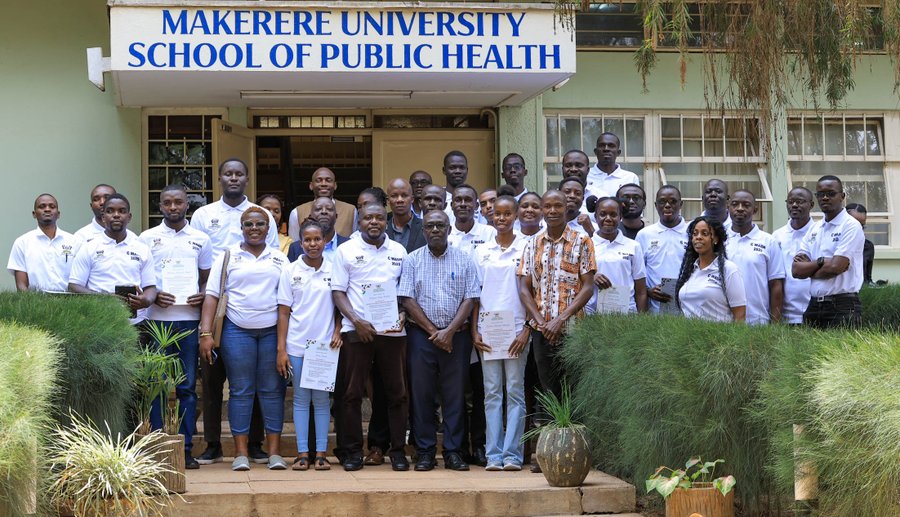
📷: Graduands of the WASH short course 2025
Home, again! Mission complete. I hope we glorified God, humanity, our families and our terrific teams a @NASA and @csa_asc. Time to share the good news!
@Krashlod@nemaug Enforcement gaps don't negate our ethical duty. Dismissing laws as a "joke" only fuels a cycle of disorder that erodes national discipline. Laws set a standard of integrity we must uphold regardless of oversight. Progress starts with individual accountability, not policing.
Article 39 of the Constitution-every Ugandan has a right to a clean environment.
National Environment Act (2019)-littering from a vehicle is a crime punishable by a fine of up to UGX 2m or 1 yr in prison. @nemaug requires vehicles to carry a trash bin to stop roadside dumping.
@DenisDukeUG@PoliceUg Rubbish is not police business. Let's look at the fact that he was over taking. Meaning he was speeding. Seguku-Bunamwaya is 3 kms.
And you were able to keep up with him watching and counting the number of times he threw rubbish. That implies you too were speeding after him
@Krashlod@DenisDukeUG@PoliceUg Article 39 of the Constitution-every Ugandan has a right to a clean environment.
National Environment Act (2019)-littering from a vehicle is a crime punishable by a fine of up to UGX 2m or 1 yr in prison. NEMA requires all vehicles to carry a trash bin to stop roadside dumping.
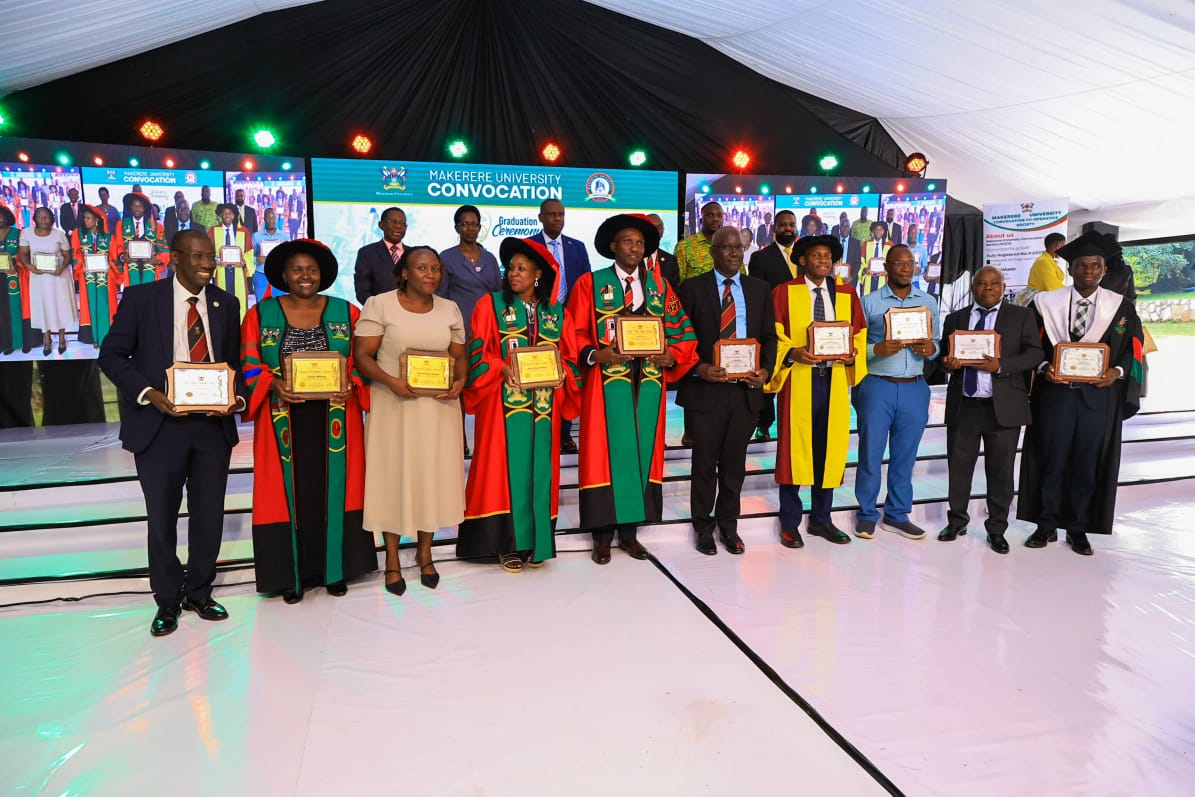
Congratulations🎉 to our Partnership Lead, Assoc. Prof. @DavidMusoke14, on receiving the 2026 Vice-Chancellor’s Research Excellence Award at @Makerere!
As a Senior Career Researcher, his 25 publications in 2025 advance environmental health, community systems & disease prevention
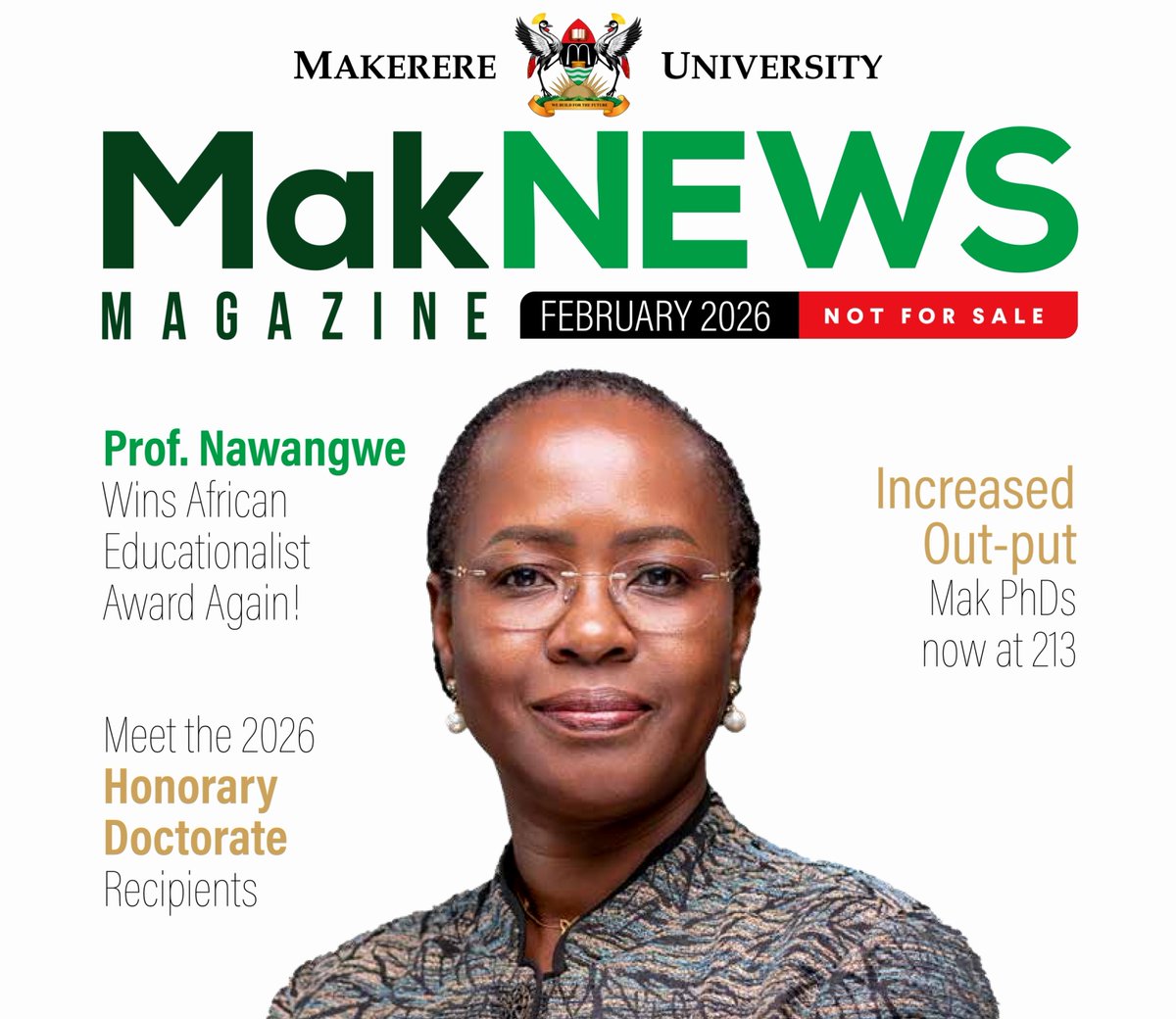
The February 2026 edition of Mak News Magazine celebrates Makerere University's enduring legacy of excellence, innovation, and impact!
This Edition highlights how @Makerere tackles global challenges through groundbreaking work—like the Healthy Soy Initiative fighting child malnutrition amid climate change, IoT-powered agriculture by Team Green Minds, and women-empowering fish processing tech.
Health advances shine too: the new Early Intervention Psychiatry Services Clinic @MakerereHosp strengthens mental health support, while the hospital evolves into a true centre of excellence.
The spotlight? Our historic 76th Graduation Ceremony (24–27 Feb)! Over 9,200 graduands—including 213 PhDs—crossed the stage. Highlights include best in Humanities and Best Overall students Ms. Sarah Aloyo and Ms. Dorothy Nakato (CGPA 4.93) from @OfficialMUBS, Esther Ziribaggwa as overall best Science student (CGPA 4.77) @MakCAES, and inspiring addresses urging ethical service, accountability, purpose-driven knowledge, and entrepreneurship.
From improved global rankings to strategic partnerships (Mastercard Foundation, new US Studies Centre), Makerere continues shaping leaders who serve humanity.
Read the full issue and join the celebration of knowledge that transforms lives!
https://t.co/gW3MfiqlUg
#MakNews #Mak76thGrad #InnovationForImpact #AcademicExcellence