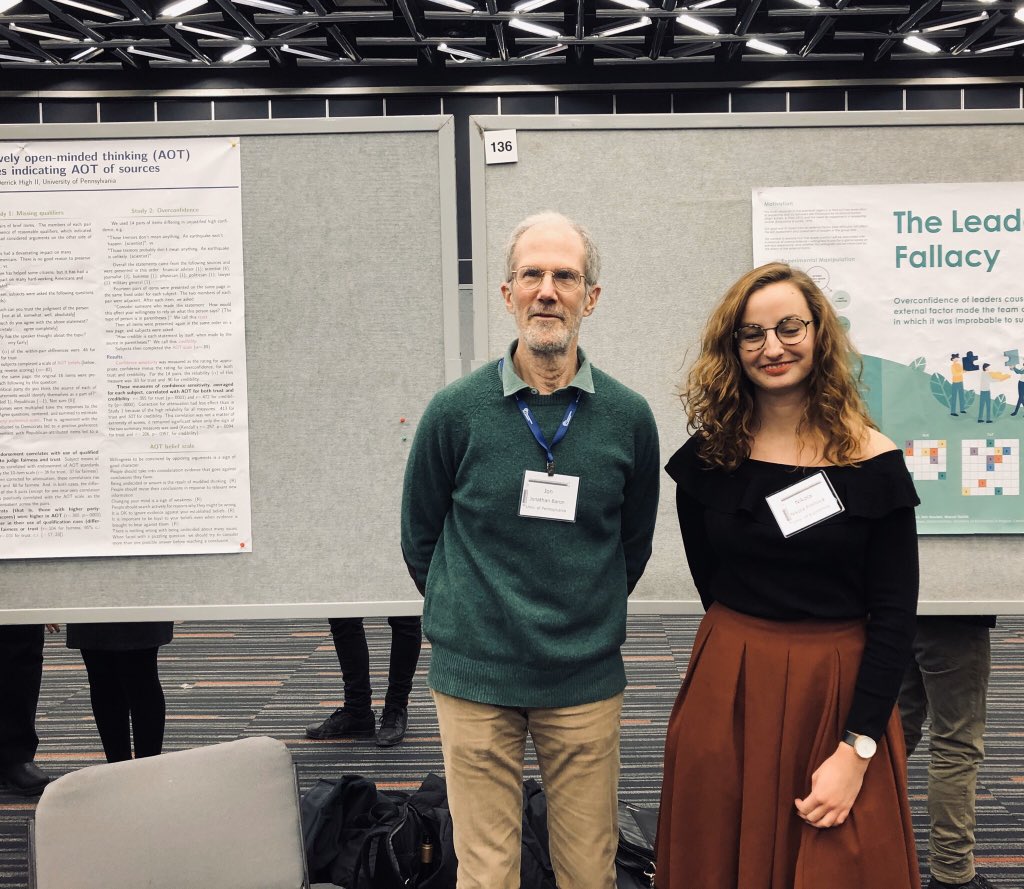
Our experiment "The leadership fallacy: How misattribution of leadership leads to a blaming game" has been published in the Journal of Economic Psychology today! 🚀
1/ New research alert! 🚨Our study (led by @NFrollova; me and @MarcelTkacik helping) explores a common organizational error: attributing too much influence to leaders on teams' task outcomes. Spoiler alert: luck plays a bigger role than we think! 🍀 @fphvse@vse_horizons
The finding that young women are becoming a lot more liberal while young men are becoming a lot more conservative DOES NOT REPLICATE in the Cooperative Election Study.
In fact, the two lines have run in almost perfect parallel for the last 15 years.
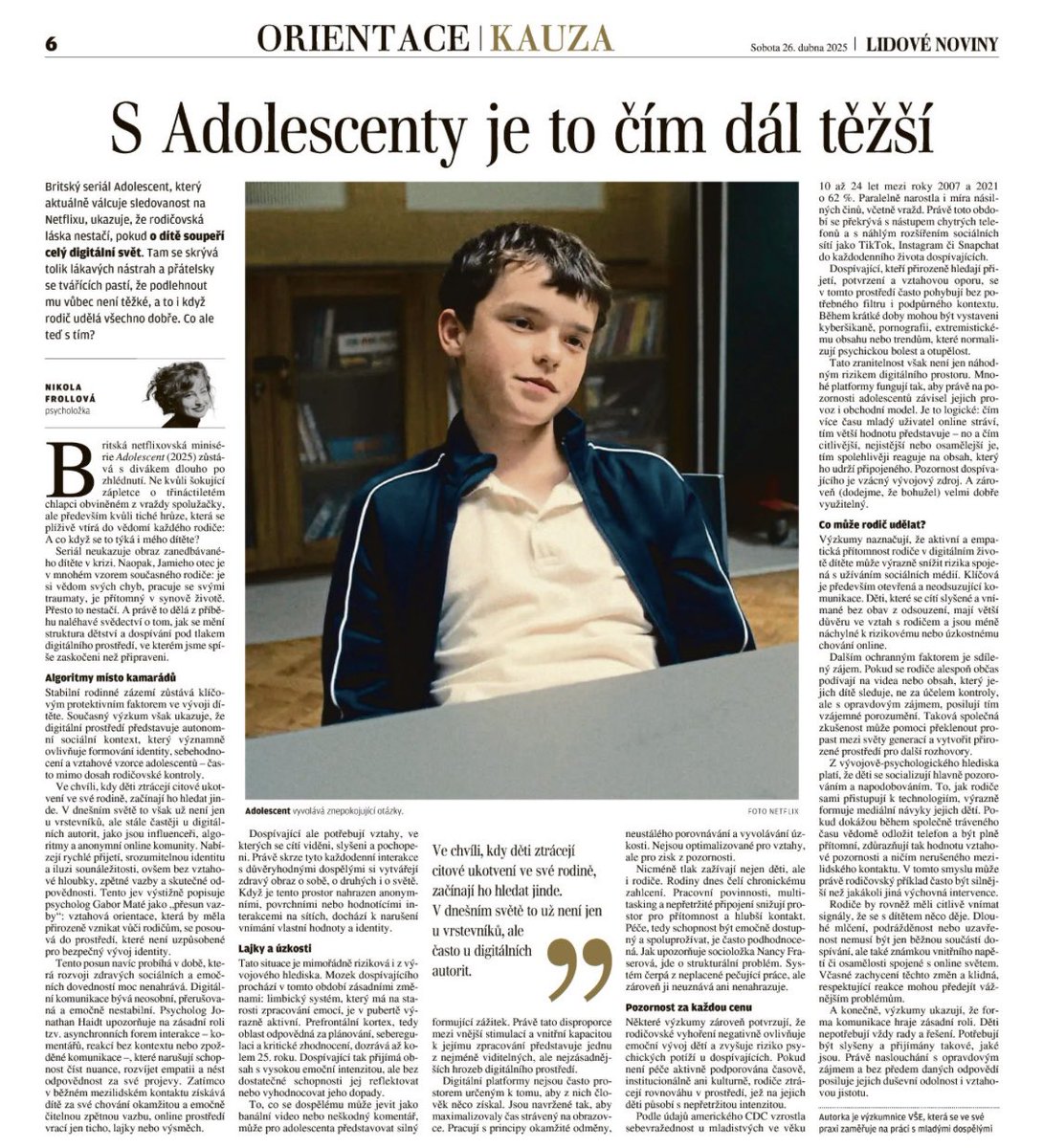
@MarekHudik@JakubZofcak@marek_soska Psychické zdraví studentů (všech) se obecně zhoršuje dlouhodobě, nejenom kvůli covidu. Organizace a univerzity v zahraničí tak nově zavádějí policy “mental health over the performance”. Když student vyhledá pomoc, je často už v krizi. Takže se musíme více zaměřit na prevenci.
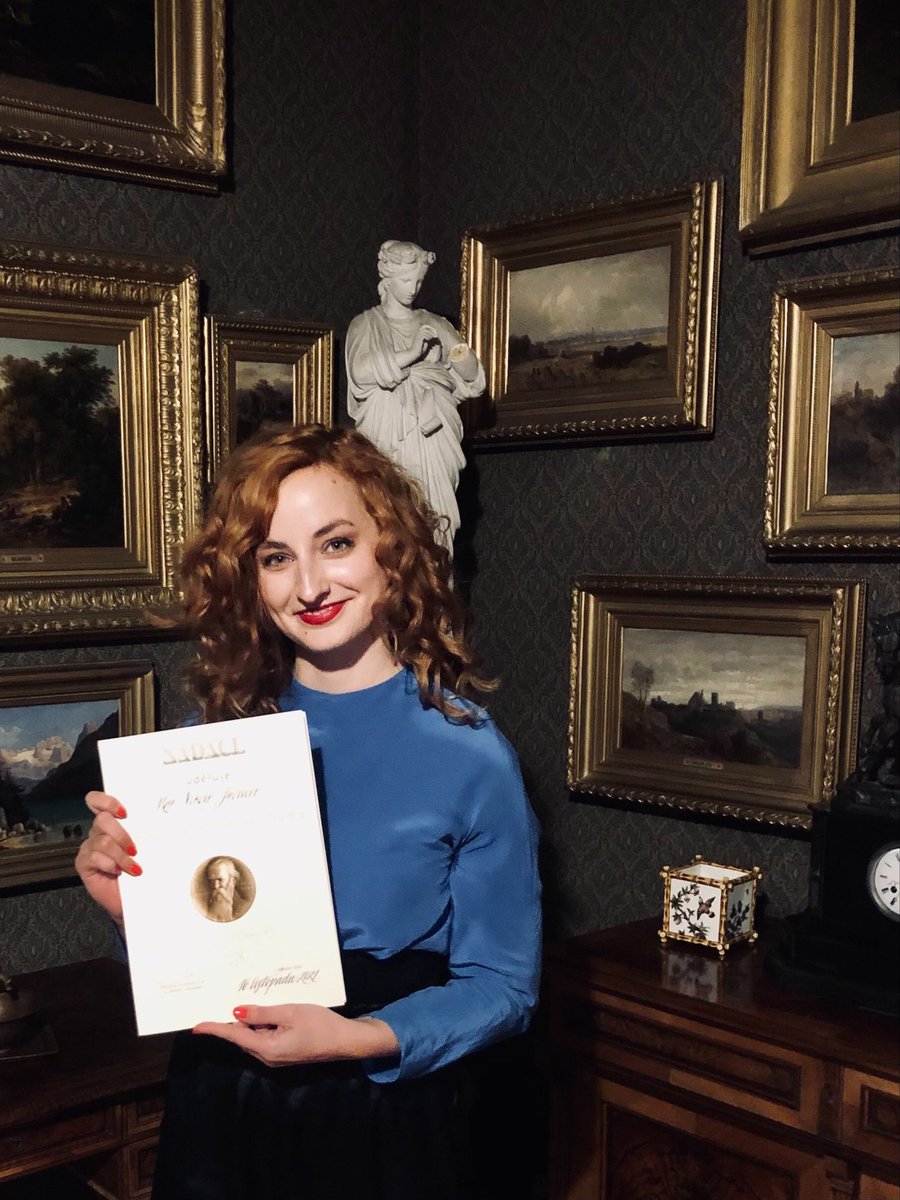
Our lab member, @NFrollova, just received not only @vsecz 's Rector's Prize, but also Josef Hlavka Award for her qualitative paper about participants' perceptions of a dishonesty experiment - https://t.co/JUvt9OzvDJ (with @mVranka and @PokusyNaLidech). Congratulations!
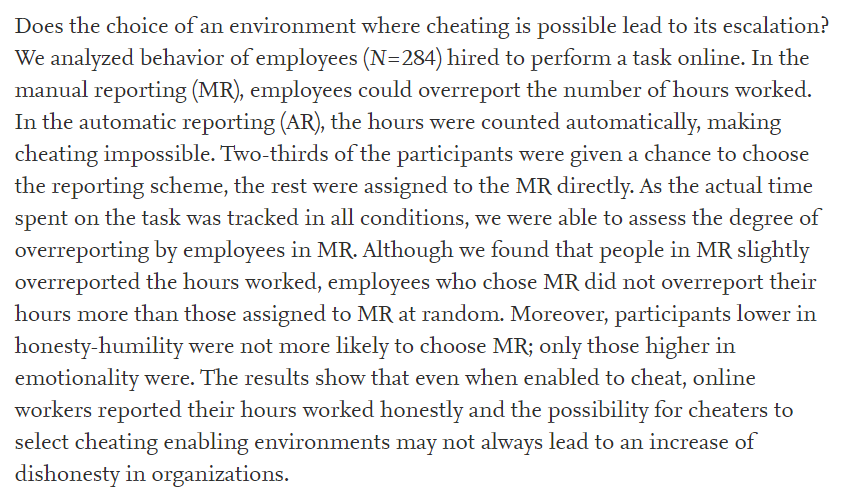
What happens when people have an option to self-select into environments that make cheating possible? We try to find out in a series of papers published this year with @bahniks, @PokusyNaLidech@MarekHudik@NFrollova and other colleagues:
Here's a question that always puzzled me.
We don't want to judge others by their *circumstances* (parents, gender, race). But do we hold them responsible for their *choices* even when these choices are strongly shaped by circumstances?
Yes, we do, 100%, my new WP suggests.
🧵
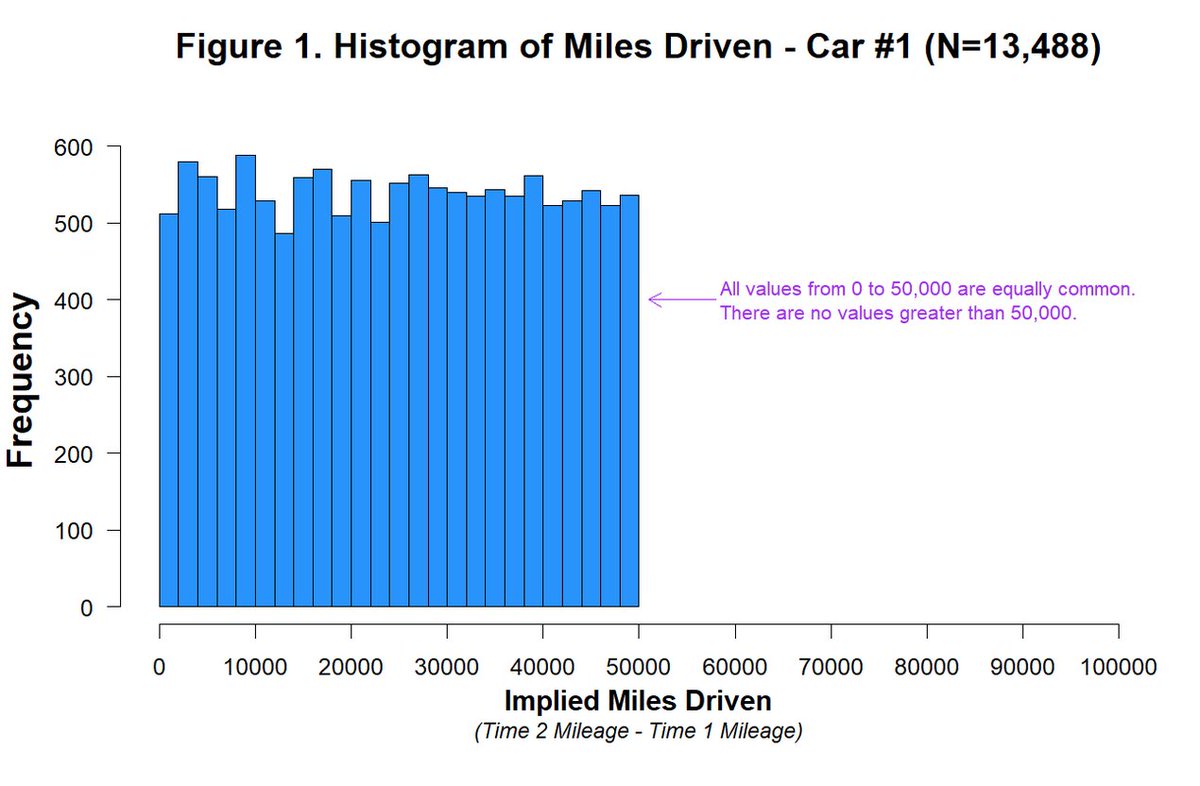
I used to teach this finding to my MBA students. It has more than 400 citations on Google Scholar. It's about dishonesty. Turns out it's fraudulent. "Evidence of Fraud in an Influential Field Experiment About Dishonesty" https://t.co/YlA2KmPvsP
Our new paper reporting a field experiment on selection effects on cheating with @mVranka, @MarekHudik, @NFrollova, M. Sýkorová, and @PokusyNaLidech is out in Journal of Behavioral and Experimental Economics: https://t.co/IZorPpFuW9
We can never be sure what is crossing participants' minds when making a decision in an experiment…
Our new paper about perception of dishonesty experiment with @mVranka & @PokusyNaLidech in Journal of Economic Methodology: https://t.co/b5b0LQrNI8
Our new paper "Selection Effects on Dishonest Behavior" is now published in JDM. I'm honored to have the opportunity to work with my brilliant colleagues @PokusyNaLidech@bahniks@mVranka
Excellent new perceptual ambiguity, like #thedress and #yannivslaurel. The brain handles degraded input by fitting it into a globally coherent interpretation, partly nudgeable by context, with top-down reinterpretation of its sensory components.
LIVE NOW: History is about to be made. Watch as @NASA_Astronauts#LaunchAmerica to the @Space_Station from American soil for the first time in nine years: https://t.co/U1COQzFy4v https://t.co/U1COQzFy4v
when given an opportunity, cashiers cheated their customers in 21% of grocery stores in #Prague and cheating jumped to almost 40% in the central part of the city - a field study with @NFrollova@mapomir@Julianne_SF and @petr_houdek published in JBEE https://t.co/HtQe51AJTp