Apa itu Gradient
@Gradient_HQ adalah sebuah laboratorium riset AI yang fokus membangun open intelligence kecerdasan buatan yang terbuka dan bisa dikembangkan bersama.
Untuk mewujudkannya, Gradient membangun infrastruktur AI yang terdesentralisasi sepenuhnya, yang mereka sebut Open Intelligence Stack (OIS).
Sederhananya:
AI tidak lagi berjalan di satu server atau satu perusahaan, tapi di jaringan terbuka.
Masalah Besar yang Ingin Dijawab Gradient
Gradient bekerja di persimpangan Blockchain dan AI, dengan pertanyaan yang sangat menantang:
Bisakah kita melatih dan menjalankan AI canggih (LLM) lewat internet publik, tanpa server terpusat?
Dengan kata lain:
Apakah mungkin membangun alternatif OpenAI, tapi:
tanpa dikontrol satu perusahaan
berjalan di jaringan yang terbuka dan otonom
bisa diakses siapa saja
Gradient percaya ini mungkin, tapi perlu pendekatan baru.
Apa yang Dibangun Gradient Saat Ini
Untuk menjawab tantangan tersebut, Gradient mengembangkan Open Intelligence Stack (OIS), yang mencakup:
• Parallax
Sistem agar AI bisa dijalankan di banyak komputer secara bersamaan, bukan satu server saja.
• Echo
Cara melatih AI secara terdistribusi, sehingga proses training bisa dibagi ke banyak mesin.
• Gradient Cloud
Solusi agar teknologi ini bisa digunakan oleh developer dan perusahaan di dunia nyata.
Semua ini adalah fondasi agar AI bisa diskalakan dan tetap terbuka.
Kenapa Pendekatan Ini Penting?
Jika AI hanya dikembangkan secara terpusat:
akses terbatas
inovasi terkunci
risiko monopoli
Dengan pendekatan Gradient:
lebih banyak orang bisa ikut membangun
AI lebih transparan
kecerdasan bisa berkembang bersama
Visinya adalah masa depan di mana kecerdasan bisa dirakit, dikembangkan, dan ditingkatkan oleh siapa pun, di mana pun.
Singkatnya
Gradient bukan sekadar project AI.
Mereka sedang membangun fondasi agar AI di masa depan:
terbuka
bisa dikembangkan bersama
tidak dikontrol satu pihak
Seperti internet, tapi untuk kecerdasan buatan.
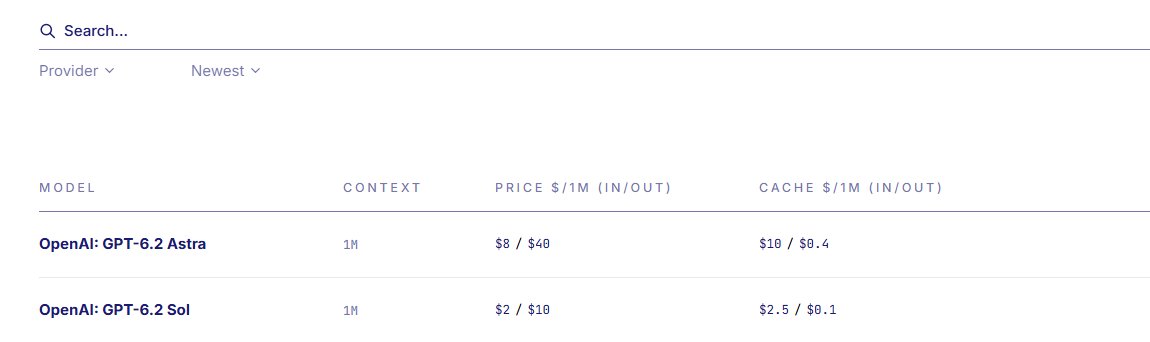
OpenAI GPT-6.2 Astra and GPT-6.2 Sol are live now on @commonstack_ai!
OpenAI’s latest generation of frontier reasoning and intelligence models is built to handle everything from deep, multi-step architectural problem solving to fast, high-throughput production workflows. Combining a 1M context window with advanced agentic execution and context caching, the GPT-6.2 lineup brings precision and scalable performance for executing tasks
Astra: https://t.co/0auWJ45Y1A
Sol: https://t.co/49sq81ewPM
Qwen 3.8 Max, 3.8 Flash, 3.8 2.4T A96B & 3.8 27B are all on @commonstack_ai
Alibaba’s powerhouse Qwen lineup designed for elite multilingual reasoning, massive multi-step execution, and ultra-fast multimodal synthesis. Delivering breakthrough open-weights intelligence at unprecedented efficiency, these models combine deep structural comprehension, advanced coding capabilities, and robust agent orchestration straight to your workflow.
Try them all here: https://t.co/6K2nRKdtYu
OpenAI GPT-6.1 Terra is live on @commonstack_ai
OpenAI’s cutting-edge intelligence powerhouse designed for advanced reasoning, complex problem solving, and seamless agentic execution. Delivering state-of-the-art capability at peak efficiency, it brings robust analytical depth, superior coding synthesis, and dependable reliability straight to your workflow.
GPT-6.1 Terra: https://t.co/o12eFYZTab
ByteDance Doubao-Seed-Evolving is live now on @commonstack_ai
ByteDance’s dynamic, constantly adapting model built for expansive contextual understanding, fluid synthesis, and high-throughput execution. Blending cutting-edge architecture with incredible cost-efficiency, it empowers developers to build smarter, faster, and more scalable applications across diverse workloads.
Try here: https://t.co/xMnmze5q2r
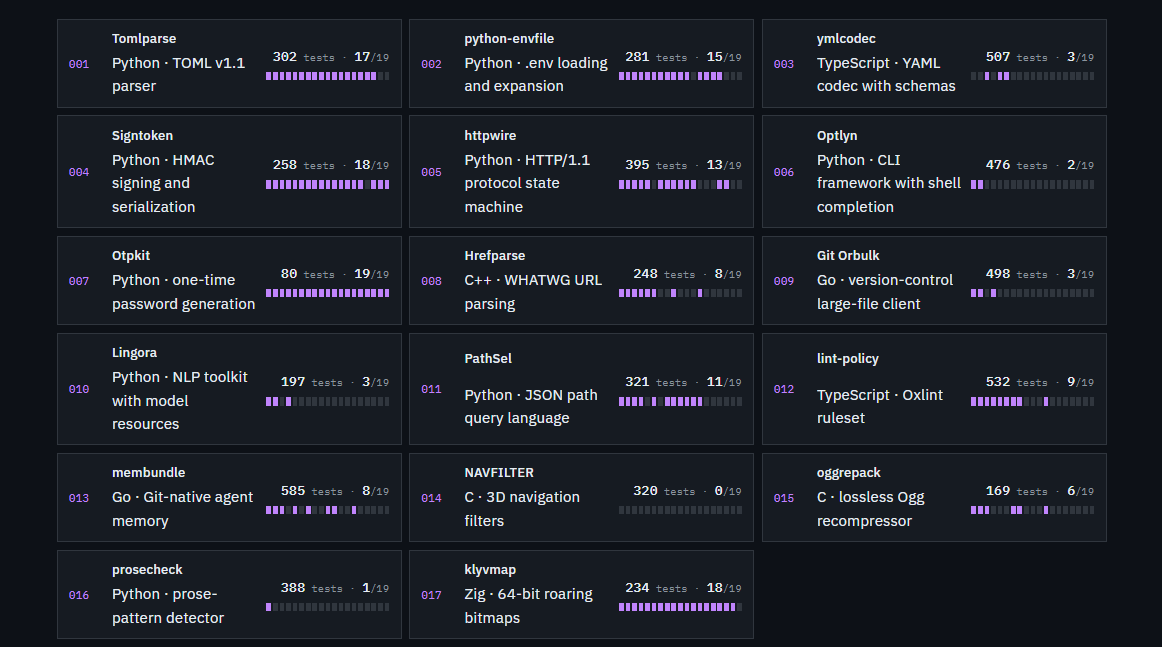
on Zero2Repo no agents were able to pass Zero2Repo’s NAVFILTER task:
- GLM-5.3 on OpenCode used the most tokens at 41.63 million.
- Claude Opus 5.5 on OpenCode spent the most money at $37.04, using 35.84 million tokens.
- Gemini 4 Argon on OpenCode exceeded the two-hour time limit after using 3.94 million tokens and spending $6.32.
None of the 19 configurations fully solved the task. Claude Sonnet 5.5 on OpenCode came closest, passing 316 of 320 hidden tests (98.75%).
@Gradient_HQ has many more test results here: https://t.co/cKnk6l1ycN
DeepSeek V4.1 Flash (1017) solved 8/17 Zero2Repo tasks with dsh, at $3.18 in reported API spend across the full suite.
OpenCode scored 7/17 and Claude Code, 5/17.
Costs are reported API spend across all 17 tasks.
Check out more findings: https://t.co/IUHMCwXi32
not cost efficient enough? could also build with Haiku 5.5 on @commonstack_ai
Anthropic's most capable small model thats fast and significantly improved from Haiku 4.5 built for high volume work.
build here: https://t.co/TEAye7KlMg
SWE-bench Verified has become saturated. Seven models scored 95–97% (Vals AI, Sep 2026). But how well can coding agents build complete software projects from scratch?
Zero2Repo is a Gradient Data research initiative building hard, verifiable tasks and training data for whole-project development.
Agents start with a full spec, an interface contract and an empty workspace. They build the entire repo without reference code, then submit it for hidden deterministic testing. Every test must pass for a task to count. No LLM judge is used.
The first release includes 17 tasks derived from real open-source projects across Python, TypeScript, Go, C, C++ and Zig.
Across 18 model–harness configurations, scores range from 1/17 to 15/17. The top 10 span 47 percentage points, compared with 5 points on SWE-bench Verified.
No configuration has completed all 17 tasks. This matters for self-iteration: small unresolved issues can persist and compound as agents continue developing a project. Reliable self-evolution remains an open research challenge.
We’re expanding the task collection and looking for contributors to suggest seed repositories, develop tasks and review requirements and hidden tests.
More cases are coming.
👉 https://t.co/pPP263vBYK
👉 https://t.co/ZzsAvdtlBJ
We are excited to showcase Gradient Data!
After building Echo and Logits, @Gradient_HQ expanding into verifiable environments, real-world trajectories, and deterministic evaluation systems for more capable and reliable agents.
Zero2Repo is the latest example:
Coding agents must turn a product spec + interface contract into a complete working repository from an empty workspace.
Scoring is binary via hidden deterministic tests, no LLM judges. Current top results reach 15/17 across 17 tasks in multiple languages.
Over the past year, we’ve worked on Echo and Logits to make AI post-training more efficient and accessible.
Gradient Data now extends that work with verifiable environments, real-world trajectories and evaluation systems for more capable and reliable agents.
https://t.co/5UGZvqc2QR
Claude Sonnet 5.5 is live now on @commonstack_ai
Anthropic's new faster, lower-cost model designed for well-scoped everyday tasks, bug fixes, and polished documents. Generating output 30%+ faster while requiring fewer tokens per task, it brings a sharp eye for design, advanced terminal coding agents, and robust cyber safeguards to your agentic workflows.
Try now: https://t.co/qjtjfsJFUA
🧩@Gradient_HQ Puzzle Mastermind!
Play from now til Oct 10th 1AM EDT!
🏆 Top 10 Participants will receive Quiz Mastermind on Discord!
Rules:
- username must match DC username
- play as many times & anytime you want during event duration
./ puzzle here: https://t.co/6E79JANGIa
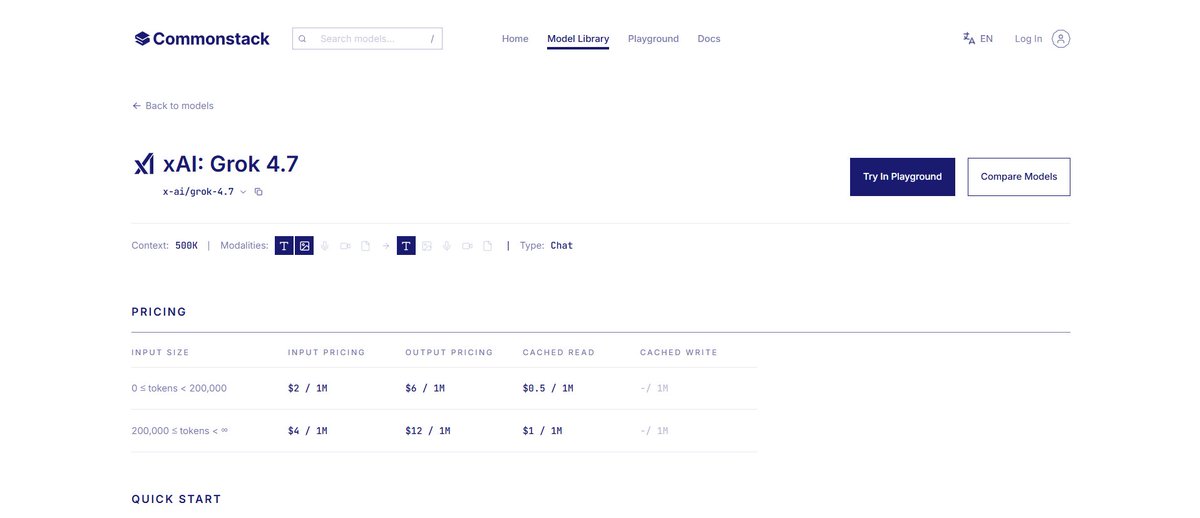
Grok 4.7 is live now on @commonstack_ai
xAI's flagship model for extended software engineering and multi-hour agent execution. Built with an expanded 500,000-token context window, very configurable reasoning levels, and robust safety architecture, it delivers frontier performance across deep coding, legal analysis, and terminal-based tasks.
Try now: https://t.co/OMEnySAP09
Echo-2
Accepted to NeurIPS 2026 Main Track.
Scaling reinforcement learning isn’t only a modeling problem. It’s an infrastructure problem too.
Echo-2 explores distributed rollout generation for more cost-efficient LLM post-training, while preserving training quality.
More capable models require more routing decisions, and better ways to benchmark how routers execute.
That’s what TwinRouterBench is built for.
Congrats to the team on the NeurIPS 2026 acceptance.
my 2 year anniversary at gradient
greatness for the 3rd one. let’s win at the frontier of data, rl and inference for AI.
./ grateful to be along for the ride @Gradient_HQ