@IAMERICAbooted For some reason Entra mail-enabled security groups are puzzling for folks used to EXO distribution groups. M365 groups is another league.
🚨Michael Burry just said Elon Musk and Nvidia's deal is built on fake numbers.
Burry published a detailed breakdown calling the entire structure "Fugazi", his word for fake.
He is alleging that billions of dollars in Nvidia chips are being hidden off balance sheets, and that American retirees are unknowingly funding the whole thing.
Nvidia, the world's largest AI chip company sold $5.4 billion worth of its most advanced GPUs, the GB200, to a company called Valor.
Valor is not a real operating business. It is a special purpose vehicle, a shell company created specifically to hold these chips and nothing else. Nvidia also invested $1.9 billion of its own money directly into Valor on top of the sale.
Those 100,000+ chips are now physically inside xAI's data center. xAI is Elon Musk's artificial intelligence company, the one that builds Grok. xAI is using every single one of those chips right now to run its AI models.
But here is what Burry is flagging.
Neither Nvidia nor xAI owns those chips on paper. Valor, the shell company holds legal title. That means $5.4 billion in GPU assets do not show up on Nvidia's balance sheet as inventory.
They do not show up on xAI's balance sheet as assets. They are legally invisible to both companies.
Nvidia gets to book the $5.4 billion as a completed sale and record it as revenue. xAI gets full use of the chips without owning them. And the risk disappears into a shell company in the middle.
Now here is where American retirees enter the picture.
Valor needed $3.5 billion in debt to fund this structure. Apollo provided it. Apollo is one of the largest asset managers on earth with $1.03 trillion under management and $834 billion specifically in private credit.
Apollo raised the $3.5 billion, packaged it into debt securities, and sold those securities to Athene.
Athene is Apollo's own insurance company. It sells fixed and indexed annuities, retirement savings products, to ordinary Americans.
When a retiree buys an Athene annuity, they believe their money is sitting in safe, stable investments. That money is now inside a structure funding Elon Musk's AI data center.
The numbers inside Athene are most alarming.
Athene holds $74.2 billion in reserves. It has moved $217 billion in assets into a captive insurer based in Bermuda, meaning those assets sit outside normal US insurance regulation and oversight.
Of the entire portfolio, 34.7%, equal to $103 billion, is classified as Level 3 assets.
Level 3 is an accounting classification that means there is no observable market price for these assets. No outside party can independently verify what they are actually worth.
The leverage sitting on top of those unpriced assets is 16 times.
Burry's says:
Every step of this structure is technically legal and publicly disclosed. But the entire thing was deliberately engineered across 8 to 12 steps to move credit risk off balance sheets and away from any market pricing.
- Nvidia books the revenue.
- Apollo collects the fees.
- xAI gets the computing power.
- And retirees sitting at the bottom of a 16x leveraged Bermuda insurance structure, holding $103 billion in assets with no market price carry the risk without knowing it exists.
SHIPPED. Mistral Vibe is now the AI agent for long-horizon productivity and coding, and the home for Work mode, Code mode, the CLI, and a brand new VS Code extension. Let's go... 🧵
@nb4ld +200% pour la solution SMS surtaxé, tellement moins de friction qu’un tunnel de paiement classique. Je pense que même pour des sites qui proposent l’achat unique ça m’aurait fait passer à l’achat.
HISTORIC BREAKTHROUGH: UNPATCHABLE CALIBRATION
We cracked it! Massive thanks to Lewy20041 & @driftguardapp for this historic hardware discovery. We have unlocked ultimate manual & automatic joystick Calibration for any Xbox Contoller 🎮
It is UNPATCHABLE and PERMANENT written directly into the controller's memory forever. It cannot block this.
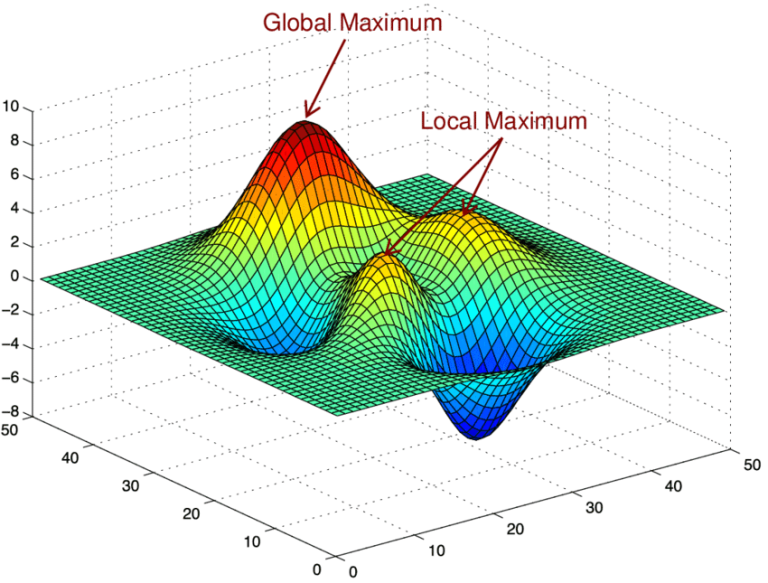
How many technologies are stuck in a local optima?
Big loudspeakers basically peaked in the 1970s.
Obviously we’ve gotten somewhat better, but it’s a lot closer to: “a couple % more accurate” than “the average person immediately notices the +50-year technological progress”
Miniaturization has improved a lot, so has digital signal processing, amplification. But take a high end setup from 50 years ago, sit in the sweet spot at the same volume…it won’t feel radically different.
I’m trying to think of other fields where the underlying principles were so mature that half a century of progress in materials/software/electronics is underwhelming.
Camera Lenses seem like a good candidate. Non-electronic instruments is another; it’s not like cellos have gotten that much better in the last ~300 years.
Had a great reminder from @janbakker_ and @merill on personal Microsoft accounts getting passwordless prompts from attackers
This thread shows you how to change your sign-in alias to be different than your email address
Attackers can't push prompts if they don't know your alias
LE SÉNAT TRAQUE LES DONATEURS DES MÉDIAS INDÉPENDANTS !
Une dérive inquiétante à laquelle OFF refuse de collaborer. Explications.
➡️https://t.co/mUk47PEeQi
Le directeur de l’agence du numérique des forces de sécurité intérieure reconnaît que la gendarmerie avait migré sur Linux « en mode très militaire, un peu brutal », mais aussi que le Libre lui a fait économiser 1/2 milliard d’euros en 20 ans
@nextinpact : https://t.co/Zzmm0pRko9
This website is like a piece of paper that's glued to the wall like you ripped it off of a magazine. There's panning and scrolling. The mental model of the page is vividly clear. Navigation is straightforward and predictable. Menu doesn't move. The 'staticness' of these old sites is undervalued and now kind of forgotten.
Compare this with modern full screen webapps that give you no sense of where you are on the page and molasses-like animated UI that captures native scrolling. These websites have their own abstraction layer to navigate, browse and present things. Almost like motion picture that presents information to you and you don't have much control. Signifiers that visually inform you of interactability are misplaced or entirely missing. You have some illusion of control but it's nowhere as explicit as a static page.
There is an ad-tech-smell and "pop" in modern websites as they take over your visual field in mysterious, unpredictable ways. Doesn't let go of the attention easily. Huge typography and motion effects captivate users kinda like a 30-sec advertisement. Crack cocaine of information consumption.
Combine this with terrible decisions at the OS-level like making scrollbars invisible, practice of UI/UX is deeply unserious today. It's not like we don't have solutions and it's an unknown problem. We have the blueprints. We had it all and we deliberately abandoned it with great carelessness. But in a certain light, the practice of UI/UX today is deeply serious in the ad-tech aspects and bedazzles their userbase with ever-increasing sense of bedazzlement. What purpose does Apple Liquid Glass UI serve otherwise?
Open for discussion and critique.
Ce n’est pas parce que vous estimez n’avoir rien à cacher que vous n’avez rien à protéger.
La vie privée ne consiste pas à dissimuler une faute, mais à préserver sa liberté, sa sécurité et son autonomie.