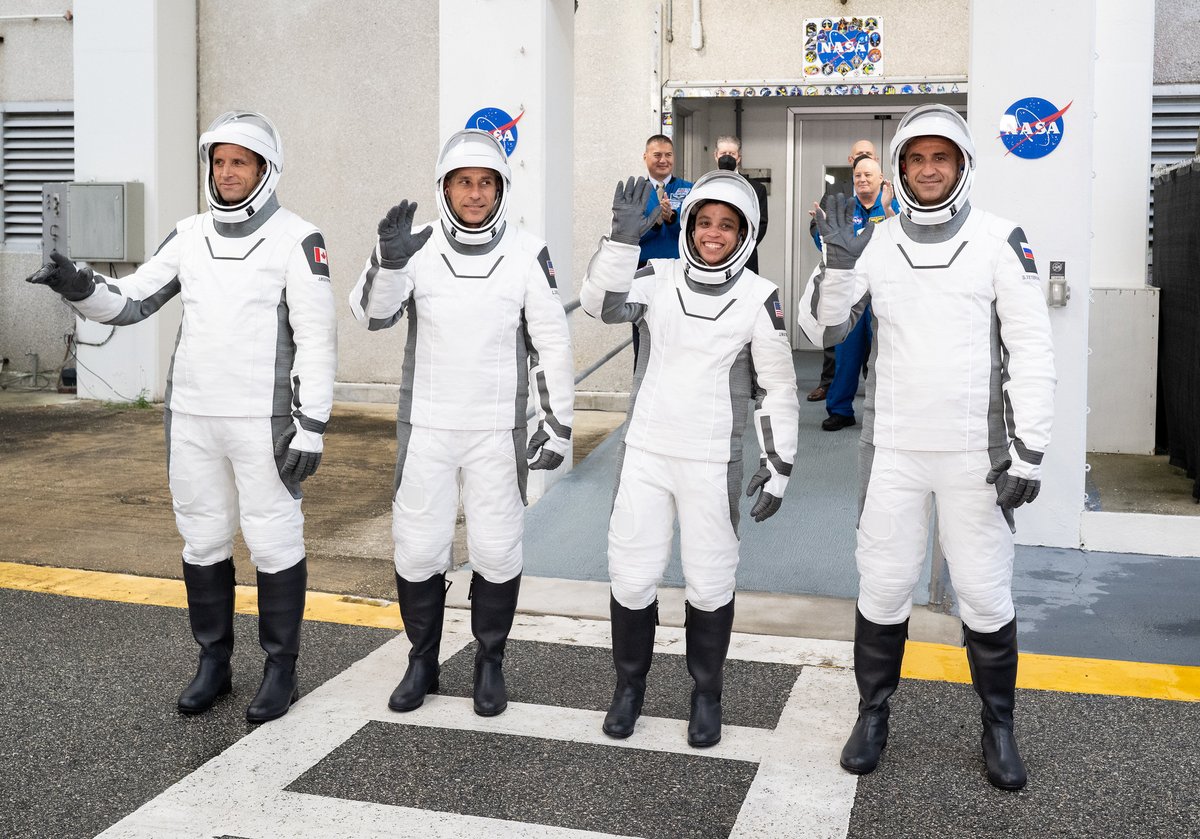
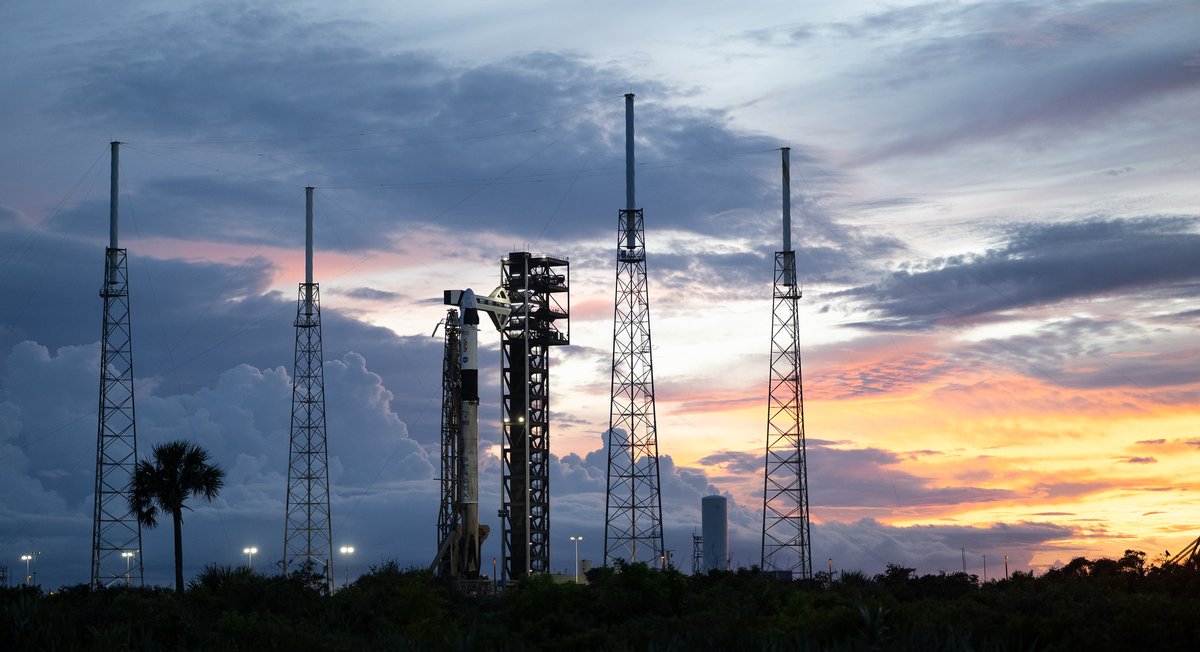
Congratulations, Crew-13!
During several internships at JPL, commander @astro_watkins worked on missions including the near-earth object hunter NEOWISE and Mars rovers Curiosity and Perseverance.
Wishing the entire crew a successful mission.
Destination: @Space_Station📍
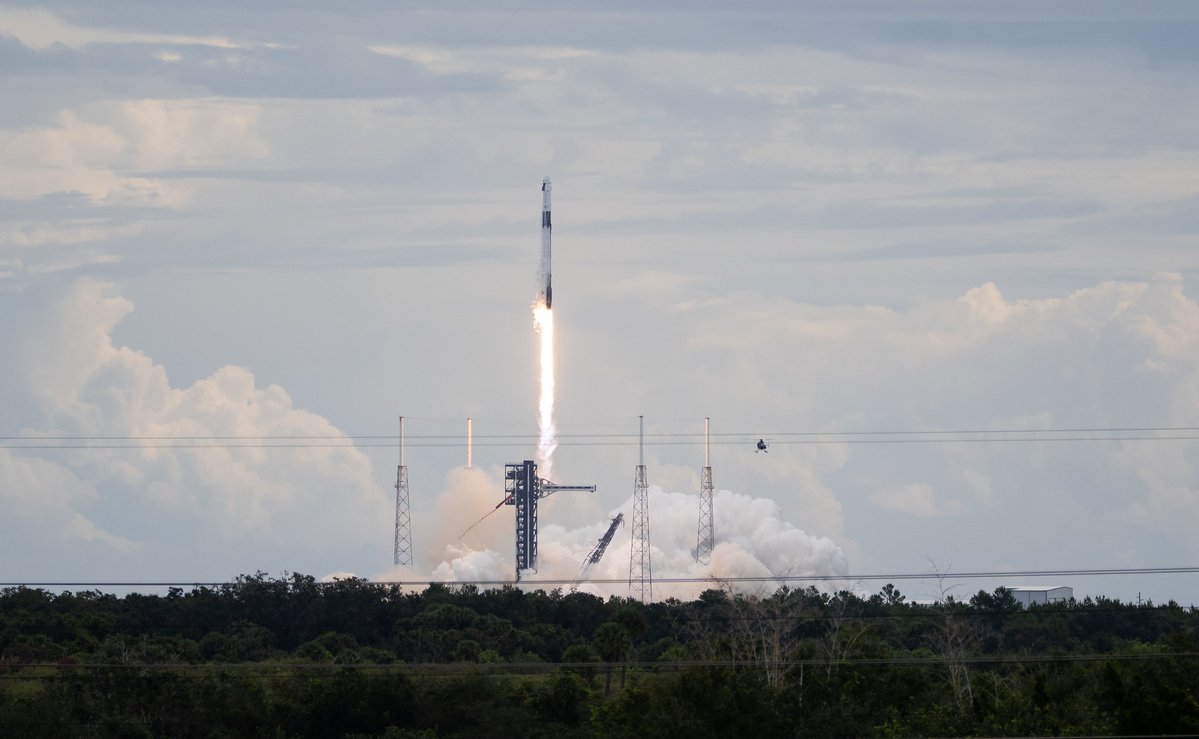
NASA’s SpaceX Crew-13 mission has successfully launched! The Dragon spacecraft carrying the crew is set to dock at about 7pm ET (2300 UTC) tonight, kicking off several months of scientific exploration. Watch with us here! https://t.co/AhTPqwgEKV
This morning, NASA's SpaceX Crew-13 mission successfully launched to the International Space Station, commanded by NASA astronaut and former Caltech postdoc Jessica Watkins.
https://t.co/SplAYpStVV
What’s up for October? 🪐
See Saturn at opposition, catch the Orionid meteor shower, and watch the Moon pass close to the Pleiades, also known as the Seven Sisters.
See how NASA and scientists around the world raced to understand the threat when a potentially hazardous asteroid was discovered. Streaming now, free on NASA+
https://t.co/yyNPbflq4F
How do we respond when we detect an asteroid that could pose a threat to Earth?
Follow the story behind a recent real-world test in our newest documentary, Planetary Defenders: This Is Not an Exercise, now streaming for free on NASA+. https://t.co/SzFMgNwxEW
An image processing method developed at JPL – for Mars – is helping uncover ancient rock art, buildings, and even tattoos on mummified human remains on Earth.
See more (literally): https://t.co/hvDTt0S0FN
“We’re seeing volcanoes around the world that we’ve never really had eyes on like this before.” – Matthew Pritchard, NISAR science team
See how NISAR captured a volcano that hasn’t erupted since about 1550 ⤵️
For the first time in nearly five centuries, Krasheninnikov erupted. 🌋
The @NASA/@ISRO NISAR satellite captured lava filling its caldera and overflowing into a wider crater, showing how NISAR can repeatedly monitor volcanoes and other natural hazards in sharp detail.
With a 5.9-foot telescope, PRIMA will conduct deep surveys of the universe in far-infrared light, helping bridge the gap between existing infrared observatories, such as @NASAWebb, and radio telescopes.
JPL is proud to manage the mission, which is targeted to launch in 2033.
Today, NASA announced PRIMA, a new space telescope that will explore long-standing mysteries around the formation of planets, stars, black holes, and even how water on Earth came to be. https://t.co/am7EPkNYof
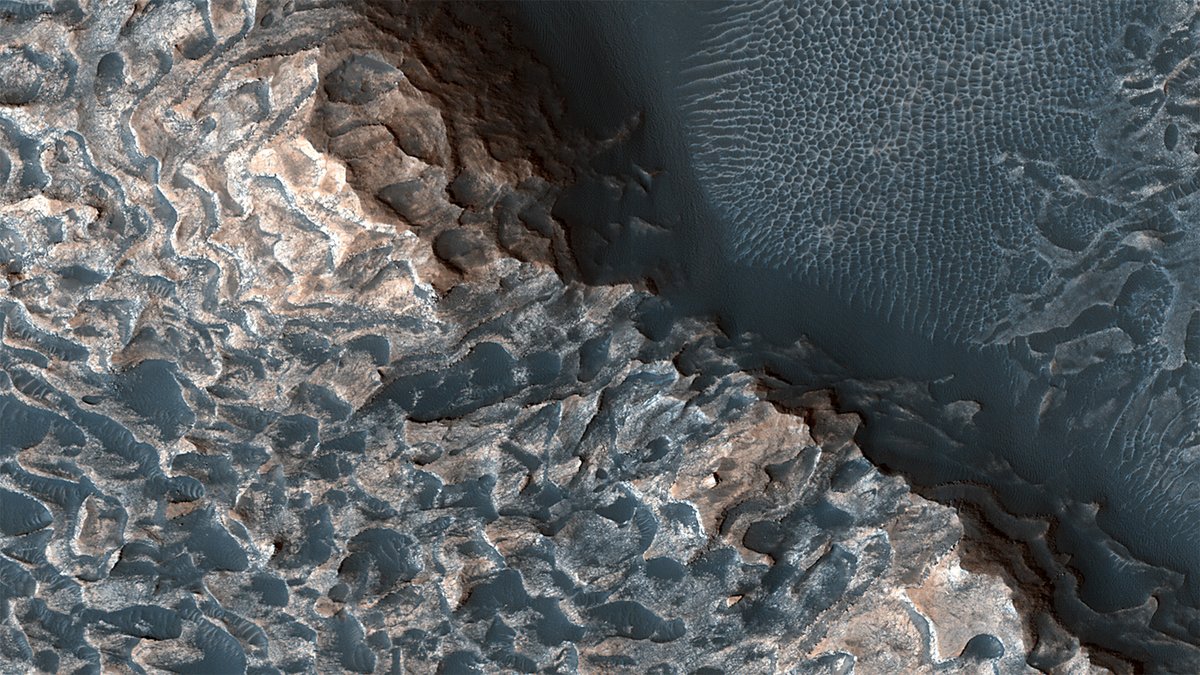
Layered beauty 😍
The Arabia Terra region on Mars has deposits that preserve a record of the planet’s ancient climate. The rhythmic nature of the layers could be due to cyclic processes, such as dust storms, perhaps involving groundwater. 1/2
A tiny amoeba broke complex life’s heat record and could broaden the search for habitable worlds. 🔥
NASA-supported researchers found the first known eukaryote able to reproduce at 145°F (63°C), hotter than scientists thought complex cells could withstand. https://t.co/nzSSRragDR
Sept. 22 marks the fall equinox. That means day and night are nearly equal in length around the world, and in the Northern Hemisphere, fall begins. In the Southern Hemisphere, spring begins on this day.
As of Sept. 22, it's officially fall in the Northern Hemisphere…while spring begins in the Southern Hemisphere. 🍁 🌎 💐
That's the September equinox, when the Sun is directly above Earth's equator and day and night are close to equal in length around the world.
Sometimes following the water can lead to surprising places💧
A new study of data from Perseverance reveals that rocks in Jezero Crater were shaped by a complex sequence of ancient lakes, groundwater systems, and hydrothermal fluids. 1/2
Sunrise, sunset 🏜️
To mark Curiosity’s 5,000th Martian day on the Red Planet, the rover’s team created this postcard. It combines two panoramas, with blue colors representing images taken in the morning, and yellow colors for the images taken at dusk. 1/2