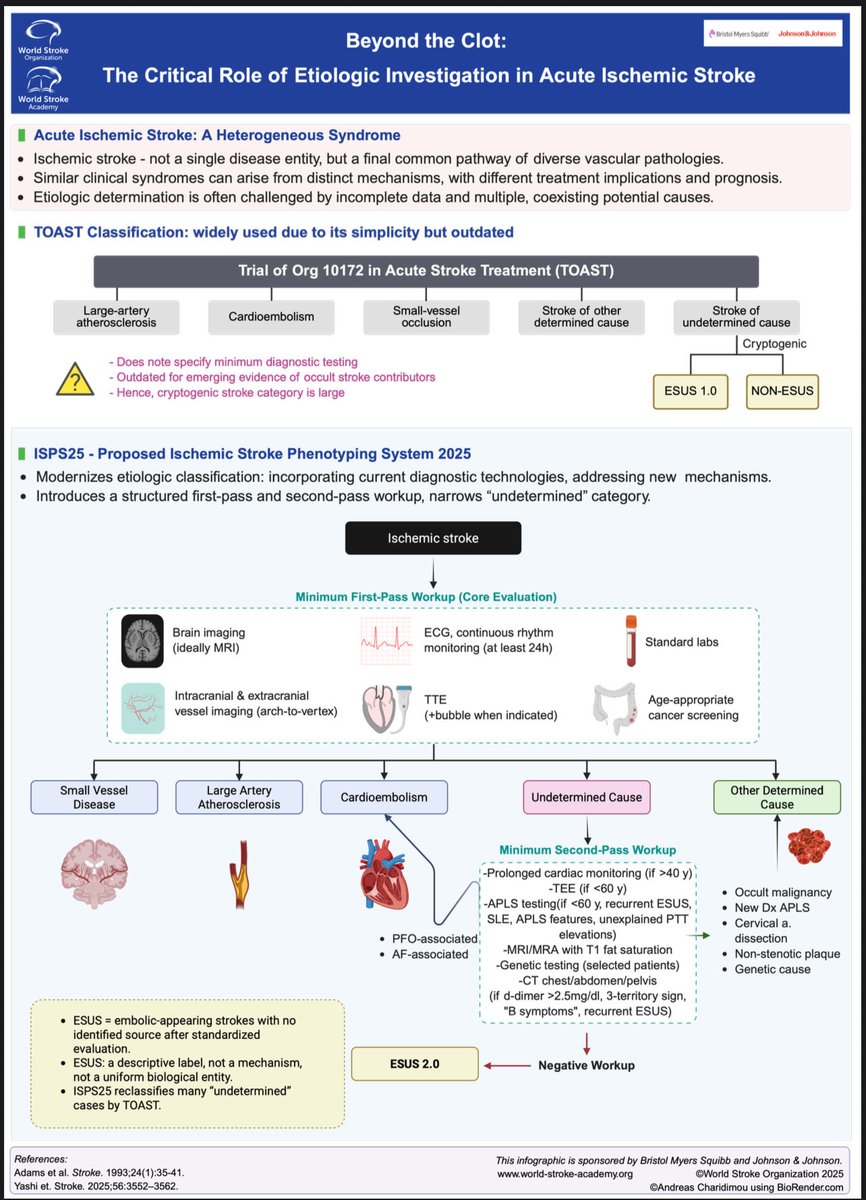
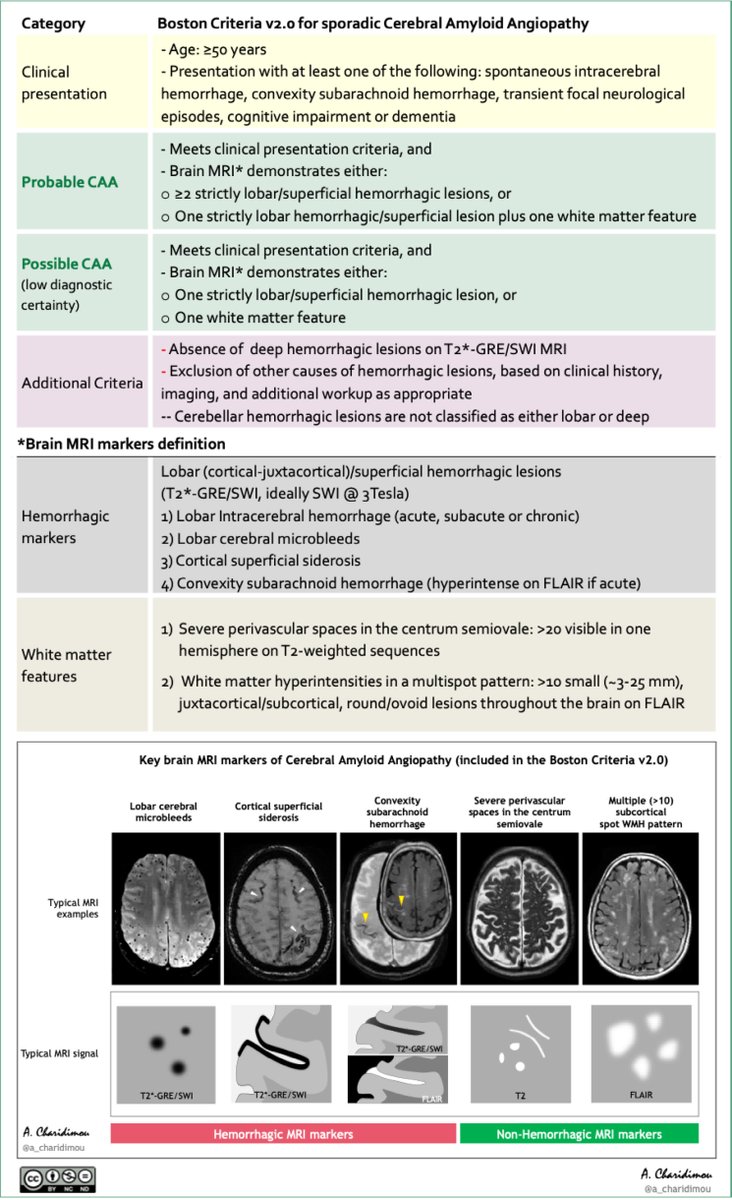
Identification of stroke etiology is key to guiding diagnosis, treatment & prevention. This @WorldStrokeEd infographic highlights the main etiological subtypes of #IschemicStroke🧠
📊https://t.co/oe7Z5A3dbv
#StrokeEducation
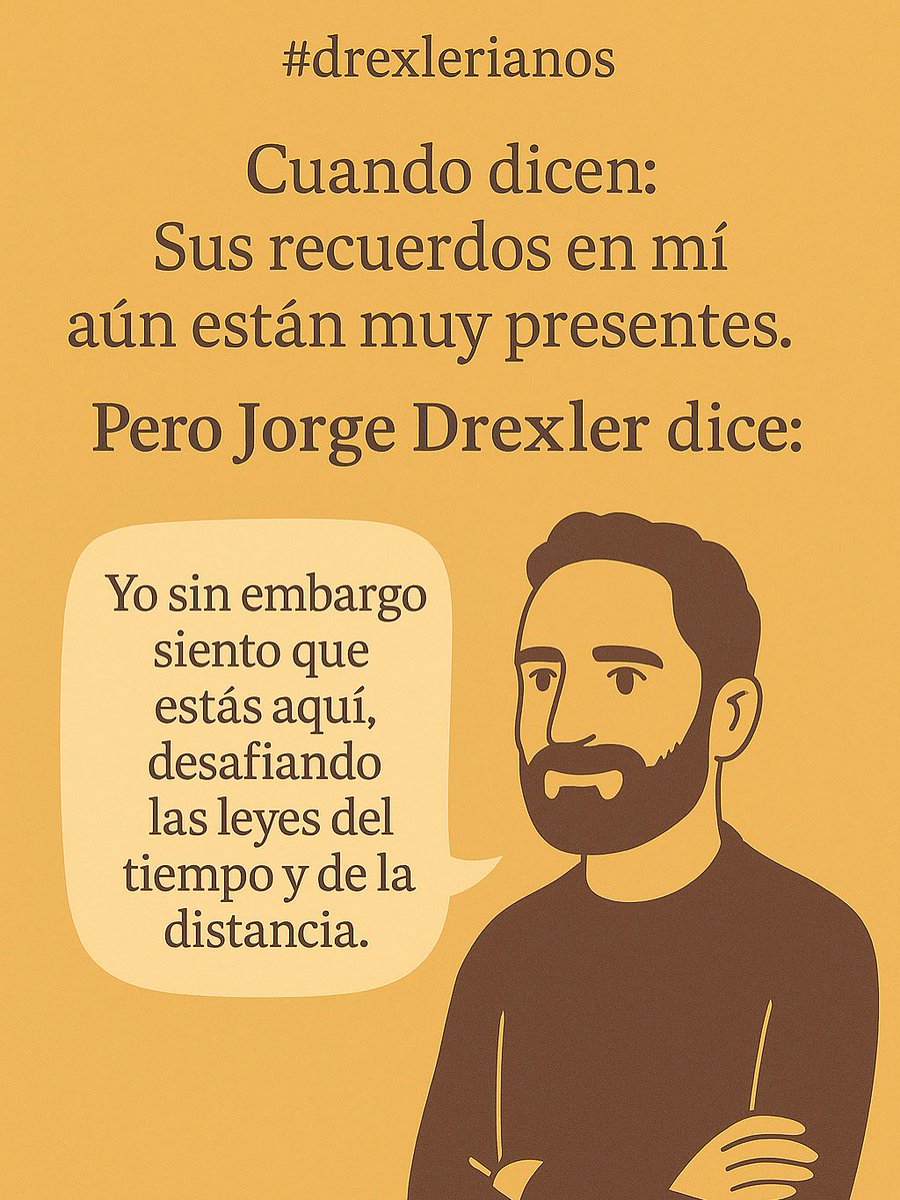
Madre mía que buen artículo sobre la inhibición de pensamientos intrusivos a través de detener la recuperación de recuerdos... os explico cómo!
El hilo que todo neuropsicólogx (y psicólogo clínico) necesitaba sin saberlo!
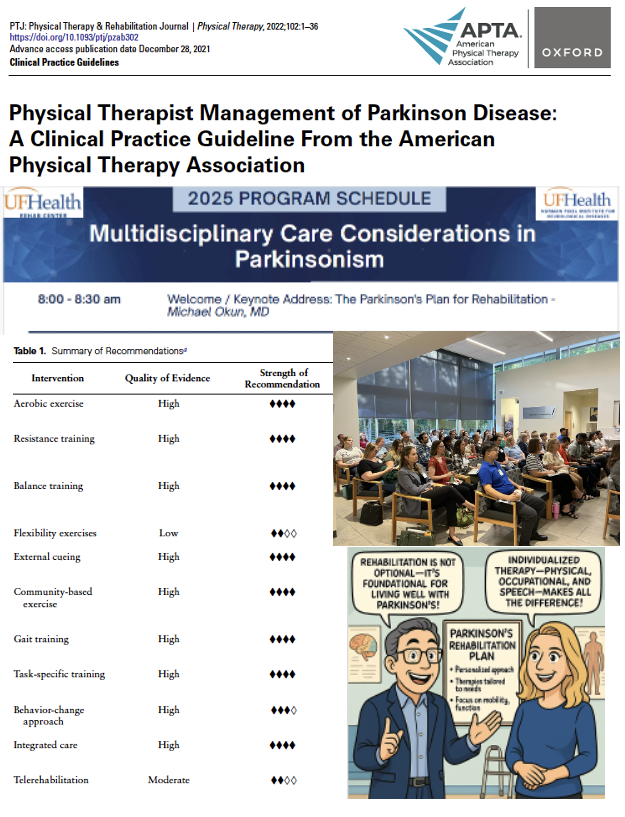
We have the guidelines, so why aren’t we referring to PT and other therapies for Parkinson’s? Let me say this clearly: There are strong evidence-based guidance to refer people w/ Parkinson’s to physical therapy early and regularly. Yet, it’s not happening. Why? We talked about the need for a Parkinson's Plan for rehabilitation today in the Fixel Movement Disorders Society multidisciplinary conference hosted by Nicole Herndon and colleagues. Important papers by Osborne and Ellis on the topic.
Key Points:
- The 2022 Clinical Practice Guideline by Osborne and colleagues outlines precisely when, how, and why to integrate physical therapy into Parkinson’s care.
- The Ellis and colleagues review enlightened us that disability starts early, even in prodromal Parkinson's, and PT seems to mitigate it.
- We’re seeing a lot of 'under-referral and missed opportunities,' despite the data.
My take: Here are the points that resonate with me about what should be in a Parkinson's plan for rehabilitation. 1- Start early and don’t wait for a fall. Rehabilitation shouldn't begin after a fracture or a walker, it should begin at diagnosis. Gait and balance changes can happen in the prodromal phase. Let’s be proactive, not reactive. 2- Prescribe movement like a medication. Physical therapy, occupational therapy, and speech therapy are not ‘extras,’ they’re essential. Movement is medicine. These therapies should be dosed, tracked, and renewed just like drugs. 3- Tailor therapy to the person, not just the disease. Every person with Parkinson’s is different. A personalized plan should match goals, stage, comorbidities, and preferences and should adapt over time. 4- We need to create a ‘therapy home’ just like a medical home. Just like we anchor care around a neurologist, we should anchor rehab around a therapy team including PT, OT, and speech working together, with regular updates and re-evaluations. 5- Measure what matters, and stay focused on the function, not just symptoms. We must track real-world functions including walking speed, transfers, cognition, swallowing and independence. PT and structured exercise reduce falls, improve function, and may slow decline.
It’s time to treat movement like medicine.
- Let’s fix the referral gap.
- Let’s implement the guidelines.
- Let’s move PT upfront, and not wait. Let's get more guidelines for OT, speech and swallowing going.
https://t.co/NC8KjEyCrb
https://t.co/tomEVXLbva
#Parkinsons #PhysicalTherapy @ParkinsonDotOrg@FixelInstitute@movedisorder
💡Accurate identification of mimic automatisms can guide clinicians in localizing brain areas involved in seizure onset. Kokkinos et al. provide a great overview!
🔗https://t.co/yXNSXRjL1p
@giocastellucci @joanajribeiro @SheikhISMD@SBeniczky@AnphyLab@AlinaIvaniuk
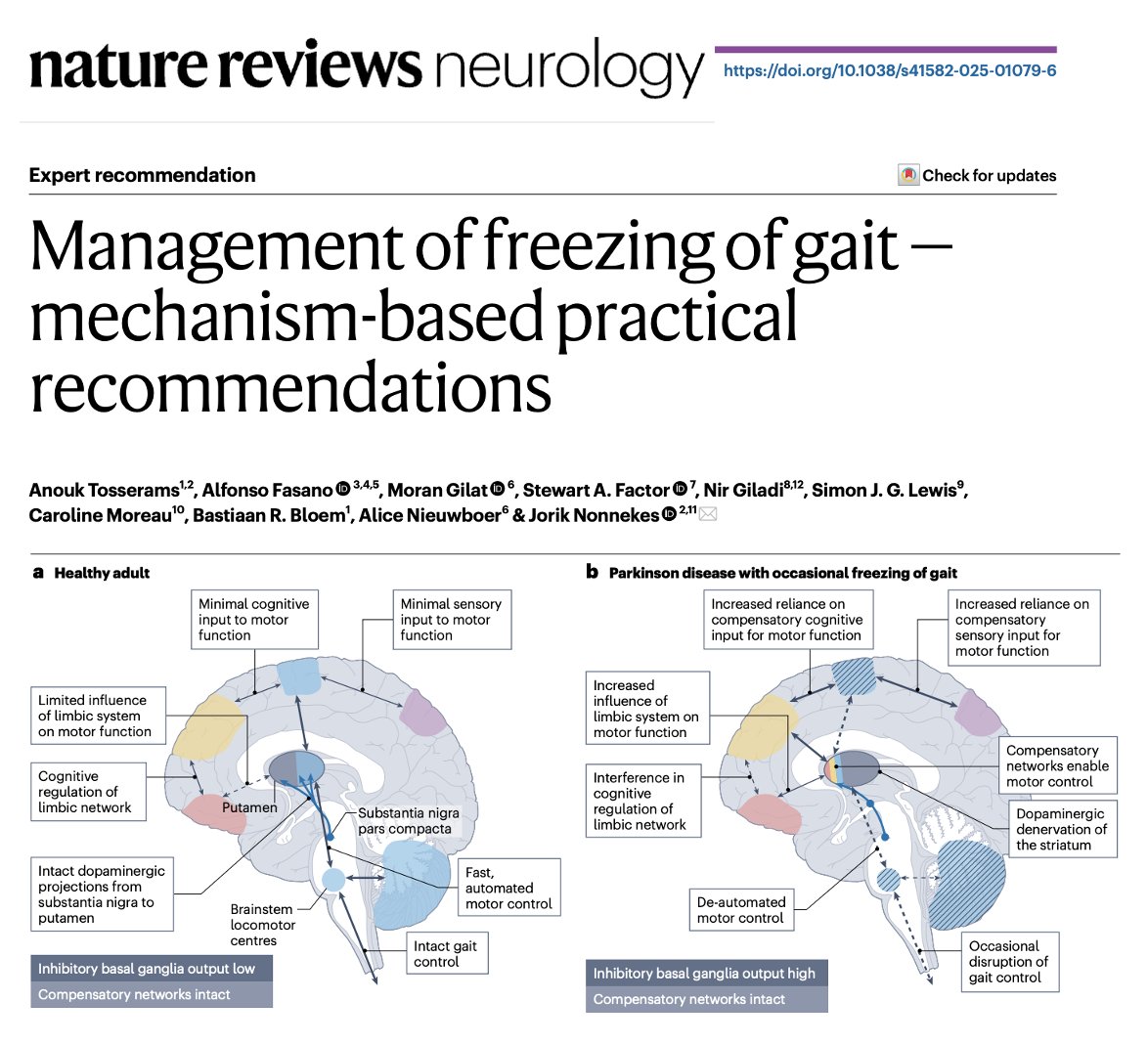
Do you have a plan for management of freezing of gait (FOG) in Parkinson's? I think about 5 things when constructing a PLAN. Check out the new paper by Tosserams, Fasano, Bloem, Nonnekes and colleagues in Nature Reviews Neurology.
Key Points:
- Freezing of gait is one of the most disabling symptoms in Parkinson’s.
- It is one of the most frustrating for patients and caregivers alike.
- People may describe it as feeling like their feet are glued to the floor, and FOG increases fall risk, anxiety, and loss of independence.
My Take: I urge our community to take a step forward with more coordinated plans for FOG in Parkinson's. FOG in Parkinson’s: Why do we need a plan? This paper offers us a clear, comprehensive, pathophysiology-driven framework to build a person specific plan. An important point that resonates for me: FOG isn’t one thing, it’s many things. It demands listening, with a personalized, evolving approach. It must addresses motor and non-motor factors that may underpin the manifestation.
Here are 5 key things I consider when treating freezing of gait (FOG):
1- Classify the type of FOG – Is it OFF-state, pseudo-ON, or dopamine-unresponsive? Your treatment will hinge on this.
2- Optimize dopamine – Tailor medications carefully, and consider infusion or DBS if or when appropriate.
3- Use non-drug strategies – Physical therapy, cueing, and gait training. These can be powerful, especially early in disease.
4- Treat the whole person. Anxiety, cognition, and sleep all interact with FOG. Addressing these features matters.
5- Think prevention: Exercise, balance training, and early identification. Can we delay FOG or treat the person more effectively so it does not emerge? Listen and optimize plans at every visit even if FOG is not present.
Let’s turn these insights into action. BRAVO to the authors. Don't be nolens volens – willy-nilly about freezing of gait (FOG).
https://t.co/6LJG5WCt3w #Parkinsons #FOG #FreezingOfGait #Neurology #DBS #Gait #MovementDisorders #ParkinsonsPlan #NeuroRehab #NeuroInnovation @ParkinsonDotOrg@FixelInstitute