The National Council of Applied Economic Research, India’s largest independent economic think tank, supports policymaking through research and data collection.
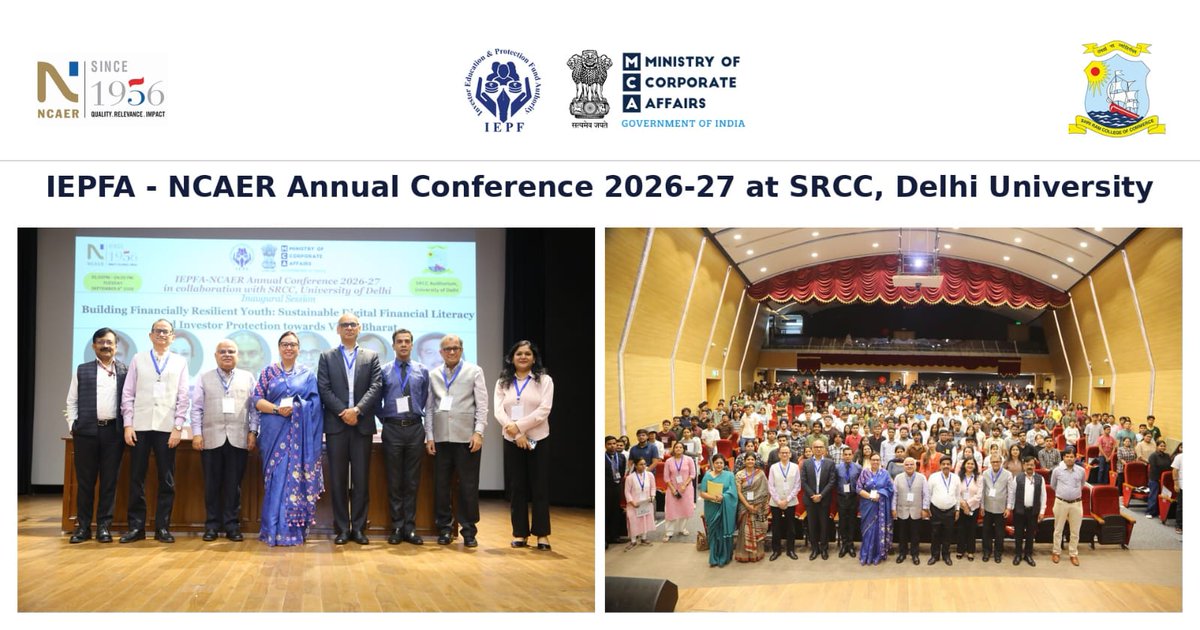
NCAER’s IEPF Chair Unit, in collaboration with @SRCCOfficial, organised the IEPFA–NCAER Investor Education & Protection Annual Conference 2026–27 on “Building Financially Resilient Youth: Sustainable Digital Financial Literacy & Investor Protection towards Viksit Bharat” at SRCC, University of Delhi, on 8 September to mark International Literacy Day.
The conference brought together policymakers, financial-sector experts, academicians and practitioners, including Professor Simrit Kaur, Principal, SRCC; Dr Prabodh Seth, Former Member, CBDT; Mr Suresh Goyal, DG, NCAER; Mr H R Khan, Former Deputy Governor, RBI; and Professor @csmohapatra_dr, IEPF Chair. Speakers emphasised the importance of sustained digital financial literacy, informed investment behaviour and stronger investor protection in building financially resilient youth.
“Women’s health does not begin with pregnancy, nor end with childbirth. It is shaped across the life course, making a life-course approach essential for women’s full participation in India’s demographic dividend and the vision of Viksit Bharat 2047,” said NCAER faculty member, @DibyasreeG, during a panel discussion on “Beyond Survival: Maternal Health and Child Health, Gender and India’s National Priority,” convened by @armmanindia in partnership with @innbreakthrough.
The discussion, moderated by journalist Priya Ramani featuring Dr @Ajay_ajKhera, @EngenderHealth and @hegde_aparna , ARMMAN, examined how gender shapes women’s and children’s health outcomes, and why maternal and child health must be central to gender equality, women’s economic participation, and India’s vision of Viksit Bharat 2047.
📢New episode of Parisila Perspectives, NCAER's podcast series, out today!
Suresh Goyal, Director General, NCAER, and @jagannarayan Padmanabhan, Crisil Intelligence, discuss:
They discuss:
➡️ Why we need a systems-thinking approach when building for transport, mobility and logistics
➡️ Lessons from tunnel boring machine shortages, energy security concerns, and the limited size of India's flagged shipping fleet
➡️ Unlocking domestic capital — insurance, pensions, InvITs and retail investors — as the next wave of infrastructure financing
➡️ The National Highway Infrastructure Trust's growth: investor participation rising from nearly 27 to over 600, and assets under management rising from ₹8,000 crore to over ₹50,000 crore
🎙️ Watch here: https://t.co/RC9LTSDnyd
🎙️How can gender data inform policy change?
Join Dr. @SonaldeDesai (Professor and Centre Director, NCAER-NDIC), Dr. @AletheiaDonald (Senior Economist, @WorldBankAfrica), and Ms. @Evelyne_Opondo (Executive Director, International Center for Research on Women (@ICRW), Africa) for a webinar on, “Gender Data that Drives Change: Celebrating Ten Years of Global Partnership through EMERGE," organised by EMERGE and @Tulane University.
🗓️Sept 23, 2026
⏰8:30–10:00 PM IST
🔗 Register: https://t.co/usg7w1b738
India needs ₹145–155+ lakh crore in infra investment over the next 5 years — nearly 2x the last five.
How are we building for resilience?
In this episode of Parisila Perspectives, Suresh Goyal, DG, NCAER, sits down with Jagannarayan Padmanabhan, Senior Director and Global Head at CRISIL Intelligence, to explore why India's next decade of infrastructure has to be about systems-thinking, resilience, and financing at scale.
🎥 Full episode out tomorrow.
https://t.co/XuIDHqM1cN
NCAER announces the release of NCAER’s Annual Report, highlighting the Institute’s research, policy engagement, publications, and key initiatives over the past year.
The report reflects NCAER’s continued commitment to advancing evidence-based economic research and contributing to informed policymaking in India.
Read here: https://t.co/KOFY7zy5S1
“Integrated human development is key to harnessing our demographic dividend.” The plus-one Anganwadi idea by @karthik_econ
"We need to focus on integrated human development, spanning nutrition and early-childhood education in the early years," says the Tata Chancellor's Professor of Economics at the University of California, San Diego and Non Resident Senior Fellow at NCAER.
His argument, backed by a large-scale RCT in Tamil Nadu finds:
→ India has among the highest child stunting rates in the world, and low school readiness
→ Most of the learning gap between public and private schools opens up between ages 3 and 5
→ Anganwadis today function mostly as daycare, not early education
→ Adding one extra Anganwadi worker, focused on pre-school education, produces dramatic gains in learning outcomes and a meaningful drop in stunting within 18 months
→ Estimated ROI: 12–20x the cost — roughly 2,000% returns
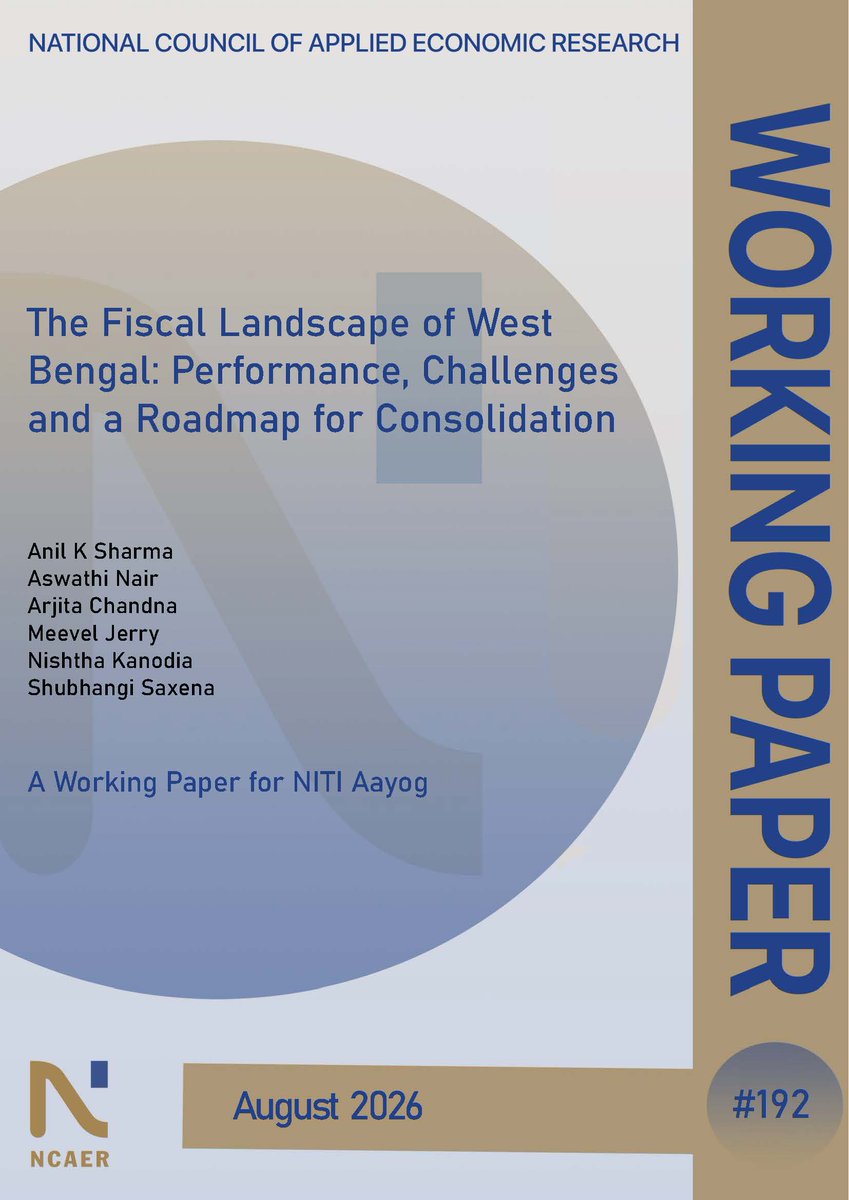
NCAER is pleased to announce the release of its Working Paper, “The Fiscal Landscape of West Bengal: Performance, Challenges and a Roadmap for Consolidation,” by Anil K Sharma, Aswathi Nair, Arjita Chandna, Meevel Jerry, Nishtha Kanodia, and Shubhangi Saxena.
The paper examines West Bengal’s fiscal performance, key challenges to fiscal sustainability, and priorities for fiscal consolidation, benchmarking the State against all States and Odisha. It identifies pathways to strengthen resource mobilisation and expenditure management, raise capital outlays, and build greater fiscal resilience.
Read paper: https://t.co/SQrTMu99Nk
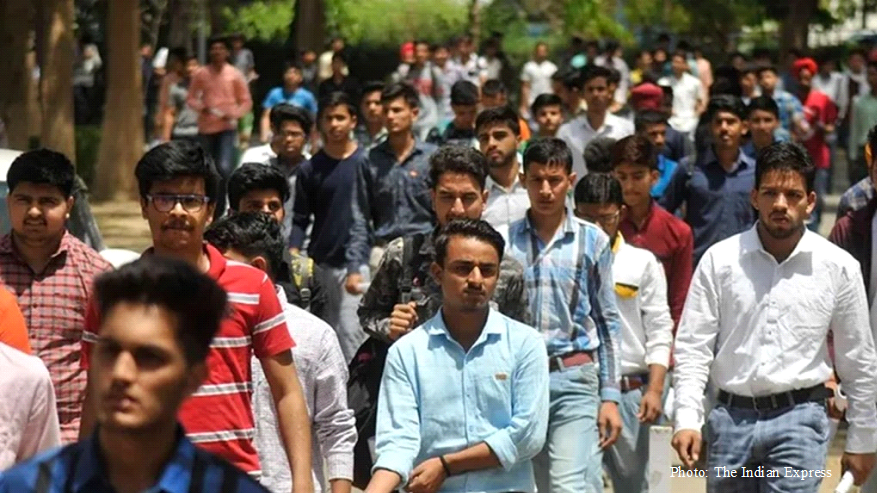
India’s young men and women are aspirational—and willing to wait for the careers they want.
NCAER Visiting Faculty member Farzana Afridi argues that while the new labour codes are a step in the right direction, creating “good” jobs and genuine career pathways—not merely employment—is no longer optional. Failure to create such opportunities risks squandering the potential of an entire generation.
Read more: https://t.co/wseE1YXtsg
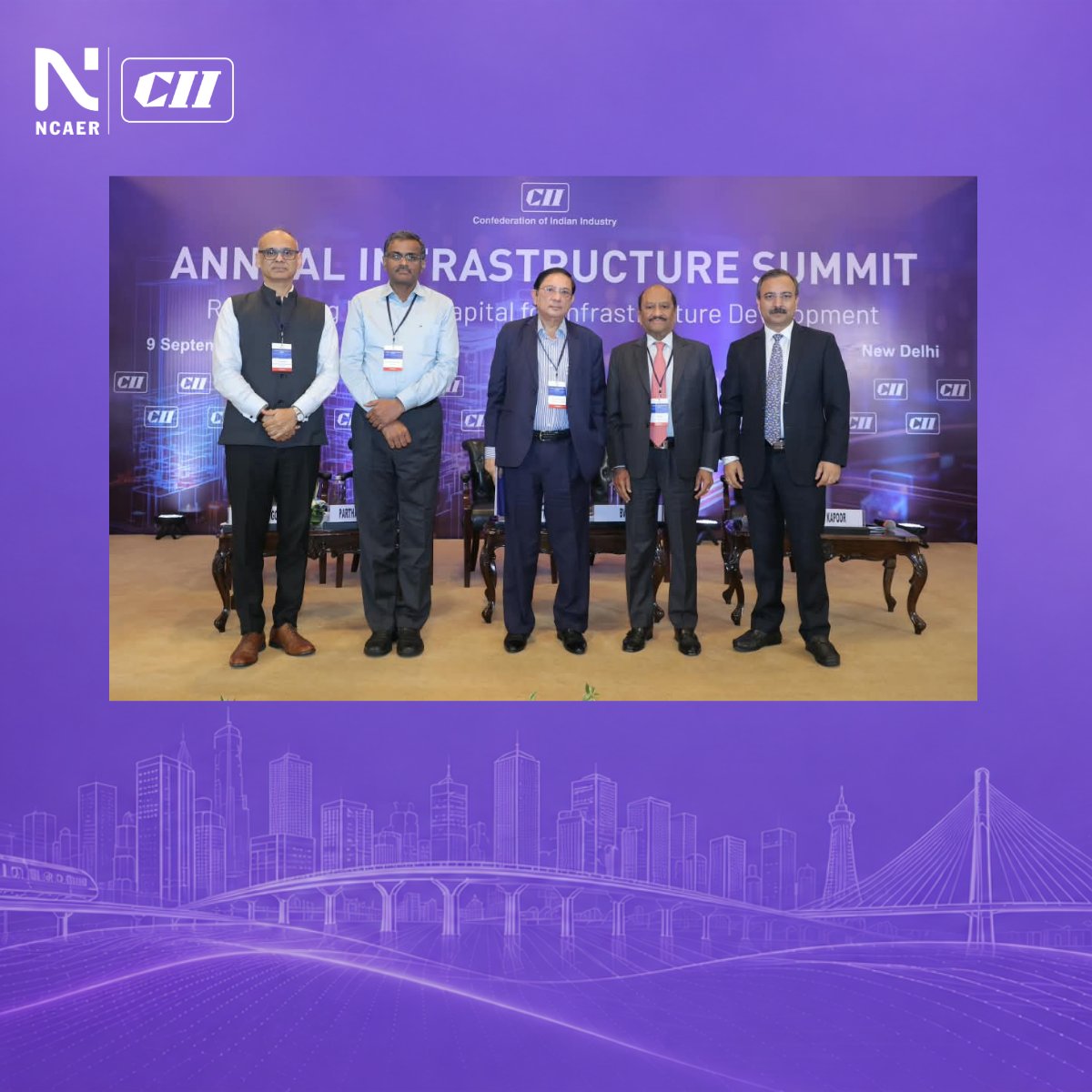
"We have the capital, but lack the supply of investable propositions, and the credibility of the counterparties offering them," said Mr Suresh Goyal, Director General, NCAER, at the Annual Infrastructure Summit on 'Revitalising Private Capital for Infrastructure Development' today.
Discussions covered:
➡️ Scaling InvITs & bond markets
➡️ Surety bonds vs bank guarantees
➡️ DFI credit enhancement
➡️ Municipal bonds for urban infra
An uneven monsoon can become an economic shock—affecting rain-fed crops, farm incomes, food prices, and rural purchasing power.
In an op-ed, NCAER faculty member @sauban_10 argues for early, crop-specific assessments of yield losses and proactive measures on food stocks, imports, and supply chains. Such timely action can help prevent an uneven monsoon from turning into a wider food-price shock.
Read more: https://t.co/w6ul9qzkzs
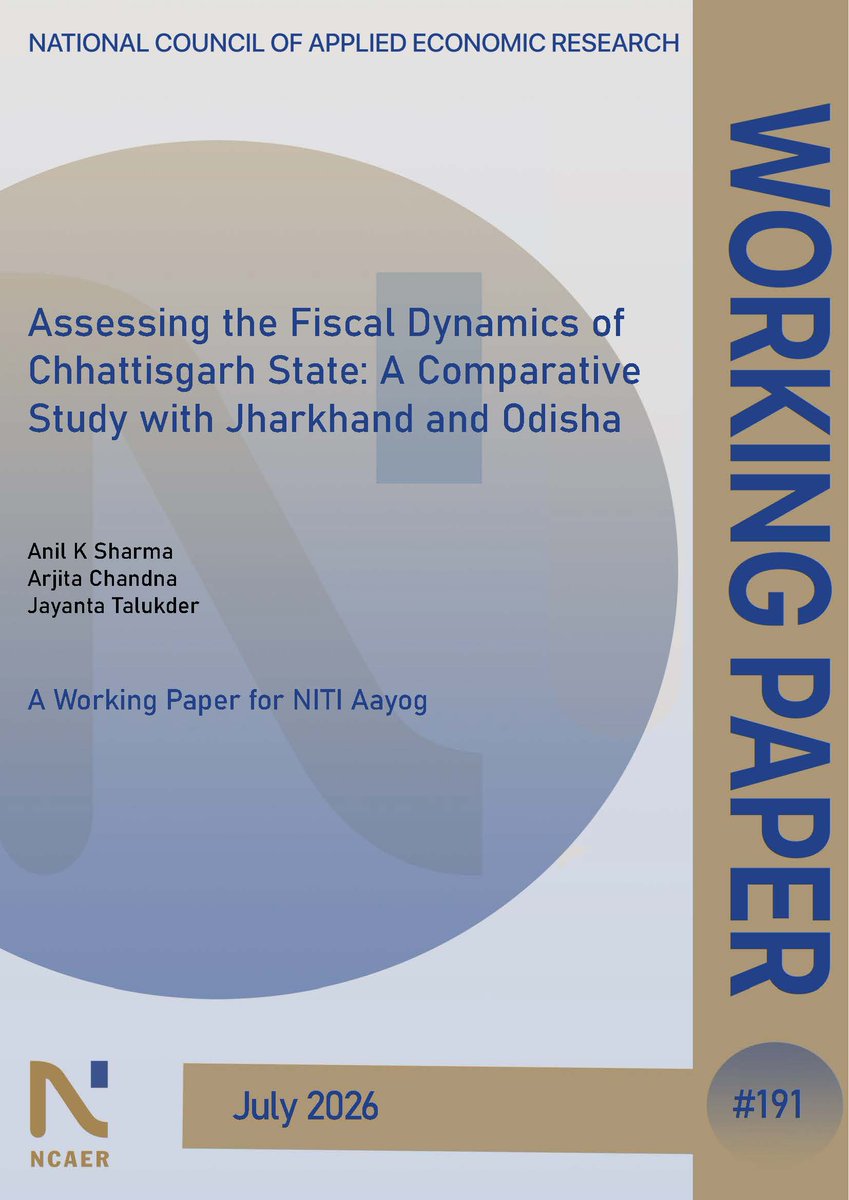
NCAER is pleased to announce the release of its Working Paper, “Assessing the Fiscal Dynamics of Chhattisgarh State: A Comparative Study with Jharkhand and Odisha,” by Anil K Sharma, Arjita Chandna, and Jayanta Talukder.
The paper examines Chhattisgarh’s revenue mobilisation, expenditure quality, fiscal deficits, debt sustainability, and fiscal discipline, comparing the State’s fiscal performance with that of Jharkhand and Odisha. While Chhattisgarh performs relatively well in revenue generation and developmental spending, rising committed expenditure and widening fiscal deficits could pose challenges to its fiscal sustainability.
Read paper: https://t.co/jBKg3HLeau
What role do social networks play in household participation in financial markets?
Using NCAER’s IHDS-II (2011–12) data, new research examines the relationship between social networks and household participation in risky financial assets in India. The analysis finds that stronger social networks are associated with greater participation in risky financial markets, with information transmission emerging as an important pathway. The association also varies across social groups and occupational categories.
@DevendraBajpaiK | @ihdscorner
Read more: https://t.co/IZntdSClza
Will CBAM undercut the gains from the India-EU trade pact?
NCAER faculty member Suvajit Banerjee and his co-author Tommaso Morotti examine how differences between the EU and Indian carbon-pricing frameworks could impose additional compliance costs on Indian exporters. They highlight why greater policy convergence may be critical to ensuring that trade and climate objectives reinforce, rather than undermine, each other.
Read more: https://t.co/r5RYADfMHA
NCAER’s latest Monthly Digest for August 2026 is out!
Check out our latest Research, Publications, Events, and Other Offerings.
Read more: https://t.co/YUIPkK6zPC
How can early-life exposure to environmental stress affect children’s learning outcomes?
Drawing on data from NCAER’s IHDS-II (2011–12), new research examines the association between early-life exposure to extreme heat and children’s learning achievement. The findings indicate that greater exposure is associated with poorer performance in reading, writing, and mathematics. The study also identifies physical development, household coping capacity, and health environments as potential pathways through which early-life environmental conditions may shape later learning outcomes.
@sourishmustafi, @punarjitrc, @ihdscorner
Read more: https://t.co/IZntdSClza
A new 10-year partnership to strengthen research on India’s transport, mobility and logistics (TML) sector.
Vertis has signed an MoU with NCAER’s NHAI Centre for Economics of Transportation, Mobility and Logistics (CETML), committing ₹10 crore over 10 years towards research that will inform the development, financing and growth of the TML sector.
The partnership aligns with a shared vision for Viksit Bharat 2047—and the recognition that robust evidence-based research fueling transport, mobility and logistics is core to India’s economic growth and development.
@NHAI_Official
How is India’s changing social structure reflected in the emergence of the middle class?
At an NCAER seminar organised this week, NCAER faculty member Professor @SonaldeDesai, presented her paper, “A Tale of Two Middle Classes,” which examines the size, composition, and orientations of India’s middle class. The presentation explored how India’s changing social structure is reflected in the emergence and evolution of its middle classes, while highlighting the divergence between objective measures of middle-class status and people’s subjective perceptions of their economic and social position.
The seminar was chaired by Mr. Suresh Goyal, Director General, NCAER, with Dr Amita Baviskar, Professor, Ashoka University, and Mr. Aurélien Kruse, Lead Economist, World Bank India, serving as discussants.
@WorldBankIndia, @AshokaUniv
How do financial inclusion and physical mobility shape women’s participation in the workforce?
NCAER Research Staff @Nishat_1495 presented her paper, “Unveiling Mobility Constraints: Financial Inclusion, Physical Mobility and Female Labour Force Participation in India,” at the Women in Leadership in Economics (WiL) Mentoring & Networking Program, held as part of the ACES Summer School in Kathmandu on 11 August 2026. The study examines how physical mobility and financial inclusion influence women’s participation in the workforce, drawing on longitudinal panel data on ever-married women from NCAER’s IHDS-II and IHDS-III datasets.