On the Occasion of the #G7 Summit
An Open Letter to the Leaders of the @G7 , the @g20org , BRICS and All Nations
On finalizing the Pathogen Access and Benefit-Sharing annex of the WHO Pandemic Agreement
Dear Leaders of the G7, the G20, BRICS and of all nations,
We write to you together, from Geneva and from Brasília, with one shared conviction: that the world must finish what it started, and that you can help it do so.
We begin not with an institution or an annex, but with a memory the whole world shares. Not so long ago, our hospitals overflowed. Families said goodbye to the people they loved through glass, or by telephone, or not at all. Children lost grandparents. Doctors and nurses, exhausted beyond anything we had a right to ask of them, kept going anyway. Estimates from WHO and others put the lives lost at up to twenty million. Humanity promised itself, in the rawness of that grief, that it would not face such a day again unprepared.
A little over a year ago, the world kept the first part of that promise. After the deadliest pandemic in a century, the nations of the world chose cooperation over division and adopted the WHO Pandemic Agreement to strengthen how countries can work together to prevent, prepare for, and respond to pandemics. In a divided world, that outcome was not to be taken for granted. It was an act of hope, and an act of faith in one another. We write to you now because that hope is not yet fulfilled, and because it lies within your hands to help fulfil it.
One piece remains. To respond to future pandemics in time, countries must be able to quickly identify pathogens with pandemic potential and share their genetic information and material so scientists can develop tools: the tests, the treatments, the vaccines that decide who lives and who does not. The system that makes this possible, fairly and on equal footing, is the Pathogen Access and Benefit-Sharing annex. It is the last piece of the puzzle, not only for the Pandemic Agreement but for everything WHO and Member States have built from the hard lessons of COVID-19. Until it is finished, the Agreement cannot enter into force. The promise stays unkept.
We will not pretend the road has been easy. When Member States closed their most recent session on the first of May, they had made real progress, but agreed that more time was needed. The hardest questions, including how the benefits of shared pathogens are defined and shared, how the system is governed, and how equity is guaranteed on equal footing, are difficult for a reason. They are the very questions that went unanswered last time, while people who could have been protected were not. The world is wrestling with them now precisely because they matter so much.
Negotiators will meet again from 6 to 17 July. We believe in them, and we have seen their dedication up close. But we also know there are moments when good people, doing their best around a negotiating table, need their leaders to lift their eyes to the horizon. This is one of those moments, and it is yours.
So we come to you, plainly, with three requests.
First, political will at the highest level. The remaining issues will not be solved by technical effort alone. They need the clear signal that only a head of government can give: that finishing this annex is a national priority, and that your negotiators may reach for consensus with courage rather than caution. Solidarity is our best immunity, but solidarity has to be chosen, and it has to be chosen at the top. We know, too, that you may be asked if the Pandemic Agreement compromises state sovereignty. It does not, and the PABS annex, as an integral part of it, will not either. Article 22, paragraph 2 says so plainly: nothing in the Agreement gives WHO any authority to direct or alter a country’s laws or policies, or to require measures such as lockdowns, travel restrictions or vaccination mandates. Those decisions remain with sovereign states. So we ask you, concretely, to instruct your negotiators to come to the July session ready to conclude, and to give them the flexibility to close the remaining gaps and finalize the annex in this round.
Second, a spirit of equity. The PABS system rests on a simple, fair bargain: those who share dangerous pathogens quickly must be able to trust that the vaccines and treatments born from that sharing will reach their own people too. Every one of us has a stake on both sides of it. When Brazil held the G20 presidency in 2024, it led the G20 to recognize, for the first time, inequality as a driver of pandemics. This is not charity, and it is not only conscience. It is also strategy: PABS exists to stop an outbreak at its source, and containing a threat where it begins is far cheaper, in lives and in resources, than fighting a pandemic once it has spread to every continent. A virus left to burn anywhere will, in time, find everyone. There is a further reason equity matters, one that governments and industries everywhere will grasp at once: predictability. Today the rules for accessing a pathogen and sharing what flows from it are improvised case by case, often mid-crisis. PABS replaces that with a single framework known in advance, stable rules that let laboratories and partners across the world move at the speed an outbreak demands. Legal certainty does not compete with equity; it makes equity work. We ask you to ensure the annex carries equity in its operational detail, not only in its preamble, so that access and benefit-sharing are guaranteed in practice.
Third, a sense of urgency. The next pandemic will not wait for us. Scientists estimate there is close to a one in four chance of another pandemic within the coming decade, and the ground beneath our old assumptions is shifting. Climate change, changing land use and evolving agriculture are redrawing the map of where dangerous pathogens emerge; the comfortable belief that outbreaks begin only in distant places is no longer true, and future hotspots may arise in or near your own countries. At the same time, advances in biotechnology, matched unevenly by biosafety, raise the risk of accidental or deliberate release. None of these dangers respect a border. So we ask you to treat 17 July as a deadline, not a milestone, and to say so publicly, sending your negotiators, and the world, the unambiguous signal that this is the round in which the work is finished.
And we already know the price of being unready. The last pandemic took lives on a staggering scale, with estimates from WHO and others putting the toll at up to twenty million, and the International Monetary Fund estimates it cost the world economy over thirteen trillion dollars in lost output, a loss borne in every nation, in shuttered businesses, broken supply chains and a generation of disrupted schooling. Against that, the investment in a system that catches an outbreak early is small. As we write these words, an Ebola outbreak is being fought across two countries, with no approved vaccine and no cure, by responders who are risking their own lives to protect strangers. That is not a distant abstraction. It is happening now. Every month this annex stays unfinished is a month the world is less ready than it could be, and people are less safe than they deserve to be.
The nations of the world, together, have stood at every great turning point in the story of human health. Together we helped wipe smallpox from the earth. We pushed polio to the very edge of history. We turned back the tide of HIV, tuberculosis and malaria, and in doing so helped save more lives than any of us will ever be able to count. Finishing this Agreement is not a departure from that legacy. It is its natural next chapter, and it is within reach.
We made a promise to the millions we lost, and to the families who carry their absence still. Let us be the generation that keeps that promise. Finalizing this Agreement, through a shared commitment to one another, is our collective promise to protect humanity. Let us keep it, together, and in time.
With respect, and in the shared cause of protecting human life,
Luiz Inácio Lula da Silva, @LulaOficial
President
Federative Republic of #Brazil
Dr Tedros Adhanom Ghebreyesus
Director-General
@WHO
Grateful to @IPUparliament for brining parliament speakers and members from around the world to #WHA79 to address two defining priorities of our time: how to translate the @WHO Pandemic Agreement into national reality, and how to ensure sustainable financing for health.
Global agreements do not save lives, implementation does. And implementation depends on parliamentarians. That is why the partnership between WHO and the Inter-Parliamentary Union is so important.
Special thanks to my brother, Martin Chungong, for whom this is the last World Health Assembly as Secretary-General of the IPU. From shaping parliamentary engagement in health to establishing the annual Global Parliamentary Forum at the World Health Assembly, his vision has created a unique platform that connects global commitments with national action.
Member States of WHO progressed work on the Pathogen Access & Benefit Sharing (PABS) annex, a key part of the WHO #PandemicAgreement, & today agreed additional time was needed to finalize the framework for ensuring a better, more equitable, response to future pandemics. https://t.co/b66Sj15kmm
I thank President @EmmanuelMacron for convening the High-Level Meeting on the Global Health Architecture and One Health Summit, and his leadership in advancing #HealthForAll and #StandWithScience.
We discussed leveraging the power of the WHO Academy in Lyon by strengthening partnerships with the @WHO collaborating centres, and the developments of the Pathogen Access and Benefit Sharing (PABS) annex negotiations which are critical to the ratification of the WHO Pandemic Agreement.
I welcome the decision by @WHO Member States to continue negotiations on the Pathogen Access and Benefit Sharing system annex to the Pandemic Agreement from 27 April-1 May.
This annex lies at the heart of the WHO Pandemic Agreement and I thank WHO Member States for their commitment to work to bring it to life.
I urge all delegations to believe in the power of trust - in one another, in our institutions, and in our shared ability to transcend differences for the common public good, for solidarity and for equity.
https://t.co/5zjB07MjJn
WHO Member States have agreed to extend negotiations on the Pathogen Access and Benefit Sharing (PABS) annex to the WHO Pandemic Agreement, with discussions to resume in late-April ahead of its scheduled consideration by the World Health Assembly (#WHA79) in May. Press release: https://t.co/u5M1A6G3Ig
As we approach the 79th World Health Assembly, the the Sixth Intergovernmental Working Group (IGWG) on the WHO Pandemic Agreement is meeting this week to continue discussions on the pathogen access and benefit sharing system (PABS) annex.
The PABS Annex will operationalize key elements of the Pandemic Agreement: the rapid and timely sharing of pathogen information; and the timely and equitable sharing of benefits.
Read @DrTedros’ opening remarks at the Sixth Intergovernmental Working Group (IGWG) on the WHO Pandemic Agreement:
https://t.co/iHd2sgOzQZ
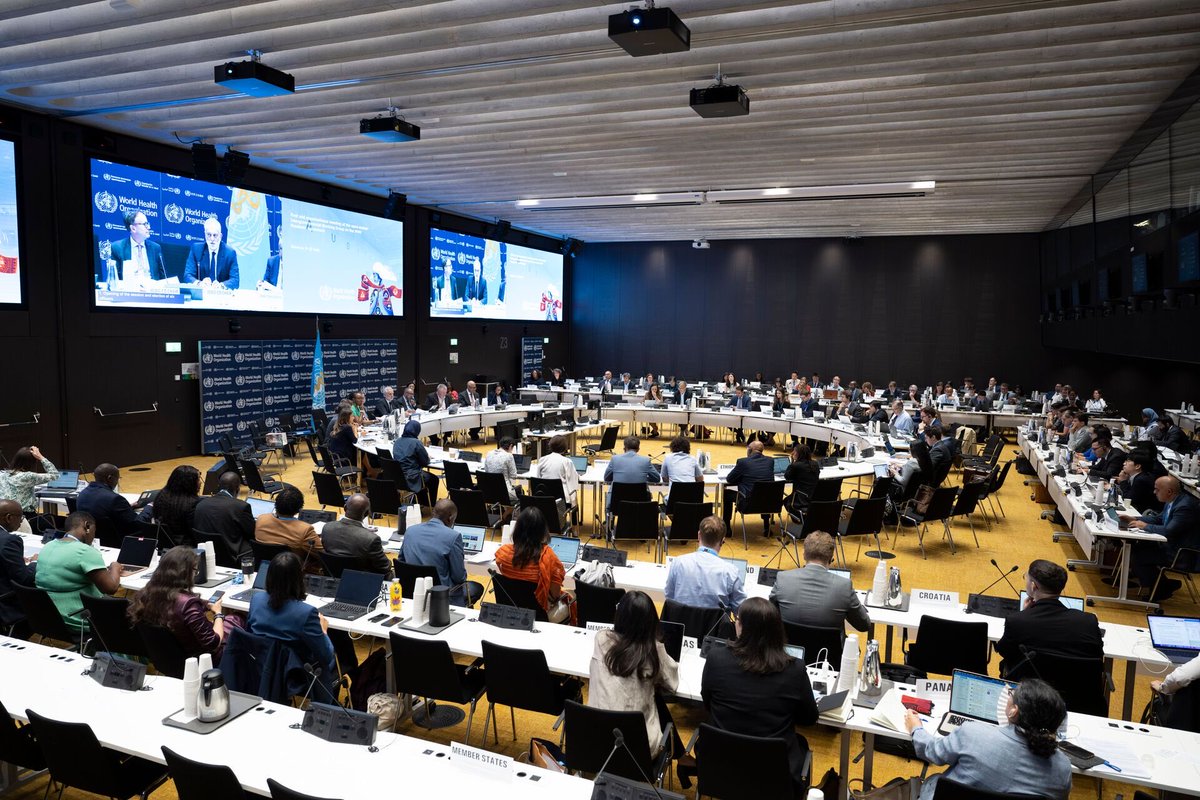
I opened the sixth and scheduled final meeting of the Intergovernmental Working Group on the @WHO Pandemic Agreement, with its focus on negotiating the Pathogen Access and Benefits Sharing (PABS) annex.
Next Monday marks five years since the publication of the op-ed (https://t.co/xd6VsNeR8P) I co-authored with 27 heads of state and government, calling for an international treaty on pandemic preparedness.
Five years ago, we began a journey, and now we can see the destination – consideration of the PABS annex at the upcoming World Health Assembly.
We’re so close – but of course, we’re not there yet.
The PABS Annex will operationalize key elements of the Pandemic Agreement: the rapid and timely sharing of pathogen information; and the timely and equitable sharing of benefits.
We must get this done. The next pandemic will not wait.
My speech: https://t.co/8ReGEeZpmn
I thank Member States for their constructive discussions at the fifth Intergovernmental Working Group meeting on the @WHO Pandemic Agreement. Negotiators demonstrated that agreement can be reached on creating a new pathogen access and benefit sharing system for consideration at May’s World Health Assembly.
For the cost of inaction is great, and maintaining the status quo will not be enough to protect against future pandemics.
To respond swiftly to future threats, countries must be able to quickly detect pathogens with pandemic potential and share their genetic sequence information and materials. This helps scientists speed up development of tests, treatments and vaccines, and accelerates access to such life-saving tools for vulnerable communities most in need.
https://t.co/82fT2j0hGT
Grateful to @WHO Member States for their energy, and urgency, in working to build the world’s first system to fairly and rapidly share pathogens and other critical materials. The goal is to ensure vaccines, treatments and diagnostics reach those who need them most in any future pandemic.
This is a once-in-a-generation opportunity—and responsibility—and countries are rising to meet it.
https://t.co/Jvf9xIwDeB
I joined the 3rd Intergovernmental Working Group Meeting on the @WHO Pandemic Agreement from Brazil, where I am attending the Leaders’ Summit of the #COP30 Climate Change Conference.
While these two processes are different, they share the goal of protecting humanity from existential threats to the health of billions.
Multilateral action, solidarity and a dedication to safeguarding #HealthForAll are central to making the world safer from pandemics, and curbing the threat posed by climate change.
In my address to WHO Member States, I praised them for their commitment to finding solutions to forging a new system on pathogen access and benefit sharing – the cornerstone of the Pandemic Agreement they adopted earlier this year.
Together, we are shaping a framework that will help to make the world safer when – not if – the next pandemic strikes.
Because in the end, solidarity is our best immunity.
https://t.co/dMGlPmb7rz
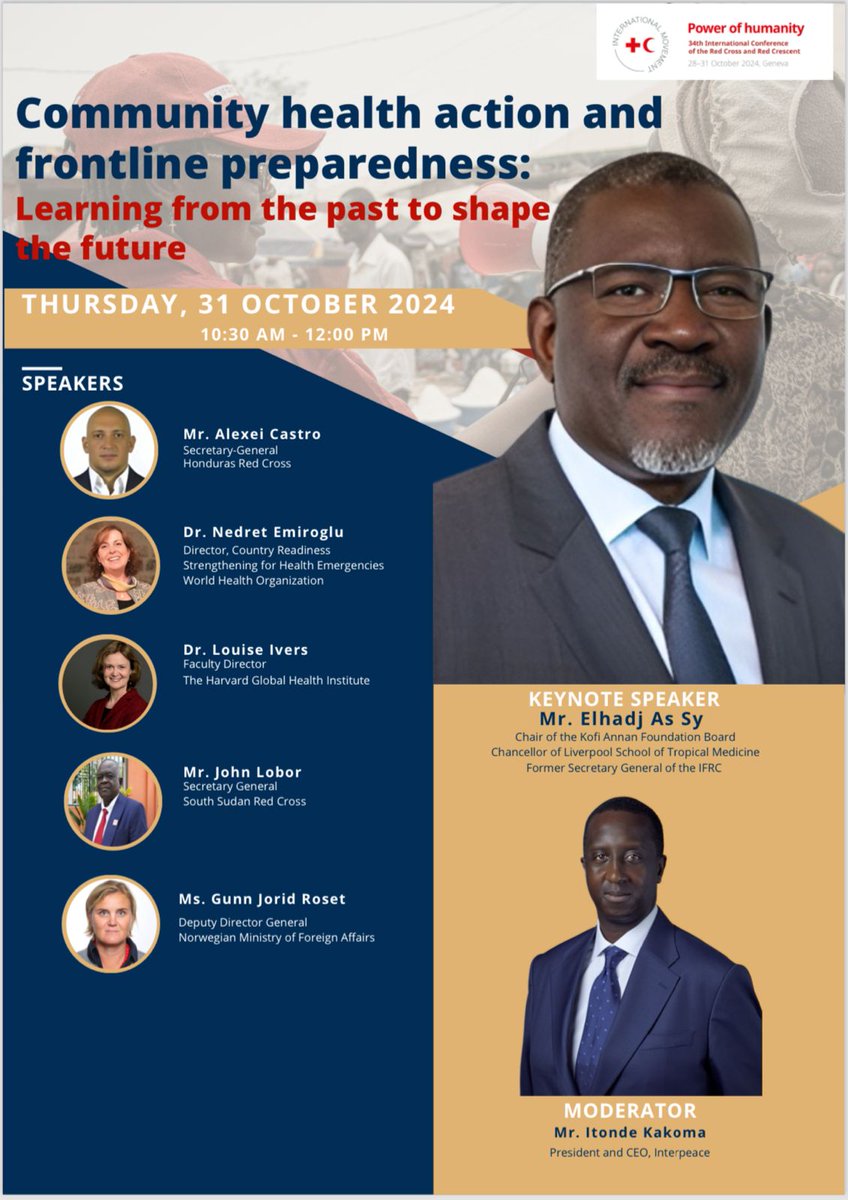
Today #RCRC24 at 34th IC
We’re looking at community health, frontline preparedness, and lessons from past experiences to shape a resilient future.
@ifrc@WHO
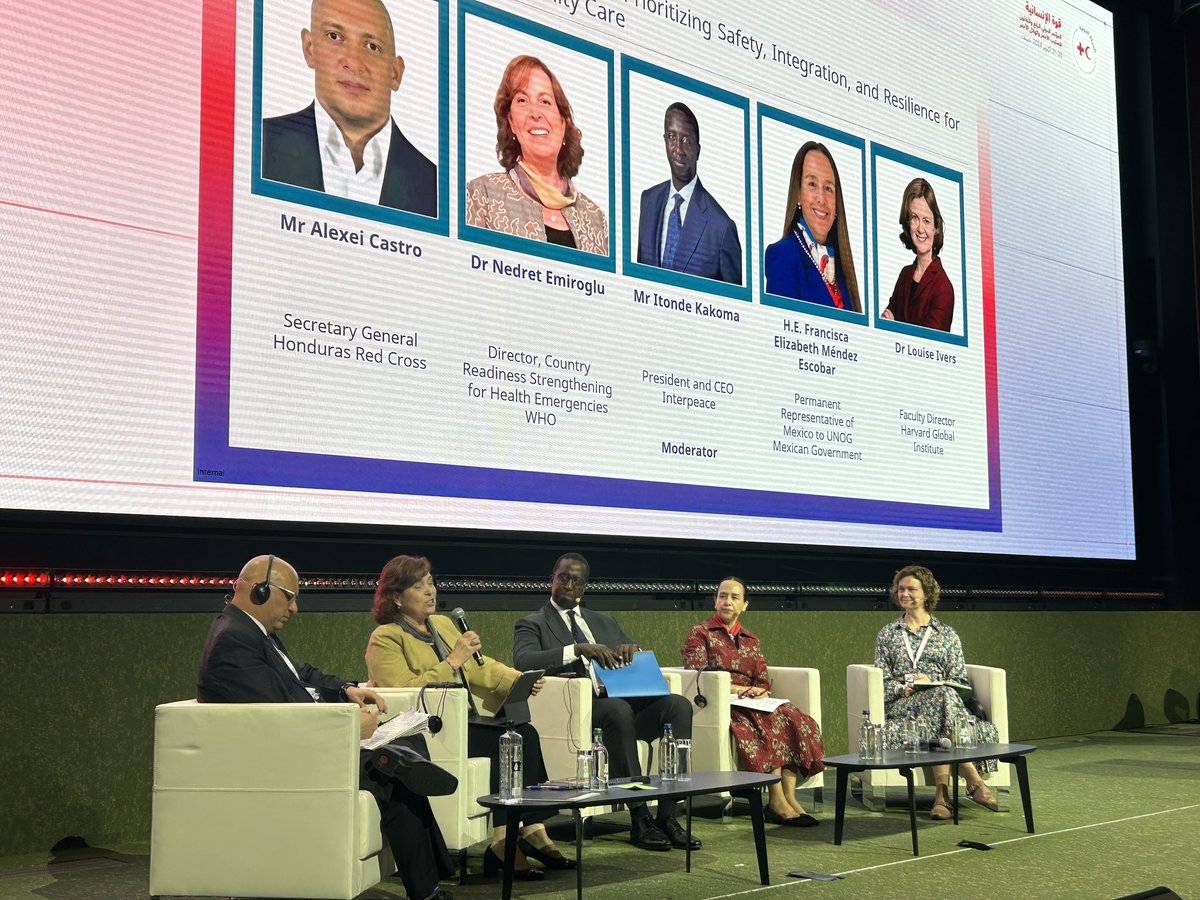
Tomorrow, at the #RCRC24 International Conference, President of Interpeace, @ikakoma1, will moderate a panel event on community health action and frontline preparedness, highlighting Interpeace's lessons learned and the need to strengthen local capacities and partnerships.
Broad range of opportunities for strengthening cooperation on #health#emergency response highlighted at meeting of Head of 🇮🇹 #CivilProtection Dr Ciciliano at @WHO🇺🇳. Productive discussion on emergency medical teams & possible 🇮🇹 #CivilProtection engagement in #Gaza operations.
Based on the current #Mpox and #Marburg outbreaks risk assessments, @WHO advises that no travel and trade restrictions are needed.
Priority should be given to public health advice and concerted, collaborative public health efforts by all partners to contain the outbreaks and protect people everywhere.
Full WHO travel guidance on Marburg: https://t.co/0KlxYwYcKa
Emergency Committee recommendations on Mpox: https://t.co/RMpNuaLdO9
Meet #WHS2024 speakers🌍
All speakers, hosts, topics & more are just one click away in our program at https://t.co/OVFNG51XRw
👉Ready to be part of #WHS2024? Register for Oct. 13-15 now: https://t.co/4WSSR6wiQR
The story of a nascent organisation @NCDCgov that found itself at the heart of an unprecedented pandemic
It is also a story about the dedicated #Nigerians that I met in public service
Plus the impact it had on us, & everyone around us with @VIhekweazu
A book we had to write
.@DrMikeRyan is an outstanding colleague, public health expert and leader. It is an honour working with him.
This recognition by Aidan Crotty, and Irish people in general, is absolutely well-deserved. Mike is an incredible ambassador of your proud nation.
I look forward to seeing the portrait in person, next time I'm in #Ireland.
https://t.co/03G7YPXVR4