The conversion of Ireland's former institutes of technology to technological universities (TUs) has been a "costly waste of money", a new report has claimed.
Researchers in Munster TU also sounded the alarm over student numbers at some campuses.
https://t.co/JyVtU3ESsf
Trump has just destroyed the US beef industry. No country in their right mind is going to import US beef.
After Trump cut funding for Screwworm monitoring programs, the dangerous flesh-eating parasite has been found in US cattle for the first time since 1966.
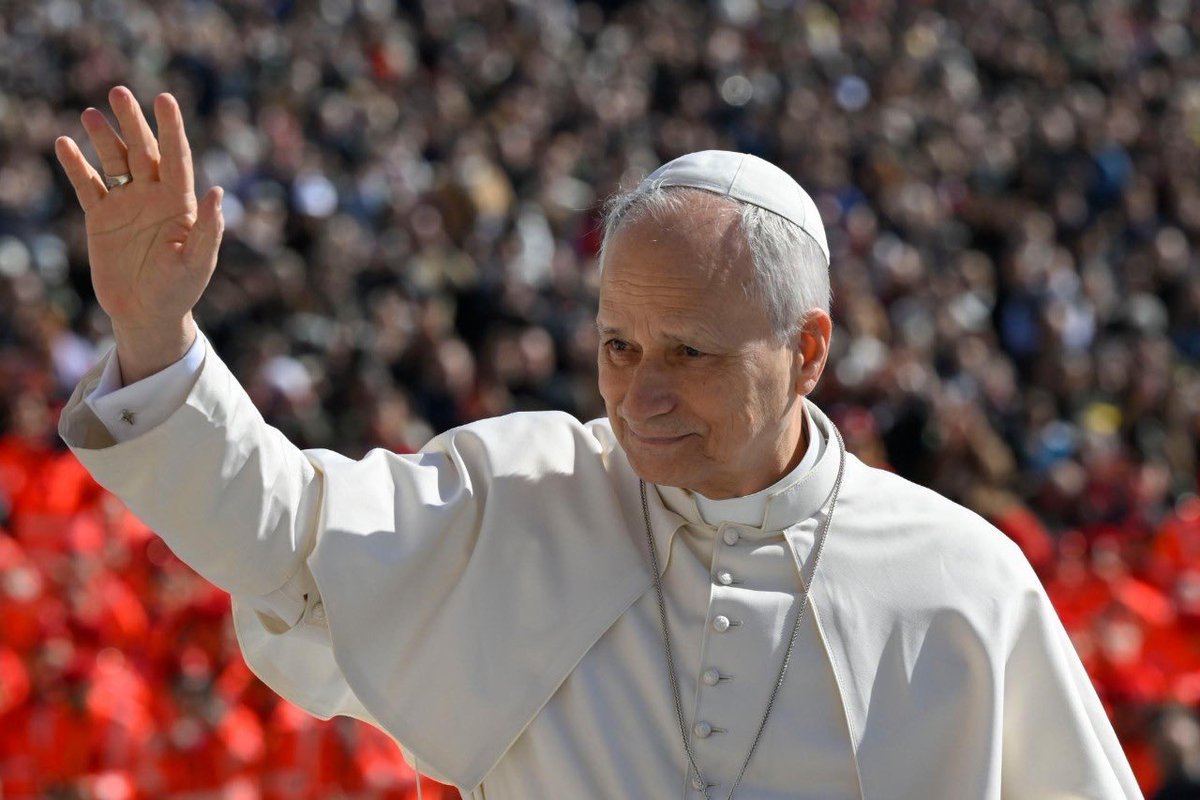
Pope Leo XIV in Madrid: “I encourage you to nurture the process of European Union, which is not merely a counterweight to other powers, but a gift to humanity.”
Wonderful.
A powerful reminder of how beautiful and hopeful the European project truly is.
🇪🇺🇪🇸
The concentration of global firms active in Ireland distorts what’s really going on in its economy, and in turn in the wider euro area economy. Here's what to know https://t.co/JoGhv067kl
The boss of Ireland’s postal service says SME’s in Great Britain are facing ‘a nightmare’ trying to sell into Ireland & the wider EU when new customs and handling charges for non-EU parcels are introduced in July.
Poland’s high growth is being driven heavily by an extremely large fiscal deficit and EU funding.
Poland’s deficit is extremely high: the European Commission estimates it widened to 7.3% of GDP in 2025 and projects it will narrow only slightly to 6.5% in 2026. Reuters also reported that Poland’s government sees the 2026 deficit at around 6.5% of GDP.
At the same time, Poland is one of the largest recipients of EU capital: €76.5bn in cohesion funds, around €55–60bn under the Recovery Plan, and the largest share of EU defence loans — €43.7bn.
From the Renaissance Europe Institute, we support this strategic decision. Europe needs a stronger Poland: a military power on eastern flank and a fast-growing economy at the centre of European security.
But this growth must also be used to build long-term productive capacity.
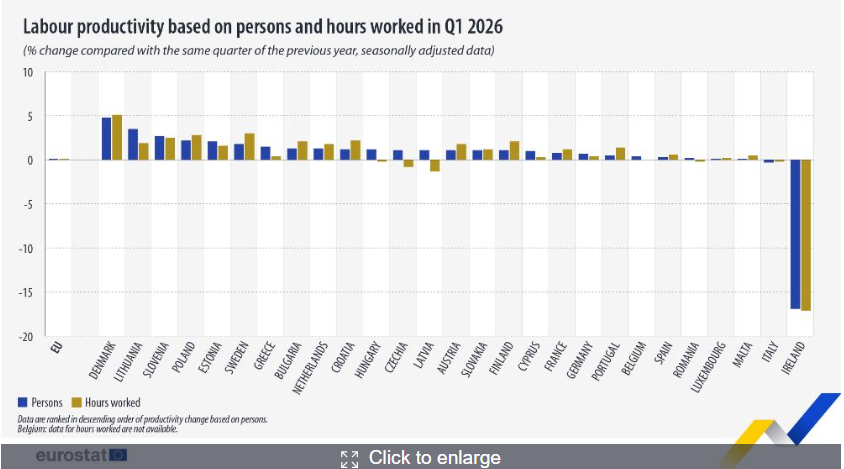
The eurozone economy unexpectedly shrank in the first three months of 2026, and Ireland was to blame.
Ireland's GDP fell by a staggering 12.1% between January and March, with the drop driven by a contraction in multinational-dominated sectors.
https://t.co/0AoOhIG0sL
Ireland’s GDP collapsed 12.1% quarter-on-quarter.
Why? Pharma.
In 2025, pharmaceutical multinationals in Ireland front-loaded exports to the U.S. ahead of possible tariff risks.
That temporarily inflated Irish GDP. In Q1 2026, that artificial export boom reversed.
Ireland’s multinational-dominated sectors fell 27.1%, while domestic sectors still grew 0.4% and Modified Domestic Demand rose 0.6%.
Without Ireland, the Eurozone would not have contracted. It would have grown roughly 0.2% to 0.3% quarter-on-quarter.
The euro-zone economy shrank at the start of the year after an unprecedented contraction in Ireland forced a revision to data that originally showed feeble growth https://t.co/Sr9NMod0r0