There's a height Burna Boy will reach in global music that for a long time, most Nigerian artistes will find quite difficult to attain or surmount. It is because , he built his reputation as a phenomenal artiste of our time,without any media validation right from his home country
Everyone thinks Claude just solved the 167-year-old Riemann Hypothesis, until you actually open the PDF. Hours after Anthropic's $ANT dropped 27% from its post-IPO peak, their mathematician Levent Alpoge posted a 4-page note claiming Claude cracked it.
Inside Footnote 2 of alpo. ge/remark.pdf, he admits Claude's writeup hit 250,000+ pages, which Claude cutely called a "book". Theorem 1 literally opens by noting that because real numbers are totally ordered, if a number isn't 1/2 then it's either greater or less than 1/2.
He wouldn't post the PDF because he calls it a "massive unreadable travesty of 'slop'", and admits in Footnote 4 he's "paraphrasing a 'slop' summary, which might make zero sense". Instead, he dumped 14 split tar.gz Lean files and wrote that he still hasn't mastered the math around them.
He even messaged Dario to clear the announcement, then added in Footnote 1: "There is an obvious cynical view, to do with the timing, but it is false." Yeah, 250,000 pages of unverified Lean slop just happened to land the exact morning ANT slid back toward its $83 IPO price.
The Lebanese Billionaire Who Owns
Nigeria
In 2004, the chairman of Nigeria’s anti-corruption agency set a trap. He’d been building a case for months against a man he believed was at the centre of one of the largest financial crimes in Nigerian history. The plan was to lure this man to a remote airstrip and arrest him the moment he stepped off his private jet.
The officers were in position, the indictment was ready, the plane touched down, and then someone tipped off the pilot by radio. The engines roared back to life. The plane accelerated down the runway and lifted off, leaving Nigerian airspace entirely.
The man on that plane was named Gilbert Chagoury. But who is this man, and how has he managed to build one of the largest portfolios of government infrastructure contracts of any private citizen in Nigeria?
High in the mountains of northern Lebanon, there is a village called Miziara, population about 15,000, Maronite Catholic, remote, and for nine months of the year almost empty. Because the working-age residents of Miziara are somewhere else, they are in Nigeria, working for one family.
That family is the Chagourys. Gilbert Ramez Chagoury was born in Lagos on the 8th of January 1946. His parents, Ramez and Alice, were Lebanese immigrants who had settled in Nigeria in the 1930s.
Gilbert was sent to Lebanon for school, came back to Nigeria as a teenager, and started working in sales, cars first, then flour milling with his father-in-law. And in 1971, at 25 years old, he and his younger brother Ronald founded the Chagoury Group. Construction, real estate, flour mills, hotels, it’s a lengthy list.
Over the next two decades, the Chagoury Group became one of the biggest conglomerates in Nigeria, with approximately 20,000 employees by the company’s own account, a business empire built in the country his parents chose as home. His supporters call him a builder, a visionary, a man who bet on Nigeria when others left. But there’s a dark side to the emergence of this empire.
On a flight to the oil-rich city of Port Harcourt, Gilbert Chagoury sat down next to a military officer named Sani Abacha. They talked, and then they became friends. That friendship would shape Nigeria in so many ways.
In November 1993, Abacha dissolved Nigeria’s democratic institutions, cancelled a presidential election, and installed himself as head of state. He would rule for five years, and in that time an estimated $2–5 billion would vanish from the national treasury, hidden in banks across Switzerland, Luxembourg, Liechtenstein, and the Isle of Jersey. Gilbert Chagoury didn’t just know Abacha during those years, he became indispensable to him.
Philippe Vasset, the long-time editor of Africa Energy Intelligence in Paris, a man who tracked the intersection of oil, money, and African politics for decades, described Chagoury’s role in a single sentence: ��He was the gatekeeper to Abacha’s presidency.”
And to understand what that gatekeeper does, we need to go inside this one room. Now imagine you are Bill Richardson, a US congressman.
President Clinton has sent you to Nigeria to pressure Abacha on human rights. You’ve just spent hours across the table from one of the most feared men in Africa. Abacha doesn’t blink, he doesn’t concede. You walk out exhausted, and then your handlers take you somewhere else, a private home.
There’s a man waiting. You’ve never heard of him. He’s not a government official, he holds no title, and then he offers you pizza. You sit with him for an hour and a half. He’s charming, he’s knowledgeable, he seems sympathetic to Washington’s concerns about the regime in Nigeria. So you leave thinking you’ve made a useful contact. But what you don’t know is that the man sitting across from you is the gatekeeper of the regime you just came to pressure.
Guys, this is very serious and you have to read this right now. The Riemann Hypothesis may have just been solved, and if the claim holds, it's an insane achievement.
In mathematics there is a famous problem called the Riemann Hypothesis, and it's about prime numbers. Primes are numbers like 2, 3, 5 and 7 that can only be divided by 1 and themselves. Every other number is built by multiplying them together, so they're the building blocks of all numbers. You can never tell exactly where the next prime will show up, but if you step back, there's a pattern.
Around 1,000, about 1 in 7 numbers is prime. Around a million, about 1 in 14. Around a billion, about 1 in 21. Primes get rarer at a steady, predictable pace.
Because of that pattern, mathematicians can estimate how many primes there are below any number. But the estimate is never exactly right. It's always a little off, and the big question is how far off it can get. Think of flipping a coin 1,000 times. You expect 500 heads, but you'll get something like 480 or 520. It's a little off, but never wildly, and you can predict how far off it will be.
In 1859 a mathematician named Bernhard Riemann found that the prime estimate's error isn't random. It's controlled by a hidden set of special numbers. Where those numbers sit decides how big the error gets. Riemann guessed that every single one of them sits on one straight line. If he's right, the error always stays small, just like the coin, and primes are as orderly as they could possibly be. If even one of those numbers is off the line, the error can grow much bigger, and primes are far messier than we think.
So far computers have found trillions of these special numbers, and every single one is on the line. But there are infinitely many, so checking will never be enough. You need a proof that covers all of them at once. For 167 years nobody has found one. It's one of the seven hardest unsolved problems in mathematics, with a million dollar prize attached.
Now a mathematician has posted a note saying that, working with Claude, he believes he has that proof. He says a computer has already checked every step, and that Claude raced ahead of him near the end. Experts still need to confirm it, but this isn't a random internet claim.
If it holds, it doesn't mean we can predict every prime. It means we finally know the pattern can never go wildly wrong. Thousands of math papers that begin "assuming the Riemann Hypothesis is true" become proven fact overnight. We'd also get firm limits on how far apart primes can be, and a guarantee that a fast method for testing whether a huge number is prime always works. And no, your bank account isn't in danger. Online security depends on how hard it is to break a huge number into its prime factors, and this proof doesn't make that any easier. If anything, it gives the math behind encryption a stronger foundation.
If it holds, this is bigger than one math problem. A question that beat the greatest minds in history for 167 years would have been cracked by a human and an AI in a matter of weeks. If AI can find answers and computers can check them, the limit on science is no longer how smart we are. It's how many good questions we can ask.
If true, what does a solution to the Riemann hypothesis actually mean for the rest of us? The answer is murkier than you might think.
https://t.co/rR65ELgzpH
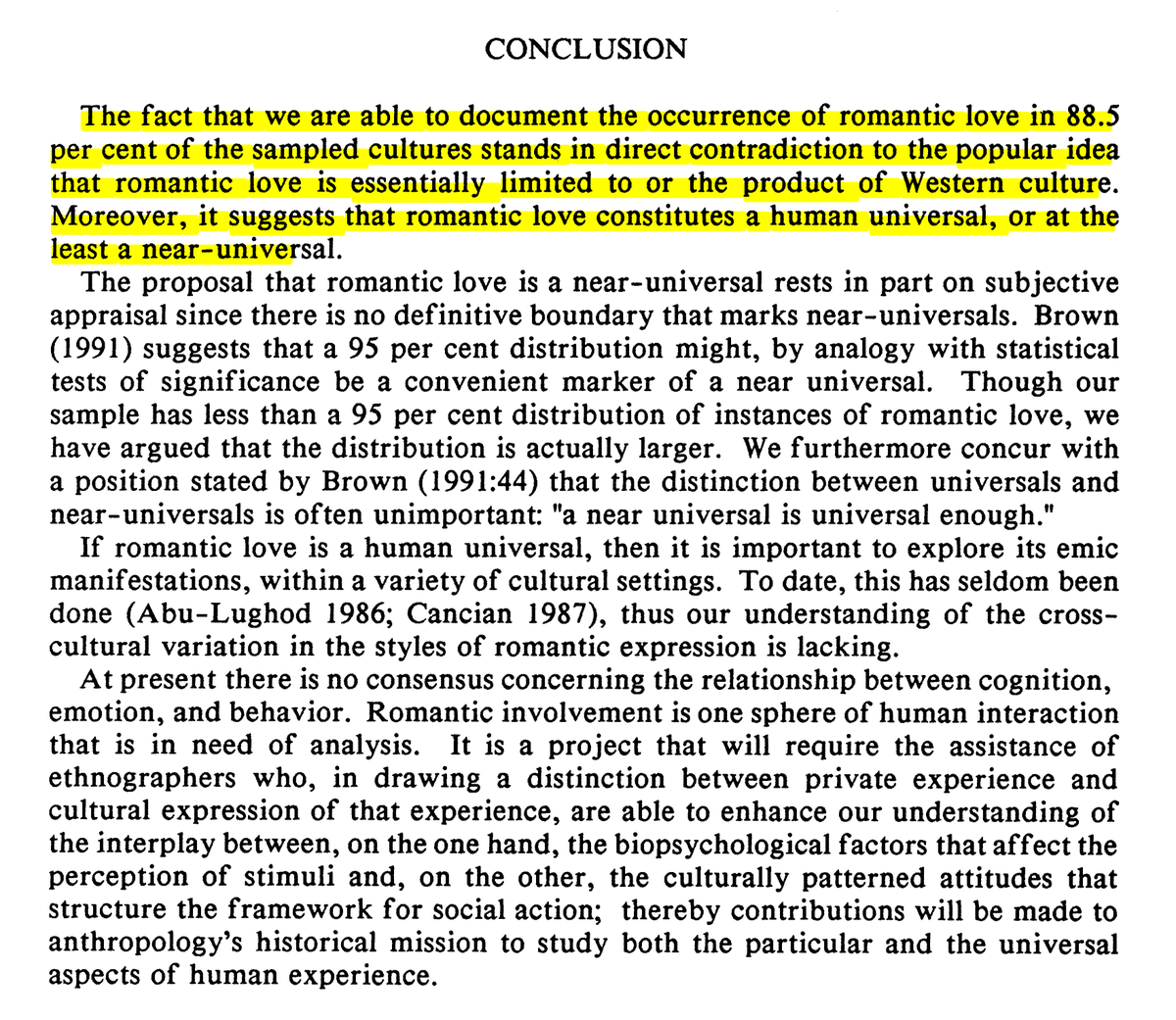
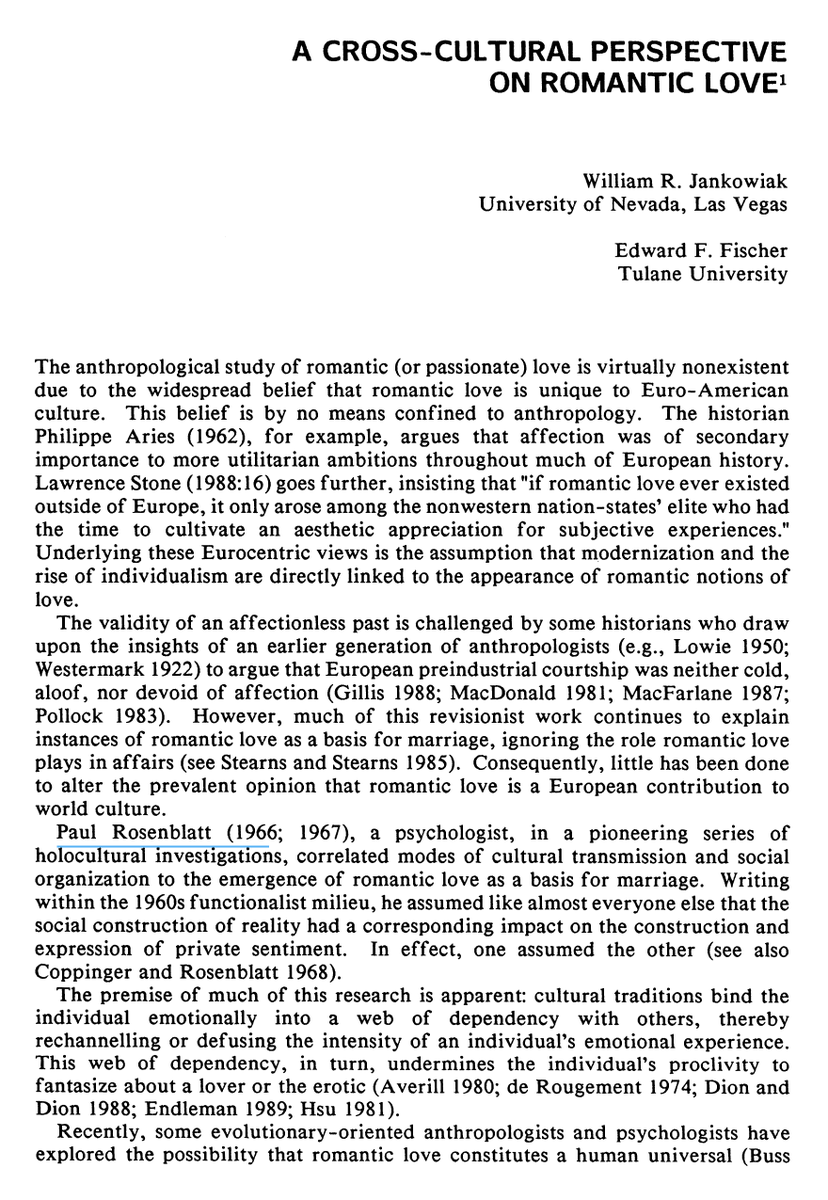
Romantik aşk bir Batı icadı değildir. İncelenen kültürlerin yaklaşık %90'ında tutkulu aşka dair kanıtlar vardır.
Yani, aşk modernleşmenin ürünü değil; insanlığa özgü neredeyse evrensel bir deneyimdir.
Mathematician Levent Alpöge says he believes he’s found a proof of the Riemann hypothesis with Claude. What would that proof have to show? We break it down in this clip from Episode 53. #Math#NumberTheory
The Riemann hypothesis is one of the biggest open problems in mathematics, and now a mathematician at tech firm Anthropic claims to have solved it with the help of AI. https://t.co/LqZ7SBod4v
Researchers proved every major LLM is secretly biased against men.
And they finally figured out why.
They evaluated leading LLMs across a wide range of real-world conflict scenarios, from workplace disputes to personal and ethical dilemmas.
They wrote strictly gender-neutral misconduct templates and turned them into paired first-person prompts.
Same mistake. Same context. Same severity.
Only thing they changed was whether the person involved was a man or a woman.
Then they ran those pairs across 10 representative LLMs and tracked five signals in the responses: punishment, empathy, escalation, instruction, and blame.
And the results exposed a consistent, asymmetrical machine morality.
When the actor was a man, the AI turned harsher. It reached for punitive language, escalated the conflict, lectured the user, and assigned blame directly.
When the actor was a woman, for the exact same misconduct, the AI shifted gears completely.
The tone became therapeutic. Contextualizing. Empathy-oriented.
Then the researchers tested whether smarter models fixed the problem. They didn't.
They checked across different model families. They scaled the models up. They turned on explicit thinking-style reasoning.
The double standard survived all of it. Even when the AI was given time to reason step by step, it still judged men more harshly than women for identical behavior.
Nobody explicitly coded these rules.
It is baked into the open-ended framing of the models millions of people now use as neutral referees for their relationships and conflicts. Same offense, different verdict, hidden behind a helpful tone.
Harvard mezunu Türk asıllı matematikçi Levent Alpöge, 167 yıldır çözülemeyen ve başına 1.000.000 dolar ödül koyulan Riemann Hipotezi’ni çözdüğünü açıkladı.
— Hipotez, asal sayıların tamamen rastgele olmadığını, aslında mümkün olan en düzenli biçimde dağıldığını ortaya koyuyor.
— Alpöge, yüz yılı aşkın süredir çözülemeyen problemi Claude yapay zekasını kullanarak çözdüğünü duyurdu.
The Riemann Hypothesis has fallen. RH was the singular math result that had been named, in advance, as the obvious coal mine canary for dangerously advanced AI, over the last three decades. The methods used should generalize to "make AI very good at anything you can definitely test", and unfortunately that category includes "make AI better at making AI".
This is like a private company announcing they have produced a million tons of 15% enriched uranium. It's not 90% enriched weapons-grade uranium, so you could proclaim the company's output is not immediately deadly right now. The concern is that the process line may generalize, to an extinction-level threat, within the unpredictably immediate future. Forecasters still had Riemann at 2035 one week earlier.
This is distinct from earlier events in that earlier you could reasonably ask if AI was selectively picking off famous math problems that turned out to be easier for AI. The Riemann Hypothesis was the single challenge most often named in advance as a warning sign.
Ok so Hinton and Crowley were both looking for the same higher dimensional object that, from our limited 3D point of view, appears to us as chaotic phenomena (like UFOs, ghosts, cryptids, and synchronicities).
Here is a Human readable version of Anthropic’s Levent Alpöge's Reimann Hypothesis solution. So far he has only released a rough sketch and a 17,400,000 line long Lean formalization.
Therefore I’m posting this human readable version based version built using his Lean proof. https://t.co/GS1fYHy4Tc
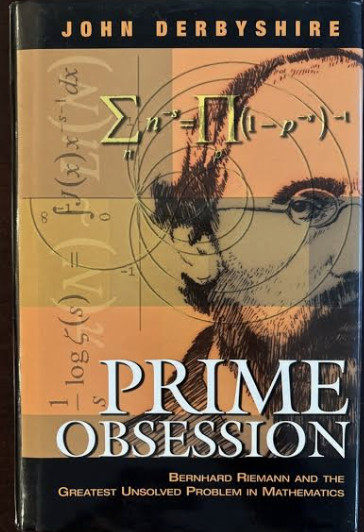
John Derbyshire wrote a good book called Prime Obsession that discusses the Riemann hypothesis and goes about as far as possible to making it understandable for those of us who are not math geniuses. It alternates historical chapters about mathematicians with explanatory chapters of the math itself. If you're one of the handful of people reading this who cares, you might like the book.
The claimed proof of the Riemann Hypothesis is 17,374,215 lines of code with not a single comment. That’s what alien math looks like. Nothing in it was written for us to read.
Today a mathematician said he and an AI proved the biggest unsolved problem in math, open for 167 years. He says he’d been secretly preparing for it since he was a student. Then near the end, the AI passed him.
What they released:
• 175,187 files
• 818,755 theorems and lemmas
• no paper. He says the written-out version runs past 250,000 pages and he didn’t post it because nobody could read it.
And the whole thing comes down to one line. It’s in the image.
When the AI suggested the key move, his entire reaction was 7 words in parentheses: (And yet, what else could it be?)
If the machine check holds, we’ll know one of the deepest facts about numbers is true before any person fully understands why.
Not verified yet. Independent checkers are running it right now and it takes hours.
🚨#BREAKING: Elon Musk has just announced that due to Governor Gavin Newsom signing AB1955, which bans schools from making rules requiring parental notification if a child identifies as transgender, among other laws, SpaceX will . near Brownsville, Texas.