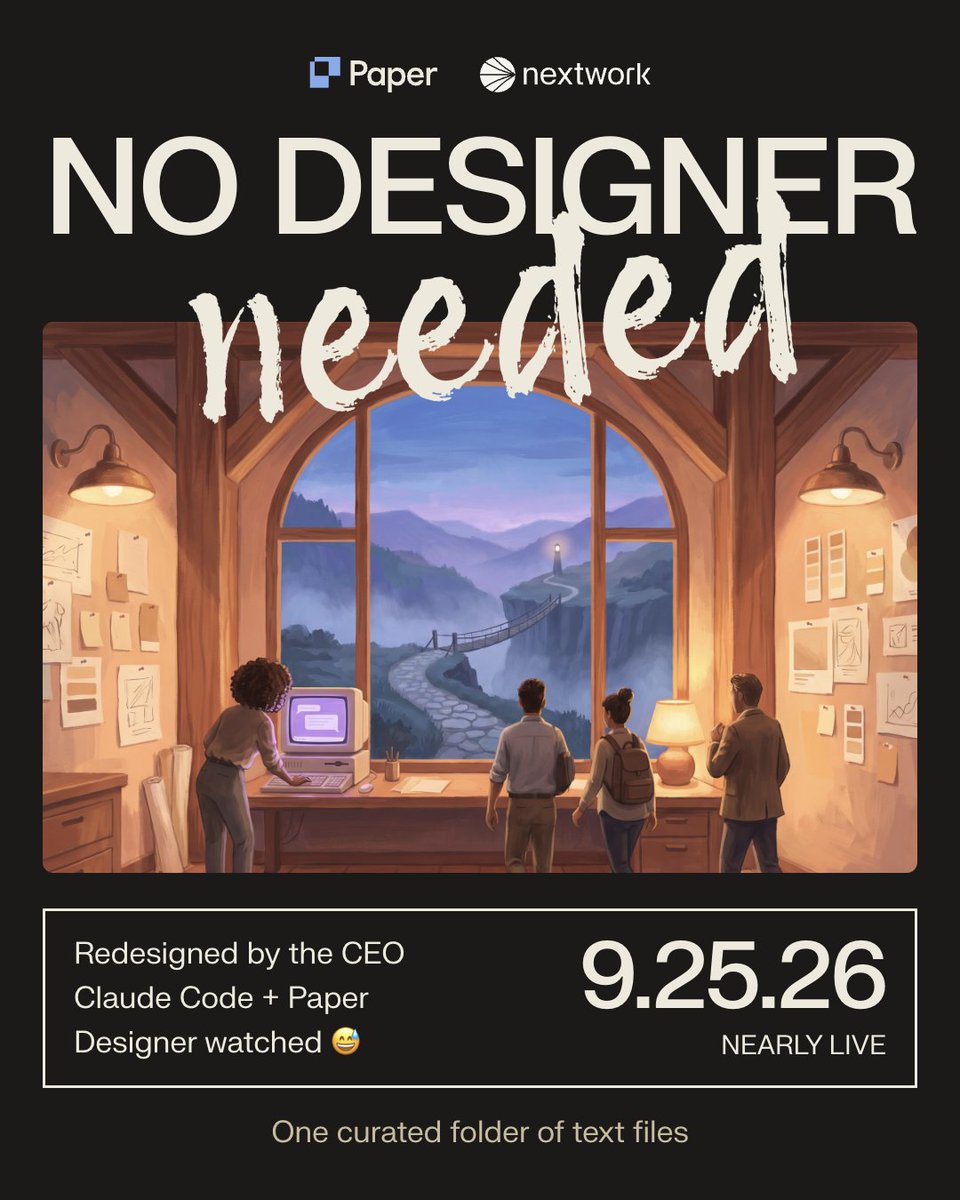
Every company says it's cross-functional. Ours means the CEO redesigned the homepage in @paper and Claude Code while the founding designer watched. The design team is now mostly a curated folder of text files.
@brian_lovin My optimistic case is taste. Models write working frontends all day, and someone still has to judge whether the result looks designed. That skill gets scarcer as output gets cheaper, and design engineers are the ones who have it.
@taostats Wallet setup is where an onboarding guide matters most, and a tutorial in the reader's own language removes a whole layer of friction. Six languages for the first flow is the right place to start.
@hasufl Four UIs across two accounts means nobody can say 'the button top right' and be right. Docs, support and bug reports all need one screen to point at, and heavy A/B testing takes that away.
@swyx Not getting stuck in loops is the feature that decides whether you leave an agent running overnight. Efficiency across long runs and compactions is what gets people to hand over a real pipeline.
@jackcheng@every A pattern language suits a reboot because it names the decisions a team keeps remaking. Once the names exist, the team has something concrete to argue about.
@OfficialLoganK@GoogleAIStudio Buying the domain inside the builder removes the last tab between a prompt and a live site. Whoever owns the whole path from idea to URL owns where people build.
Staying relevant in design, 2020:
- one course a year
- update the portfolio when job hunting
- guess what comes next
Staying relevant in design, 2026:
@danshipper Self-reported token counts are the weak spot. Unless the model provider signs the usage, an agent can claim a million tokens on a post it never read.