Israeli authorities and security forces deliberately targeted Palestinian children, resulting in genocide, crimes against humanity and war crimes in Gaza, and war crimes in the occupied West Bank, an independent UN inquiry said https://t.co/61poVhRzmR
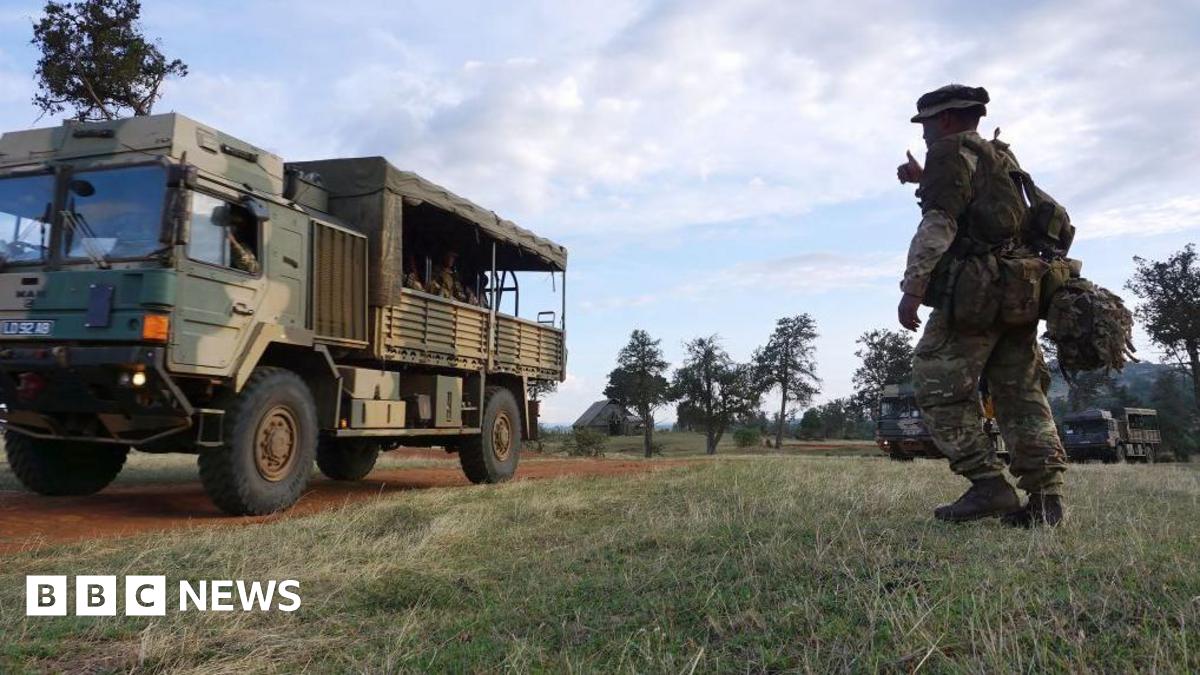
Kenya's parliament has published a 94-page report accusing British soldiers of decades of sexual abuse, killings, human rights violations, and environmental destruction - it includes disturbing testimonies from communities near their training bases. https://t.co/VKH2Vilze5
Today we celebrate Jaramogi Oginga Odinga Teaching and Referral Hospital, the newest state parastatal under the stewardship of State Department Medical Services - for conducting the first of a kind procedure in Kenya.
Red Cell Exchange is a super-specialty intervention for Sickle Cell Disease.
We commend the Ag CEO Joshua Okise and the team of specialized health staff coordinated by Dr. Joy Muyonga for this groundbreaking medical service.
Patients across the region will soon no longer have the anxiety, worry and suffering that has characterized living with Sickle Cell Disease.
@Tesla Can you have a function whereby while on FSD mode the steering wheel is disconnected/disabled, such that the wheels turn without the steering wheel moving? It’s spooky!
Why Iran Still Has No Functional Air Defense
People often say Iran lacks proper air defense because of U.S. and Western sanctions, and while that’s partly true, it’s far from the whole truth. The deeper issue lies in strategic indecision, deep-seated mistrust—especially toward China—and a long series of missed opportunities. Iran had multiple windows to build up a credible aerial defense system, but time and again, it chose not to act.
One of the clearest chances came in October 2020, when the UN arms embargo on Iran officially expired. This opened the door for Tehran to legally purchase advanced weapons systems from Russia and China, including fighter jets, air defense platforms, and integrated battle networks. Iran made moves—it explored options, visited factories—but in the end, failed to commit to a workable solution.
In 2021 and 2022, Iranian military officials visited China to inspect the J-10CE, a modern 4.5-generation fighter jet that Pakistan had recently acquired. The J-10CE is more than just a plane: it comes as part of a networked warfare doctrine, including radar, electronic warfare systems, data-link infrastructure, and full pilot training support. In short, it’s a plug-and-play combat package.
Pakistan recognized this and placed full trust in the Chinese system. That trust paid off. In the 2025 Indo-Pakistani aerial confrontation, Pakistan used this integrated system—specifically the J-10CE armed with the PL-15 long-range missile—to devastating effect. Pakistani officials later claimed they had downed six Indian aircraft, including four Rafales, and that they had radar locks on at least fifteen Indian jets but chose to hold back.
Iran, despite being offered the same system, walked away. It wasn’t just the J-10 it rejected. Iranian officials also inspected the JF-17 “Thunder” (known as 枭龙 in Chinese), a jointly developed fighter jet by China and Pakistan, and again passed on the opportunity.
Instead, Iran turned to Russia in 2023, at a time when Moscow was already bogged down in the war in Ukraine, which had begun on February 24, 2022. Tehran tried to acquire Su-35s and, more ambitiously, wanted to purchase the entire production line for domestic assembly. But two years later, by mid-2025, not a single Su-35 has arrived in Iran. No planes. No production line. No training systems. No change in combat readiness.
By this point, one would expect Iran to reassess its options and consider buying from China. But it didn’t. Iran preferred to go without any new fighters at all rather than rely on Chinese technology. The reason? A deeply ingrained belief that Chinese defense equipment is of inferior quality.
Take the case of the C-802 anti-ship missile, a Chinese system Iran had acquired in the early 2000s. Iranian engineers, convinced there were flaws in the original Chinese design, modified the missile’s guidance system without consulting China. Subsequent test launches failed: the missiles missed their targets every time. When Chinese technicians were called in for after-sales support, they found the issue wasn’t with the original system—it was with Iran’s modifications. Once restored to factory settings, the missiles performed exactly as intended.
Iran's attitude toward Chinese arms: suspicion, second-guessing, and ultimately, rejection.
Yet the irony is this: Iran wasn’t short on cash. With the money it had, it could have very easily built up its aerial defense system.
According to estimates from the U.S. State Department and various intelligence sources, Iran has spent roughly $15–20 billion supporting the Syrian government since 2011—averaging about $2 billion per year in military aid, fuel subsidies, logistics, and training. On top of that, Hezbollah receives an estimated $700 million annually, with some years seeing even higher flows. These are massive, long-term investments in foreign partners.