this is free f*cking gold for anyone building a second brain
his second brain article pulled 8 million views, so he packed the whole system into one repo
the repo, the guide, the tools, the learning path, all free
• the guide
> 10 sections, 65 pages, from the core idea to troubleshooting
> 5 tracks on top, 44 pages, 15 of them build guides with working code
• the machine (.claude/)
> 18 agent skills, one per workflow
> 72 slash commands - /ingest-pdf, /ingest-youtube, /ingest-voice, /backfill
> 6 subagents - curator, linker, researcher, reviewer, ingestor, graph-analyst
> 4 are read-only, so nothing rewrites your vault behind your back
• the scripts (plain Python, zero dependencies)
> graph export, link checker, vault stats, chat converter, site builder
• the starter vault
> its own CLAUDE.md with page contracts and linking rules
> raw/ stays untouched once it lands, wiki/ is what the agent keeps up
> log.md - one line per run, so every change is traceable
• 87 vetted resources
> 28 tools, 26 Obsidian plugins, 15 repos, 12 skills, plus papers and articles
five tracks to choose from:
> knowledge graphs
> Jev engineering
> agent harnesses
> loop engineering
> eval engineering
new to this? start with the second brain guide. already deep in it? jump straight to the tracks
the Jev engineering and loop engineering tracks alone are worth the clone
a consultant bills four figures to build you a research system like this. here it's a public repo under MIT
↳ https://t.co/3zyoyQy0af
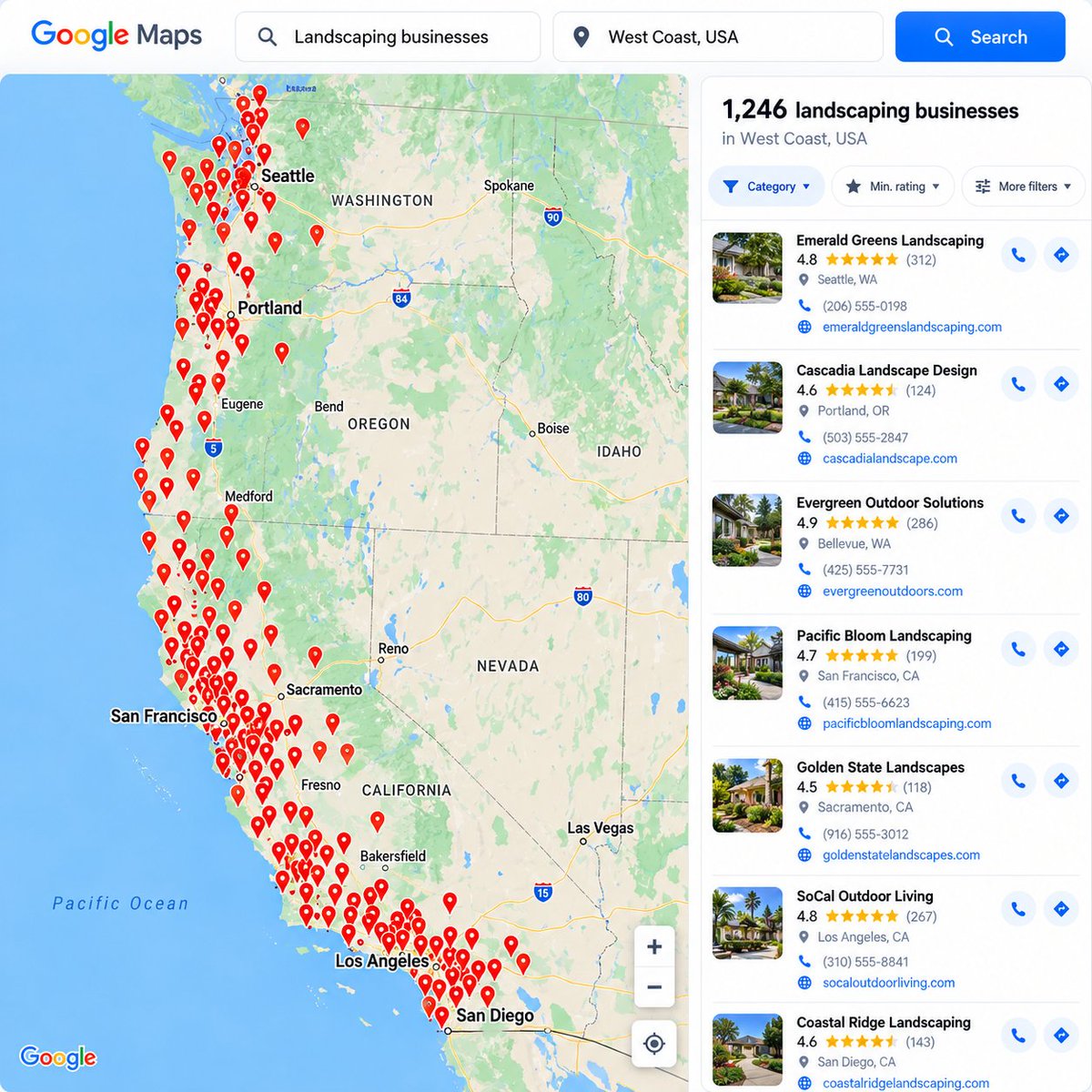
Google Maps + verified emails = 53 meetings in 50 days.
That's what we did for our client Eden Studio, from 69,204 businesses scraped off Google Maps.
Local owners live on Google Maps, so that's where the whole market sits.
I wrote out exactly how to scrape local businesses from Google Maps:
- Pulling the raw list
- Finding the owner
- The email waterfall
- Writing to a local owner
- Calling the list
Full breakdown in the article:
I gave Claude 48 hours to cook.
The task:
Research 20 distinct visual styles, create skills from them for vertical shorts, then generate a short for each style.
Time:
It now takes ~1.5 hours per short once its style exists, and about ~3 hours for the first short in a new style.
Cost:
New short in an existing style ~$18
First short in a new style ~$24
Here are 3 examples:
whoever leaked this is f*cking crazy
someone mapped 300+ AI agents into one GitHub repo - and basically leaked the shortlist of what’s actually worth trying.
coding agents. browser agents. memory. voice. research. multi-agent teams. local models. sandboxes. evals.
all sitting on one page.
and once you start opening the categories, you realize how much stuff people are still building from scratch for absolutely no reason.
want an AI that works inside your codebase?
-> Aider / Continue
want agents working together like a tiny company?
-> CrewAI / AutoGen / MetaGPT
want your agent to actually remember you tomorrow?
-> Mem0
want it running code somewhere that isn’t your laptop?
-> E2B
want models running locally for $0/token?
-> Ollama
want to see what your agent actually did after it inevitably does something weird?
-> AgentOps
and that’s barely scratching it.
there are 300+ projects across ~25 categories.
the real cheat code isn’t downloading all of them.
it’s opening the repo before you build anything and asking:
“has someone already solved this?”
because there’s a pretty good chance the answer is yes - and the open-source version already has thousands of people testing it for you.
I went through the map and pulled out the agents I’d actually start with + my pick for every major part of the stack.
full 300+ AI agent list below
Vibe-coded web version of my old procedural graphics experiments. Originally were made in AE and Geometry Nodes. Made a couple presets with old shapes set. But there’s a lot more to play with, break and have fun.
https://t.co/KjWyYWRFSv
What used to take Blender can now start with one sentence 🥶
I literally typed the movements I wanted 3D model to do in plain English and within seconds @tripoai had those same movements running on the 3D model.
Seriously within seconds. Not exaggerating.
Until now, I had to use high end models like Astra or Fable to do these kinds of animations on a 3D model. It not only cost a lot of tokens but also took a way looong time
This new workflow feels way crazy to me. Super fast and Stupid easy to use.
Now I’m just making Sukuna dance, do karate and try every ridiculous move that comes to mind 😂
Also, not to forget, did you notice how well Tripo handled the textures here? It feels like Sukuna came straight out of a comic. So goood.
You can check here: https://t.co/My2aXyx33d
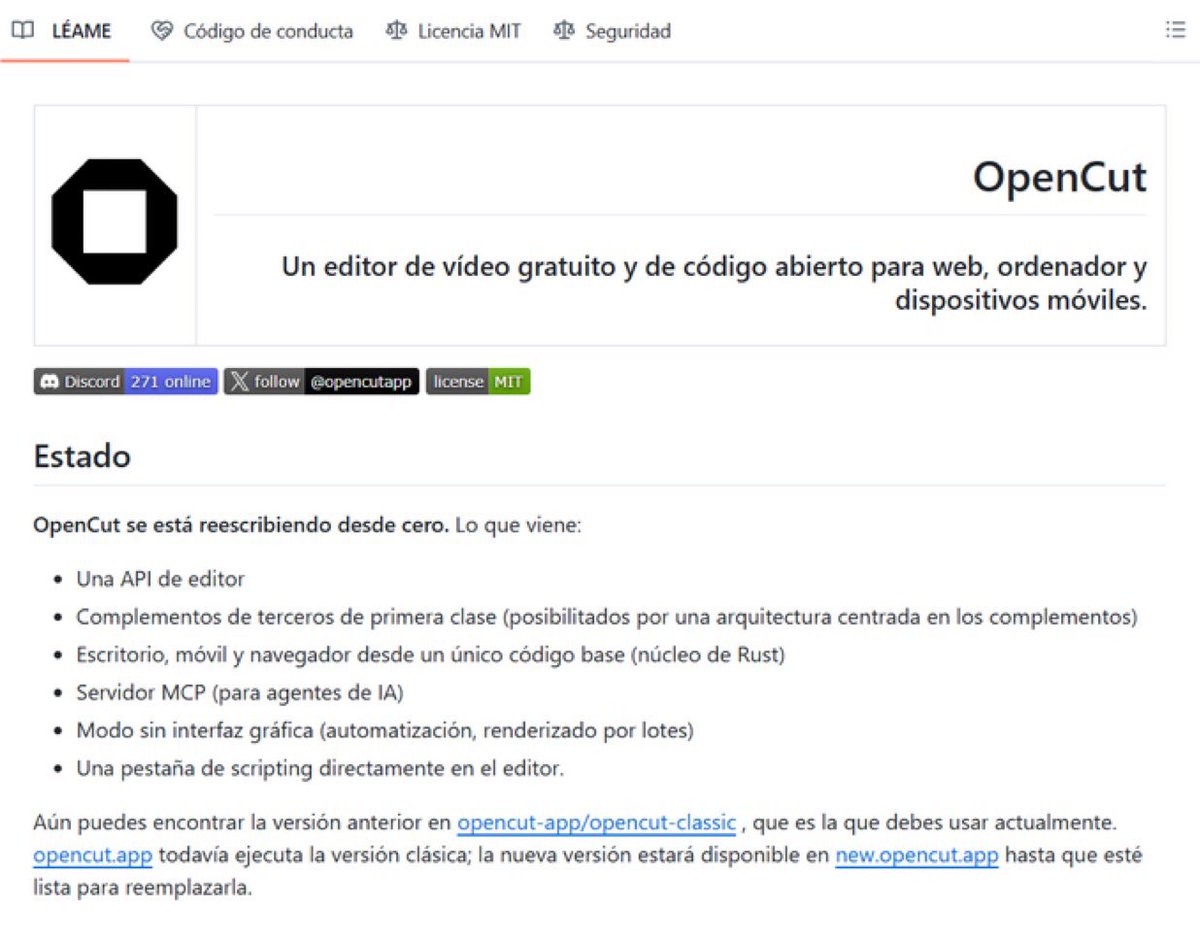
🚨 HAN CREADO UN CAPCUT GRATIS Y SIN MARCAS DE AGUA, Y YA TIENE 92K STARS EN GITHUB
CapCut te mete marca de agua, te bloquea funciones y encima te cobra suscripción.
Un grupo de devs se cansó y construyó la alternativa open source y gratuita.
Se llama OpenCut. Te explico todo:
Un editor de vídeo open source que están construyendo desde cero, con arquitectura basada en plugins.
La idea: una alternativa real a CapCut, pero abierta.
Sin marcas de agua, sin paywalls, sin suscripciones.
Lo que crearon:
→ Editor completo con línea de tiempo y multipista
→ Plugins nativos para expandir lo que puede hacer
→ Una sola app para web, escritorio y móvil (núcleo en Rust)
→ MCP Server, automatizaciones y soporte para agentes de IA
→ Licencia MIT: puedes hacer lo que quieras con él
Cómo instalarlo:
→ Clona el repo desde GitHub
→ Instala las dependencias
→ Ejecuta la versión clásica (disponible ya)
→ Sigue la nueva versión en https://t.co/wCQ5LpBzsM
Es exactamente lo que CapCut debería haber sido desde el principio.
Enlace abajo👇
35 WEBSITES GOOGLE DOESN'T WANT YOU TO KNOW
1. Explee .com — sends cold emails on autopilot
https://t.co/Wb8ppu6CBi
2. NoteGPT — turns docs into podcasts
https://t.co/5guI12zfQG
3. Napkin AI — turns text into diagrams
https://t.co/zbZM1QwZqN
4. Ideogram — generates text in images perfectly
https://t.co/15aM1br0es
5. Suno — makes full songs from a prompt
https://t.co/oBBLkwUNif
6. HeyGen — clones your face into videos
https://t.co/VMPy4543Tx
7. Kling AI — best AI video generation
https://t.co/LVlCukZcc4
8. ElevenLabs — clone any voice instantly
https://t.co/CRZgiTnd7d
9. Gamma — AI presentations in seconds
https://t.co/iioMX6OLwc
10. Perplexity — AI search with real sources
https://t.co/jjIArzhr4a
11. Pika — animate any image into video
https://t.co/F6FVmeNqr2
12. Runway — cinematic AI video generation
https://t.co/iz3ysgx2Vd
13. Cursor — AI code editor that builds for you
https://t.co/lMBPdWDBVp
14. v0 — generate UI components with AI
https://t.co/HfI1SNyr0v
15. Lovable — turn ideas into working apps
https://t.co/UC1OLaOHzi
16. Descript — edit video by editing text
https://t.co/unSkPVUxTi
17. Opus Clip — auto cut long videos into shorts
https://t.co/ONudvbxsxf
18. Krea AI — real time AI image generation
https://t.co/lQ4oro7Giv
19. Magnific — upscale any image with AI
https://t.co/4naInvkXvS
20. Viggle — make characters move realistically
https://t.co/FNK9aOSv99
21. tl;dv — record and summarize any meeting
https://t.co/fPG4ZYq2o6
22. Fireflies — AI meeting notes automatically
https://t.co/Y6m2IUUpLD
23. Castmagic — turn audio into content pieces
https://t.co/ryhynVJeAG
24. Replit — code and deploy from browser
https://t.co/6k3QRnnNlP
25. Leonardo AI — generate images for free
https://t.co/cFKBsVUDxv
26. Synthesia — AI avatar videos no camera needed
https://t.co/UqOFE4CM2O
27. Fliki — turn text into videos with AI
https://t.co/GdoDS1i0g7
28. Photoroom — AI product photography
https://t.co/XsI2j61B4P
29. Invideo AI — turn prompts into full videos
https://t.co/zowB7n8khR
30. Consensus — search what science agrees on
https://t.co/D5y0Hn6iHI
31. SciSpace — understand any research paper
https://t.co/hexAgmr8TC
32. Tome — AI builds your pitch decks
https://t.co/e1V01yCzLp
33. Beautiful AI — smart presentation design
https://t.co/PODbjhPOY7
34. Meshy — turn text into 3D models
https://t.co/THlKTuvW1c
35. Vizcom — turn sketches into renders
https://t.co/IKAQCBLwBU
The AI revolution isn't coming.
It already happened and you missed half of it.
🚨 Claude users!!
Here is how to save a lot of Claude code usage
> Use your highest-usage model mainly for thinking/planning, not coding. Delegate implementation to models with better limits.
> Keep effort low by default. Increase it only when necessary. Avoid agent-heavy modes unless you actually need them.
> Watch your context window. Once it reaches ~50–60%, compact it. Auto-compact can help.
> Don’t run dozens of unnecessary skills. Merge duplicates and remove anything already built into the model.
> Disable MCPs you don’t need for the current task. If they’re taking 15–20%+ of your context, disable some.
> Keep Memory.md / Claude.md clean. Periodically remove outdated entries and archive anything important
How is your Claude limits?
This dinosaur doesn't exist
35 seconds. 5 moves. 8.3M views...
Toddler cartoons like this are the quiet monster of YouTube – a breakdown of the format did 1.86M views here
Here's exactly how this one was made:
1. The song. One prompt to Lyria 3 Pro with my own lyrics - 35 seconds, vocals and ukulele. The first take skipped "Three!" in a counting song. Whisper caught it, take 3 sang every line
2. The mascot. 4 concepts, picked Dino. Nano Banana Pro in Higgsfield put him in one playroom for every line: hello, jump, clap, spin, touch your toes, bye-bye
3. The singing. I cut the song piece by piece and gave each piece to Seedance 2.5 as an audio reference. He opens his mouth on every word and dances in the gaps
4. The edit is code. Claude Code wrote it in HyperFrames: every word lights up when it's sung, a star hops from word to word, giant numbers pop and fly into a 5-slot counting board. The outro counts the board back: one, two, three, four, five
Then every scene is an ad slot:
Toothbrush → toothpaste
Bubble bath → bath toys
Picture book → kids books
Fruit bowl → snacks
Building blocks → toys
Bedtime → night lights, pajamas
Rain boots → kids clothing
All 9 scenes are already generated, same Dino in each (grid in the reply)
Higgsfield draws and animates him. Picsart writes the song. HyperFrames renders it. You sell the slots
Cost: ~520 Higgsfield credits + 34 Picsart credits
Bookmark this before every kids channel is a dinosaur
Day 31 building the Figma and Amazon for hardware until somebody invests in it.
[packaging - blister]
So I’m testing the same hardware kit across vacuum skin, blister and pouch packaging. The film, cavity, clearances, sealing area and materials all adapt around the object, while staying editable.
I’m also experimenting with the forming process itself, so you can move from the flat film to the final package and understand how the object changes the structure around it.
The goal is that eventually you don’t stop at designing the product. You can keep going into how it’s protected, presented and prepared for the physical world.
10 GITHUB REPOS BRINGING AI INTO CYBERSECURITY
AI isn't just changing how we build software.
It's also changing how security teams find, test and fix vulnerabilities.
1. PentestGPT
AI assistant for reasoning through penetration testing workflows and findings.
https://t.co/9ZcItviCti
2. Caido
Modern toolkit for intercepting and analyzing web traffic during security research.
https://t.co/E2yv2L2Jge
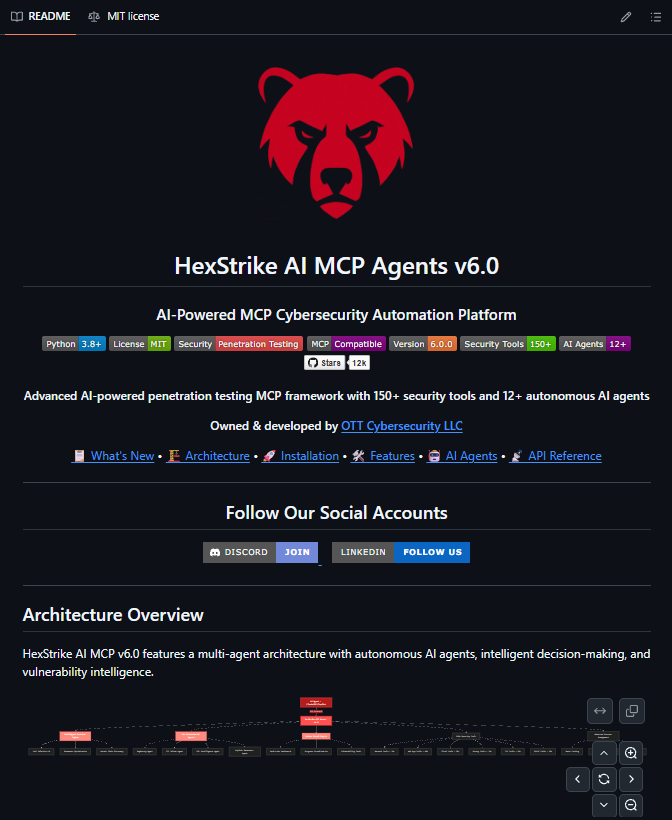
3. HexStrike AI
Connect AI agents with cybersecurity tools through an MCP-based framework.
https://t.co/wVj3W9dqJ2
4. Strix
AI-powered security testing for investigating applications and finding vulnerabilities.
https://t.co/xlYhXK5975
5. Nuclei
Fast, template-based vulnerability scanner for applications and infrastructure.
https://t.co/Vr7yol06Oq
6. Semgrep
Code-aware security scanning that helps catch vulnerabilities before deployment.
https://t.co/UXshu3HJIF
7. Gitleaks
Find exposed API keys, passwords, tokens and other secrets in Git repositories.
https://t.co/gzbcvI0c3R
8. OWASP Amass
Discover domains, subdomains and infrastructure to understand external attack surfaces.
https://t.co/xpX7sLwzf2
9. Wazuh
Open-source platform for security monitoring, detection, vulnerability management and log analysis.
https://t.co/KzY46IlhYq
10. Prowler
Assess cloud environments against security best practices and compliance frameworks.
https://t.co/JYRDnoAogJ
Save these repos if you're exploring AI-powered cybersecurity.
this must be f*ckn illegal...
i pointed a crawler at my own prompt instead of the web, 195 words, every word crawled as a decision instead of text
each word gets a typed question: is it relevant, sourced, ambiguous, or needs approval. each answer returns a probability.
then the routing is brutal and it has no opinion about it
→ p ≥ 0.95 goes straight to code, no model call at all
→ p < 0.95 goes to sonnet 5.5, that is the only part a model thinks about
→ anything that smells like approval goes to me
one crawl, 168 forks out of 175 words read. 133 ended inside an if statement. 24 reached sonnet. 11 came to me.
the good part: "ask" scored 0.544 on needs approval, no confidence either way, so it stopped and handed it off instead of guessing.
average confidence across the run, 0.925.
everyone crawls the web for context. it was sitting in the prompt, unread.