Postdoc👩🔬@UCSF @UCSFCancer|Translational Control| RNA Modifications|Cancer Biology|🪴🐶🐈 🌧️☕️ 🎶🎻❤️| You are the inspiration for ur own dreams❤️#carpediem
Ever wonder if tRNAs can regulate the identity of a cancer cell?
@HsiehLab@FredHutch postdoc @yeonsookim_phd did and discovered a single tRNA that can control lineage dependency and drug sensitivity in prostate cancer published today @Nature: https://t.co/V7FHTM0l5M
🔥Out now in @CellCellPress from the amazing @QiushuangW & co: dietary arginine shapes anti-viral & anti-tumor immunity, repressing MHC-I translation in a codon-usage–dependent way—impairing defense against flu, SARS-CoV-2 & colon cancer. 🧵👇 https://t.co/DJIVLkPEWK
Excited to share our new paper in @ScienceMagazine A subset of lung cancers drives cachexia, not through factors circulating in the blood, but through local lung sensory neurons. https://t.co/eoRLCutXG4 big thanks to first authors Michael and @s_kotschi our collaborators
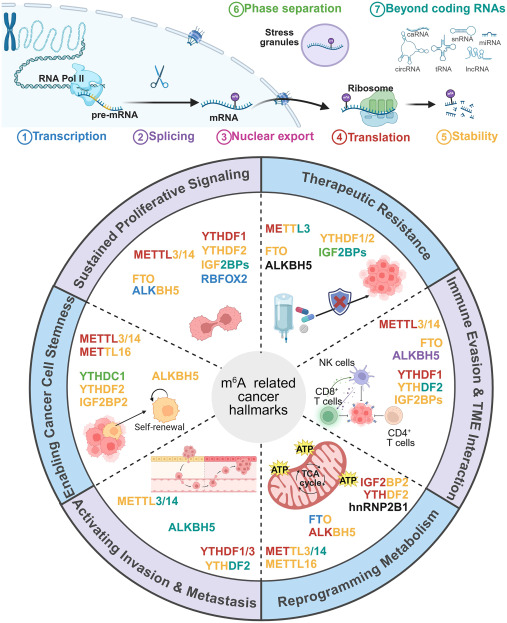
Now online! FOCAS: Transcriptome-wide screening of individual m6A sites functionally dissects epitranscriptomic control of gene expression in cancer https://t.co/o5BWCQSMAz
Mary Brunkow, Fred Ramsdell and Shimon Sakaguchi have been awarded the 2025 Nobel Prize in Physiology or Medicine for their groundbreaking discoveries concerning peripheral immune tolerance that prevents the immune system from harming the body.
The Nobel Prize laureates identified the immune system’s security guards, regulatory T cells, thus laying the foundation for a new field of research. The discoveries have also led to the development of potential medical treatments that are now being evaluated in clinical trials.
The hope is to be able to treat or cure autoimmune diseases, provide more effective cancer treatments and prevent serious complications after stem cell transplants.
#NobelPrize
BREAKING NEWS
The 2025 #NobelPrize in Physiology or Medicine has been awarded to Mary E. Brunkow, Fred Ramsdell and Shimon Sakaguchi “for their discoveries concerning peripheral immune tolerance.”
#CELLFIE for CAR T screening, out in @Nature today—a new mRNA-based platform for screening primary cells. CAR + gRNA library are delivered by lentivirus, CRISPR modifiers as electroporated mRNA. That’s more flexible and effective than existing T cell screening methods. (1/7)
Try the Rapidash protocol to isolate ribosomes from any sample in less than 5 hours. At the moment, the best protocol to characterize ribosome associated proteins (RAPs) by MS without contamination from other multi-protein complex components! https://t.co/pHJBWBxNbt
“Zotatifin, as a bona-fide ‘translatome therapy’ that blocks the production of cancer-causing proteins, expands the landscape of drugs available for patients,” @DuyguKuzuoglu on latest research w/
@haognguyen@RuggeroDavide@kevansf@ucsf https://t.co/JPbEYAqax6 #PCSM
Happy to share our new work with @haognguyen on targeting mRNA translation of oncogenes by RNA structure remodeling with a small molecule zotatifin. Congrats to @DuyguKuzuoglu an amazing postdoc and all the authors and collaborators!
https://t.co/RGH6wZqkLl
Great tools and tips for the field to study IRES-dependent translation. Beautiful dissection of true HOX IRES translation in developing embryos. Congrats to all @mbarnalab@KatLeppek!
☕️@ScientistJoanna, @RuggeroDavide & co perform a genome-wide CRISPRi screen and identify RBM42 as a ribosome-associated protein that modulates MYC translation and an #oncogenic mRNA program required for #PancreaticCancer growth.
👉🏼https://t.co/SWt5DxRqpF
https://t.co/IHcOfFPdDn