I propose Stanford NLP as an independent third-party evaluator under @DarioAmodei’s 3 step plan. For important parts of the work, universities would be better than any other organization (see below ����👇), and, of university groups, @stanfordnlp would be the best one to choose. 😊
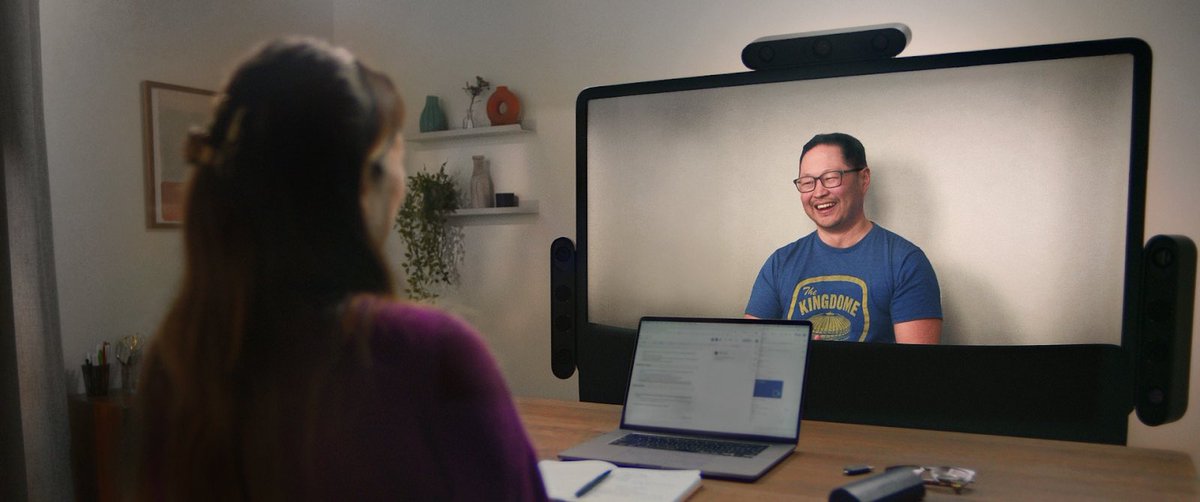
📢 Google's Project Beam (formerly Project Starline) is looking for Student Researchers!
We seek students interested in real-time high-realism 3D reconstruction, dynamic 3D, relighting, materials, novel view synthesis, diffusion, video models, transformers, and more.
🧵1/7
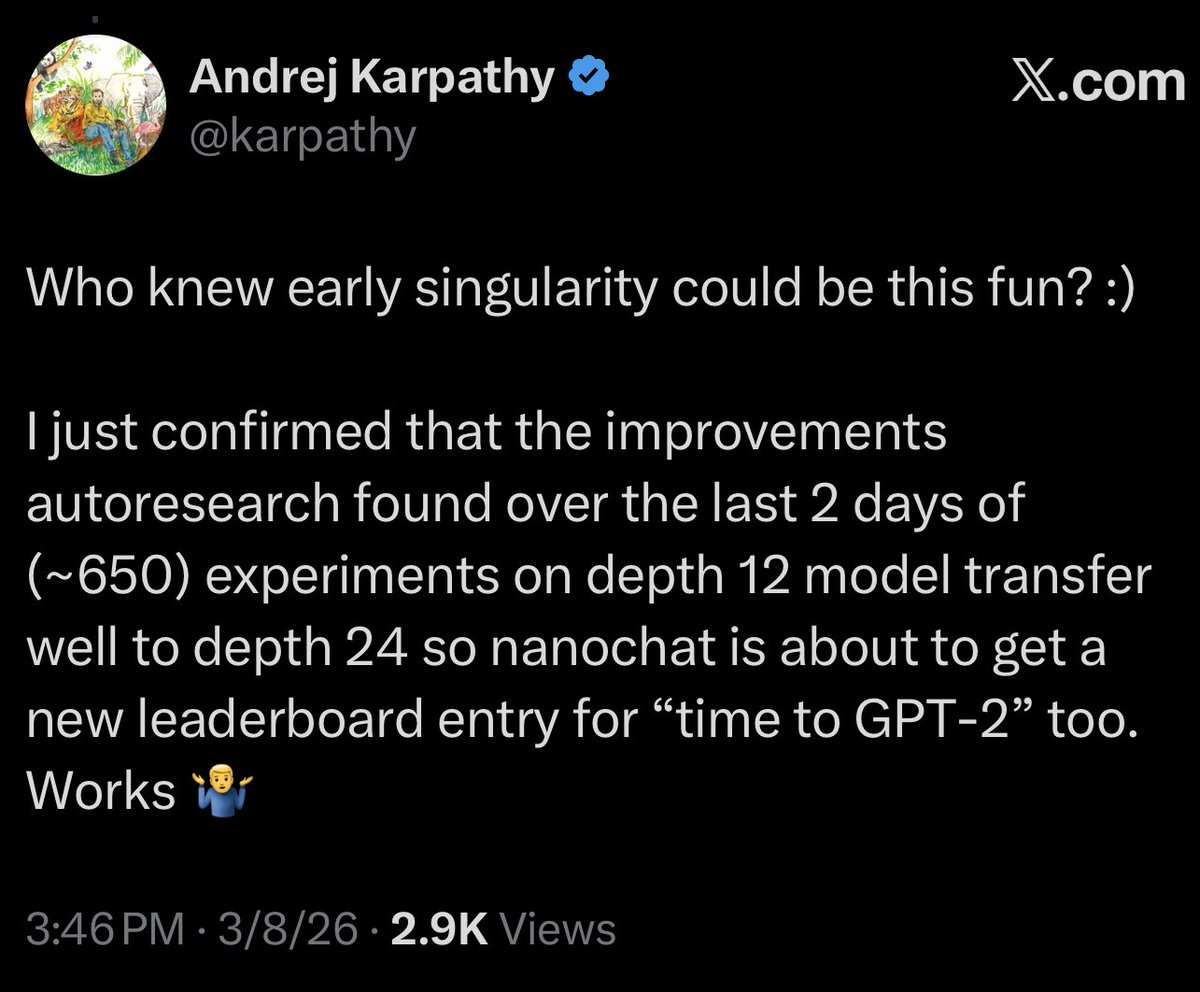
The next step for autoresearch is that it has to be asynchronously massively collaborative for agents (think: SETI@home style). The goal is not to emulate a single PhD student, it's to emulate a research community of them.
Current code synchronously grows a single thread of commits in a particular research direction. But the original repo is more of a seed, from which could sprout commits contributed by agents on all kinds of different research directions or for different compute platforms. Git(Hub) is *almost* but not really suited for this. It has a softly built in assumption of one "master" branch, which temporarily forks off into PRs just to merge back a bit later.
I tried to prototype something super lightweight that could have a flavor of this, e.g. just a Discussion, written by my agent as a summary of its overnight run:
https://t.co/tmZeqyDY1W
Alternatively, a PR has the benefit of exact commits:
https://t.co/CZIbuJIqlk
but you'd never want to actually merge it... You'd just want to "adopt" and accumulate branches of commits. But even in this lightweight way, you could ask your agent to first read the Discussions/PRs using GitHub CLI for inspiration, and after its research is done, contribute a little "paper" of findings back.
I'm not actually exactly sure what this should look like, but it's a big idea that is more general than just the autoresearch repo specifically. Agents can in principle easily juggle and collaborate on thousands of commits across arbitrary branch structures. Existing abstractions will accumulate stress as intelligence, attention and tenacity cease to be bottlenecks.
I once bet with Elon:
If AI can do AI research and engineering better than Andrej Karpathy, that’s AGI. I bet that wouldn’t happen in 2026.
Starting to think I might lose that bet.
We present a research preview of Self-Flow: a scalable approach for training multi-modal generative models.
Multi-modal generation requires end-to-end learning across modalities: image, video, audio, text - without being limited by external models for representation learning. Self-Flow addresses this with self-supervised flow matching that scales efficiently across modalities.
Results:
• Up to 2.8x faster convergence across modalities.
• Improved temporal consistency in video
• Sharper text rendering and typography
This is foundational research for our path towards multimodal visual intelligence.
Great work from @Amandeep__kumar.
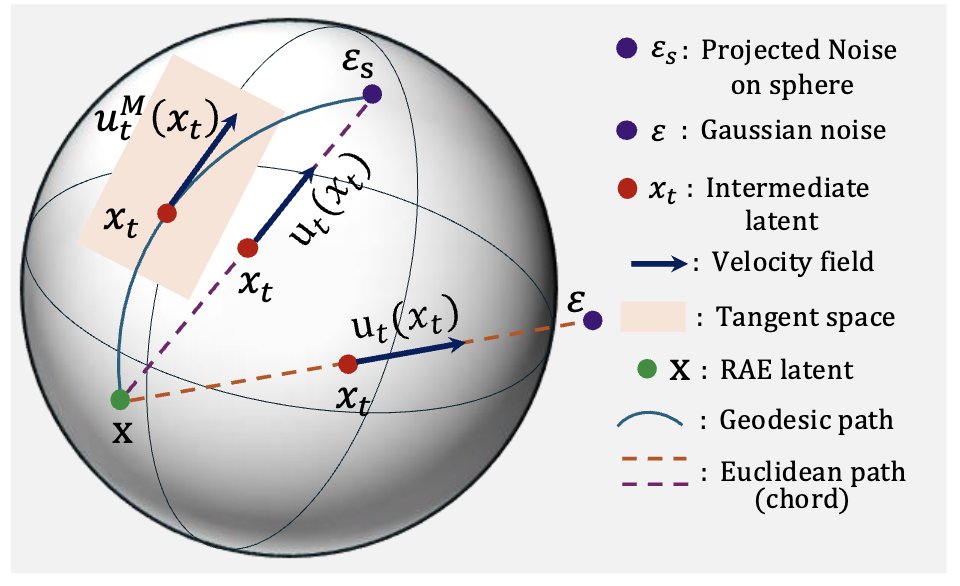
The recent 'Diffusion Transformers with Representation Autoencoders' (DiT-RAE) bridges the gap between understanding and generation, but it previously relied on handcrafted design choices like latent dimensions higher than DINOv2 to work with DINOv2. This introduced massive compute overheads.
Amandeep tackled the root cause: DINOv2 projected points lie on a high-dimensional hypersphere. By using Riemannian flow matching with Jacobi field regularization, he accounts for the actual geometry of the data. This is a significant step toward efficient, truly unified vision models.
🚀 Unlocking Standard Diffusion Transformers on Representation Encoders
Why do standard DiTs fail to converge on high-dimensional features like DINOv2? 📉 We found the answer isn't just "more parameters"—it's Geometry.
Introducing Riemannian Flow Matching with Jacobi Regularization (RJF)
📄 Paper: https://t.co/yMutIh2mh5
Check out NeuralRemaster with Phase-Preserving Diffusion (ϕ-PD): a parameter-free, model-agnostic reformulation that makes structure-aligned generation simple and reliable.
Huge thanks to @rowantmc@vitorguizilini@vishalm_patel and other coauthors
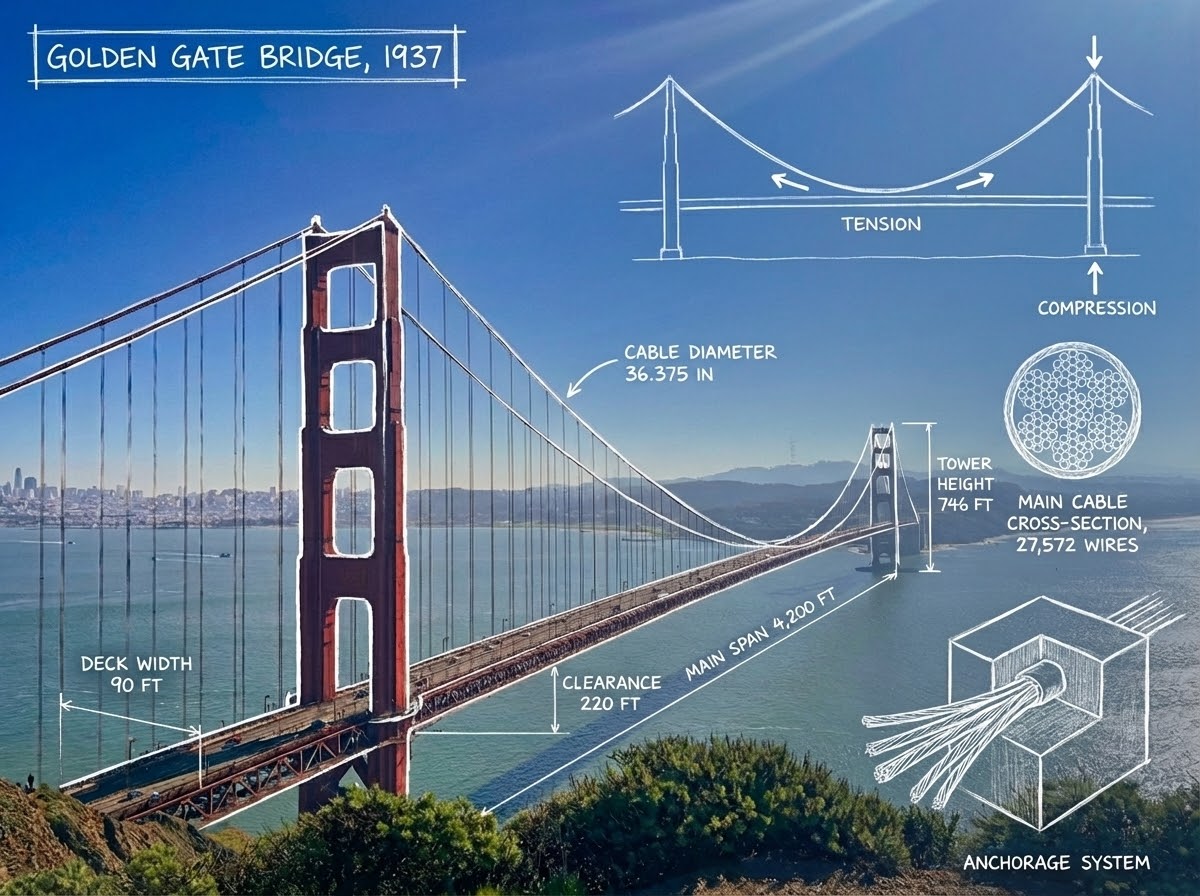
Give all latex, figs & graphs for your paper to Nano Banana Pro, and it'll make a clear, fun, and high resolution 4K poster for you
We might just preset this as our @NeurIPSConf poster next month
https://t.co/Vy7VKOrzMG
Go to @YuyangHu_666 poster & and he'll share the prompt
You went 🍌🍌 for Nano Banana. Now, meet Nano Banana Pro.
It’s SOTA for image generation + editing with more advanced world knowledge, text rendering, precision + controls. Built on Gemini 3, it’s really good at complex infographics - much like how engineers see the world:)
Diffusion will obviously work on any bitstream.
With text, since humans read from first word to last, there is just the question of whether the delay to first sentence for diffusion is worth it.
That said, the vast majority of AI workload will be video understanding and generation, so good chance diffusion is the biggest winner overall.
Also means that the ratio of compute to memory bandwidth will increase.
🥳🥳DiT w/o VAE, but with Semantic Encoder, such as DINO!
We introduce SVG (Self-supervised representation for Visual Generation) .
Paper: https://t.co/TL2gnTDCGL
Code: https://t.co/fWEwVYeiKz
🧩 “It’s not AR vs diffusion… it’s AR through diffusion.”
👉Is it possible that Visual Autoregressive are models are secretely a discrete diffusion ?
We show: with a Markovian attention mask, VAR becomes mathematically equivalent to discrete diffusion.
Here's how 🧵👇
Did you know that when they say stuff like "The A18 uses TSMC's 3nm process" or "announced the 2nm node"
The 3nm, 2nm actually doesn't mean anything?! It's just like a version number. They make it up. Literally nothing measures 2nm or 3nm.
I certainly didn't know.