For inactive adults, about 2,000 extra steps 🚶🏽♀️ a day (roughly 1.6 km) is linked to 25–50% lower mortality risk. Walking 11,000–16,000 steps a day, compared with 2,000–5,000, was linked to 45–67% lower risk.
These are among the findings of a new analysis in @MayoProceedings bringing together meta-analyses and cohort studies on diet quality, #physicalactivity, cardiorespiratory fitness and all-cause mortality.
Small daily increases in activity are one of the most accessible ways to support healthy ageing.
https://t.co/uvchLN9zEs
A 🆕 ACC Scientific Statement, published in #JACC, offers a comprehensive set of lipid-lowering strategies for detecting and managing #ASCVD earlier in life.
Read the statement: https://t.co/G3lDgePn7A #cvLipids#CardioX
🚨 TRABAJAR DEMASIADO PUEDE COSTARTE LA VIDA.
Un nuevo metaanálisis publicado en iScience (2026) revela un dato preocupante:
Trabajar 55 horas o más a la semana se asocia con un 57% más de riesgo de mortalidad cardiovascular frente a jornadas de 35–40 horas.
Y no, trabajar más no siempre significa vivir mejor.
Tu corazón también necesita descansar.
🩺 Intensive vs standard BP:
9 RCTs, 65K patients
📉 Every HR <1 (0.73–0.90); pooled HR 0.82, 95% CI 0.78-0.87
🧮 Heterogeneity of treatment effect? None: I²=0%
🎯 Lower SBP ➡️ better outcomes in HTN, T2D and stroke
Implement!
🚨 TE HAN CONTADO MAL LO DE LOS PICOS DE GLUCOSA.
Durante años nos hemos obsesionado con evitar que la glucosa suba después de comer.
Pero un estudio publicado en Nature Metabolism encontró algo sorprendente:
Lo que mejor predecía el hambre posterior no era el pico de glucosa, sino la CAÍDA que se producía 2-3 horas después. 🧵👇
Two major blood pressure trials just published in the NEJM, testing the same intensive target of SBP<120 vs <140 mmHg.
But they got completely different answers, and that tells us something important about how we apply evidence in medicine. 🧵
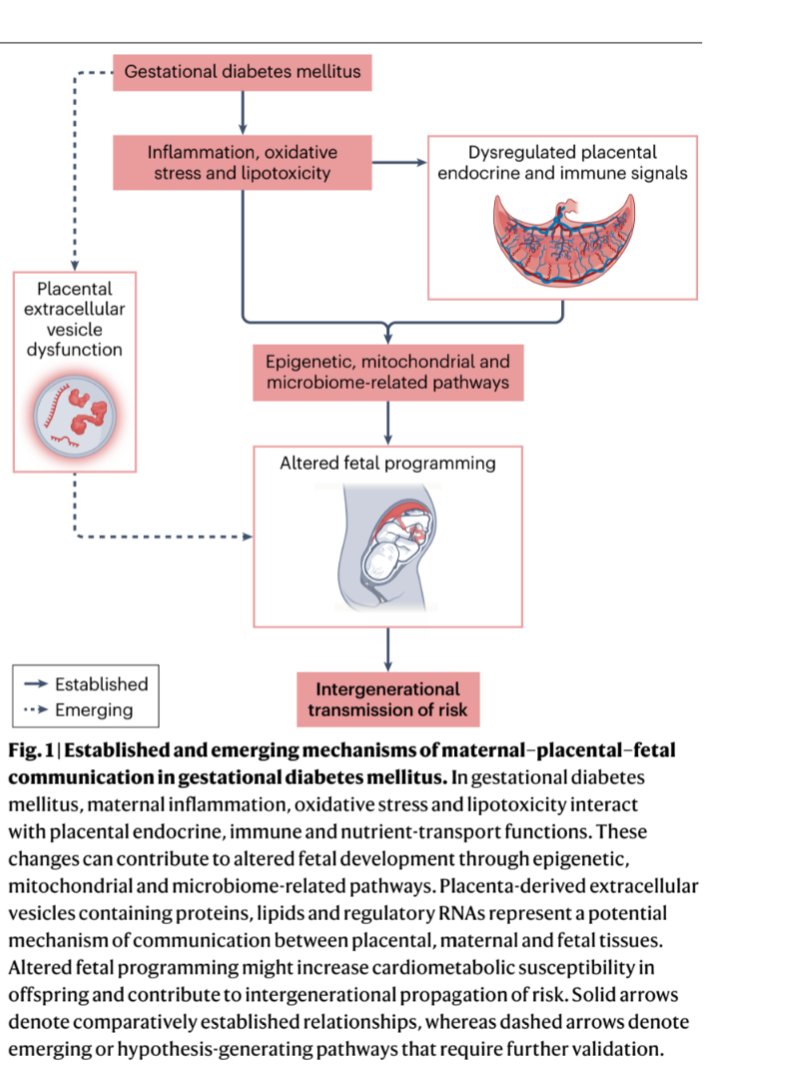
📖 #Gestational#Diabetes Mellitus is not just a #pregnancy complication.
Prior #GDM confers ~7–10× higher #T2D risk and ~45–98% higher #CVD risk—even beyond progression to T2D.
Postpartum #OGTT at 4–12 weeks and lifelong cardiometabolic follow-up matter.
@NatureRevEndo 👇🏻🔗
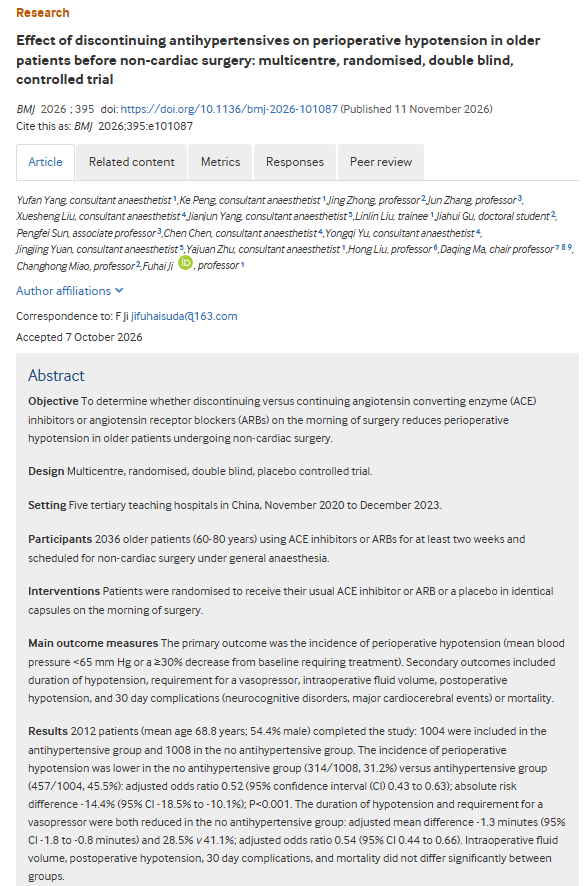
New BMJ Research: Pausing a patient’s usual dose of blood pressure medication on the day of surgery reduces the rate of very low blood pressure requiring treatment during the operation compared with taking their medication as normal, finds trial
https://t.co/Mw3MkTYy9g
Sarcopenic obesity is an emerging focus in obesity medicine. The treatment algorithm emphasizes assessing muscle mass, strength, and function alongside adiposity.
#ObesityWeek2026
Is “moderate drinking is good for the heart” still true? New review on alcohol and cardiovascular disease: inter-organ crosstalk, microvascular dysfunction and accelerated cardiovascular ageing. Time to rethink the glass. Read more in #EHJ.
https://t.co/YaMfT7OUh4
#cardiotwitter@ESC_Journals@escardio
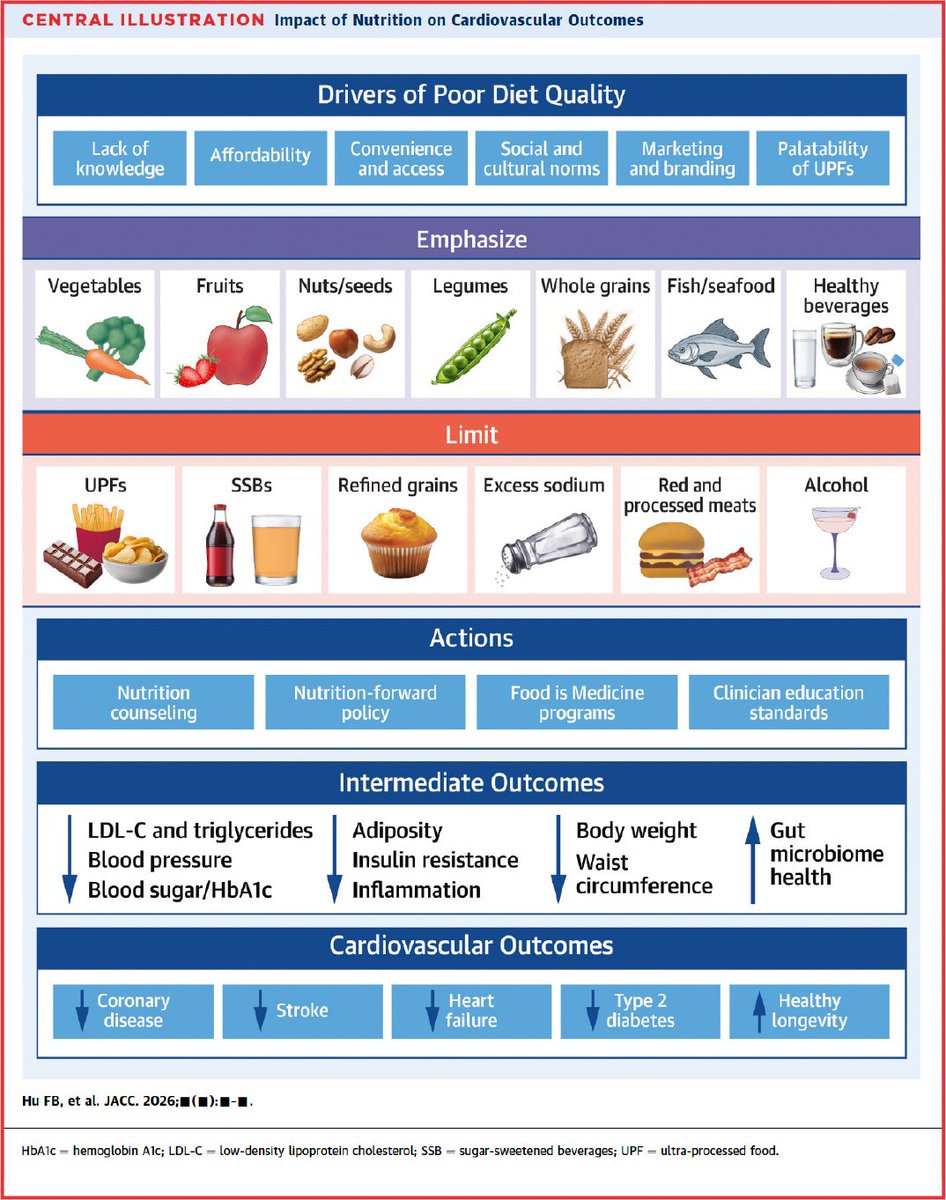
A healthy, balanced dietary pattern, rather than one focused on individual nutrients or foods, is key to maintaining heart health, according to a new ACC Scientific Statement in #JACC. Get the details with #CardiologyMag: https://t.co/gqUDxHrqKg
@JACCJournals
Glad to see so much long COVID research, including by some of the leading institutions in virology & immunology. It appears clear that something is going on with viral persistence & immune perturbation, but the conflicting findings show there's a lot left to learn -- & this barely touches on how to treat it.
Is there a prevention gap in cardiovascular outcomes for middle-aged men? New research published in the AJPC examines this possibility, as well as potential solutions.
Read more here: https://t.co/nuV6dUS5xv
#AJPC#PreventiveCardiology#CardiovascularResearch
📖 New @atherosociety Consensus on #hypertriglyceridaemia:
ASCVD risk is driven by TRL remnant cholesterol—not TG per se. Prioritize #LDL and secondary causes; consider non-HDL-C/ApoB for risk stratification. With TG ≥500 mg/dL, pancreatitis prevention becomes a key goal.
🔗👇🏻
Surprisingly, even at triglycerides above 1000 mg/dL (11 mmol/L) the incidence of ASCVD is almost 4-fold the incidence acute pancreatitis: 3.4 million individuals nationwide in Denmark followed for 6 years. Published in Circulation by Takahito Doi
https://t.co/yMyzHvl1Rl
NEW @atherosociety CONSENSUS on HYPERTRIGLICERIDEMIA
🫀CV risk assessment as 1st step
👉🏻150-499 mg/dl: if a drug is needed, icosapent ethyl 1st choice
👉🏻>500 mg/dl plozasiran/olezarsen
Last alternative: fibrates/omega3
https://t.co/x4W3EtOfZM
#ipe#plozasiran#olezarsen
Does intensive treatment of systolic blood pressure have an effect on cognitive outcomes and brain structures in adults with type 2 diabetes, compared with standard treatment?
New #BMJResearch investigates
🔗 https://t.co/LibspMkQSq