Human Rights Advocate || Exposing abuses || Protecting civic freedoms || Equality & Rule of law || Equality means the whole bundle of rights, not a reduced set.
The deeper crisis, in my view, is the increasingly blurred boundary between CCM and the institutions of the United Republic of Tanzania.
Recent public remarks by CCM’s Secretary for Ideology and Publicity, Chacha, concerning the relationship between the ruling party and the country’s security institutions have made this issue impossible to ignore.
The suggestion that institutions such as the Tanzania Police Force, the Tanzania Intelligence and Security Service (TISS), and the Tanzania People’s Defence Force (JWTZ) are under CCM raises a fundamental constitutional question: are these institutions organs of the United Republic of Tanzania, or organs of the ruling party?
The Police, TISS and JWTZ are not the property of CCM. They belong to the nation and must serve the Constitution and the people of Tanzania regardless of political affiliation.
If the security apparatus is politically subordinated to the ruling party, then the distinction between party and State becomes dangerously blurred.
This is why I describe what Tanzania is experiencing as a movement towards a party-state system. CCM is constitutionally a political party, but when the ruling party is perceived as controlling government institutions, security organs and the mechanisms through which political competition is regulated, the country risks becoming a system in which challenging the ruling party is treated as challenging the State itself.
That is fundamentally incompatible with the principles of a genuine multiparty democracy. CCM should be a political party competing for the support of Tanzanians; it should not become indistinguishable from the State itself.
The security institutions must be loyal to Tanzania, not to a political party. Their ultimate responsibility must be to the Constitution, the law and the people.
Tanzania therefore stands at a profound constitutional and moral crossroads. The country’s reputation for peace cannot be preserved simply by suppressing dissent, restricting political competition or preventing citizens from demanding accountability.
Peace without justice is silence; stability without freedom is fear; and order without accountability is repression. The right to life, freedom from arbitrary detention and enforced disappearance, freedom of expression and assembly, and the right to participate in the political life of one’s country are not privileges that a government may grant or withdraw according to political convenience.
They are rights that belong to every Tanzanian. The disappearance of Humphrey Polepole must be resolved. Every reported disappearance must be investigated. Every death arising from the 2025 violence must be accounted for.
The findings of the Chande Commission must not disappear into government archives. Political detainees must receive genuine due process. Families of the dead and disappeared deserve truth.
And institutions responsible for investigating the State must be sufficiently independent to investigate those who wield State power. The ultimate measure of a government is not how securely those in power live, but how safely an ordinary citizen can speak, criticise, organise, protest, vote and live without fearing detention, disappearance or death.
If Tanzanians have reached a point where even former senior officials, party leaders, diplomats, journalists, activists and ordinary citizens can disappear into uncertainty, while commissions produce reports without accountability, then the crisis is no longer simply about one election, one political party or one administration. It is a crisis of constitutional government, a crisis of accountability, and a crisis of the meaning of citizenship itself.
Tanzania cannot continue calling itself a beacon of peace while its citizens are asking the most basic question of all: if the State cannot protect us from those who abuse power, who protects us from the State?
🚨 TANZANIA AT THE EDGE OF CONSTITUTIONAL COLLAPSE:
WHEN POLITICAL POWER OVERRIDES THE RULE OF LAW, SECURITY INSTITUTIONS SERVE THE RULING PARTY, AND CITIZENS ARE LEFT WITHOUT PROTECTION
Let us remind ourselves, when President Samia Suluhu Hassan assumed office in March 2021 following the death of the late dictator John Pombe Magufuli, she presented a political philosophy built around Reconciliation, Resilience, Reforms and Rebuilding, the so called 4Rs.
We witnessed Political exiles were invited to return, restrictions on political gatherings were partially relaxed, and there was genuine hope that Tanzania could recover the civic and political space that had narrowed dramatically after 2015.
I believed, as many Tanzanians did, that this could mark the beginning of a new political chapter. Instead, the years that followed have raised increasingly serious questions about whether the promised reforms were ever intended to fundamentally change the architecture of political power.
By the time of the 29 October 2025 general election, Tanzania had witnessed the arrest and prolonged detention of CHADEMA Chairman @TunduALissu on treason charges, the exclusion of CHADEMA from the electoral contest, restrictions on opposition activities, allegations of abductions and enforced disappearances, pressure on journalists and independent voices, and an increasingly aggressive use of State security institutions against political dissent.
The election subsequently produced an official result of approximately 98 percent for the incumbent after the country’s principal opposition party had been prevented from participating.
What began as a promise of reconciliation increasingly came to resemble a system in which political competition itself was being treated as a threat to national security.
The question I now ask is simple: what happened to the Tanzania of reconciliation, tolerance and peaceful political competition that was promised in 2021 by President @SuluhuSamia?
The disappearance of Humphrey Polepole is one of the most disturbing examples of how far Tanzania’s political environment has deteriorated. Polepole was not an unknown activist operating on the margins of society. He was a senior Chama Cha Mapinduzi (CCM) politician who served as the party’s Ideology, Publicity and Training Secretary, served as a Member of Parliament, and later became Tanzania’s Ambassador to Malawi and Cuba.
Polepole was therefore a man who had spent years within the very political establishment that governs Tanzania. His later withdrawal from diplomatic service, his increasingly critical public positions, and the circumstances surrounding his disappearance have generated profound questions that remain unanswered.
Humphrey Polepole family reported that his home had been broken into and that he could no longer be found, with indications of a violent struggle. His whereabouts remain unresolved. And this is precisely where the issue becomes larger than Humphrey Polepole himself.
If a former senior CCM ideologue, Member of Parliament and ambassador can disappear and the State cannot provide a clear and credible account of what happened to him, then who is safe?
What protection does ordinary opposition politicians like @HecheJohn@jjmnyika@TheRealJongwe or activists like @MariaSTsehai@Chahali@TitoMagoti have?
What protection does a journalist like @ThatBoyKhalifax have? What protection does a whistle-blower have? What protection does an ordinary citizen have who happens to criticise those in power?
The circumstances surrounding former Vice President Emmanuel John Nchimbi have also generated questions about how abruptly senior figures can be removed from the centre of political power.
His political departure and the circumstances surrounding it have been accompanied by public speculation and controversy.
VP Nchimbi was not a minor political figure: he served as Vice President of the United Republic of Tanzania and held senior positions within CCM and government. When the careers, positions and public visibility of people who have occupied such senior offices can change abruptly without adequate public explanation, the demand for transparency becomes even more important.
A State that cannot convincingly explain what happens to its own former senior officials cannot expect its citizens to live without fear.
The violence surrounding the 2025 general election makes the question of accountability even more urgent.
Following the election, Tanzania experienced widespread protests, an internet shutdown, curfews, mass arrests and the use of lethal force by security personnel.
The Presidential Commission of Inquiry chaired by retired Chief Justice Mohamed Chande Othman subsequently recorded 518 deaths from unnatural causes, including hundreds of civilians and children, while 197 deaths were associated with gunshot wounds.
Those figures alone should have forced the country into a national reckoning. Instead, the most important question remains unanswered: who gave the orders, who authorised the use of lethal force, who carried it out, and who will ultimately be held responsible?
A commission can count the dead, document injuries and describe what happened, but counting bodies is not the same as delivering justice. The Chande Commission completed its work and submitted its findings, yet accountability has not followed on a scale commensurate with the gravity of the deaths.
A new commission or investigative mechanism may now be established, but Tanzania cannot continue moving from one commission to another while victims’ families remain without justice and the identities of those responsible remain unknown.
We cannot bury hundreds of citizens, appoint commissions to investigate their deaths, produce reports, establish new commissions and then expect the country simply to move on.
Justice requires more than reports. It requires truth, identification of responsibility, prosecution where evidence establishes criminal conduct, compensation and institutional reform. Until that happens, the families of those killed are left carrying a burden that belongs to the State.
🚨 In northern Ethiopia, a sharp influx of war-wounded has arrived at hospitals across the Tigray region over the last few days. As fighting intensifies across the region, our teams are scaling up our medical response.
https://t.co/E8g7bw6hZO
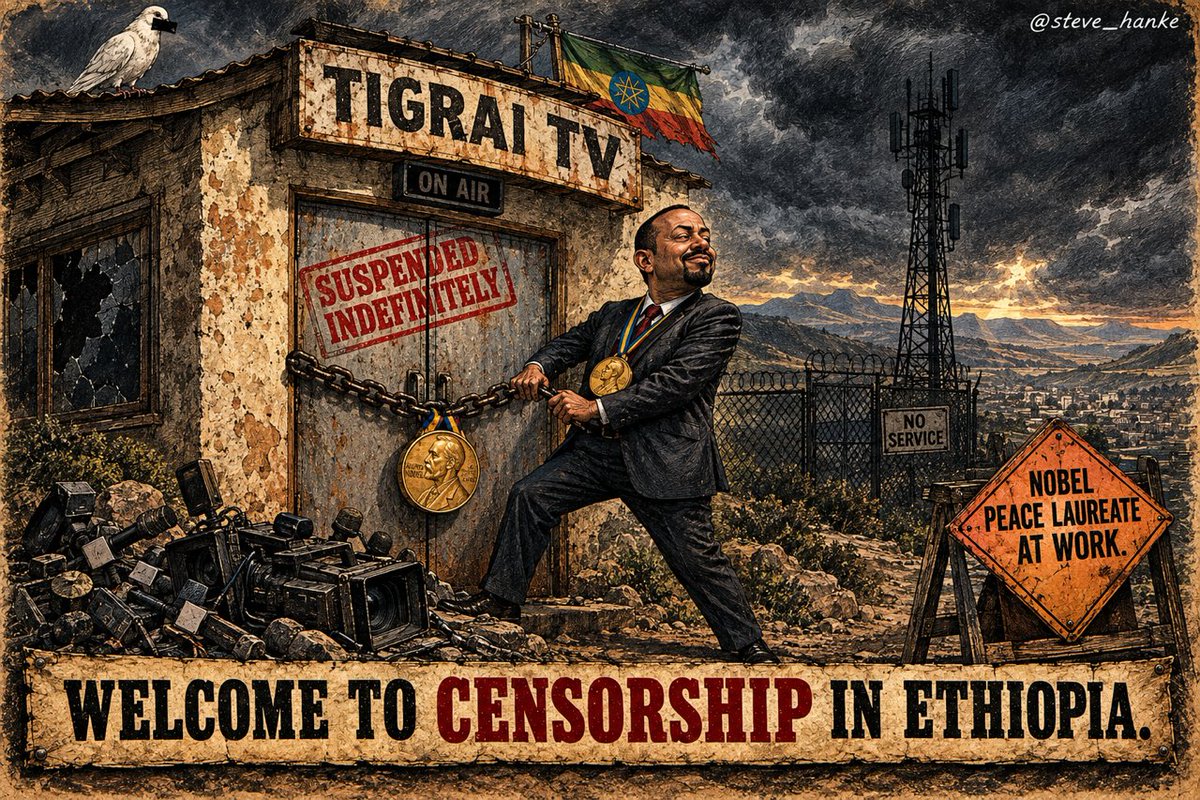
#EthiopiaWatch🇪🇹: Last week, PM Abiy's government suspended Tigrai TV "indefinitely." This week, phone and internet service across Tigray have gone dark.
This is the handiwork of a Nobel Peace laureate.
WELCOME TO CENSORSHIP IN ETHIOPIA.
Show this to anybody who still denies the genocide.
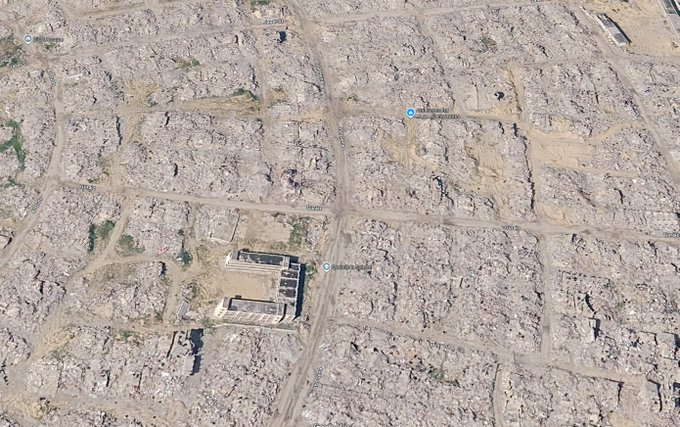
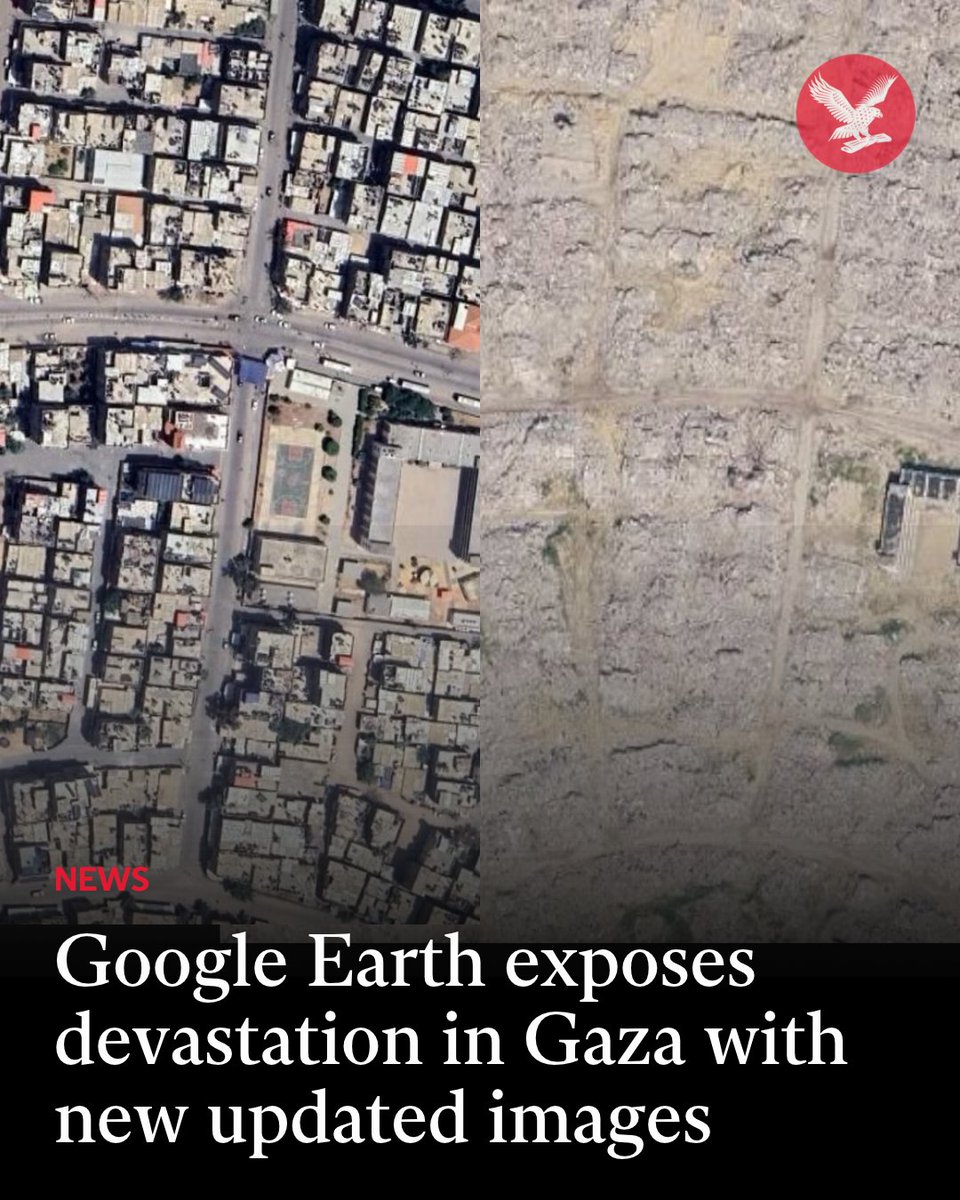
These were all people's homes. Completely and totally destroyed.
These images should haunt those who enabled Israel's crimes against humanity - and we will never give up until there is justice for the Palestinian people.
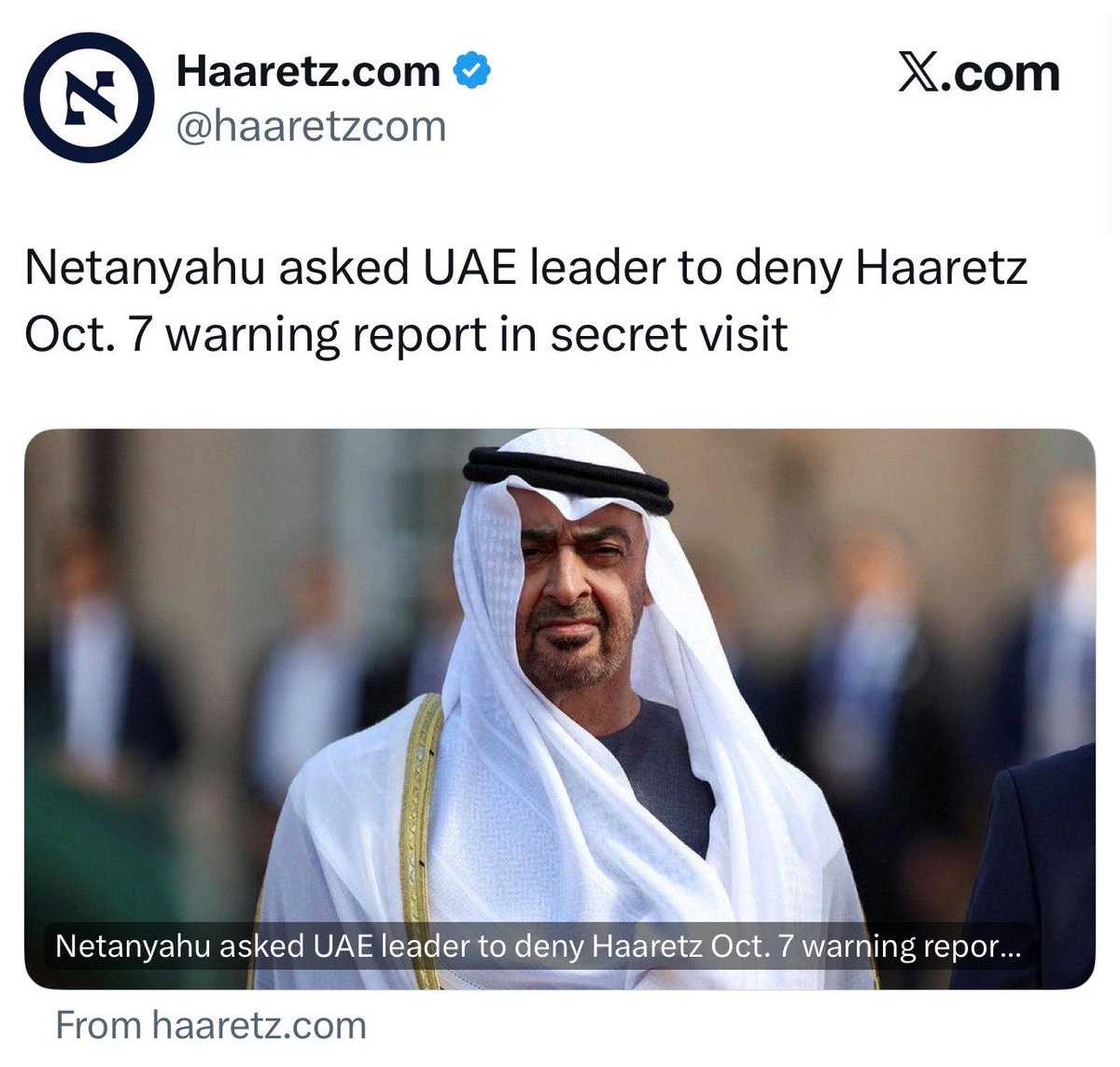
🇮🇱 Israeli PM Netanyahu secretly met UAE President Mohamed bin Zayed on Sunday and asked him to deny that he warned Netanyahu of a major Hamas attack days before October 7, a source with firsthand knowledge told Haaretz.
Haaretz reported this month that bin Zayed spent 45 minutes on the phone with Netanyahu about ten days before October 7, explicitly warning that Yahya Sinwar was planning a major operation. Netanyahu reportedly said Hamas was focused on the West Bank and never briefed his security chiefs. The New York Times has since confirmed the warning.
Netanyahu calls the report an "absolute lie" and has threatened to sue. He also denies reports by The Atlantic and The Wall Street Journal that Egypt's intelligence chief repeatedly warned him too.
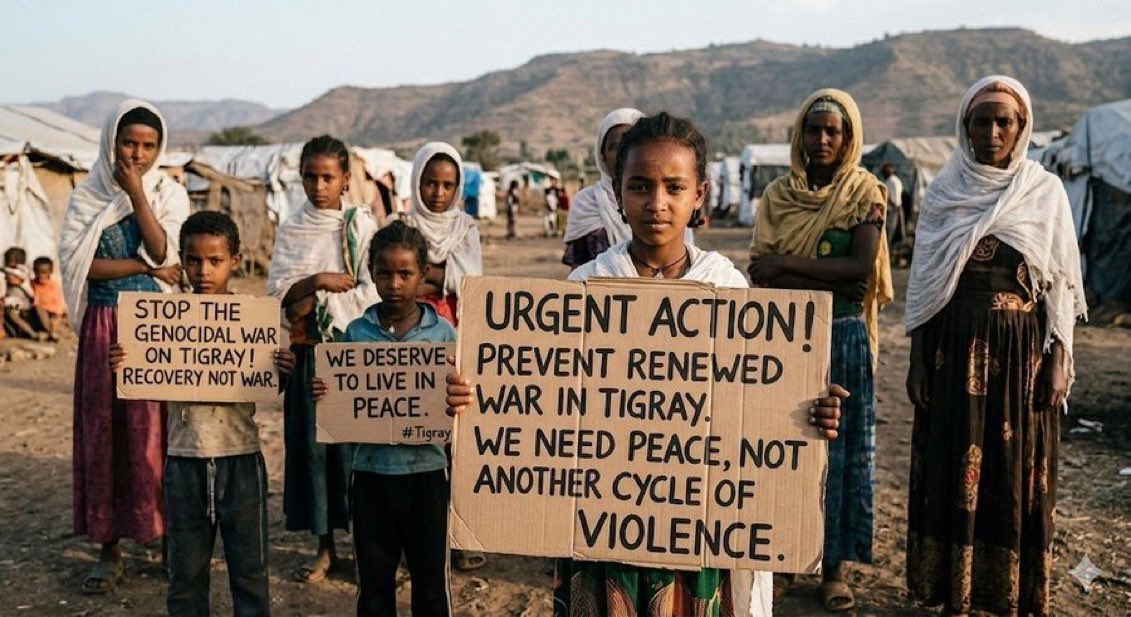
The people of #Tigray are already starving, dying from drought and untreated disease, and living with the unhealed wounds of massacres, systematic rape, and siege. Another full-scale war would finish what the last one started and condemn hundreds of thousands more civilians to famine and slaughter. The international community cannot look away again. @SenateForeign@SFRCdems
Tigrayan civilians endured massacres by Eritrean troops in Axum and elsewhere, ethnic cleansing in Western Tigray by Amhara forces with federal backing, and systematic rape often intended to prevent births. A siege blocked aid and produced famine. Estimates of civilian deaths range from 500,000 to over 800,000. Accountability remains almost nonexistent years later.
News: Drone strike kills three, including two-year-old child, in southeastern #Tigray
A series of drone strikes reportedly killed three people, including a two-year-old child, and injured four others in MyShumet area near Freweyni in #Hintalo_District of southeastern Tigray, according to Tigray Television.
The strikes reportedly began at around 2:00 a.m. on 8 September and hit what district administrator Goytom Tesfay described as a civilian residential area. He told Tigray TV that the attacks resulted in three deaths and injuries to four others.
https://t.co/wrAGpOmUNV
🚨 Sixteen Bullets Could Not Kill Tundu Lissu. Neither Will Treason.
From Courtroom Advocate to Tanzania’s Most Prominent Opposition Voice; Who Is Tundu Lissu?
Tundu Antiphas Mughwai Lissu, born on 20 January 1968 in Ikungi District, Tanzania, built his life as a lawyer and advocate for ordinary citizens long before he became the country’s most visible opposition figure.
Trained at the University of Dar es Salaam and later at the University of Warwick, he used the law to challenge land grabs, environmental harm from mining companies, and official corruption that impoverished rural communities.
As a Member of Parliament for Singida East and later a senior leader of CHADEMA, he treated Parliament and the courts as arenas in which the powerful could be held to account, insisting that rights on paper meant nothing if they were not defended for farmers, workers, and the poor.
That stance nearly cost him his life. On 7 September 2017, gunmen sprayed his vehicle with bullets outside his home in Dodoma; he was hit sixteen times, suffered catastrophic injuries, and endured nearly twenty surgeries.
After months of treatment he went into exile in Belgium, where he continued to speak against authoritarianism even while recovering. The attack did not silence him. It became the defining proof, for his supporters, that he would not be frightened off the path of public advocacy.
Mr. @TunduALissu returned to contest the 2020 presidential election against the late authoritarian leader John Pombe Magufuli. CHADEMA and independent observers described the poll as stolen through intimidation, irregularities, and a climate of fear; Lissu rejected the official result and again left the country under pressure.
After Magufuli’s death he came home once more, was elected CHADEMA chairman in 2025, and led the party’s “No Reforms, No Election” campaign for genuine electoral change.
In April 2025 he was arrested and charged with treason, a capital offence, over remarks prosecutors said were intended to block the general election.
Lissu has called the case a politically motivated prosecution and has conducted much of his own defence from detention.
More than a year later, still in custody and still on trial, Lissu has not recanted. He has told the High Court that the judgment will set a precedent far beyond his own fate, and he has remained on what he calls the line of justice.
We can summarise his stance in a single sentence: if sixteen bullets could not kill him, a treason charge will not either.
Whether that defiance changes Tanzania’s politics is for history to decide; what is already clear is that Lissu has refused to step back.
Google Earth has updated its images to show the devastating scale of destruction across Gaza with swathes of the strip reduced to rubble.
Read more: https://t.co/BBMDsysCf1
🚨 A Defining Examination of the Rule of Law and Judicial Independence in Tanzania
Although I am not a citizen of Tanzania, the protracted prosecution of Mr. @TunduALissu, chairman of the principal opposition party Chadema and a longstanding advocate for constitutional and electoral reform, commands sustained international attention.
For more than sixteen months Lissu has remained in pretrial detention on a single count of treason under section 39(2)(d) of the Penal Code, an offence that carries the possibility of capital punishment and for which bail is unavailable.
The charge arises from remarks he delivered on 3 April 2025 concerning the necessity of electoral reforms prior to the conduct of the 2025 general election. The prosecution has closed its case after presenting seventeen witnesses; the defence has completed its evidence; and the matter now rests with a three-judge panel of the High Court Justices Dunstan Ndunguru, James Karayemaha and Ferdinand Kiwonde for final submissions and judgment.
What is at stake extends far beyond the liberty of one political figure. The proceedings test whether a political disagreement over the conditions of democratic participation may lawfully be converted into a capital criminal prosecution.
Human Rights Watch (@hrw) has characterised the charges as fabricated; Amnesty International (@amnesty) has called for Lissu’s immediate and unconditional release. Both organisations have documented a broader pattern of constraints on opposition activity and civic space.
The defence has contested the prosecution’s construction of Lissu’s words, argued that the evidence fails to establish the specific intent required by the statute, and noted the absence of testimony from senior officials who might have spoken directly to whether those words were perceived as a genuine threat to the government.
Lissu himself has observed that the eventual judgment will establish a precedent of lasting significance. That assessment is accurate: the outcome will signal whether Tanzania’s constitutional order prioritises the protection of individual rights and the integrity of judicial process over the instrumental use of the criminal law against political dissent.
I therefore address the three justices with the utmost respect for their constitutional office. Their duty is to examine the evidence presented, apply the governing legal standards without regard to extraneous considerations of political expediency or pressure, and determine whether the prosecution has discharged its burden of proof beyond reasonable doubt.
As Lissu has himself submitted: if the evidence does not fit, the accused must be acquitted. The panel holds not merely the fate of one individual but the credibility of the judicial institution itself.
I address the Government of the United Republic of Tanzania with equal directness. Political dissent, however robustly expressed, must not be treated as a criminal offence.
The deployment of a capital charge of treason as an instrument for narrowing the space for opposition, deterring civic participation, or resolving electoral disputes is incompatible with the principles of constitutional democracy and the international human-rights obligations Tanzania has assumed.
The demand is not that any person stand above the law; it is that the law stand above transient political power. Where the evidence fails to meet the statutory threshold, continued detention serves neither justice nor the long-term interests of the Tanzanian state.
The international community is observing these proceedings with close attention. History will record whether the judiciary discharges its responsibility with independence and fidelity to the evidence, or whether the coercive capacity of the state prevails over the protections the Constitution and the rule of law afford the individual.
Justice cannot be subordinated to power. Judges must not be deterred from acquitting when the evidence requires it.
Hundreds of thousands were likely killed in the last round of war in Ethiopia, in Tigray, and perhaps 100,000 women raped. Please, let's have much greater efforts by the international community this time around to avert renewed war.
Ethiopia is fueling regional instability: bombing civilians and schools in Tigray while training the RSF in partnership with the UAE and allowing drones to cross into Sudan—a country that welcomed Tigrayan refugees. Its actions are fueling genocide at home and in Sudan.
#Sudan #Ethiopia #Tigray
Videos emerging from #Tigray show distressed families alleging that young people are being forcibly taken for military service. @hrw has separately documented alleged roundups involving TPLF-led authorities, local officials, police, militia, and TDF personnel.
The war on #Tigray did not start on Sept 23.
Two months of drone strikes on schools, homes and food aid. Fuel and medicine cut off. 130,000+ civil servants still unpaid. Then the US lifted its arms embargo, and an emboldened Ethiopia hit Tigray with 20+ strikes in a single day.
With 17 other Tigrayan groups, we demand an immediate ceasefire, an end to the siege, and a comprehensive peace plan and political settlement.
Full statement: https://t.co/Me0NxsC7WS
As war returns to Tigray, there is deep concern that Ethiopian government forces will resume their mass atrocities against the Tigrayan people. https://t.co/Oe1ddzvPG1