Preprint of our comprehensive breast cancer data analysis platform MammOnc-DB with over 20,000 breast cancer patient sample data (https://t.co/wLqMHEii5F…) is now online at: https://t.co/yped2fnB9k
@UABPathology, @UABHeersink, @theNCI, @NCIDataSci , @NCIgenomics , @BCRFAlabama
UALCAN (https://t.co/ieIhO4mhUc) has been visited over 1.5 million times and cited over 6,000 times during last 8 years, enabling many discoveries. Thanks to collaborators and users for their kind support. @UABPathology, @UABHeersink, @theNCI, @NCIgenomics, @NCIDataSci, #Cancer
Thanks to the innovation of @uabpathology faculty @Varambally_S and @darshan_sc, cancer research is now mobile: The team has created a free mobile app based on their comprehensive cancer proteogenomic platform, @Now_UALCAN. https://t.co/nfzu0REQun
UALCAN (https://t.co/ieIhO4mhUc) analysis show that PD-L1 and IDO1, regulators of immune responses and therapeutic targets are increased and co-expressed in subtype of bladder cancers. @BladderCancerUS, #CancerResearch, @NCIgenomics, @NCIDataSci, @UABPathology, #TCGA
Our collaborative study "Global impact of somatic structural variation on the cancer proteome" is online @
https://t.co/4zNRC5OmD5
Proteomics data are deposited in UALCAN platform @ https://t.co/ieIhO4mhUc, @UABPathology,
@ONealCancerUAB, @UABHeersink, @bcmhouston, #Cancer
A perspective on using cancer proteomics to identify targets was published with our collaborators.https://t.co/ZMAgLTtsnW. The cancer data analysis platform UALCAN, https://t.co/P1NB4LiKQB provides the Clinical Proteomic Tumor Analysis Consortium data
@UABPathology, #Cancer
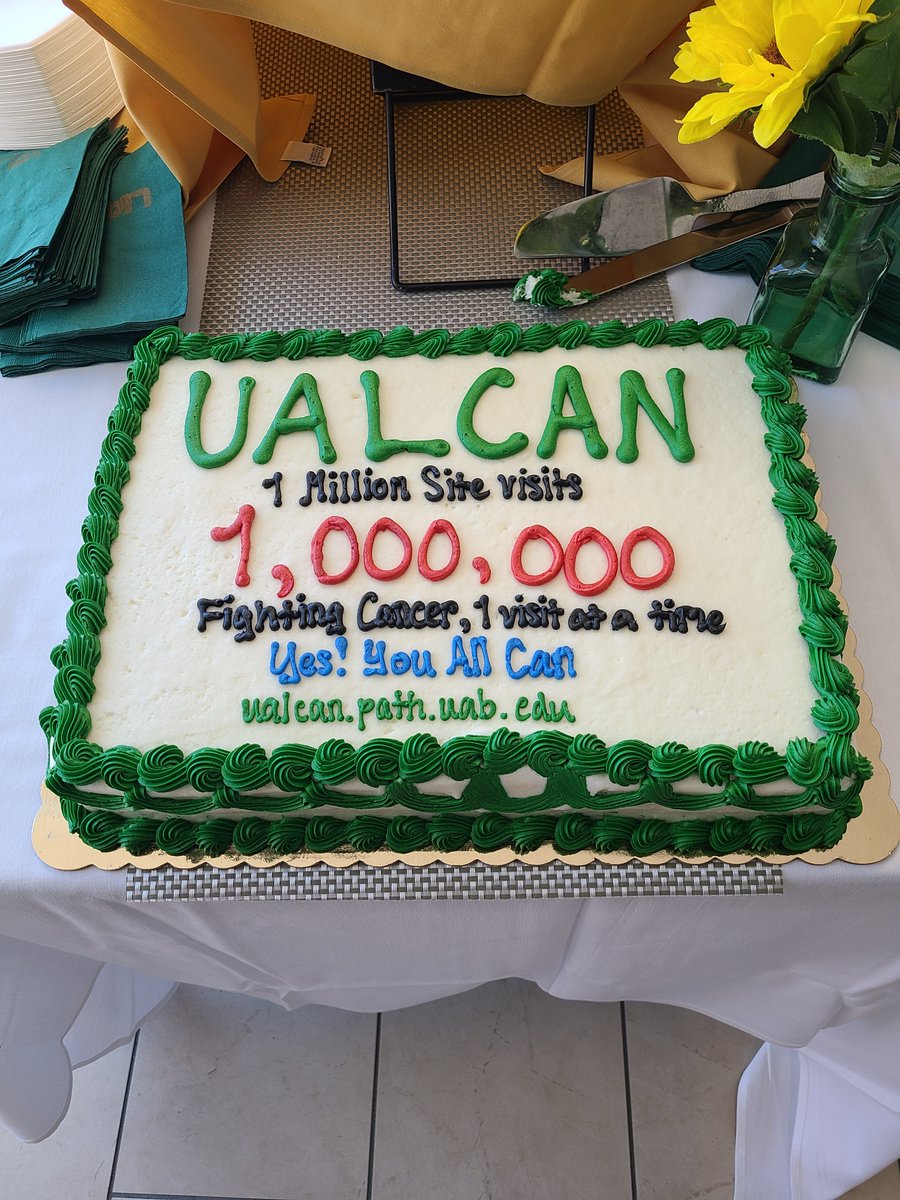
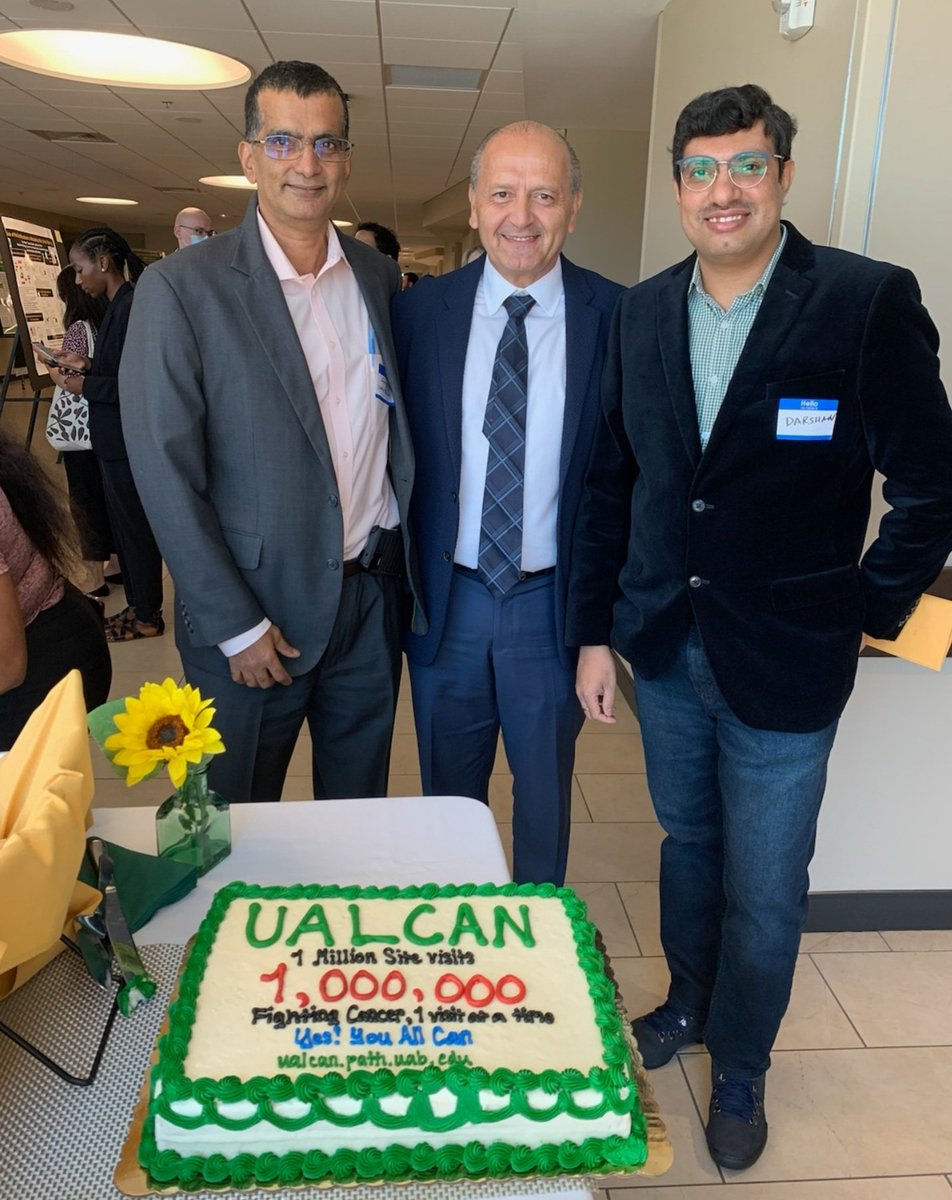
We had a cake cutting to celebrate "Million" site visit for comprehensive #cancer data analysis platform UALCAN (https://t.co/lJno3XDONP) at the @UABPathology department research retreat today.
@DrNetto, @darshan_sc
Received a kind note today "Thank you for developing UALCAN. I don't think my day goes by without visiting it at least once. UALCAN is extensively used in industries developing drug targets". Purpose is served when discoveries are made and #Cancer targets identified
@NCIgenomics
Our first study on EZH2 in cancer, published in Nature (2002) reached 3,000 citations today (2022). Many exciting investigations have been done on it during the last 20 years in various cancers and diseases now. It has got FDA approved inhibitor as well. #Cancer.
Our new manuscript "Proteogenomic characterization of 2002 cancers" is online at Nature Communication
https://t.co/eiFb3MJfv3. Data is integrated in to UALCAN (https://t.co/ieIhO448G4). @UABPathology, @ONealCancerUAB, @UABHeersink, @NCIDataSci,
@NCIgenomics, @bcmhouston, #Cancer