Professor & Deputy Chair, Depts of Cancer Systems Imaging and Genitourinary Medical Oncology, @MDAndersonNews. Specializing in #prostatecancer. Tweets are mine
Unsung hero poster award for RCC. @OncHahn discusses muscle and fat changes in patient receiving either Len/Ev or Cabo with some interesting findings that complement standard toxicity data.
Pierre Chambon, MD, FAACR, a Fellow of the AACR Academy who was a pioneer in the structure and expression of genes, died May 5, 2026, at the age of 95. We offer condolences to his family, friends, and colleagues. https://t.co/6KIS9qVhzh
Simon Bott will always be a legend to thousands of UH chemistry students. When I was first starting out, his teaching style was one I was constantly trying to emulate. RIP my friend.
@UH_NSM is saddened to share the passing of Simon Bott. Dr. Bott was a beloved chemistry professor who championed education and celebrated every UH accomplishment.
We honor Dr. Bott and send our condolences to his family and loved ones.
https://t.co/DeQ5dXBkWG
@UH_NSM is saddened to share the passing of Simon Bott. Dr. Bott was a beloved chemistry professor who championed education and celebrated every UH accomplishment.
We honor Dr. Bott and send our condolences to his family and loved ones.
https://t.co/DeQ5dXBkWG
Cholesterol metabolism pathway in #ProstateCancer models. @DanielFrigo@MDAndersonNews joins @AndreaMiyahira@PCFnews to unpack how CAMKK2–CAMK1–CREB signaling drives #CRPC by rewiring cholesterol metabolism. They show that dual CREB1/ATF1 inhibition blocks growth even in enzalutamide-resistant models, and highlight CAMKK2 as a promising, druggable metabolic node with potential benefits that extend beyond tumor control. #WatchNow > https://t.co/6W1KQ7X5zG
👉From adipose–tumor crosstalk to ferroptosis: lipid metabolism is reshaping how we think about cancer progression.
Our new review in Trends in Cancer, led by Joe Rupert & Nikki Cao, in collaboration with @mkolonin.
🔗https://t.co/a2SM39g8HK
@MDAndersonNews🤝@UTHealthHouston
@JasonRCantor@LyssiotisLab@NatMetabolism@thebioKIMist Preach @JasonRCantor! It seems like every talk I give about targeting cancer metabolism requires an explanation of the limitations of historical DepMap screens with regards to media and the number of missed (or physiologically false) metabolic hits.
The ever-expanding role of AR and sex hormones in cancer.
Androgen receptor signaling as a new target for intervention in acute myeloid leukemia https://t.co/akydsEj3pq
Big Pharma movement following promising early phase 1/2 data from a trial led by our own @OncHahn@MDAndersonNews in men with progressing mCRPC.
@PCFnews
J&J buys into Halda's cell death tech with $3B acquisition, beefing up prostate cancer pipeline https://t.co/QGaTMvoZBp
In Memoriam: Bert W. O'Malley, M.D.
It is with great sadness that we announce the death of Dr. Bert W. O'Malley, Baylor College of Medicine chancellor, and former chair of the Department of Molecular and Cellular Biology. He also served as the associate director of basic research in the Dan L Duncan Comprehensive Cancer Center at Baylor College of Medicine.
Considered the ‘founding father’ in the field of molecular endocrinology, Dr. Bert O’Malley was born in Pittsburgh, Pa. and received his Bachelor of Science degree from the University of Pittsburgh and his medical degree from the University of Pittsburgh School of Medicine. He did his clinical internship and residency training at Duke University Medical Center and spent four years at the National Institutes of Health, where he was head of the Molecular Biology Section of the Endocrine Branch of the National Cancer Institute of the National Institutes of Health.
He then served as the Lucious Birch Professor and Director of the Reproductive Biology Center at Vanderbilt University before joining Baylor College of Medicine as chair of the Department of Molecular and Cellular Biology in 1973, a position he held for 45 years.
During his time in this role, the department was routinely listed in the top five in the nation in securing National Institutes of Health funding; more than five times as No. 1. He published more than 700 papers and holds 29 patents in the fields of gene regulation, molecular endocrinology, steroid receptor and coactive action and cell proteomics and metabolism.
In July 2018, O’Malley was named the fourth chancellor of Baylor College of Medicine and stepped down as chair of the department to assume the role of chancellor, but continued to direct his research lab. As chancellor, he advised the president of Baylor College of Medicine, participated in strategic planning activities and acted as an ambassador for the College. He was a member of the NCI-designated Dan L Duncan Comprehensive Cancer Center at Baylor.
O’Malley changed the understanding of endocrinology in a fundamental way. He focused his research on the molecular mechanisms that guide gene regulation in endocrinology and endocrine cancers, including how hormones, receptors and coactivators contribute to the disease process. His pioneering work in this field has shown that intracellular hormones and cofactors act at the level of DNA to regulate the production of proteins and affect the function of the cell.
Research Highlights:
Dr. Bert W. O'Malley received the 2013 Endocrine Regulation Prize of the Foundation IPSEN at the 15th European Congress of Endocrinology on April 29, 2013..
O’Malley’s lab discovered and was the first to solve the structure of a functional receptor-coactivator complex on DNA capable of regulating gene transcription in vitro. In addition, he showed that steroid receptor coactivator-2 (SRC-2), which is highly elevated in a variety of tumors, is likely implicated in metabolic coordination of cancer metastasis, opening the possibility of therapeutically targeting the SRC-2 pathway.
His work with steroid receptor coactivator-3 (SRC-3), a prognostic marker for aggressive human breast cancer, showed that small-molecule inhibitors that directly bind SRC-3 cause selective degradation of the complex, hereby killing cancer cells with no observable toxicity. Small-molecule inhibitors represent a new type of oncologic drugs that target coactivators.
In addition, Dr. O’Malley’s work showed in a mouse model of heart disease, that stimulating SRC-3 with small-molecule MCB-613 initiated a complex cascade of events in tissue repair and modulation of the inflammatory response that reduced fibrosis, attenuating loss of cardiac function after myocardial infarction. These findings open the possibility of novel therapies to regulate the progression of heart failure via SRC-3.
His work also revealed a role for SRC-3 in regulatory immune T cells (Tregs) that promote cancer growth by inhibiting anti-cancer immune responses. He also showed that SRC-3 is significantly enriched in both murine and human Tregs. Inhibiting SRC-3 in Tregs in the lab stopped them from reducing the anti-tumor response, suggesting that modulating SRC-3 in Tregs might help control cancer growth.
Dr. O’Malley will be missed greatly and his contributions to cancer research will live on for decades to come.
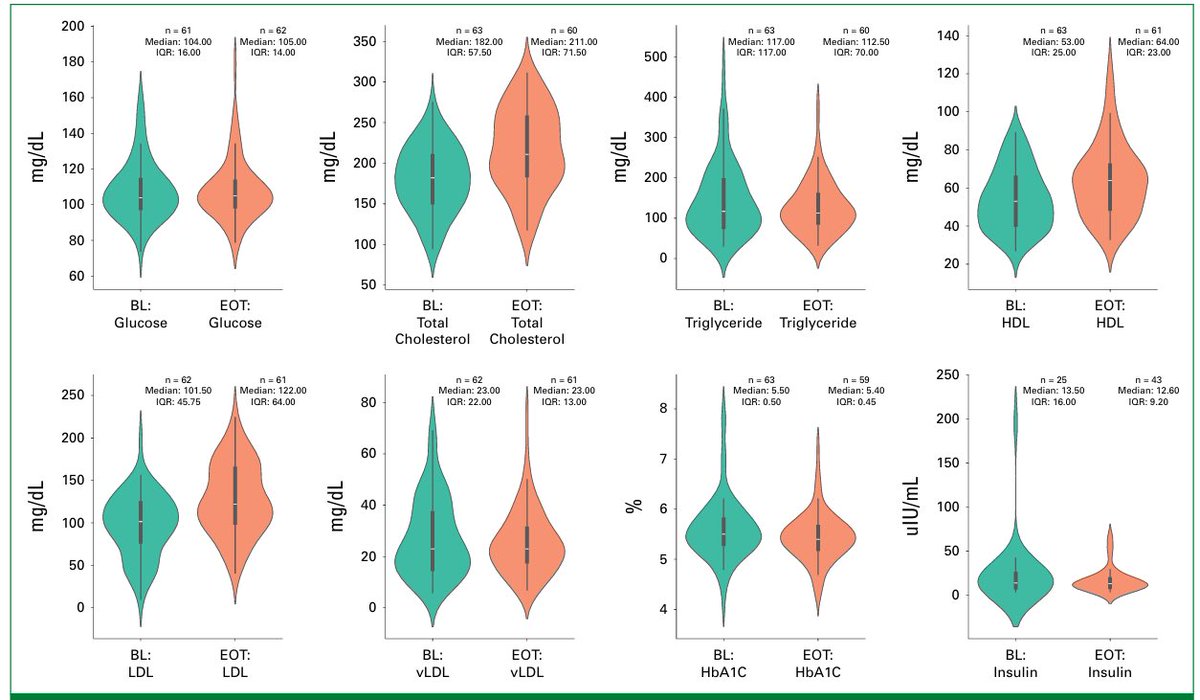
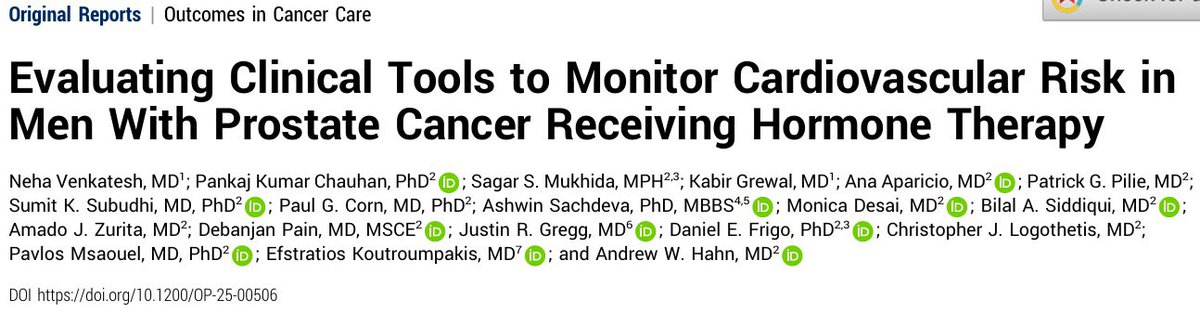
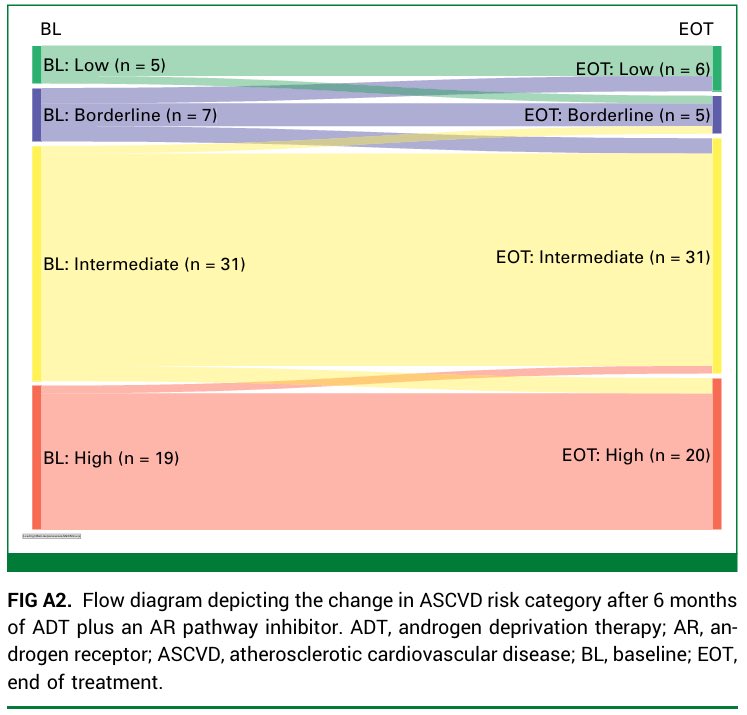
Here’s our latest work led by @NehaVMD in @JCOOP_ASCO https://t.co/xAFdjXBD0t We evaluate how cardiometabolic risk scores perform in men with localized high-risk PCa who received 6 months of pre-op ADT +/- ARPI
Are you looking for a postdoctoral position where you will be challenged to dig deep into the post-transcriptional mechanisms of cancer? If so, check out @HsiehLab@fredhutch, we have an opening (https://t.co/zArk26ioo9)! Website: https://t.co/zvfl2x5C8d
Congrats to our own Pham Hong Anh "Nikki" Cao on her newly awarded F99 fellowship from @theNCI!!
This award allows us to further investigate links between the regulation of lipid droplet homeostasis, #ferroptosis, and #prostatecancer progression.
@MDAndersonNews@MDA_UTHGrad
So proud of MTB student Ester Lujan winning best poster in the Tumor Biology category at ENDO 2025 held in San Francisco this year! 🎉 🥳 Ester is advised by Dr. Dan Frigo and Dr. Loukia Karacosta. Congratulations!