@shamol_coder Can’t argue with any of those
Would add one more
Sometimes doing nothing - watching and waiting for recovery is the most powerful tool- more tests more monitoring is sometimes harmful
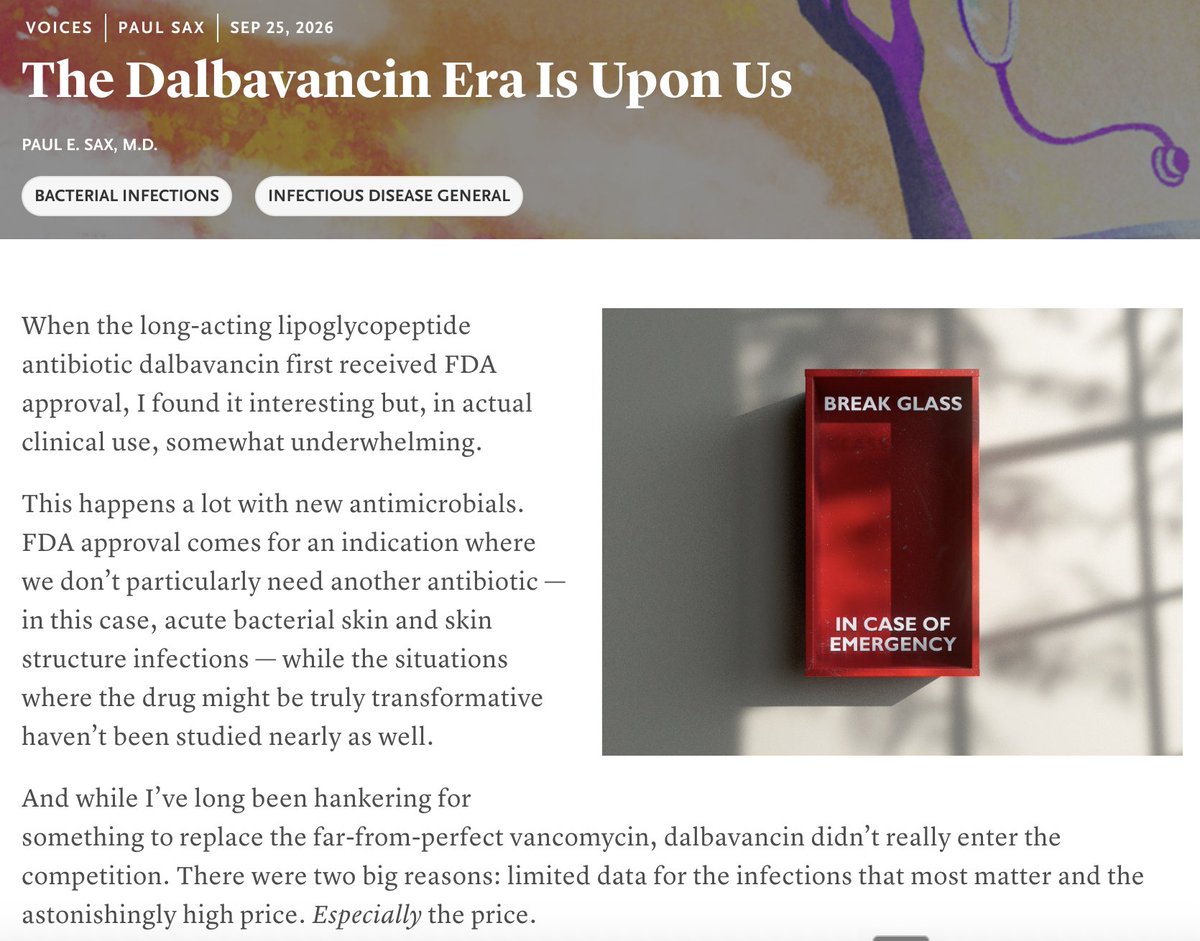
If you haven't done inpatient patient care recently, here's a big change that's happening -- dalbavancin is poised to replace vancomycin in many clinical settings. Here I explain why. Free-to-read link in replies. @NEJM@NEJMClinician@PriyaNori
@icmteaching@TheEMNerd@khaycock2@ThinkingCC@PulmCrit “The Surviving Sepsis Campaign (SSC) Guidelines once represented a leading voice in the care for patients with sepsis and septic shock.”https://t.co/lcV2HwFyJJ
1/3 "When I got the call that I was going to be recording a song with Dolly, I was truly honored. When she walked into the studio, her presence filled the entire room. She was so kind and warm with everyone around her and went out of her way to make everyone feel welcome.
@CoffeeBlackMD When I was an ID trainee I felt that the consult was as much about me summarizing the long journey as it was about sorting out any infection
@mattvanswol 2. The effectiveness studies are reasonably easy to do- Placebo randomized etc. Studies to show reduced transmission require different methods.
Once the vaccine was released the virus mutated and we lost this benefit. See reference
https://t.co/7MCuWbEkql
@mattvanswol 1. I’m going to answer in good faith here.
For the original strain - the Alpha variant B1.1.7- Immunization did reduce transmission. This effect is not as easy to demonstrate in a study. It requires longer follow up and different methods
There were debates about the handling about the Andes hantavirus outbreak, but that was done given low but clear risk of secondary transmission. This study assessed that risk for health care workers without PPE. 118 exposed, 8 cases, 4 deaths. https://t.co/hdJEXTxI5B