We’ve raised $6M to build AI physics models to predict and control the weather.
Big thanks to @KindredVentures, @refactor, @BoxGroup, @factorialcap, Otherwise, Karman VC, and our wonderful angels.
Come help us solve the world’s most difficult problems. We’re hiring!
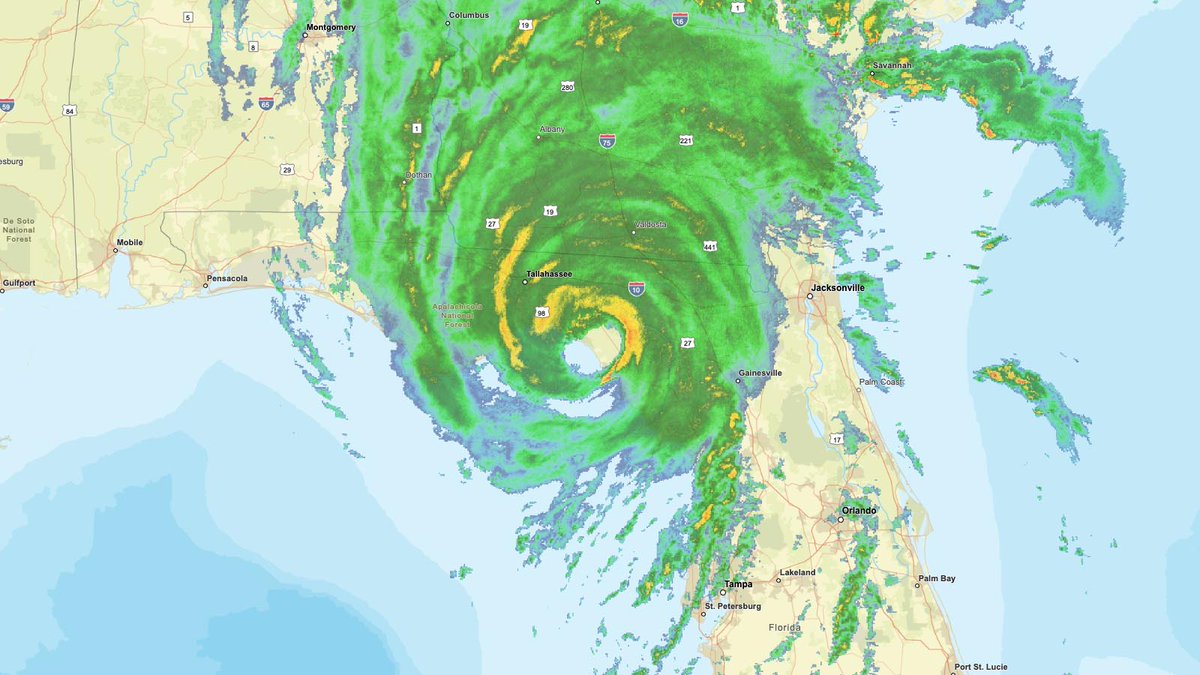
AccuWeather's Preliminary Estimate of the Total Damage and Economic Loss from #Hurricane#Helene in the U.S. is between $95 - $110 #Billion.
Heartbreaking devastation from Keaton Beach, #Florida well up north through the #Carolinas and beyond.
Updates on @AccuWeather#breaking
Helene’s Cat 4 landfall gives the U.S. a record eight Cat 4 or Cat 5 Atlantic hurricane landfalls in the past eight years (2017-2024), seven of them being continental U.S. landfalls. That’s as many Cat 4 and 5 landfalls as occurred in the prior 57 years.
For two decades, a bold and promising experiment sought to answer a wild question: Could scientists artificially weaken hurricanes before they bring devastation to U.S. shores? https://t.co/0Q1pJJ1MtS
The Atlantic Ocean has a lot to say right now. And none of it is particularly good. My take on the deep Atlantic heat – which blows May 2005 out of the water – how it could impact hurricane season, and how it's affecting us today via @CC_Yale https://t.co/5guoHicvON
A record-breaking Atlantic hurricane season is expected for 2024. We are making good progress on our Bubble Curtains as Tropical Cyclone Mitigation concept to help people and communities exposed to these devastating events.
https://t.co/NHjBMZvcyf
We are happy to be involved in the discussion about Goal 8 of the Government funded Moonshot Program in Japan: «Realization of a society safe from the threat of extreme winds and rains by controlling and modifying the weather by 2050.»
https://t.co/43tUoSTS03
Extreme intensification of storms like Otis, fueled by abnormally warm ocean waters, is made much more probable because of human-caused climate change.
https://t.co/S7sZjJRdJv
Category 5 hurricane Otis made landfall near Acapulco late last night local time, the product of the most extreme storm intensification on record in the northeastern Pacific Ocean.
https://t.co/q0U0uQbhsj
We are happy to be featured in this article with our concept to mitigate the destructive power of Tropical Cyclones.
"Extreme weather: the technologies used to combat climate change"
https://t.co/PNZkIagBZw
Moonshot Goal 8: Realization of a society safe from the threat of extreme winds and rains by controlling and modifying the weather by 2050.
https://t.co/Q7yuLpULae
An exciting vision presented through the government funded Moonshot Program in Japan. Their strategy aligns well with our process as we focus on representing our solution through simulations and real-world testing. https://t.co/004guek8EW
The process of upwelling is what we aim to mimic with the OceanTherm concept. We propose to do this with bubble curtains in front of an incoming threat to reduce the energy available for the tropical system to pick up in intensity.
Hurricane #Lee is moving through record warm water... but leaving COLDER water in its wake. 🌀
Hurricanes churn up water as they move through the ocean, bringing cooler, nutrient-rich deep sea water closer to the surface.
The process, upwelling, is critical for ocean life. 🐟
We believe targetted OceanTherm interventions could locally and temporarily reduce ocean temperatures to more normal levels and thereby reduce chances of rapid intensification events.
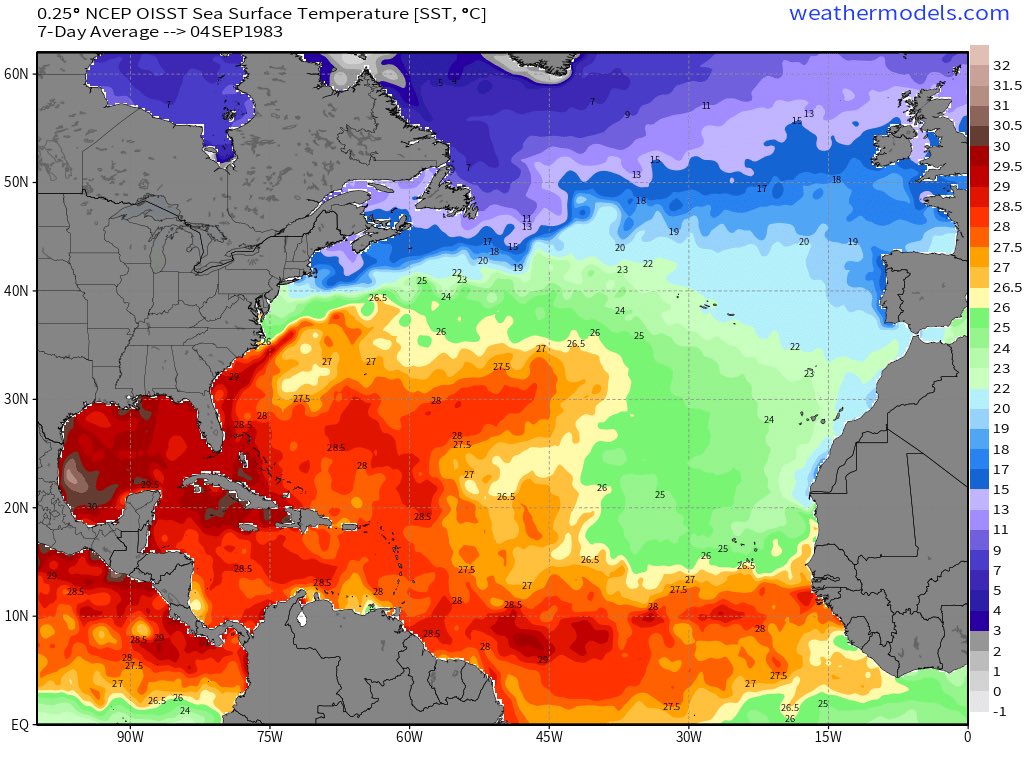
Been thinking a lot recently about how unusual the 2023 Atlantic water temps are. Imagine Lee headed into 1983 waters east of the Leeward Islands (27.5C)- 2023 Lee has 29.5C to work with- an astounding difference. Arguably doubles or triples the chance of Rapid Intensification
This is the relationship we aim to tackle with the OceanTherm concept. There could be enormous savings with our solution, considering the extreme levels of damage we see from hurricanes making landfall every year.
Each 1°C the oceans warms makes a hurricane 40-50% more destructive, according to theory and modeling. Thus, the 1°C of August warming of SSTs in the Gulf of Mexico from long-term global warming likely made Idalia much more destructive. https://t.co/0fZ36Nqsvo
Although not as much as Ian with $113 billion, Idalia with estimated damages of $20 billion is still significant. Not to mention the social and ecological impact. What if an OceanTherm intervention could mitigate these damages by more than 25%?
https://t.co/RUdmw34BSx
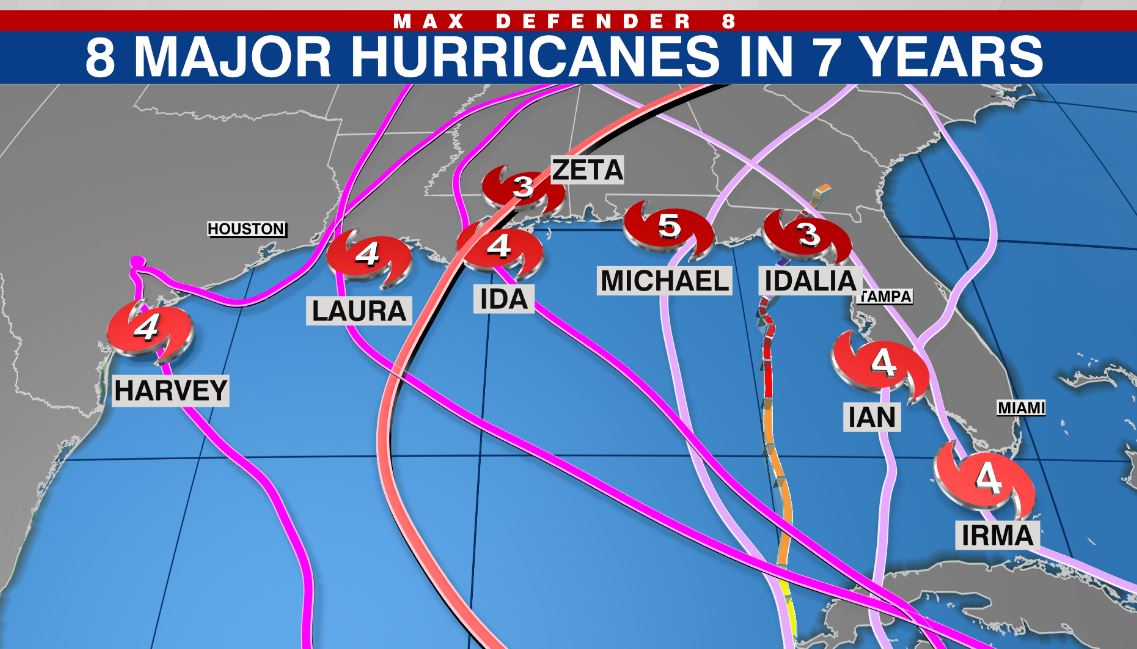
8major landfalls in past 7 yrs! While we can't attribute the general landfall locations (Gulf) to climate change (short data period) what we can say is that it's not coincidence (hotter water) that storms are getting stronger and rapidly intensifying (right up to landfall) @WFLA
After Ian in 2022, we were interviewed by @thedailybeast. "If we know how to stop these deadly hurricanes from occurring, or at least diminish their effects, why haven’t we done so already?" - @TonyHoWasHere
https://t.co/rd9ulQ6YGH