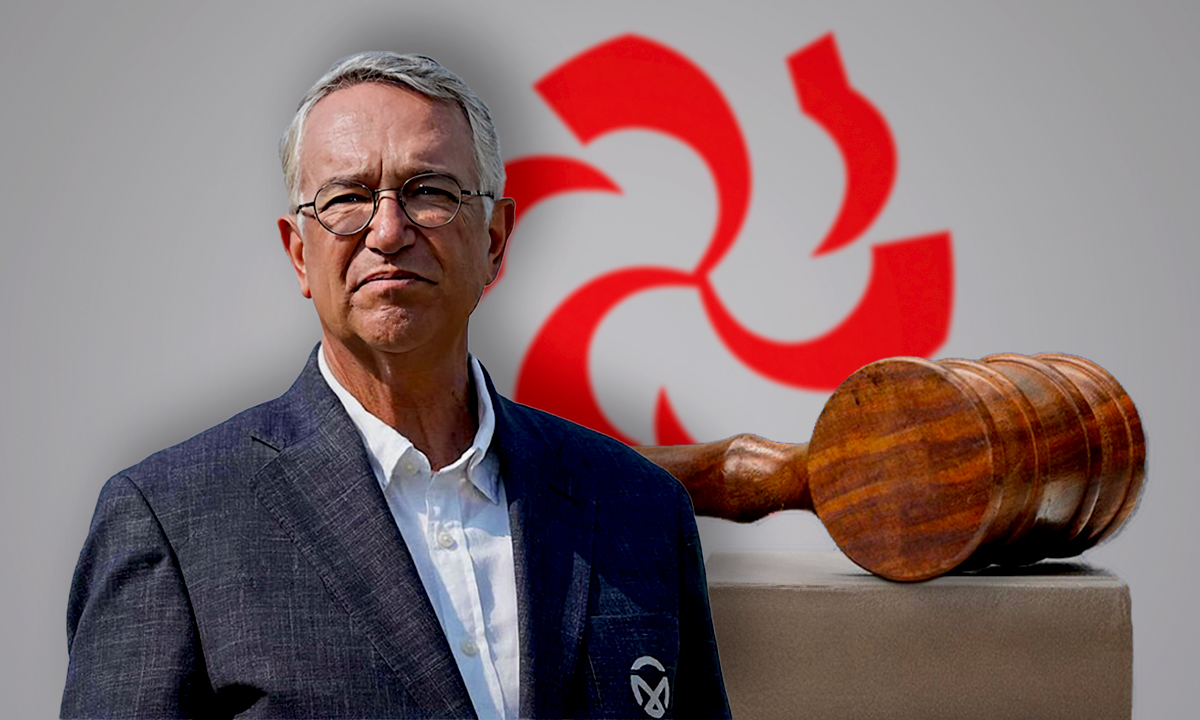
México (y el mundo) necesita más gente que diga:
-Si piensas diferente, ven, sé mi amigo y complementemos nuestras visiones.
Y no gente de la que dice:
-Si no piensas igual que yo, no puedes ser mi amigo.
Wen lambo?!
The @Lamborghini Fast ForWorld Revuelto is here!
And we're happy to power their sales ⚡️
Benefits for Revuelto holders include:
🏎️ Access to Lamborghini Super Trofeo Series events
🏎️ Quests for "impossible-to-buy"experiences
🏎️ Exclusive phygital merch
🏎️ First interoperable digital car collectible and more!
In collaboration with @animocabrands, @Lamborghini, @TheMotorverse & @gravitas_labs !
@HelioX_pass holders check our Discord to get involved!
Belinda da sus primeras declaraciones después de su viral caída:
"Así es, me caí en la pasarela, pero no me dio vergüenza, vergüenza me daría creer que las ciclovías son las responsables del tráfico vehicular" afirmó la artista.
President Biden is right, there is no place in America for this kind of violence. As a country we may not agree on everything, but we should be able to agree on that.
@AlertaQro Es una tontería pensar que una "avioneta" va a poder influir en el clima; no está probado ni es posible...todos los que han volado en aviones más grandes saben que incluso un avión comercial con más de 10 veces las dimensiones no "disuelve" la lluvia ni "rompe" las nubes.
❝Votaste por alguien que provocó cambios en tu vida y te piden que defiendas a un sistema —abstracto— que no te ha traído ningún tipo de beneficio❞. #TercerGrado
The Profitability Myth: Neobanks are Here to Stay
If one thing has dramatically transformed the banking landscape in the past decade, it's the emergence of neobanks. Offering a digital-first approach, neobanks have redefined customer experiences, shattering traditional banking norms along the way. Yet, the nagging question has always been – can these digital upstarts become profitable?
Just last year, in 2022, the consensus was scepticism. After all, many neobanks had difficulty turning a profit, and critics had a field day pointing fingers at the sector's reliance on abundant venture VC funding. But as time has passed, this perception is changing rapidly. Neobanks are finally proving the naysayers wrong – they are indeed capable of profitability in more ways than one.
From Red to Black: The Journey to Profitability
It's important to understand that turning a profit has always been a challenge for many fledgling companies, not just neobanks. Startups rely on VC money to gain traction, develop technology, and grab market share. Unfortunately, this abundant funding made it too easy for many neobanks to burn through cash without focusing on profitable business models.
But not all neobanks followed this path. A handful, like @monzo, @StarlingBank, and @Zopa, has shown that it is possible to attain profitability with patience and strategic thinking. What they did differently is quite simple – they focused on business models that generate revenue.
Successful Business Models: Bundling Services
The secret to neobank profitability lies in bundling various financial services. Instead of solely relying on traditional banking, successful neobanks have leveraged their digital-first approach to provide services that attract diverse customer segments and foster customer loyalty.
Take Monzo, for instance. Initially starting as a prepaid debit card, it quickly transitioned into a full-fledged digital bank, offering current accounts, loans, business banking, and energy-switching services. Starling Bank, conversely, has focused on providing various services to businesses, including lending, and cash management. Zopa, formerly a peer-to-peer lender, broadened its product line to include savings accounts and credit cards.
The Peril of Niche Neobanks
While focusing on niche markets may sound attractive, evidence suggests that niche neobanks face a more challenging road to profitability. The reason is simple - they limit their potential customer base and revenue opportunities. This underlines the importance of a diversified approach. Neobanks need to expand their horizons, offering a variety of services that meet the diverse needs of a broad customer base.
Reflecting on the Mistakes: The Cash Burn Conundrum
In retrospect, the biggest mistake for many neobanks was the high cash burn rate fueled by abundant capital. It's easy to see why - with plenty of money in the bank, chasing growth at any cost becomes tempting. However, the successful neobanks have shown that a careful, disciplined approach to spending and a strategic focus on revenue generation can lead to profitability.
The Future of Neobanks: A Profitable Path Forward
In summary, the myth that neobanks can't turn a profit is being debunked as increasingly digital banking entities demonstrate their financial viability. The key to their success lies in offering a broad range of bundled services and exercising careful control over spending. As the industry matures, expect to see more neobanks turning a profit, ultimately solidifying their place in the financial landscape.
The journey to profitability is far from a straight path. But as we've seen with Monzo, Starling Bank, and Zopa, the patient and strategic ones who keep their focus on revenue generation and customer needs will make it there eventually. And that's good news for all of us looking for banking solutions that are not only convenient but also backed by solid, profitable companies. One thing is clear, loans and business banking are key pillars of profitability in the digital banking space.
The Profitability Myth: Neobanks are Here to Stay
If one thing has dramatically transformed the banking landscape in the past decade, it's the emergence of neobanks. Offering a digital-first approach, neobanks have redefined customer experiences, shattering traditional banking norms along the way. Yet, the nagging question has always been – can these digital upstarts become profitable?
Just last year, in 2022, the consensus was scepticism. After all, many neobanks had difficulty turning a profit, and critics had a field day pointing fingers at the sector's reliance on abundant venture VC funding. But as time has passed, this perception is changing rapidly. Neobanks are finally proving the naysayers wrong – they are indeed capable of profitability in more ways than one.
From Red to Black: The Journey to Profitability
It's important to understand that turning a profit has always been a challenge for many fledgling companies, not just neobanks. Startups rely on VC money to gain traction, develop technology, and grab market share. Unfortunately, this abundant funding made it too easy for many neobanks to burn through cash without focusing on profitable business models.
But not all neobanks followed this path. A handful, like @monzo, @StarlingBank, and @Zopa, has shown that it is possible to attain profitability with patience and strategic thinking. What they did differently is quite simple – they focused on business models that generate revenue.
Successful Business Models: Bundling Services
The secret to neobank profitability lies in bundling various financial services. Instead of solely relying on traditional banking, successful neobanks have leveraged their digital-first approach to provide services that attract diverse customer segments and foster customer loyalty.
Take Monzo, for instance. Initially starting as a prepaid debit card, it quickly transitioned into a full-fledged digital bank, offering current accounts, loans, business banking, and energy-switching services. Starling Bank, conversely, has focused on providing various services to businesses, including lending, and cash management. Zopa, formerly a peer-to-peer lender, broadened its product line to include savings accounts and credit cards.
The Peril of Niche Neobanks
While focusing on niche markets may sound attractive, evidence suggests that niche neobanks face a more challenging road to profitability. The reason is simple - they limit their potential customer base and revenue opportunities. This underlines the importance of a diversified approach. Neobanks need to expand their horizons, offering a variety of services that meet the diverse needs of a broad customer base.
Reflecting on the Mistakes: The Cash Burn Conundrum
In retrospect, the biggest mistake for many neobanks was the high cash burn rate fueled by abundant capital. It's easy to see why - with plenty of money in the bank, chasing growth at any cost becomes tempting. However, the successful neobanks have shown that a careful, disciplined approach to spending and a strategic focus on revenue generation can lead to profitability.
The Future of Neobanks: A Profitable Path Forward
In summary, the myth that neobanks can't turn a profit is being debunked as increasingly digital banking entities demonstrate their financial viability. The key to their success lies in offering a broad range of bundled services and exercising careful control over spending. As the industry matures, expect to see more neobanks turning a profit, ultimately solidifying their place in the financial landscape.
The journey to profitability is far from a straight path. But as we've seen with Monzo, Starling Bank, and Zopa, the patient and strategic ones who keep their focus on revenue generation and customer needs will make it there eventually. And that's good news for all of us looking for banking solutions that are not only convenient but also backed by solid, profitable companies. One thing is clear, loans and business banking are key pillars of profitability in the digital banking space.