Here are the top 5 of my papers that I’m most proud of. Residents and young faculty and those interested in academic medicine may gain some insights on learning how these papers came to be and what kind of resources and preparation is needed if you want to pull off these type of studies and trials.
I’ve added a few lines about how each paper came to be, and why I consider them important. All of this represents team work not individual.
1. Clinical course of Smoldering Myeloma (SMM). @NEJM 2007
This paper established the natural history of SMM, risk factors, and provided the foundation to embark on early intervention trials. It’s cool to be last author on a paper with Bob Kyle as the first author! Working with him I watched and learnt how meticulous and careful you have to be with any kind of research. He called and verified the status of every patient in the cohort.
To do this type of study you need a large cohort of patients with very long follow up on a disease that not much is known about natural history or prognosis. I was lucky to work with Dr. Kyle and have this database.
ESMO 2026 reshapes advanced prostate cancer care
From de novo mCSPC to molecularly defined mCRPC, treatment is now earlier, intensified, and genotype-driven.
🧬 mCSPC
🟢 Low volume
→ ADT + ARPI is standard
🟣 High volume
→ Fit patients: ADT + docetaxel + ARPI (triplet)
→ Unfit for docetaxel: ADT + ARPI
⚠️ ADT alone is obsolete except in frail patients
❌ Zoledronic acid / denosumab NOT recommended in mCSPC
🧠 Relapsed mCSPC
• Low volume: ADT + ARPI
• High volume: ADT + ARPI ± docetaxel (selected)
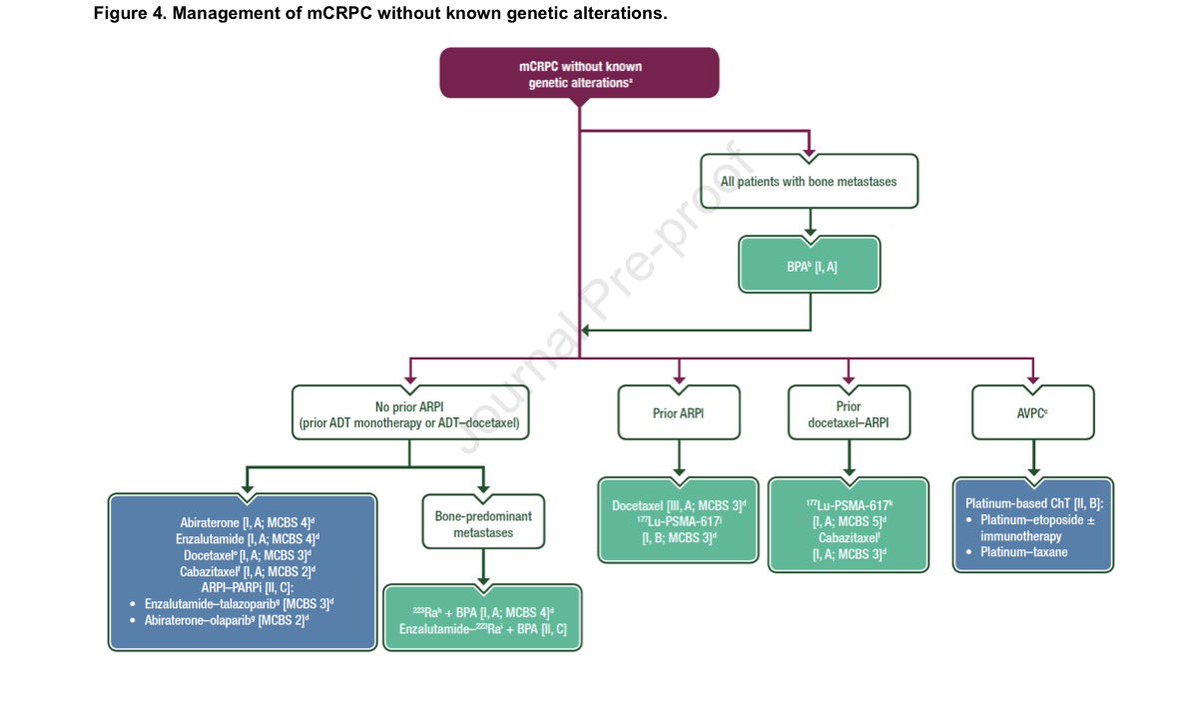
🧬 mCRPC without known mutations
• Prior ADT only: ARPI or docetaxel
• Post-ARPI: docetaxel or ¹⁷⁷Lu-PSMA-617
• Post-docetaxel + ARPI: ¹⁷⁷Lu-PSMA-617 or cabazitaxel
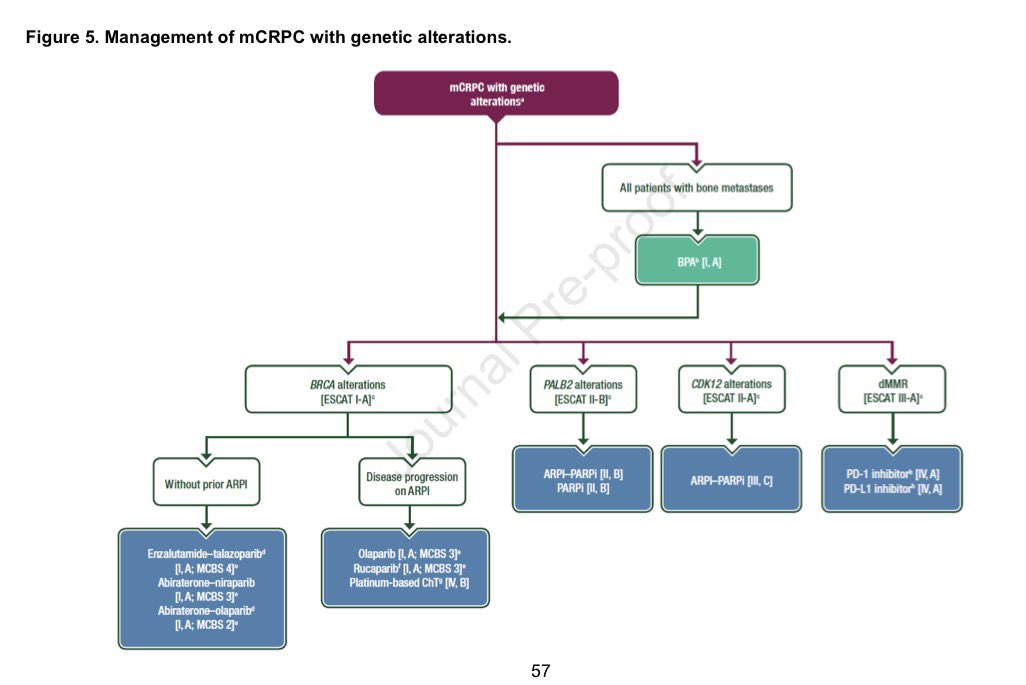
🧬 mCRPC with genetic alterations
• BRCA: PARP inhibitor ± ARPI > chemotherapy
• PALB2 / CDK12: selective PARPi use
• dMMR: PD-1 / PD-L1 inhibitor early
• Aggressive variant / NEPC: platinum-based chemotherapy
🦴 Bone health
✅ All mCRPC with bone mets must receive BPA
❌ Not for mCSPC
💡 Takeaway
Earlier intensification. Mandatory genomics. Radioligand therapy mainstream.
🔖 Save this for daily OPD decisions
📖 Full paper in comment ⬇️
#OncoTwitter #MedTwitter #ProstateCancer #GUOncology
@OncoAlert@myesmo@esmo_open@asco@Annals_Oncology
Management of Stage III NSCLC: ASCO Rapid Recommendation Update
💥Patients with unresectable stage III NSCLC with an EGFR exon 19 deletion or exon 21 L858R mutation may be offered consolidation osimertinib after definitive CRT (LAURA)
@OncoAlert
https://t.co/qa8AaHbOuq
#ASCO24 Plenary
Ph III LAURA trial of consolidation osi vs. pbo in EGFR+ NSCLC:
⏺️mPFS 39.1mo vs 5.6mo favoring osi (HR 0.16; P<0.001)
⏺️12 mo PFS 74% vs 22%
⏺️36mo OS 84% vs 74% (20% mature, p NS)
Amazing new SOC in NSCLC
🔥PLENARY Session #ASCO24🔥
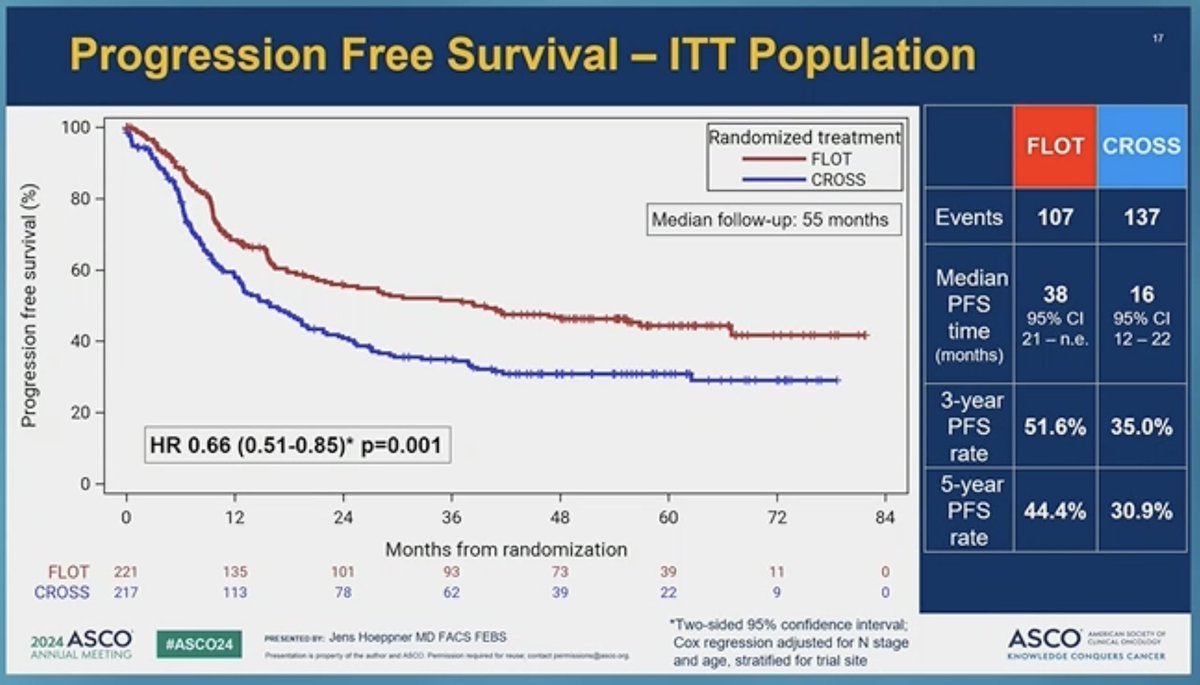
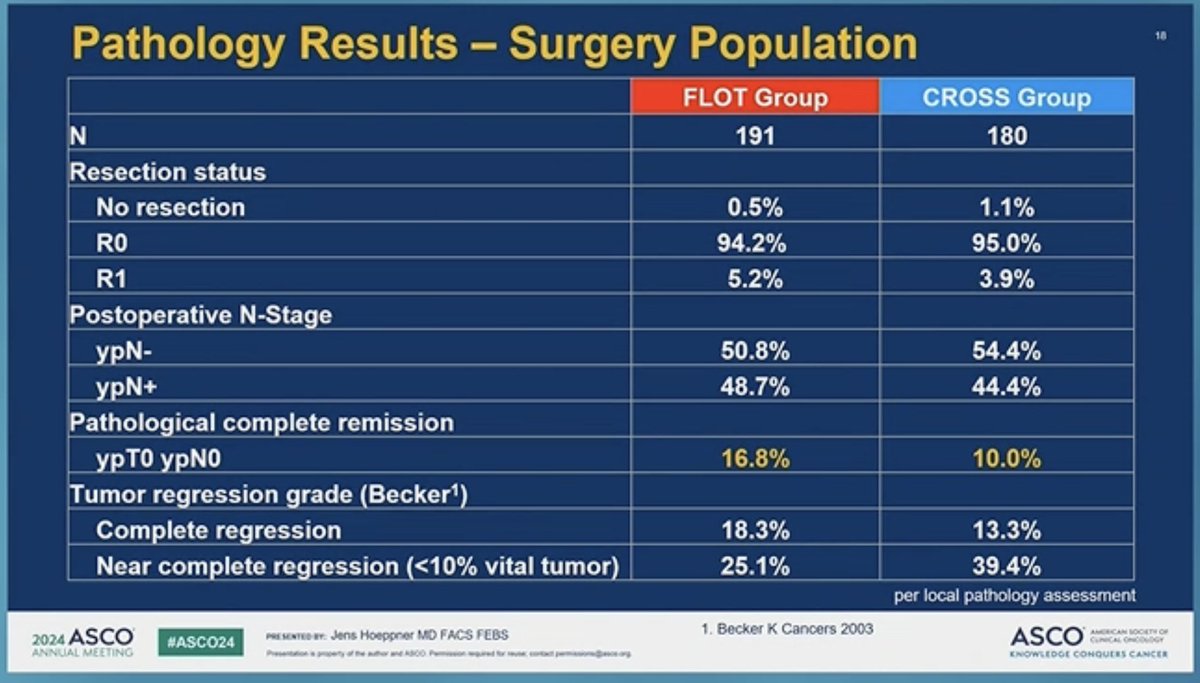
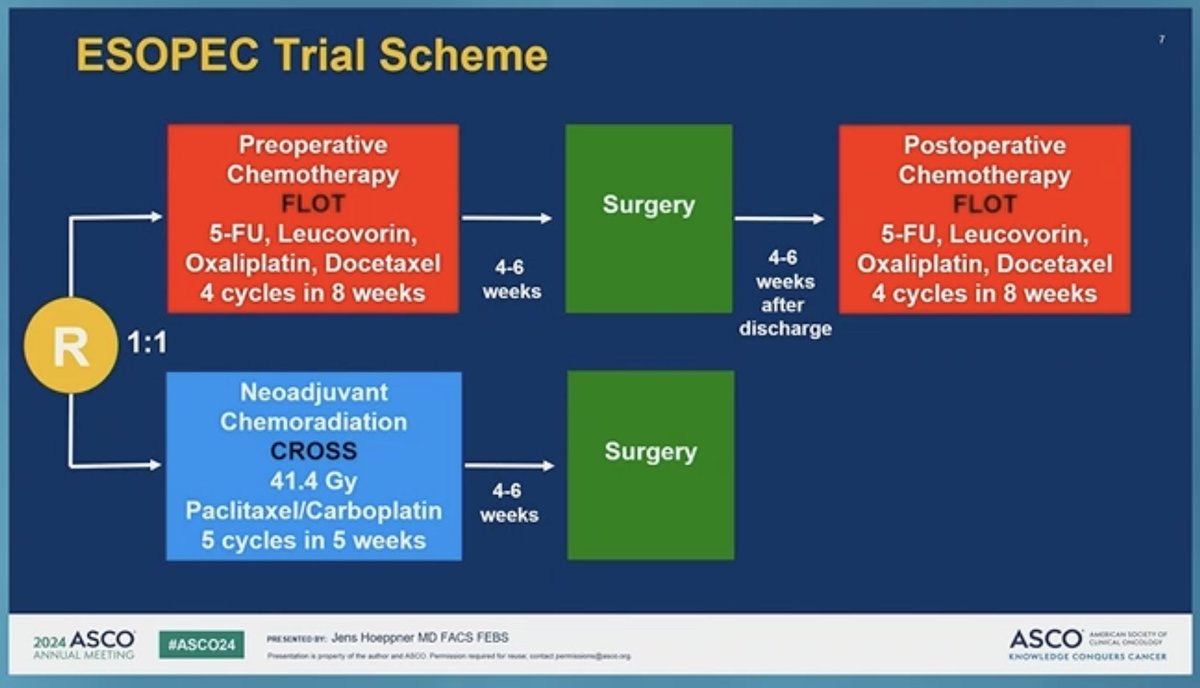
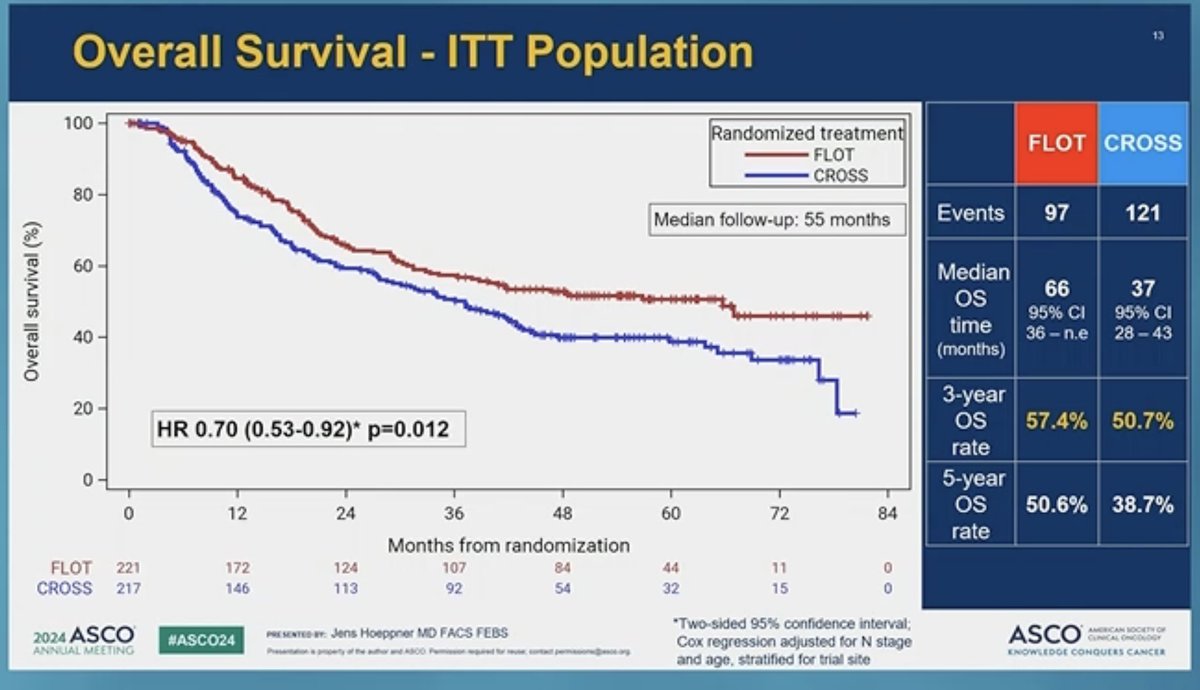
Perioperative chemotherapy (FLOT) to neoadjuvant chemoradiation (CROSS) in patients with adenocarcinoma of the esophagus
🔎 ESOPEC phase III trial, 438 patients
👉R0 180 vs 171
👉pCR 17 vs 10%
👉mOS 66 vs 37 mo
👉3yr OS: 57.4 vs 50.7%
🧐FLOT improves OS compared to CROSS
@myESMO
Great discussion by dr Krop @Yale: here the new algorithm for the management of hormone receptor-positive/HER2-negative advanced #BreastCancer after #ASCO24@OncoAlert
Most awaited trial for last decade
Peroperative FLOT vs neoadjuvant CROSS for adenocarcinoma of esophagus.
What will work the best ?
FlOT has Sunk the Cross . ✝️
Median OS 66 months vs 33 months
3 year OS -57.4 % vs 50 .7 %
HR of 0.7
FOLT is the winner over Cross . @ASCO #asco24 @agrothey@GlopesMd@weoncologists@GIcancerDoc@Larvol@OncoAlert@OncBrothers
#ASCO24 Plenary🔥
Ph III LAURA trial of consolidation osi v pbo in stage III EGFR+ nsclc:
- mPFS 39.1m v 5.6m (HR 0.16; P<0.001)
- 36m OS 84% v 74% (p NS)
Standing ovation for this new SOC, & for the very best of leaders @RamalingamMD@asco@myESMO@IASLC@OncoAlert#LCSM
Our team worked on this BCR ABL TKI table. Hope it helps. Let me know if you have any additions or modifications- I can send you the source file. #oncopharm @AaronGoodman33
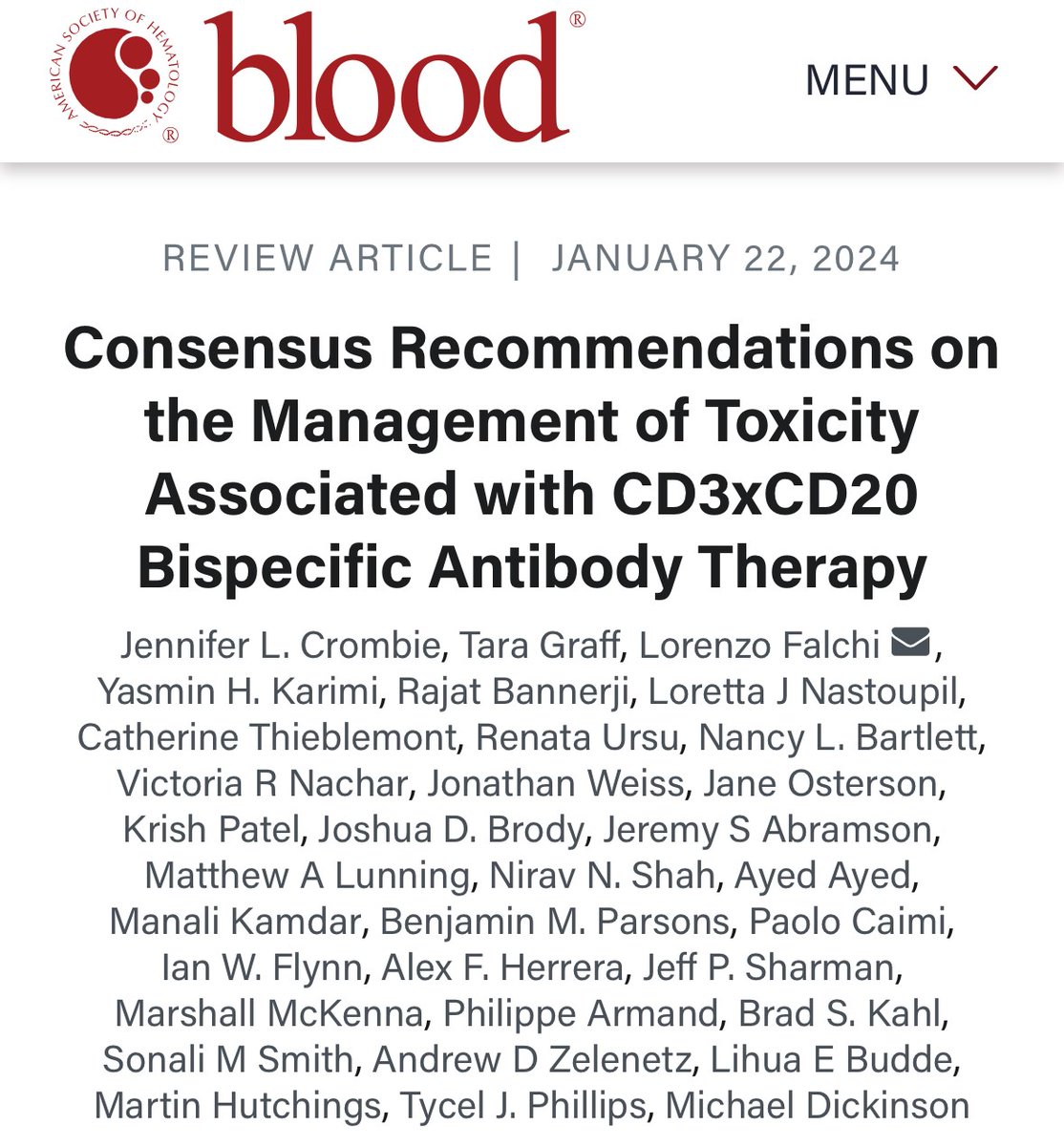
👏congrats and thanks to @VictoriaNachar for representing #oncopharm on this super important issue. We finally have consensus guidelines on how to manage these common toxicities! https://t.co/eGiYi7CNFb
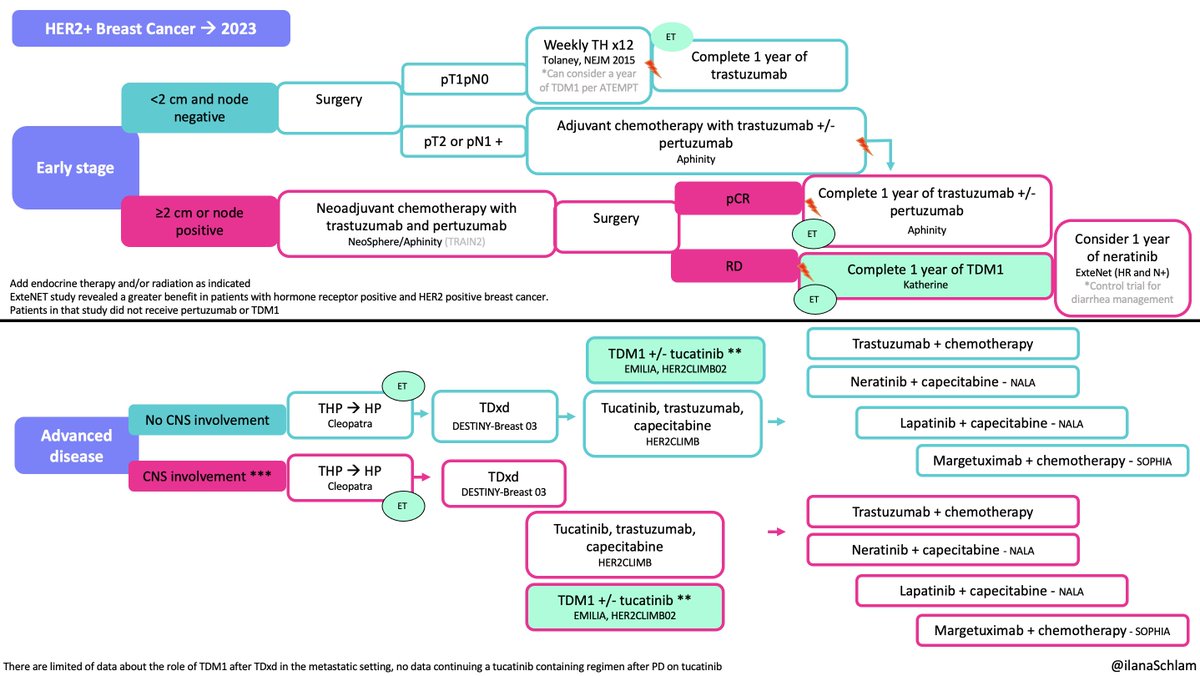
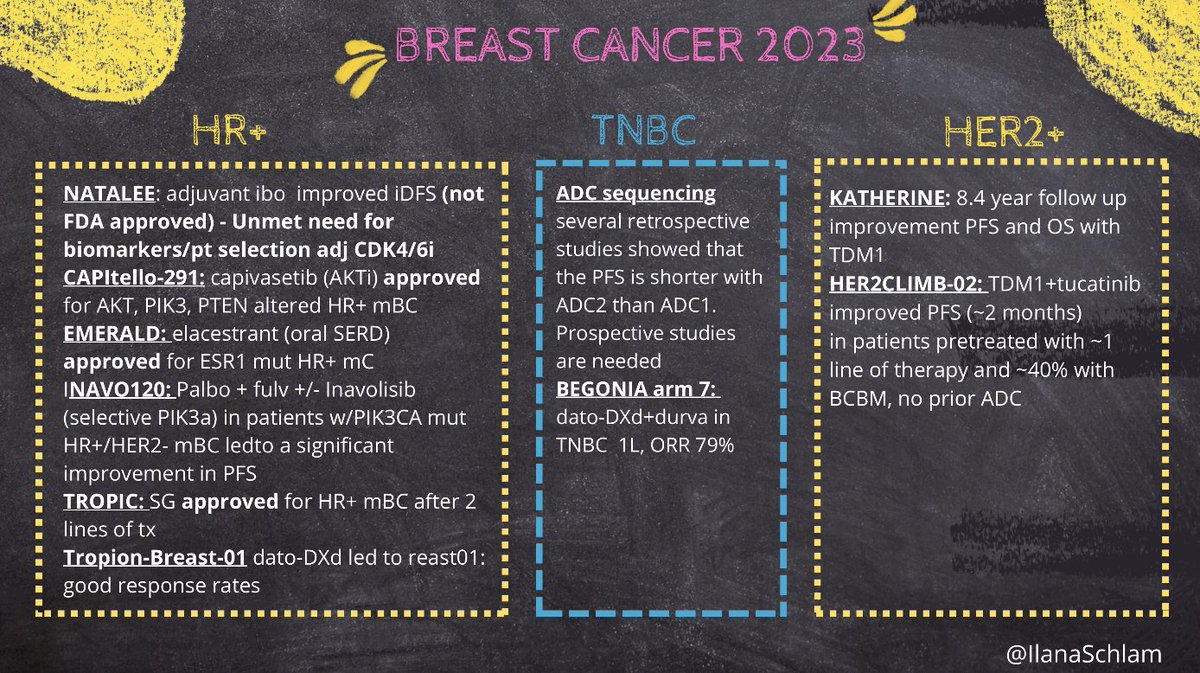
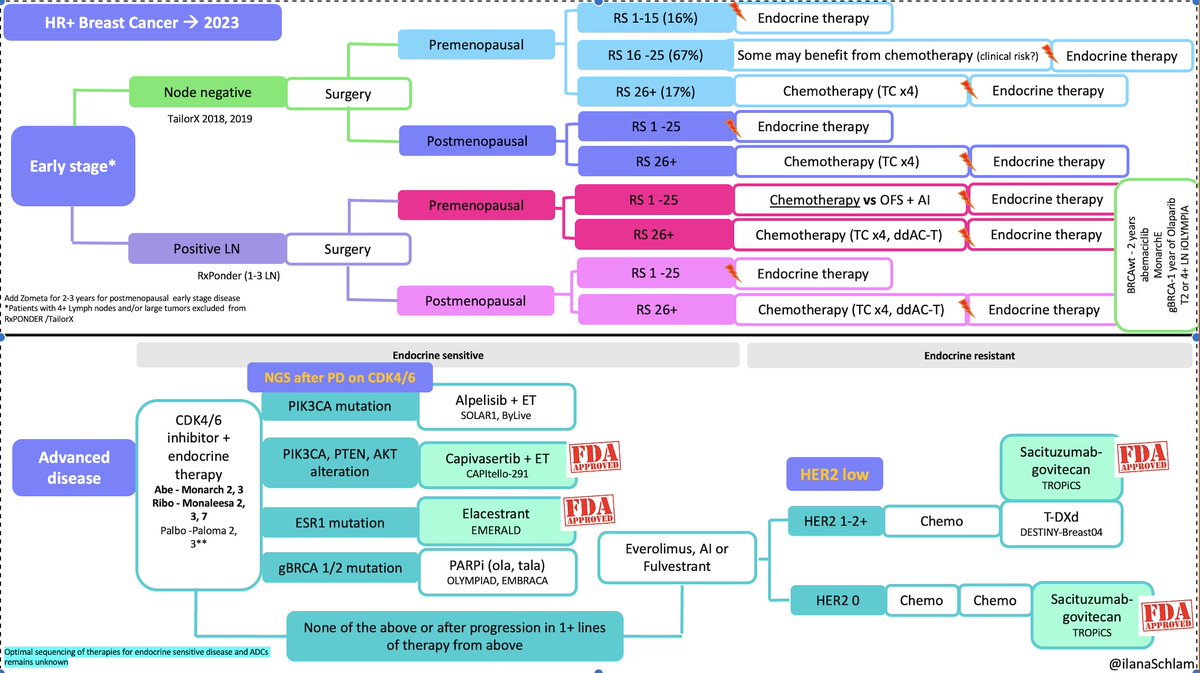
2023 was an outstanding year for breast cancer research
As we start wrapping up #SABCS23, we need to think about how to incorporate what we learned in the clinic and future research.
Looking forward to what is yet to come to improve outcomes for our patients!
@OncoAlert#BCSM