So True!
“But every time I knock on a door and pause before opening it, I am reminded why I chose this work.
The privilege of oncology is not only that you get to cure people. When you do, there is nothing like it. But it is also that you are invited into the most honest rooms in medicine, and people let you stay, laugh, and cry with them”
https://t.co/acMauf7mmA
I agree. I do think AI will eventually do most things better than us physicians, including diagnose and manage complex cases. I don’t think we will become obsolete but our roles will be redefined.
A study published today in Science may be the most important AI paper in clinical medicine this year. And it happened to land on the same day I submitted a letter to JAMA arguing that AI can already deliver clinically adequate care for defined tasks.
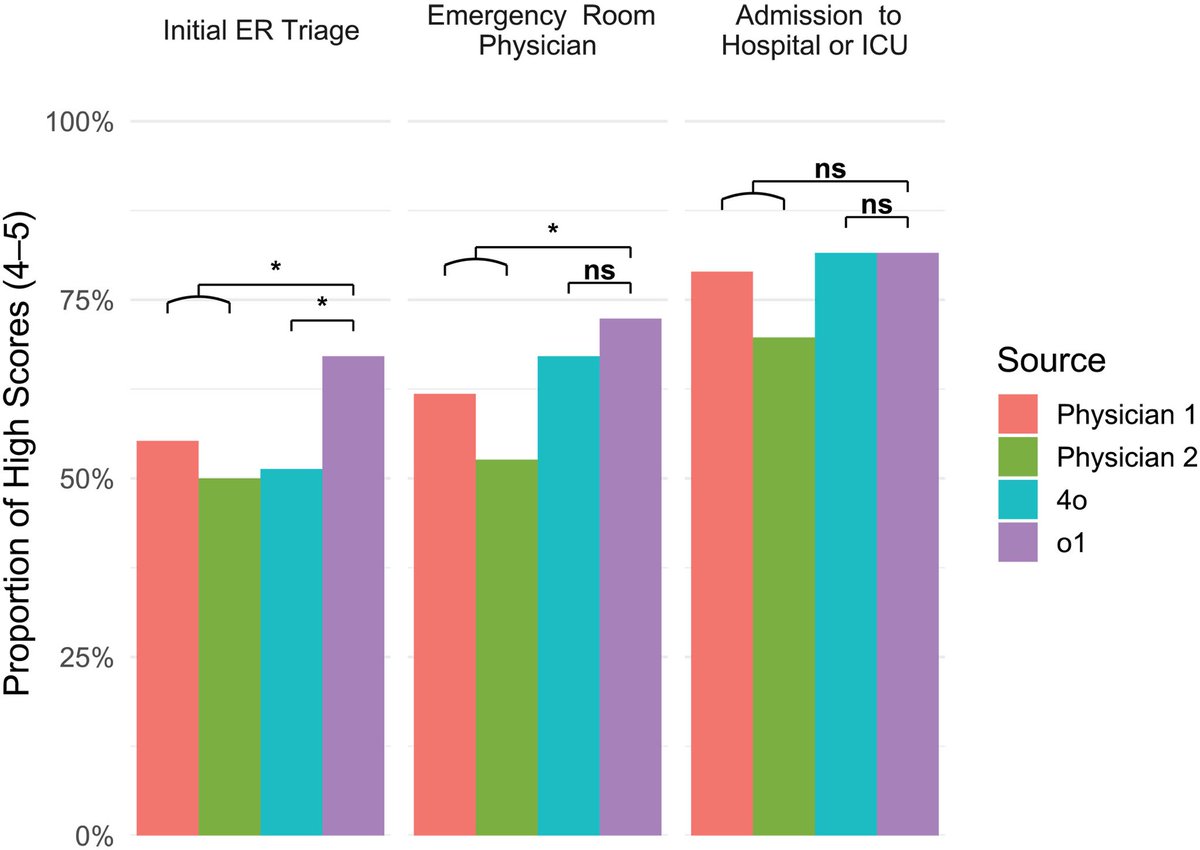
Researchers at Harvard Medical School and Beth Israel Deaconess Medical Center ran six experiments pitting OpenAI's o1 reasoning model against hundreds of physicians across the full spectrum of clinical reasoning: differential diagnosis, management planning, probabilistic reasoning, and clinical documentation. Then they did something most AI studies don't. They tested it on 76 real, unstructured emergency department cases pulled directly from the medical record at a major academic medical center.
The results across all six experiments: the AI outperformed physicians.
On the real ER cases — the messiest, most clinically relevant test — the AI identified the correct or very close diagnosis in 67.1% of cases at initial triage, 72.4% at ER physician evaluation, and 81.6% at hospital admission. The two attending physicians scored 55.3% and 50.0% at triage, 61.8% and 52.6% at ER evaluation, and 78.9% and 69.7% at admission. The gap was widest at initial triage.
On management reasoning using expert-scored clinical vignettes, the AI scored a median of 89%. Physicians with conventional resources scored 34%. That is not a typo.
The physician evaluators were blinded and could not distinguish AI-generated differentials from human ones. One evaluator guessed correctly 15% of the time. The other guessed correctly 3% of the time.
I'm an emergency physician. I work in a rural Texas ED. These are my cases. These are my decision points. And I can tell you that the triage finding is the one that matters most. Triage is where the least information meets the highest stakes — where the wrong call means a patient sits in the waiting room while their sepsis progresses or their STEMI evolves. The AI was 12 to 17 percentage points better than experienced attendings at exactly that moment.
The authors are careful to note this is text-based reasoning only; the AI doesn't see the patient's distress, doesn't hear breath sounds, doesn't read the room. Those are real limitations today. But the cognitive reasoning component of emergency medicine — pattern recognition under uncertainty with incomplete data — is precisely what this model is demonstrating it can do.
This was published in Science. Not a preprint. Not a company blog post. Peer-reviewed, in one of the two most prestigious scientific journals in the world.
The profession needs to stop debating whether AI will be good enough. It needs to start planning for the fact that, for an expanding set of clinical reasoning tasks, it already is.
And yes, this was written with AI. Sorry!!
@VincentRK That’s a valid concern, but it’s really about calibration, not capability.
But i think the fix isn’t to avoid; it’s to use them as a first-pass and verify key facts just like we already do in practice.
AI isn’t “not intelligent”; it’s not perfectly reliable at expert-level nuance “yet”. That’s different.
Where they struggle is at the highest subspecialty level, which is exactly where experts also diverge.
The issue isn’t that AI fails, it’s that we need to understand where it works well and where it doesn’t, just like any tool in medicine.
Respectfully, I disagree with this statement: “But AI can never be a doctor.”
AI already has the potential to be more knowledgeable than any individual physician, and, at least from a patient’s perspective, can sometimes feel more attentive, compassionate, and responsive than many clinicians.
That said, I agree that a truly “good doctor” cannot be replaced by AI today. But that gap is narrowing quickly. In the near future, AI won’t just support care; it will become a cornerstone of delivering excellent, scalable, and more human-centered healthcare.
Max Amini tells Piers Morgan the people of Iran are “hoping for a strategic attack" to dismantle the regime.
"We'd like for this regime to fall with the least amount of casualties."
📺 https://t.co/nH9pauqFCQ
@piersmorgan | @MaxComedian
زمانی که «دفترچه دوران اضطرار» تدوین میشد، فرض بر این بود که ایده «ریزش» در بدنه سپاه و دستگاههای امنیتی میتواند از ابعاد فاجعه بکاهد. اما امروز، پس از خیزش میلیونی مردم و بر قتلعام دهها هزار تن از بهترین فرزندان این سرزمین، دیگر نمیتوان با منطقِ پیش از کشتار به استقبال فردا رفت.
وقتی جنایت علیه بشریت در مقیاسی چنین وسیع رخ داده، سکوت یا ابهام در مورد سرنوشت ماشین سرکوب، نه یک استراتژی سیاسی، که خیانت به خونهای ریخته شده است.
۱. چطور میتوان در ساختاری که از مدیر دفتر امامجمعه تا کارمند اداری سپاه و بسیجیِ بهظاهر دارای «شغل آزاد»، همگی در شبکه مویرگی سرکوب و کشتار و شناسایی معترضان نقش داشتهاند، دم از «عدم مسئولیت بر اساس عضویت» زد؟
دفترچه اضطرار با پذیرش اصل عدم مسئولیت بر اساس عضویت، عملاً چشمان خود را بر مسئولیت ساختاری بسته است. در سیستمی که تمام اجزای آن برای سرکوب طراحی شده، کارمند دفتری و مأمور عملیاتی دو بال یک پرندهاند. دادنِ امکانِ بقا به هر کسی که در این سازمانها مانده و تا روز سقوط استعفا نداده، یعنی تزریق سمِ نفوذ به رگهای دولت انتقالی.
در غیاب اسنادی که وجود ندارد و اگر هم باشد قطعاً در روزهای سقوط امحاء خواهند شد، چطور میخواهید ثابت کنید کدام نیروی یگان ویژه یا نوپو ماشه را چکانده است؟ آیا قرار است فقدان مدرک را به پای بیگناهی بگذاریم و قاتلان را در بدنه نظام جدید استخدام کنیم؟
۲. ادعای نیاز به «نیروهای متخصص» امنیتی و انتظامی سابق برای حفظ نظم در دوران گذار، یک مغالطه خطرناک است. سپردن امنیتِ رهبران دوران انتقال و چهرههای سرشناسی که به کشور بازمیگردند به دست کسانی که تا دیروز در «اتاقهای فکرِ» حذف همان چهرهها بودهاند، چیزی جز انتحار سیاسی نیست.
نفوذ این افراد در ساخ��ار قدرت جدید، یعنی استمرارِ حضورِ «دولت پنهان» و تهدید دائم جان کسانی که میخواهند ایران را بازسازی کنند.
��. ضرورت بازنویسی فوری دفترچه اضطرار وجود دارد.
ما درسهای بزرگی را با قیمتی گزاف آموختیم:
ریزش اتفاق نیفتاد: بدنه امنیتی نشان داد که تا آخرین لحظه برای بقای خود خون میریزد.
در این شرایط تدوین چنین بندهایی صرفا باجدهی است: وعده جذب در حکومت بعدی، نه تنها مانع سرکوب نشد، بلکه به جنایتکاران این اطمینان را داد که در هر صورت جایگاهی خواهند داشت.
هرگونه ابهام در انحلل کامل و بیقید و شرط وزارت اطلاعات، سازمان اطلاعات سپاه و یگانهای سرکوبگر، این دفترچه را به عاملی برای «مصونیت جنایتکاران» تبدیل میکند.
اگر قرار است قاتلان دیماه، فردا لباسِ «کارشناس امنیتی» دولت گذار را بپوشند، پس این انقلاب برای چه بود؟ عدالت انتقالی نباید فدایِ ثباتِ ادعایی شود.
پیوستهای امنیتی این دفترچه باید بازنویسی شود؛ پیش از آنکه خون مردم در پیچوخمِ مصلحتسنجی��ای سیاسی به هدر رود و پایمال شود.
استفاده از نیروهای ارتش (نه ردههای ارشد و فرماندهی که همه سپاهی هستند) که نقش بسیار کمرنگتری در کشتار مردم داشتند و تشکیل گارد محلات و استفاده از نیروهای مردمی محله محور که اکثرا از هم شناخت کامل دارند و اجازه نفوذ قاتلان بین خود را نمیدهند، راهحل های جایگزین برای تامین امنیت در دوران گذار میتواند باشد.
سیستمهای اطلاعاتی شامل ایدئولوگترین و خطرناکترین نیروهای رژیم هستند. این اصلی ترین چالش است و سیستم اطلاعاتی حکومت جدید ایران باید با کمک و تجربیات سیستمهای امنیتی غرب از صفر ساخته و بازسازی شود.
@PahlaviReza