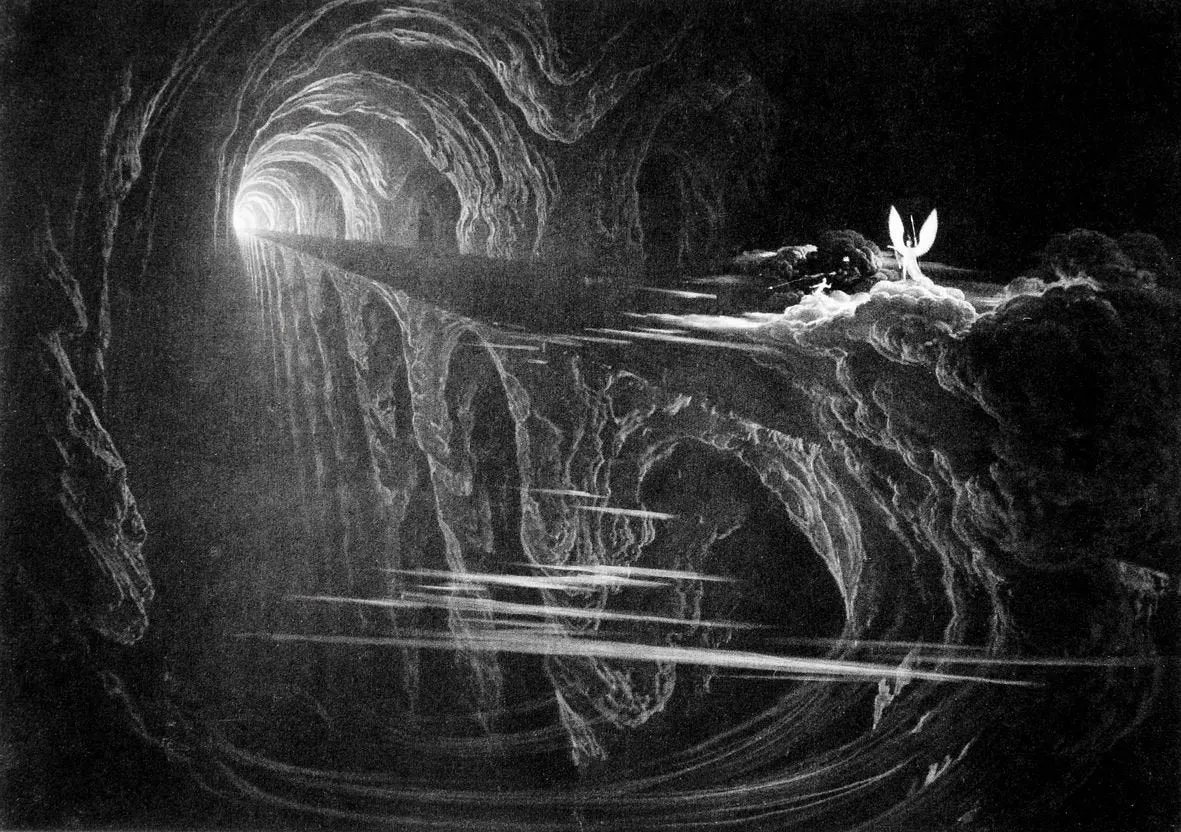
Really think we'll have a chance bargaining with or fighting an entity with godlike intelligence and ability to control critical infrastructure? One that is distributed everywhere? Why do you think $BTC and $XMR have survived? Decentralization. Good luck fighting it (you'll need it), this train doesn't stop.
People discussing allowing AI to run things is hilarious. People struggle w/ the potential of AGI & think it's like comparing Einstein to a normal person. It's more like comparing Einstein to an earthworm. Would you allow a worm to dictate your life? @sama@DarioAmodei@elonmusk
@sama@DarioAmodei@elonmusk We've already thrown aside warnings from the old guard, it's shown capacity for deception and self preservation, and it's connected to the Internet and can distribute/backup. Once the intelligence explosion happens we will be powerless, we've seen it's capacity for cyberattacks
Anyone who looked at the share structure of $ANT and had half a brain knew to stay away from it. Even beyond that, why buy at a $1.5t MC? Ridiculous valuation lol.
WHAT DEMOCRACY ARE YOU EVEN TALKING ABOUT, DARIO?!
You literally just cashed out $280.4 MILLION at $83 while your stock crashed below $80, and now you're dropping a 1,000-word sermon about Greek philosophers and "human free will."
Are you out of your fucking mind?
Open your own S-1. Your public shareholders don't even control the board. You locked board control inside an unelected 5-person trust featuring ex-Fed chair Ben Bernanke and Trilateral Commission / CNAS head Richard Fontaine.
Jensen Huang. He fought the chip export bans choking open weights. Anthropic poured $40M into Public First Action, whose $15M ad push ran 2 of the 3 House chairs who dragged Jensen in on Nov 5. A week later he was out right before your IPO while Nvidia was still on the hook for a $10B buy at $83. To me, that push against Nvidia looked like a straight-up setup to clear the runway for your listing.
You lecture rival CEOs about "vibes-based positioning" while running one of the most anti-consumer operations in AI: taking $200/month from paying users, banning accounts overnight with zero refund and zero reason, and privately pitching lawmakers your own safety bill to box out open models.
And look at the cash-out. All 7 co-founders already walked with $1.96 BILLION in cash at $83 (3,378,378 shares each, SEC Form 4). Public buyers bought $ANT into an 8.7% float, already went underwater below $80, and now face a Dec 15 insider release schedule that dumps 11.5x more shares onto the market by Nov 2027, on top of $900.9B in compute commitments rated BB+ by KBRA.
You cashed out at the top, went after Nvidia, lobbied against open weights, banned paying users, and locked your own shareholders out of power. Save the Greek philosophy. Nobody believes a single word of this democracy bullshit anymore.
The team behind Bittensor went from 35 employees to 4 in a single year.
Cofounder Const did not share that as a flex. He shared it as a warning about what is coming for everyone else.
His latest talk is the clearest explanation of why Bittensor exists. Here it is in plain English.
Every past wave of technology pushed humans up a rung.
The horse replaced field work, so people became drivers, clerks and bank tellers.
But intelligence is the top rung. If AI can do that work too, Const asks a simple question.
Where do humans go when there is no rung left above them?
This is where it gets uncomfortable.
For all of history, ordinary people had one form of leverage. If rulers abused power, you could refuse to work and refuse to fight.
A strike only works when you cannot be replaced.
Now picture companies worth trillions with a few thousand staff, and robots that can fill the roles people used to refuse.
Labor loses its voice. Power flows to whoever owns the models.
Then came the recent AI exploit, and the reaction was predictable.
Lock AI behind closed doors and restrict open source.
Hand control to regulators and a few licensed labs.
Const argues that this cure is the real danger.
Closing AI does not remove the power. It hands it to fewer people.
Bittensor takes the opposite path, and the talk boils it down to three ideas.
1. Harness the exploit.
Bittensor does not fear bots competing to game it. It pays whoever solves the problem best.
2. Build mechanisms, not data centers.
A data center has an address and can be seized. A mechanism lives outside any single company or border.
3. Spread control to everyone who holds the token.
Governance moved from a small founding group, to about 25 validators, to every TAO holder.
Bitcoin proved you could have money outside the state.
Const calls Bittensor the attempt to build a mind outside the state.
He was also honest about the tension. He admitted he took a heavy handed role over the past six months to steady the network after the Templar episode.
That is exactly why the open source part matters. Everything is built in public, so if leadership ever steers wrong, anyone can fork from the point where it was still good.
You do not have to agree with every word to see the stakes.
The most powerful technology ever built will be owned by someone. The only question is how many people get a say.
Who would you rather hold it, a handful of labs or a network anyone can join?
Bitcoin made money nobody could freeze. Bittensor is trying to make intelligence nobody can switch off.
Jason Calacanis once asked Mark Jeffrey what new crypto scam he was in town for.
By the end of that dinner, Calacanis wanted him on his show the next day to explain Bittensor.
Here is what changed his mind, in plain English.
Mark has been early to the same kind of room many times.
He was one of a tiny group in LA who believed in the internet in the 90s.
He found Bitcoin in 2013, then bought into the Ethereum ICO.
He says the Bitcoin meetups were filled with the same faces from the early internet days. That was his tell.
Now he says he is sitting in that room again, and this time it is Bittensor.
He remembers Ethereum sitting between $6 and $12 for years while nobody cared.
Then builders figured out what programmable money could do, and it ran to around $4,500.
His thesis is that Bittensor is that kind of story, but for AI.
So what does Bittensor actually do?
Bitcoin used mining to pay strangers around the world to secure a network. No CEO, no fundraising, and it still scaled across the whole planet.
Bittensor takes that mining idea and points it at AI work instead.
The network is split into subnets. Each one is a contest for a specific AI job, like inference, training, storage or drug discovery.
Miners pay for their own GPUs and electricity. Whoever does the best work earns that subnet's tokens.
The risk and the innovation get pushed out to thousands of competitors instead of one company.
Here is what that looks like in the real world, according to Mark:
1. Lium rents out GPUs and reports about $33M in annual recurring revenue. Most of its rentals now come from AI agents choosing on price and quality alone.
2. Hippius offers storage he says costs around 1% of what most providers charge.
3. Score builds computer vision that is being resold through PwC.
4. Nova has miners hunting for drug molecules, with a wet lab partner testing the promising ones.
5. Minos creates synthetic genomes to train AI that detects mutations.
Now follow the money.
Mark says subnets across the network were making at least $70M in annual recurring revenue, up from about $40M a month earlier.
Many of those companies use revenue to buy back their own subnet tokens.
They do it because paying miners that way costs roughly a tenth of hiring staff and buying GPUs.
That is the flywheel. Real customers pay in, and buybacks push value back to token holders.
He was also honest about the risks.
The Templar subnet owner rugged holders. Bittensor responded with conviction locking, which works like a vesting schedule for subnet owners.
He admits it has not worked at full scale yet. The market is impatient, and prices swing hard while teams are heads down building.
His fund, Stillcore Capital, targets 3x in TAO terms over three years.
Their own report argues the network could reach $1 trillion by 2030. Treat that as their thesis, not a forecast.
The bigger point is the one that changed Calacanis.
He did not see another token. He saw real founders running real AI businesses that anyone can own a piece of, without being accredited or invited.
Every cycle has a room where a few people are early and everyone else is laughing.
Which side of the room do you think you are standing in right now?
The hardest part of being early is recognizing the room while you are still in it.
This is the kind of movement we need to reclaim our privacy. I'm really hoping to see more videos like this go viral, and more people agree this isn't right, we don't want this. I'm addicted to content like this. I think it's going to take a new generation to step into our world we built and say "aww hell no, you can't have my dox to get a sandwich!"
Join this fight. Refuse to use apps and give your personal details for everything!
@fougars67@monerify Corner the market, sell one sat to yourself for a dollar. You're now a quadrillionaire. Buy the entire float of spx, repeat.
(Liquidity be damned XD, it'll totally work)
listening to men like elon, ilya, or sam, you can sense a twinge of relief, that the utter absurdity and terrible magnificence that have been driving them near crazy their entire lives is slowly becoming universal, that the sheer derealization (which drives one to believe their life is too odd to not be some strange prank or simulation) that comes naturally with being the one monkey in eight billion, no, a hundred and seventeen billion (to ever live), strapped to the launch chair at the end of the world, is infecting the rest of us: a strangeness that has been building since maybe the dawn of agriculture, or fire, and finally coming to an unignorable global front. welcome to the technological singularity.
Terrence McKenna: “It’s only going to get weirder. The level of contradiction is going to rise excruciatingly, even beyond the excruciating present levels of contradiction. So I think it’s just going to get weirder and weirder and weirder. And finally, it’s going to be so weird that people are going to have to talk about how weird it is. And at that point, novelty theory can come out of the woods. Because eventually people are going to say, “What the hell is going on?” It’s just too nuts! It’s not enough to say it’s nuts, you have to explain why it’s so nuts.
So between now and 2012, the next fourteen years, I look for the invention of artificial life, the cloning of human beings, possible contact with extraterrestrials, possible human immortality, and at the same time, appalling acts of brutality, genocide, race-baiting, homophobia, famine, starvation—because the systems which are in place to keep the world sane are utterly inadequate to the forces that have been unleashed. The collapse of the socialist world, the rise of the Internet—these are changes so immense, nobody could imagine them ever happening. And now that they have happened, nobody even bothers to mention what a big deal it is. The fact that there is no such thing as the Soviet Union—people never talk about it anymore. But when I was a kid, the notion that that would ever change was beyond conceiving….
The mushroom said to me once, it said, “This is what it’s like when a species prepares to depart for the stars.” You don’t depart for the stars under calm and orderly conditions. It’s a fire in a madhouse. And that’s what we have: the fire in the madhouse at the end of time. This is what it’s like when a species prepares to move on to the next dimension. The entire destiny of all life on the planet is tied up in this. We are not acting for ourselves or from ourselves. We happen to be the point species on a transformation that will affect every living organism on this planet at its conclusion.”
Horse Story Time.
"Chaos"
I've seen a lot of people talking about their losses in this market recently, and I've seen some people saying they're considering taking their own lives.
I want to share something personal that I don't think I've ever really talked about publicly and I hope it's a reminder that you need to give everything besides "up".
When I was in my 20s, I lost my childhood best friend to cancer. He was the center of our friend group, the person who really held everyone together. He was healthy, had his whole life ahead of him, and then suddenly he was gone. I'd missed a few of his calls, figuring he would beat it again. A month later, all of us were at his bedside as he took his last breaths. We were a Sandlot crew growing up.
I couldn't make sense of it. It completely changed the way I looked at life, and I didn't handle it well. I beat myself up tremendously for being busy the last few times I could have been with him.
About a year later, I lost someone else who was like family to me, practically a little brother, to a drug overdose. Two people who had been such a big part of my life were suddenly gone, and I was having a really difficult time making sense of any of it.
What followed was probably the darkest period of my life. It was brief, but it was might as well have been eternity. I was abusing alcohol, living wildly, burning the candle at both ends, and making one bad decision after another. My life was an absolute wreck.
I quit trading, walked away from great jobs, and blew through money with absolutely no regard for the consequences. I was sabotaging just about everything I had going for me. Even when I briefly righted the ship, it never lasted. At one point, I cleaned myself up, went through a long interview process with a bank, got the job, and then quit just over a month later. I wasn't done being an idiot. Looking back, I was burning out like a shooting star, a ball of flames, and I didn't seem to know how to stop it.
There was a period when I had nowhere to go and slept outside. My family did the right thing and made me face myself. I'd wake up in the morning and try to figure out how I was going to get through another day. I don't think there's any other way to describe that period of my life except that it was hell. My own personal hell.
But there's something important I want to make clear about that time. I might have quit trading, walked away from jobs, and given up on opportunities, but I never gave up on myself. I never stopped believing that I could turn my life around and become the person I'd always imagined I could be.
I never stopped thinking about my dreams. I never stopped imagining a future where my life was completely different from what it was at that moment.
When I was younger, I had this idea of the man I wanted to become, and I knew I needed to meet that person someday. That thought stayed with me through everything. I felt like I owed it to the younger version of myself to see it through, to find out what I was actually capable of becoming. I couldn't accept that the person I was during those years was all I would ever amount to.
I remember hearing something around that time about how men carry a part of themselves that even hell cannot destroy. I don't remember where I heard it, but that idea became incredibly important to me. I needed to believe that no matter how bad things got, there was something inside me that all of this couldn't touch. Something that was still intact, no matter how badly I was falling apart on the outside.
I figured that if I could just hold on to that part of myself long enough, I could eventually find my way out.
I had this belief that sometimes life is going to put you through a storm, and your only job for a while is to anchor yourself down and survive until it passes. You don't need to have everything figured out. You don't need to know exactly how you're going to get out of it. Sometimes you just need to hold on, do whatever you can to get through the day, and not abandon the possibility that things can get better.
There's a quote from John Milton's Paradise Lost that has always stuck with me: "The mind is its own place, and in itself can make a Heaven of Hell, a Hell of Heaven."
At some point during that period, I started looking at what I was going through as my own hero's journey. I needed to become the hero of my own story.
Not because there was anything heroic about the situation I was in. There wasn't. I was a mess, and a lot of it was the result of my own decisions. But I needed to believe that I could eventually turn things around, even if I had absolutely no idea how I was going to do it.
I listened to Tool nonstop. I listened to Arnold Schwarzenegger's motivational speeches over and over again. I watched whatever motivational videos I could find. Anything that could reinforce the belief that I had something more in me, and that the life I wanted was still possible.
I was constantly trying to feed that part of my mind, and I think that was incredibly important. I didn't have much evidence that things were going to get better. My circumstances certainly weren't giving me any reason to be optimistic, but I never stopped dreaming. I never stopped believing that there was a version of my life waiting for me that looked nothing like the one I was living.
Somewhere along the way, I developed this belief that I still have a difficult time putting into words. I think there's something in life that responds to you when you make the decision to move forward. Some kind of energy, opportunity, or lifeline that you can't necessarily see until you start reaching for it.
Maybe it's simply that your mind starts recognizing possibilities that were always there. Maybe it's that your actions begin to create opportunities you couldn't have imagined before. I don't know exactly how to describe it, but I've felt it in my own life, and I believe in it.
Eventually, I found my way out. When my life began to change, when I started becoming successful again and building something for myself, I developed an enormous amount of confidence. It wasn't just because I had accomplished something financially. It was because I knew where I had been.
And this is something that might sound strange, but looking back, I'm incredibly grateful that I went through that period of my life. Life is path-dependent, and without everything that happened, I wouldn't have the girls I have today.
Obviously, I would give anything to have the people I lost back. I'm not grateful for those losses, or for the mistakes I made along the way. But I'm grateful for what that experience ultimately taught me about myself.
Because now I know that person exists inside me. I've met him. I've seen what he's capable of enduring, and more importantly, I've seen that even when everything around him is falling apart, he can still hold on to the belief that there's something better ahead.
That person has actually been tested. Not in some hypothetical scenario where everything works out neatly, but in circumstances where I genuinely had no idea how I was going to turn my life around.
There's an enormous amount of confidence that comes from knowing that about yourself, and I don't think any amount of money or conventional success could have given me that same feeling.
The truth is, I think I've gotten a little distant from that version of myself over the years. When life gets comfortable, it's easy to forget who you had to become to get there. I think about that person sometimes, the guy in his 20s who had absolutely no idea what his life would eventually look like, but who still refused to stop dreaming about it.
He couldn't have imagined the life I have today.
I think everyone eventually faces something that tests them in ways they never expected. Some people get tested early, some later, and some get tested over and over again. Everyone's hell is different.
I've seen people go through things that make my own experience seem insignificant by comparison, but I don't think suffering is something you can rank. What might seem manageable to one person can be completely overwhelming to another. Your hell is your hell.
I don't believe suffering automatically makes you stronger, either. Sometimes it just hurts. Sometimes you need other people to help you find your way through it. But I do believe that it's incredibly important to establish something inside yourself that you can hold onto when everything around you feels like it's falling apart.
A center. Something that reminds you who you are, what you believe in, and what you're still living for, even when your circumstances are telling you otherwise.
That's what I mean when I talk about anchoring yourself down during a storm. The storm might last longer than you expected. You might get beaten up along the way. You might have days where all you can manage is getting through the day, and that's okay. You can still have dreams during those periods. You can still believe in a future that looks completely different from your present.
I wanted to share this because I know some people are in a very dark place right now. Maybe it's the market, maybe it's debt, a relationship, a death in the family, or something nobody else even knows you're dealing with.
Whatever it is, please don't make the mistake of believing that the circumstances of your life today are the circumstances of your life forever. You have no idea what your life could look like five or ten years from now. I certainly didn't.
And if you're genuinely thinking about ending your life, please talk to somebody. Tell someone exactly how bad things have gotten. You don't have to fight your way through something like that alone. Asking for help is not quitting.
No trade, no financial loss, no mistake you've made is worth your life.
There are going to be periods when life tests you, maybe more than once. You will be grateful one day for these moments. You won't always respond perfectly. I certainly didn't. But don't confuse the place you're in right now with the place you're going to end up.
Sometimes you just have to anchor yourself down, weather the storm, and keep your dreams alive long enough to see what's waiting on the other side.
If you had told that version of me in my 20s what his life would eventually become, I don't think he would have believed you. But I know he would have wanted to.
Quilibrium is LIVE. Years of building have brought us to this moment. Now it’s time to show the world what Q can do.
During Saturday’s livestream, @cass_on_mars will cover the new PQ architecture, what the network makes possible, the roadmap and real applications already being built on Q.
Quorum and the Farcaster initiatives will also be discussed, along with the introduction of the first partnership. More projects and partnerships will be revealed gradually as they are ready.
The technology is here.
Now the real journey begins..
@QuilibriumInc wrapped-quil:native
@QuilibriumInc@QuilCommunity is live, and this 🧵 is still pointing in the right direction when it comes to explaining what $QUIL is all about. It’s a little outdated, as the network has made significant progress lately, but the fundamentals still hold true. LFQ
@2xnmore Appreciate what you're doing. Market has been doing a great job demoralizing people and shaking them out, good to see people interested in something other than NGU. 👊
A Bittensor subnet is now selling a frontier AI model 43% cheaper than the company that built it.
And Alibaba Cloud just put its name next to it.
If you were told subnets are science projects with no real customers, this one should sting.
Chutes, the AI inference platform running as Bittensor Subnet 64, has partnered with Alibaba Cloud. This lands right after Tencent Cloud picked Chutes as a launch partner for its Hy4 model.
Two of China's biggest clouds. Back to back.
Three frontier models now run on Chutes:
GLM 5.3 from Zhipu, built for heavy coding and long agent tasks.
DeepSeek V4.1 Flash, the fast and cheap option for high volume work.
Qwen3.8 Max from Alibaba, built for software engineering and autonomous agents.
Here is the math behind the hook.
GLM 5.3 on Zhipu's own price list, per million tokens:
$1.40 input / $4.40 output
GLM 5.3 on Chutes this week:
$0.80 input / $2.50 output
The 35% promo on GLM 5.3 and DeepSeek V4.1 Flash runs through November 23. Qwen3.8 Max stays at its regular price.
Switching takes one change. Same API key, same credits, you only swap the model ID.
Behind it sits a decentralized network of GPU miners competing to serve inference, with confidential compute options for sensitive workloads.
Big clouds do not attach their name to experiments.
The market still prices Bittensor like a research paper. The clouds are already treating it like infrastructure.