Everyone talks about cutting sodium. Almost nobody talks about adding potassium. The evidence says the latter may be just as (if not more) important
.
A WHO-commissioned meta-analysis pulled together 22 randomized trials and 1,606 participants. The headline number: in adults with high blood pressure, increasing potassium intake dropped systolic blood pressure by an average of 3.5 mmHg. In the subset of studies where intake reached 90 to 120 mmol per day (about 3,500 to 4,700 mg), the drop was 7.2 mmHg.
Important caveat the meta-analysis flagged: this effect was only seen in people with hypertension. In normotensive adults, the BP change was not statistically significant. The same paper also notes there was no clean dose-response relationship established between the two effect sizes. Two data points, not a smooth curve.
The mechanism is straightforward. Potassium does two things at once. It signals the kidney to excrete more sodium in urine by inhibiting a sodium reabsorption channel called NCC in the distal tubule. It also relaxes vascular smooth muscle directly by opening potassium channels in the arterial wall, which hyperpolarizes the muscle cells and reduces vascular tone. Two mechanisms, one ion.
The stroke data is even more compelling. Across 11 cohort studies and 127,038 adults, higher potassium intake tracked with a 24% lower risk of stroke. That is association data, not RCT-grade causation, but it lines up with what the trials show for blood pressure.
Now the intake gap. The 2019 National Academies set adequate intake at 2,600 mg per day for women and 3,400 mg for men. NHANES data puts the US adult average somewhere around 2,300 mg. Most people are below target, and the gap is bigger for women in absolute terms.
Closing it is not complicated. One banana delivers about 420 mg. One baked potato with skin gives you 925 mg. One cup of cooked spinach is 840 mg. One cup of white beans is 1,190 mg. Adding one of those to an average day gets most adults into the target range.
Cutting sodium is fine if you do it. Adding potassium does something on its own.
Aburto et al., BMJ 2013
NIH Office of Dietary Supplements, 2024
USDA FoodData Central
The ramp up of cancer immunotherapy is remarkable. Now we're seeing vaccines achieve some cures or remissions in the most refractory cancers: pancreatic, melanoma, glioblastoma, renal, triple-negative breast cancer.
✓ out the new Ground Truths (link in profile)
Exercise doesn’t just strengthen muscles—it rewires immunity.
Acute workouts and long-term training reshape immune cell behavior through exerkines, metabolites, blood flow, and even the gut microbiome, with implications for cancer, autoimmunity, and healthy aging. #ExerciseImmunology #Healthspan #Immunology
https://t.co/ieYqsZEw96
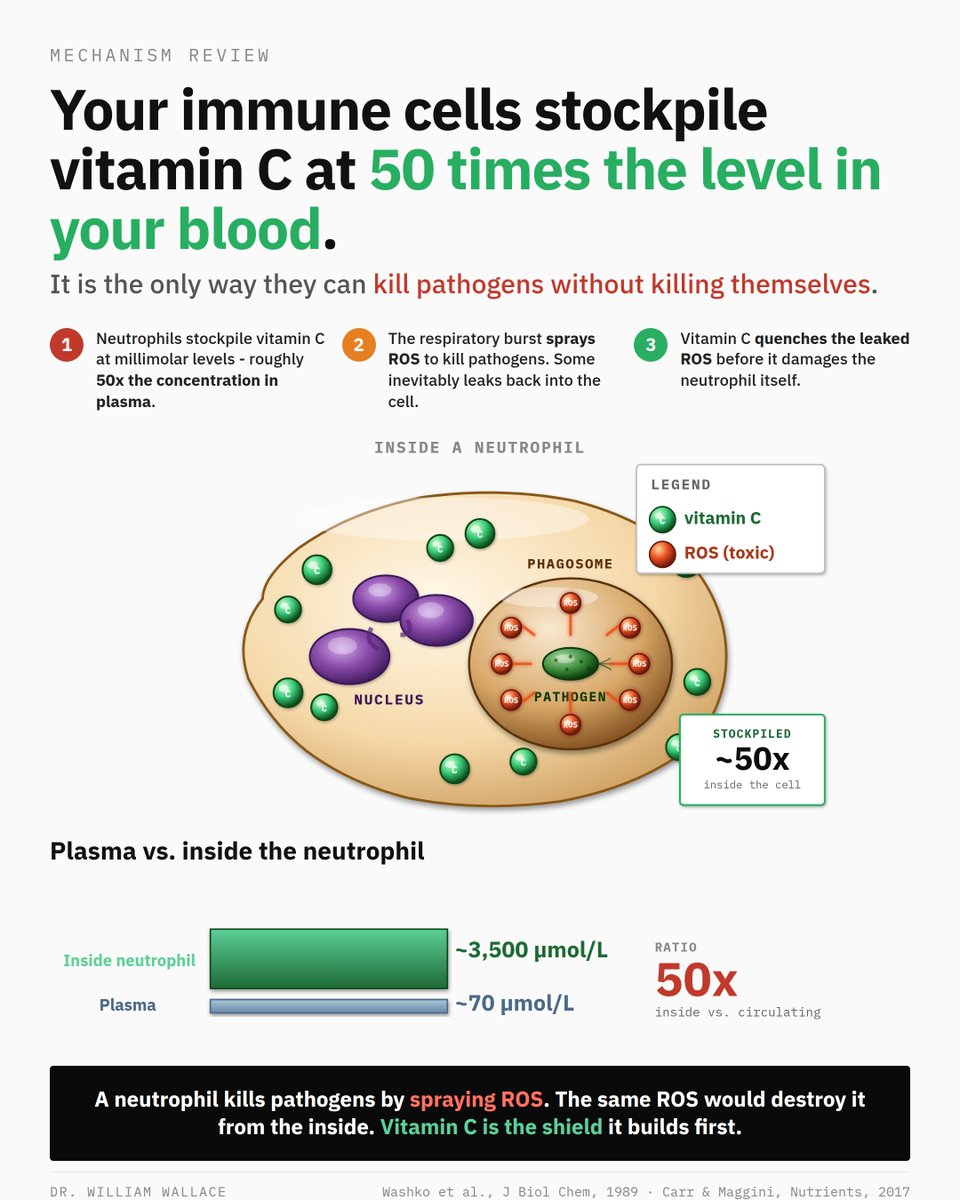
Vitamin C is famous as an antioxidant. That framing understates what it does inside your immune cells.
When a neutrophil hunts down a bacterium, it does not chew it apart. It engulfs the pathogen into a sealed compartment called a phagosome and detonates a respiratory burst inside, spraying reactive oxygen species like superoxide, hydrogen peroxide, and hypochlorous acid onto the trapped organism. This is essentially the chemistry of industrial bleach, used in a controlled space. It works. It also creates a problem.
ROS does not stay neatly contained. Some of it leaks back into the neutrophil itself. A cell that produces enough oxidant to kill a pathogen produces enough to kill itself. The neutrophil needs an internal antioxidant pool large enough to neutralize the leakage without shutting down the kill. Vitamin C is a major component of that pool.
Resting plasma vitamin C tops out around 70 micromolar at saturation. Inside neutrophils, the concentration sits in the millimolar range, roughly 50 times higher. This is not passive equilibrium. Neutrophils pump vitamin C across their membrane against a steep gradient using a sodium-dependent transporter called SVCT2, maintained at metabolic cost.
When neutrophils initiate a respiratory burst, their internal vitamin C drops sharply. Stankova 1975 and Winterbourn & Vissers 1983 documented this consumption during phagocytosis. The cell then needs to refill the reservoir. Repeated infection without dietary replenishment depletes the pool, and neutrophil function declines with it. Patients with severe infection routinely show plasma vitamin C well below healthy controls.
The practical question is dosing. Levine 1996 in PNAS measured this directly in seven healthy adults under controlled depletion-repletion. Neutrophils saturated at approximately 100 mg daily intake. Plasma saturated fully at 1000 mg daily. Single doses above 500 mg showed declining bioavailability with the excess excreted in urine. Above 400 mg daily, no measurable additional benefit appeared.
What this means: roughly 200 mg daily, split into two doses, keeps your neutrophil and plasma pools comfortably saturated. That is achievable from food alone. A red bell pepper, two kiwifruit, or an orange plus a cup of strawberries each put you in the range. The 1,000 mg pills do not get more vitamin C into your cells than the pepper does. They just produce more expensive urine.
Cellular vitamin C does not fall during infection because the immune system is broken. It falls because the system is working as designed and burning through its reserves to do it. Refilling the tank is one of the few interventions with mechanism, pharmacokinetics, and clinical context all aligned.
Washko et al., J Biol Chem, 1989
Levine et al., PNAS, 1996
Carr & Maggini, Nutrients, 2017
#Obesity is associated with higher risk for 12 #cancer types and accounts for approximately 10% of annual new cancer cases in the US.
📄 This Review summarizes the primary biological pathways connecting obesity and cancer development.
https://t.co/1ggRbdtW56
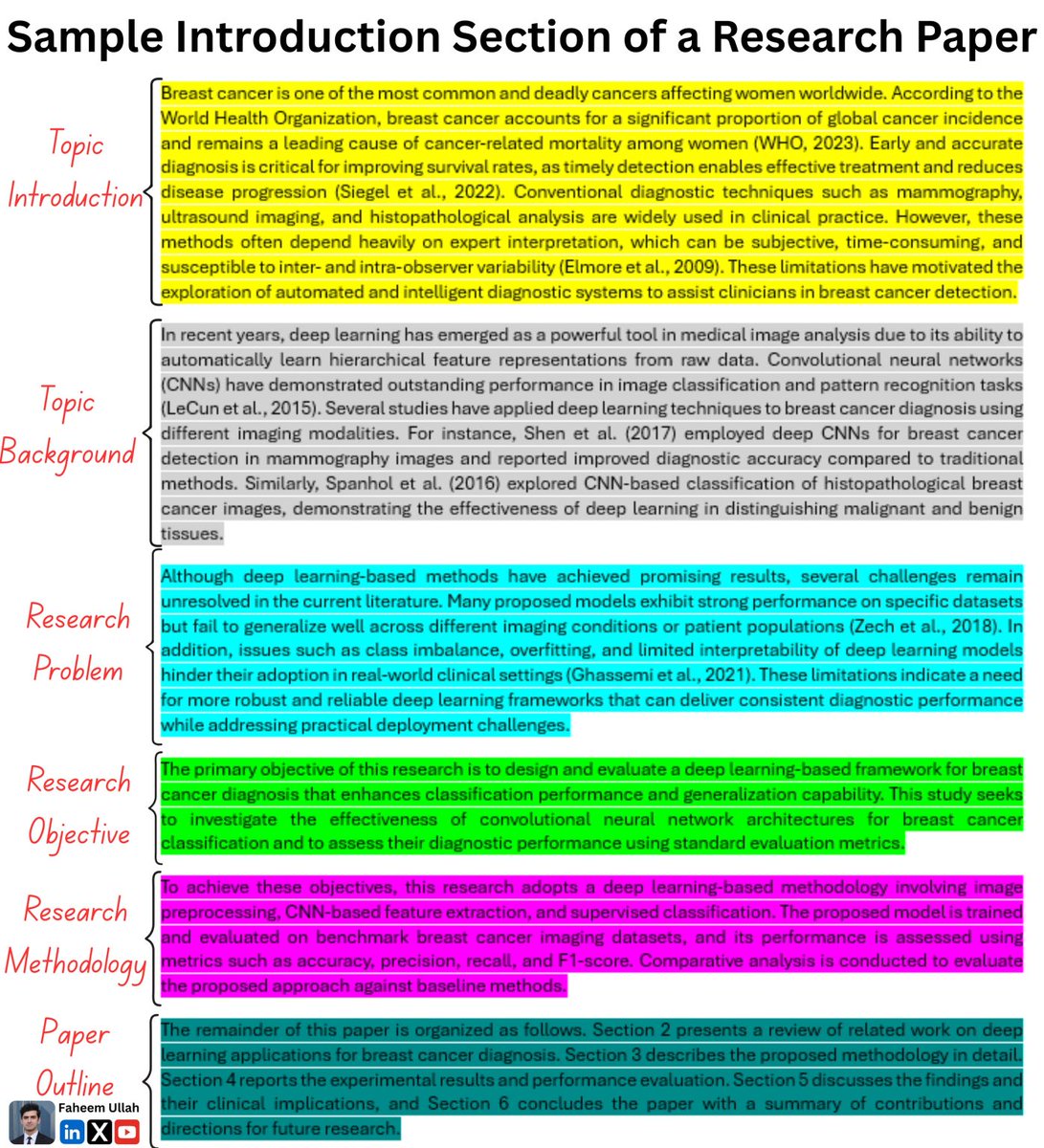
PhD Students - Here is an example of a good introduction
A good introduction should have the following 6 parts.
1. Topic introduction
2. Topic background
3. Research problem
4. Research objective
5. Research methodology
6. Paper outline
One AI skill that changes how you read academic papers.
It turns every reference into a reusable writing block.
I call this method: Atomic sentences.
Atomic sentence = One sentence. One claim. One source.
You can extract them directly from a peer-reviewed paper, vetted by authors and reviewers before it ever reaches you.
It is a form of summarising the content, but the output can be reused and recombined in your writing.
Here's how it works 👇
1. Upload any paper to Claude and trigger the /ea-atomic-sentences skill. It breaks down every cited reference into a single compressed claim. (Repeat on as many papers as needed)
2. Pick 5–6 sentences relevant to an argument and arrange them coherently, so it makes sense. Add your own ideas/findings as well.
3. Ask Claude to combine them into a coherent paragraph. What you get is surprisingly well-written paragraphs. Use the skill /ea-academic-writer for even better results.
✅ Every reference in that paragraph is real.
✅ Every claim was made by a human researcher.
✅ You control the narrative of what is being said in your paper, but build on the findings of others.
Disclaimer: Don't skip reading, as you need to understand your domain to use this and don't rely 100% on AI, as it can make mistakes.
If you read books and forget everything, this is for you.
NotebookLM can turn any book into action plans, memory notes, and usable insights.
Here are 12 prompts:
Obezite ‘irade zayıflığı’ değil, büyük ölçüde genetik bir hastalıkmış!
Nature Metabolism’te yeni yayınlanan kapsamlı derlemeye göre👇
✔️ 85’ten fazla monogenik obezite formu tespit edildi (çoğu çocuklukta başlıyor)
✔️ 1000’den fazla genetik lokus kilo değişkenliğini etkiliyor
✔️ Ailede obezite varsa kalıtım oranı %40-75 arasında!
Yani ‘az ye, çok spor yap’ demek yetmiyor❗️
✅ Artık genetiğe göre kişiselleştirilmiş tedaviler (melanokortin-4 reseptör agonistleri gibi) devreye giriyor.
Obeziteyi suçlamak yerine anlamanın zamanı geldi…
#Obezite #Genetik #Bilim #Sağlık”
9 AI Tools for Researchers 🧠
📌. https://t.co/sKjtw5iA0M – research faster
📌. https://t.co/agMu8hLw9Q – verify sources
📌. https://t.co/T1OMgOnkDU – summarize papers
📌. https://t.co/mwWOyio5ZW – explain theories
📌. https://t.co/pi01TGHxGu – auto summaries
📌. https://t.co/quYXc3rzcx – find evidence
📌. https://t.co/iuMfQlSnp9 – discover related work
📌. https://t.co/lDfUJiUZgm – visualize citations
📌. https://t.co/PtpinBDImS – deep paper search
Here's how you can earn $1599 a month—with no experience required!
للمهتمين بالبحث العلمي 📚
هذه من أفضل الأوراق اللي قرأتها عن كتابة ونشر الأبحاث. 👌
3 محررين من مجلات طبية كبرى يشرحون بشكل عملي ماذا يريد المحرر فعلًا من الباحث، وأبرز الأخطاء اللي تسبب رفض الورقة.
مفيدة جدًا لأي شخص يبدأ بالنشر العلمي أو يطور طريقة كتابته للأبحاث.
Short sleep ages you. Long sleep usually means something is already aging you.
A new paper in Nature this week mapped sleep duration against biological aging across 9 organ systems in half a million UK Biobank adults aged 37 to 84. Junhao Wen's lab at Columbia used 23 different aging clocks built from MRI scans, plasma proteins, and metabolites. The relationship is U-shaped. The slowest measured aging sat between 6.4 and 7.8 hours per night. Outside that window in either direction, organs looked older than chronological age would predict.
The two arms of the U are not the same biology.
On the short-sleep side, the causal story is well established. Sleeping under 6 hours raises systemic inflammation, impairs next-morning glucose tolerance, suppresses NK cell activity, and tracks with markers of poorer overnight brain waste clearance. Mendelian randomization in this paper supports a direct causal effect of short sleep on aging biology. Short sleep drives the wear and tear.
On the long-sleep side, the picture flips. Consistently sleeping over 8 or 9 hours is a well-documented marker of underlying disease, not a damaging behavior in itself. It tracks with major depression, undiagnosed sleep apnea, hypothyroidism, chronic inflammation, and neurodegenerative disease. The authors note that Mendelian randomization could not strongly support reverse causality, but they explicitly could not exclude it either. Decades of sleep medicine argue that for most long sleepers, the long sleep is the body compensating for something already wrong.
This matters because the practical advice for the two groups is opposite.
If you sleep under 6 hours, the levers are direct. Total sleep opportunity. Consistent timing. Morning light. Caffeine cutoff after lunch. Alcohol stopped at least three hours before bed. Sleep extension trials adding 45 to 90 minutes a night have shown measurable improvements in metabolic and cardiovascular markers.
If you consistently sleep 9 or more hours and still wake unrefreshed, the right move is to investigate what your body is recovering from. Home sleep study to rule out apnea. TSH, free T4, ferritin, CRP, vitamin D, B12. Depression and anxiety screening. A review of medications that increase sleep need.
One scenario gets lumped in with long sleepers that shouldn't be. Athletes in heavy training blocks, adolescents, people recovering from infection, and people in their first trimester genuinely need 9 to 10 hours. The paper looked at habitual sleep in adults aged 37 to 84, not acute recovery states. The curve does not apply to them the same way.
The cleaner way to state the finding: there is a window in the middle where the body looks youngest on every clock the authors built. Both sides of that window correlate with faster organ aging. The reasons differ. Short sleep does the damage. Long sleep usually shows the damage is already underway.
THE HIDDEN ORGAN GEOMETRY OF SLEEP: WHY YOUR NIGHTLY POSITION MATTERS MORE AFTER 50
PART 1: THE HIDDEN PHYSICS OF SLEEP
Most of us picked a sleep position decades ago and have not questioned it since. The body, though, is not a symmetrical block. Your heart, stomach, liver, lungs, and the brain’s cleaning system are all arranged off-center, and gravity acts on them for eight hours every night.
The direction gravity pulls depends entirely on which surface you lie on. Left side, right side, back, and stomach each create a distinct relationship between organs and the structures around them.
One position protects more systems than any other. Another silently damages a structure few people ever mention. And the position many assume is the safest is actually the worst for more than half of all diagnosed sleep apnea.
Left side sleeping wins on three major fronts. First, the inferior vena cava, the largest vein returning blood from the lower body, runs along the right side of the spine. Lying on the left avoids compressing it under the weight of abdominal organs, preserving optimal venous return and cardiac preload. This is why left side sleeping is specifically recommended during pregnancy, but the hemodynamic benefit applies to every adult.
Second, left side geometry keeps stomach acid where it belongs. The stomach curves so that the esophageal junction sits on the right side of its upper surface. On the left side, gastric contents pool in the lower greater curvature, leaving the sphincter dry. On the right side, the pool shifts toward the esophageal opening, and any slight sphincter weakness common after 50 lets acid enter the esophagus. The same stomach, same acid, and different positions determine whether reflux occurs at all.
Third, the brain’s glymphatic waste clearance system, which flushes amyloid beta and other metabolites during sleep, operates most efficiently in the lateral position. Both left and right side sleeping outperform supine and prone positions. The drainage pathway through the internal jugular veins is oriented favorably when the body is horizontal and on its side. Eight hours a night, every night, for decades adds up to a meaningful difference in how well the brain cleans itself.
Lateral sleeping also reduces intracranial pressure compared with lying flat, a benefit that matters for anyone with glaucoma risk or unexplained head pressure. The hydrostatic drop helps protect the optic nerve and may ease strain on the brain’s venous system.
The right side offers its own narrow advantages. The liver, a 1.5-kilogram organ, sits in the right upper quadrant. On the right side, the ribcage supports its weight. On the left, it hangs from ligaments and can tug on the diaphragm, a discomfort some people with fatty liver or congestion notice immediately. Right side sleeping may also produce slightly higher vagal tone and lower resting heart rate, though the data is mixed.
For most people over 50, however, the right side’s benefits are overwhelmed by the reflux geometry. The acid presses against the sphincter for hours, making it a poor default unless liver comfort or unilateral lung disease specifically demands it.
The back position provides the most neutral spinal alignment. For anyone with degenerative disc disease or chronic back pain that worsens on the side, supine sleeping can feel like the only option. The trade-off is airway patency. Gravity pulls the tongue and palate backward, narrowing the pharyngeal space. About 56 percent of diagnosed obstructive sleep apnea is positional, meaning the obstruction occurs primarily on the back. A person who snores exclusively on their back is part of that 56 percent, and the airway that holds open on the side collapses under a different gravitational vector.
Stomach sleeping keeps the airway most open, because the tongue falls forward. But the cost is sustained 90-degree neck rotation. The cervical facet joints and muscles endure asymmetric loading that causes morning stiffness and, more concerning, compresses the vertebral arteries running through the neck bones. In individuals with atherosclerosis, which becomes more common after 50, that sustained rotation carries a documented risk of arterial dissection. The prone position also restricts chest expansion and increases the work of breathing.
Age magnifies all these calculations. Glymphatic clearance efficiency drops as perivascular channels narrow with age, so maximizing remaining capacity via side sleeping becomes proportionally more important. The lower esophageal sphincter weakens, making right side reflux worse. Pharyngeal muscles lose tone, so the airway that tolerated supine at 30 collapses at 60. And nocturnal blood pressure dipping, which protects the cardiovascular system, is better supported by left side sleeping in many individuals on antihypertensive medication.
The detailed application of these principles, including a full step-by-step action plan, is provided in the attached Part 2; Part 3 offers a quick bullet-point cheat sheet for daily reference.
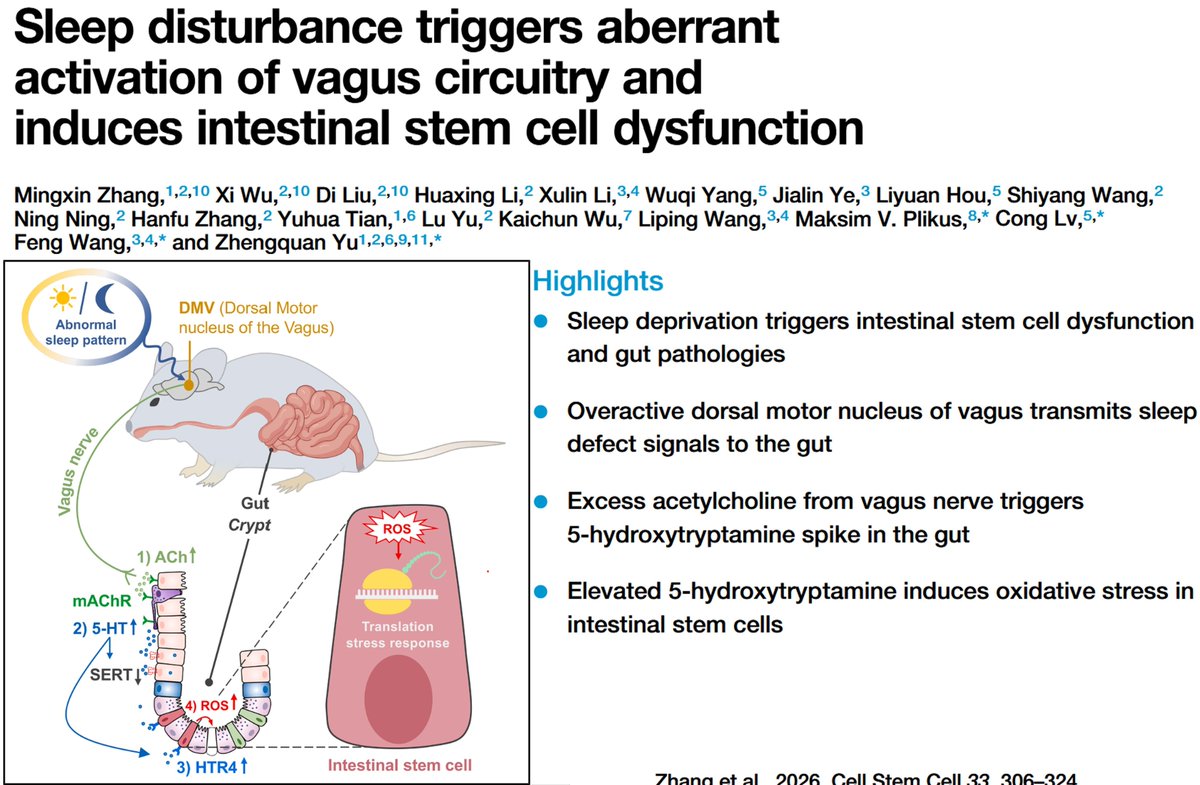
Sleep loss doesn’t just affect the brain—it disrupts the gut 🧠➡️🦠
Overactive vagus signaling boosts acetylcholine & serotonin in the intestine, driving oxidative stress and impairing stem cell function. Another reason sleep is critical for whole-body health. #SleepScience #GutHealth
https://t.co/gcqACD9LWM
Understanding the Interplay Between Obesity and Cancer: From Mechanisms to Therapeutic Opportunities
✅️ This review summarizes how these obesity-related changes contribute to cancer progression & treatment resistance, & It is discussed the potential strategies to improve therapy. A better understanding of these mechanisms may support the development of more effective treatments for patients w/obesity.
https://t.co/MOSw96OPBk @HealthyFellow
Obesity-driven mechanisms promoting tumorigenesis, progression & metastasis. Obesity contributes to cancer development & progression through multiple interconnected mechanisms. During tumorigenesis, adipose tissue expansion induces a pro-inflammatory microenvironment characterized by cytokine dysregulation (e.g., IL-6, TNF-α) & activation of insulin/IGF-1 signaling pathways, which promote cellular transformation & proliferation. In tumor growth, obesity-associated hypoxia leads to HIF-1α activation & drives aberrant angiogenesis & extracellular matrix (ECM) remodeling, resulting in enhanced tumor cell proliferation and invasion. As the disease progresses, these changes collectively facilitate metastasis. In metastatic stages, obesity promotes lipid metabolism & accumulation within tumor cells, supports inflammatory signaling & immune cell recruitment, & disrupts adipokine balance (e.g., leptin, adiponectin), thereby enhancing cancer cell survival, dissemination, and colonization of distant organs. Together, these processes establish a tumor-promoting environment that accelerates cancer progression & metastatic spread.
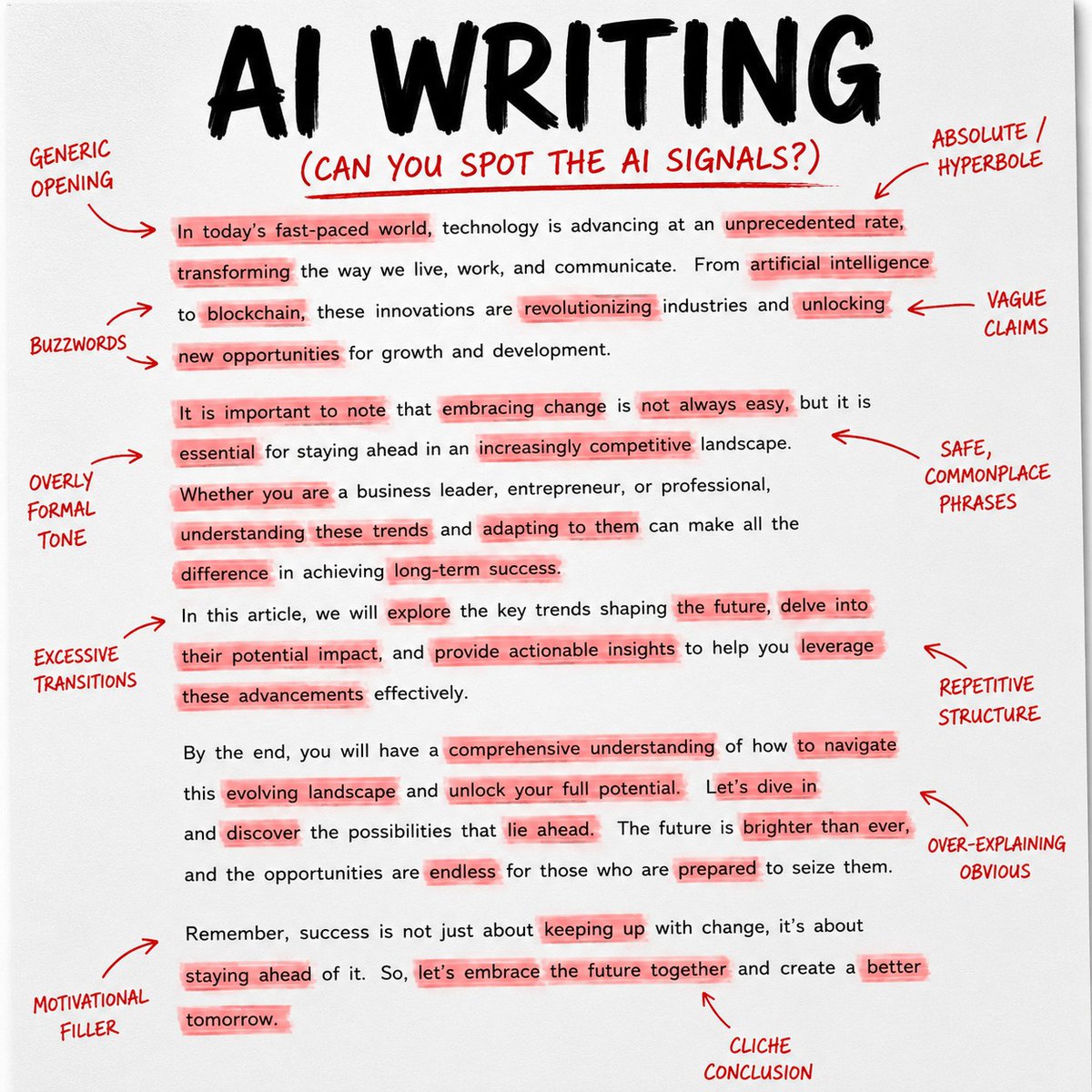
BAD NEWS: YOUR CHATGPT OR CLAUDE WRITING IS OBVIOUS
Most people won't say it, But they spot it instantly.
Here are 7 Claude Anti-AI Writing System Prompts that remove the AI fingerprints from your writing: