New @WHO guidelines now include recommendations to limit #sedentary behaviour and replace with #physical activity of any intensity, but still a lot of room to improve and expand the evidence-base #EveryMoveCounts
Every move counts!
Evidence for new @WHO#sedentary behaviour guidelines
➡️Substantial health gains from limiting sedentary time
➡️Replace sedentary behaviours with #physicalactivity of any intensity
👉🏽https://t.co/p7C0WNDKI4
By @PC_Dempsey@fiona_bull et al @IJBNPA
New Research Letter in Diabetes, Obesity & Metabolism:
🔹 Breaking up sitting ↓ postprandial GIP (not GLP-1) in people with Type 2 Diabetes
🔹 Hints of sex differences
🔹 Timely in the era of GLP-1 RAs
Led by Beth Logan (med student) 👏
OA link: https://t.co/oi2LATsFZd
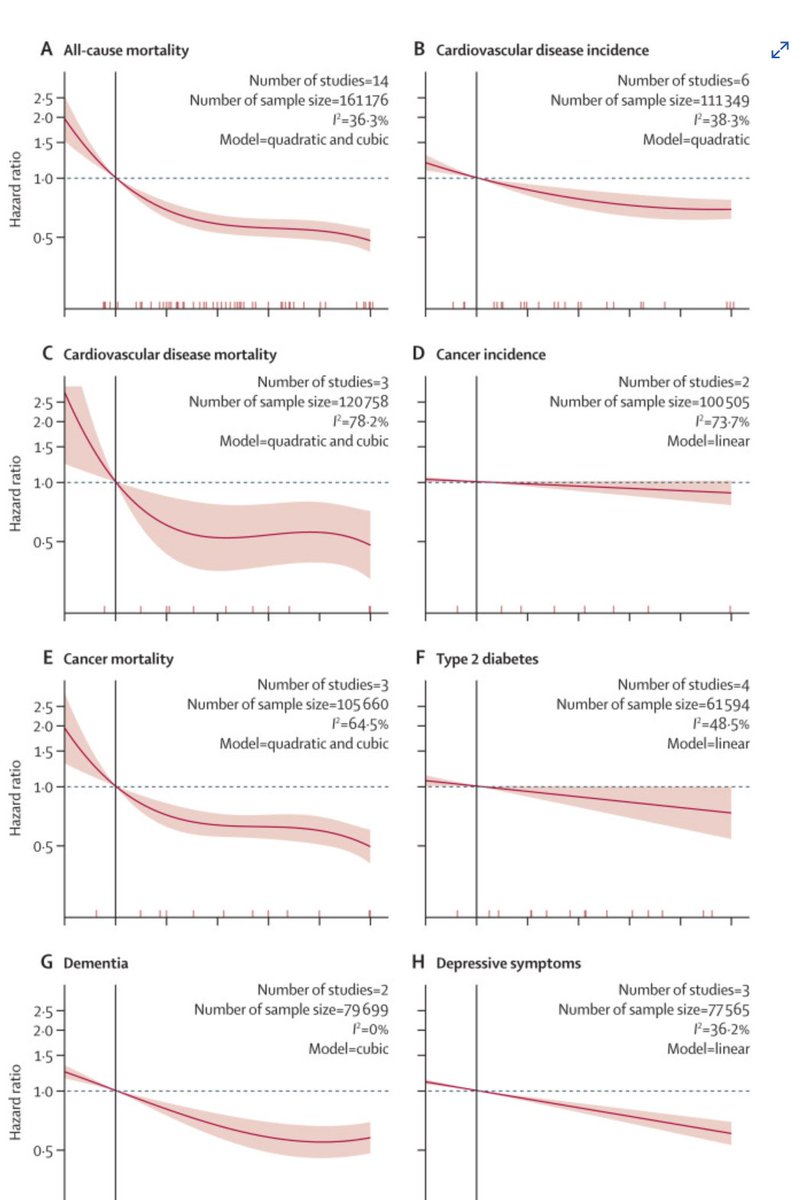
How many steps do we really need a day for good health?
Excited to share our new research in @TheLancetPH
https://t.co/amcusTAMIH
* Even small increases for those inactive could be helpful
* 7000 is a realistic target backed by science
Keep stepping 🚶♂️🚶🧑🦯🏃♀️
@OxWearables@ProPASSconsort@M_Stamatakis@ismpb_org@ISPAH@F_Schwendinger Great to see this work come to fruition and interesting results (eg. after correction for RDB, sub-groups). Wondered if you examined any metrics that might show more temporal variability (or be less habitual) over time—eg. PA/SB patterns, bout distributions, transition dynamics?
📢Excited to share a comprehensive scoping review led by @hmlyoungphysio on PA/sedentary behaviour interventions for #MLTCs & #frailty
Some key gaps:
❌ Limited focus on sedentary behaviour
❌ Minimal (reported) carer involvement
❌ Homogeneity in populations
More work needed! 👉
Finally published! Physical activity & sedentary behaviour interventions for ppl living w/ both #frailty & #mltcs & their carers: a scoping review https://t.co/7OM43ZaQub
Yep.
Disinformation enabled Donald Trump’s second term and is a crisis for democracies everywhere https://t.co/gviyEnF6Gx
"The playbook involves putting conspiracy theorists at the heart of government and dismantling agencies that support evidence based policy making. Trump has promised Robert F Kennedy a 'big role in the administration.'"
by @chrischirp et al. via @bmj_latest
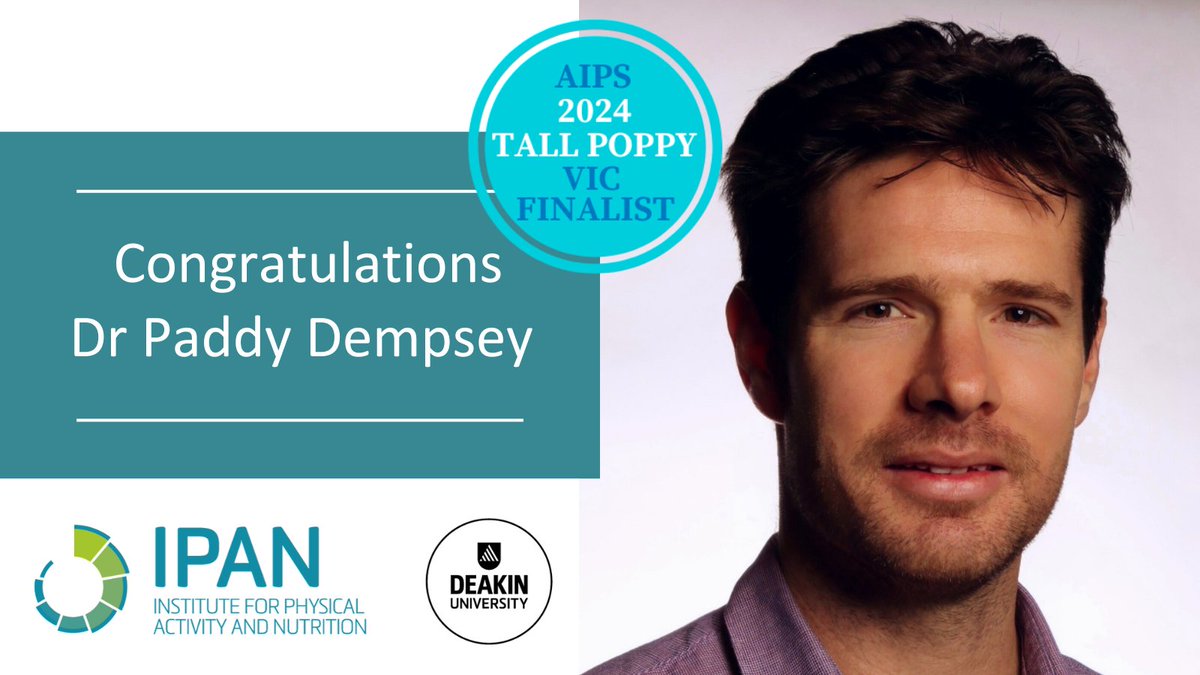
Honoured to be shortlisted for an @aipolsci 2024 #YoungTallPoppy Award! Grateful for the chance to contribute to clinical and public health research, and to be part of a campaign that promotes scientific literacy and excellence while inspiring new generations of scientists #STEM
Thrilled to announce Dr @PC_Dempsey is a 2024 @aipolsci #YoungTallPoppy finalist! Paddy’s research sheds light on how different amounts, intensities and patterns of physical activity and sedentary behaviour can improve cardiometabolic health.
@deakinresearch | @BakerResearchAu
@minnajohansson1 Interesting work/idea. Agree specific evidence on effectiveness & feasibility/accessibility for brief or very brief PA advice is shaky. I wonder how you view patient referral (ie., other health professionals/community-based services) within this? - i.e., TNT vs. TN'R' (refer)?
How much exercise is needed to increase life expectancy?
Turns out a little goes a long way.
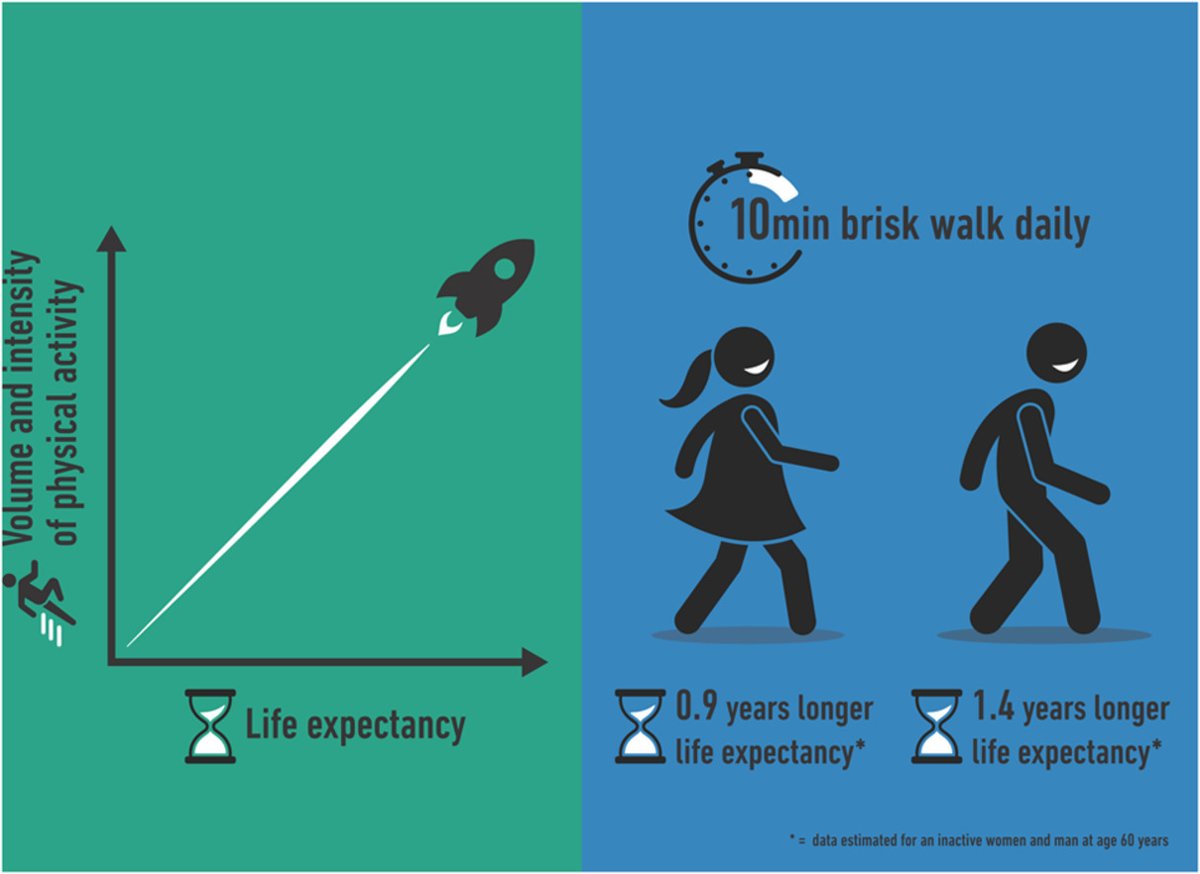
This new study in over 71,000 people (aged 60+) found:
➡️Higher volumes and intensities of exercise = greater benefits (up to 3.5 to 4.6 extra years for women and men, respectively).
➡️BUT - just a 10 min brisk walk daily was enough to add 0.9-1.4 years to modeled life expectancy.
https://t.co/BtgLU9ruoI
Nice harmonized accelerometer meta-analysis led by @JakobTarp across 9 prospective studies in adults—building up activity volume linked to lower mortality risk, with some added benefit from more moderate intensity activity
https://t.co/9Tf2x2XsKK
#PublicHealth#PhysicalActivity
@PC_Dempsey expertly concluded the Highlighted Symposium on "The Physiology of Sedentary Behavior," offering insightful perspectives on translating experimental data into practical guidelines and highlighting key knowledge gaps and future research directions. #ACSM24
Nicely set up Symposium by @MarsApovian@jmjakicic@ReneeJRogers on focusing/positioning PA & lifestyle modification in the context of contemporary anti-obesity drugs (eg GLP-1 RAs).
Rapidly moving space. New ACSM consensus statement on obesity management coming soon! #ACSM24
Mark Hargreaves presents the DB Dill Historical Lecture - "Exercise Physiology in a Molecular Age". A legend in the science of exercise & muscle biology, but I'll always remember him more for being a top bloke and mentor/role-model. All the best with 'retirement' 🙂 #ACSM24
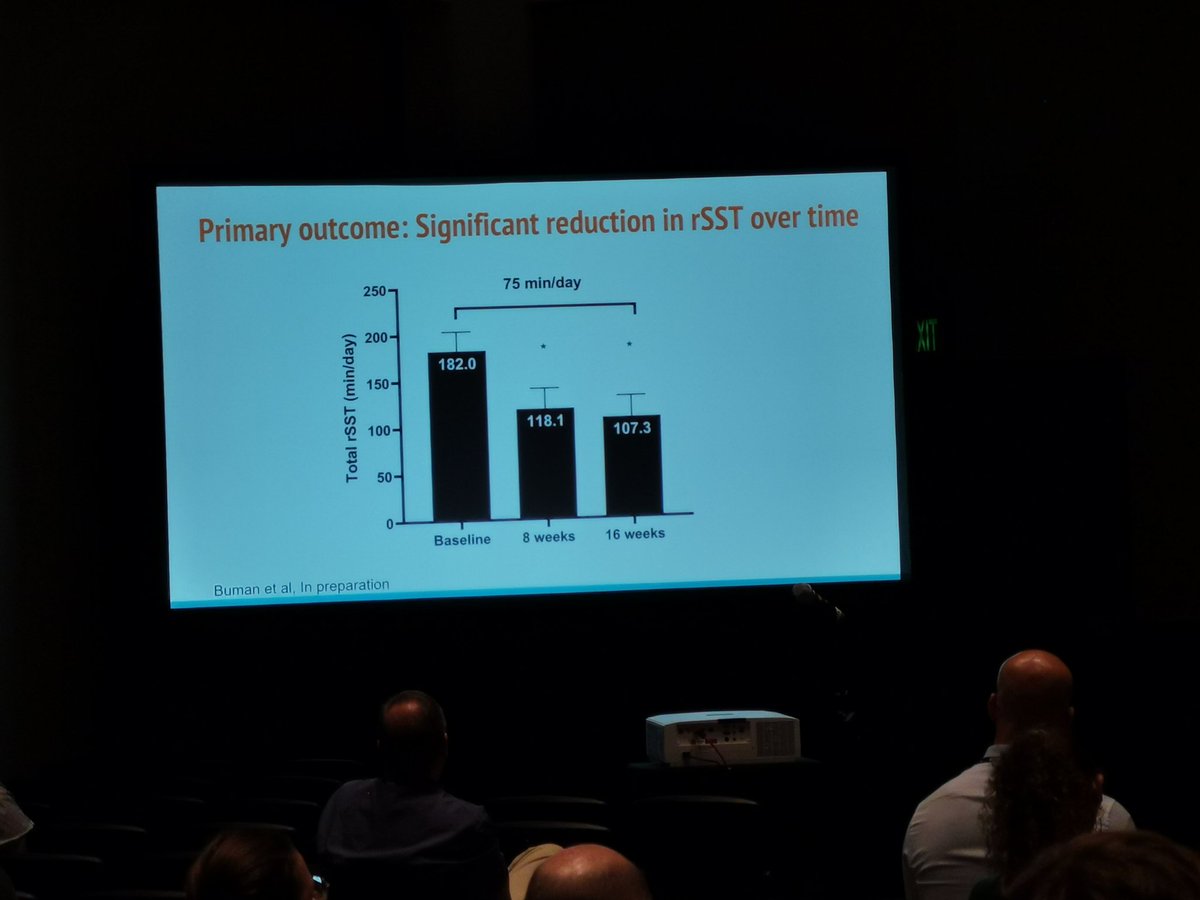
@khasanaj_@mbuman @kozey_keadle present the rationale, development/building of an innovative optimized set of unique interventions to reduce recreational sedentary screen time, then results of a full factorial RCT. Interesting new findings & lots of new lessons learned #ACSM24
@M_Stamatakis talks about non-exercise vigorous intermittent lifestyle physical activity (VILPA) & associations with CVD and cancer risk. Bout lengths and micropatterns an area of interrogation. How best to incorporate such wearable data into future PA guidelines? #ACSM24
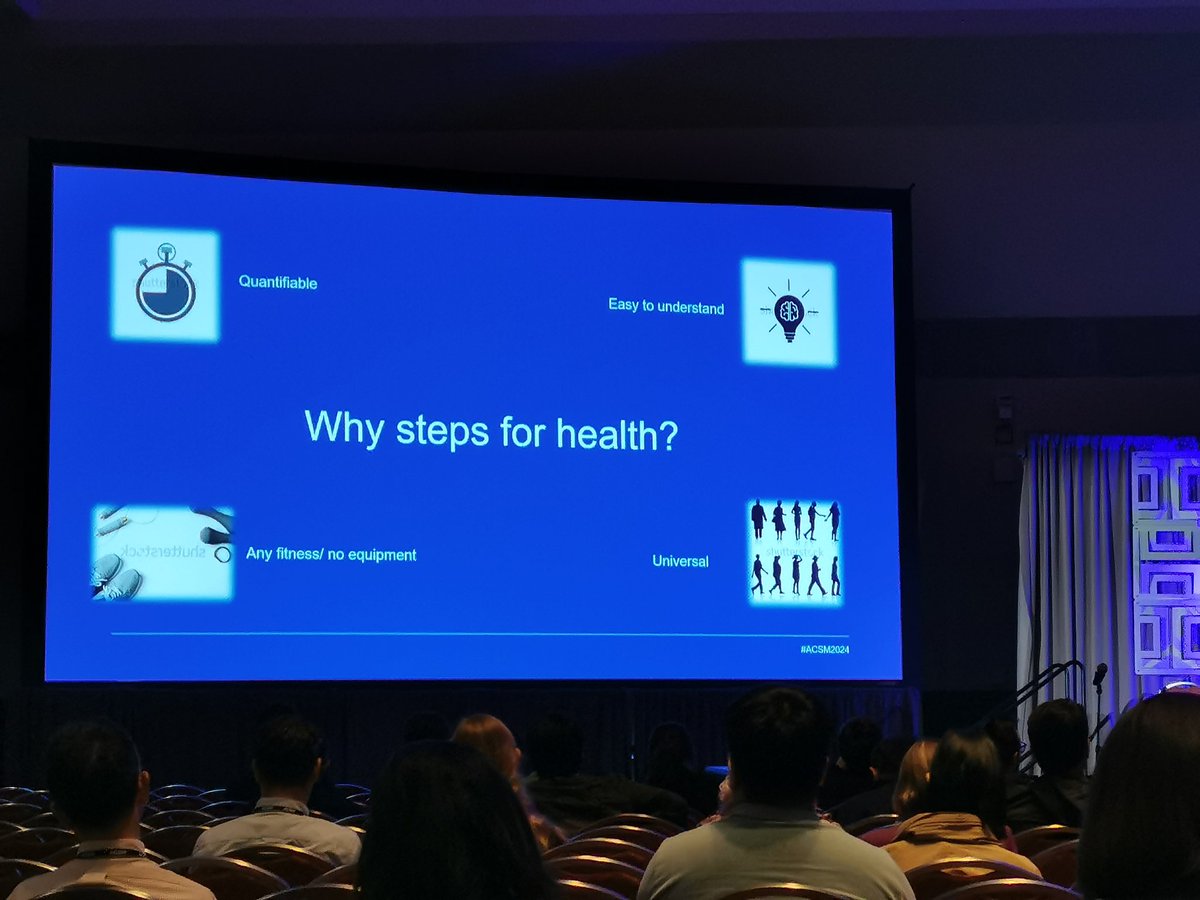
Steps for health: where are we up to? Nice evidence synthesis and discussion by @BorjadelPozoCr1 on the opportunities, but also challenges, of such metrics. How many steps optimal? Do all steps count? Will we see steps-based recommendations in future guidelines?... #ACSM24
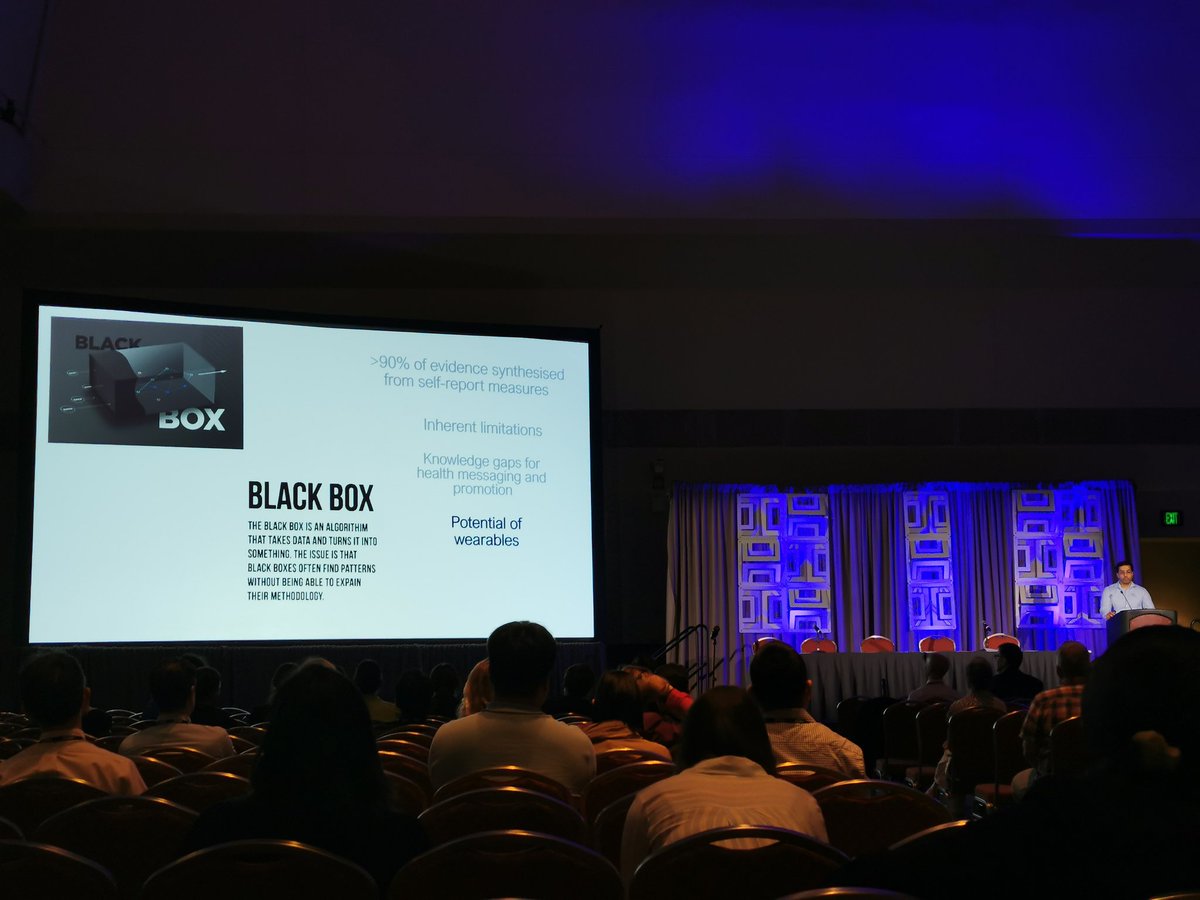
Informative talk by Stuart Trost about the uptake and implementation of machine learning techniques with wearable devices: is there a lack of innovation or diffusion failure? Announces new 'Actimetric' R package in R #ACSM24
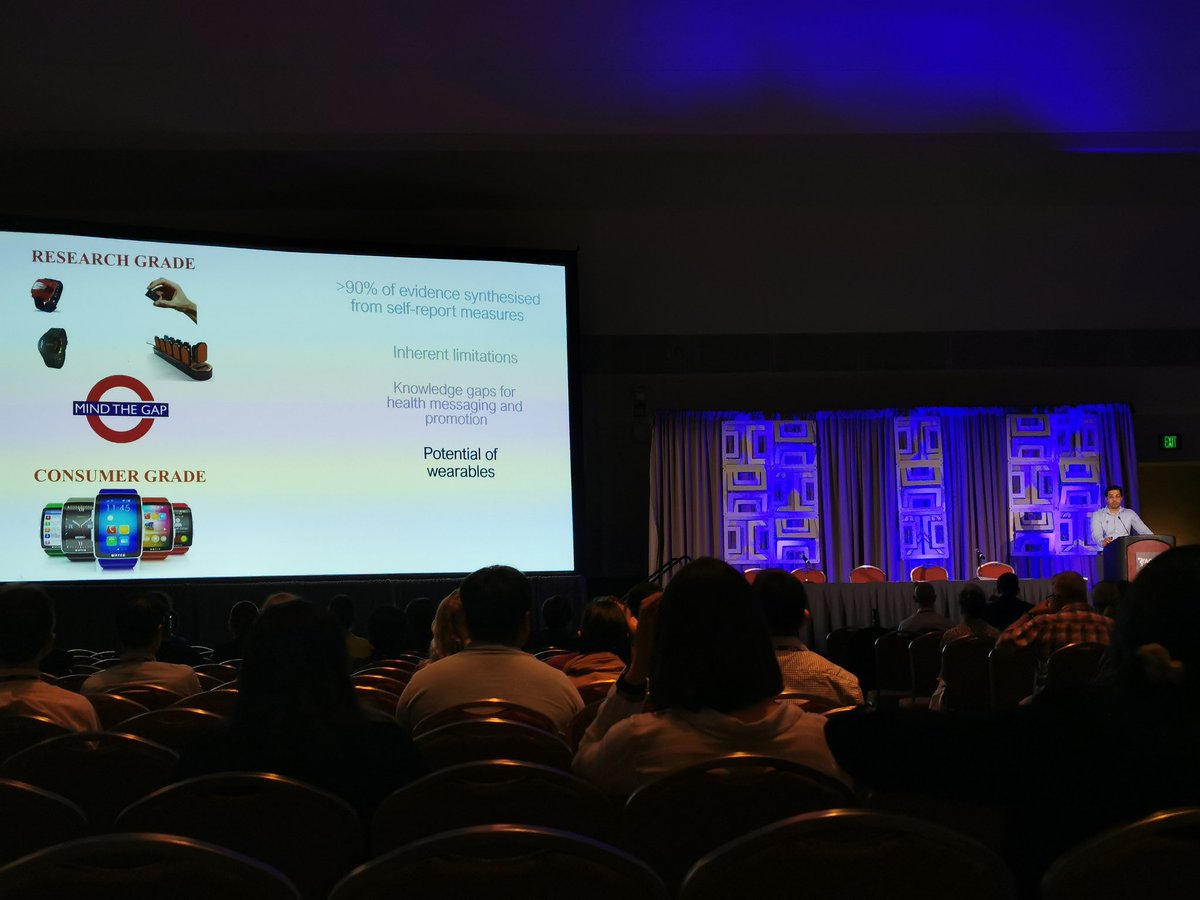
Informative overview and introduction by @Matthew_Ahmadi_ to the Highlighted Symposium - "Novel Insights on Physical Behaviour and Non-Communicable Disease through Application of Wearables". #ACSM24. Large potential of wearable sensors and AI to inform the evidence-base.