We will demand that everyone admitted to the hospital has quality measures checked. Their blood pressure will be measured at 4 am! Blood thinners for all! Everyone will starve after midnight!
Will that help the patients, sir?
Note: Foundational habits beat every supplement on this list:
• Nutrient-dense diet
• Take magnesium with D
• 7–9 hours of sleep
• Morning sunlight
• Walking 8K+ steps
• Lifting 3x/week
No pill replaces these.
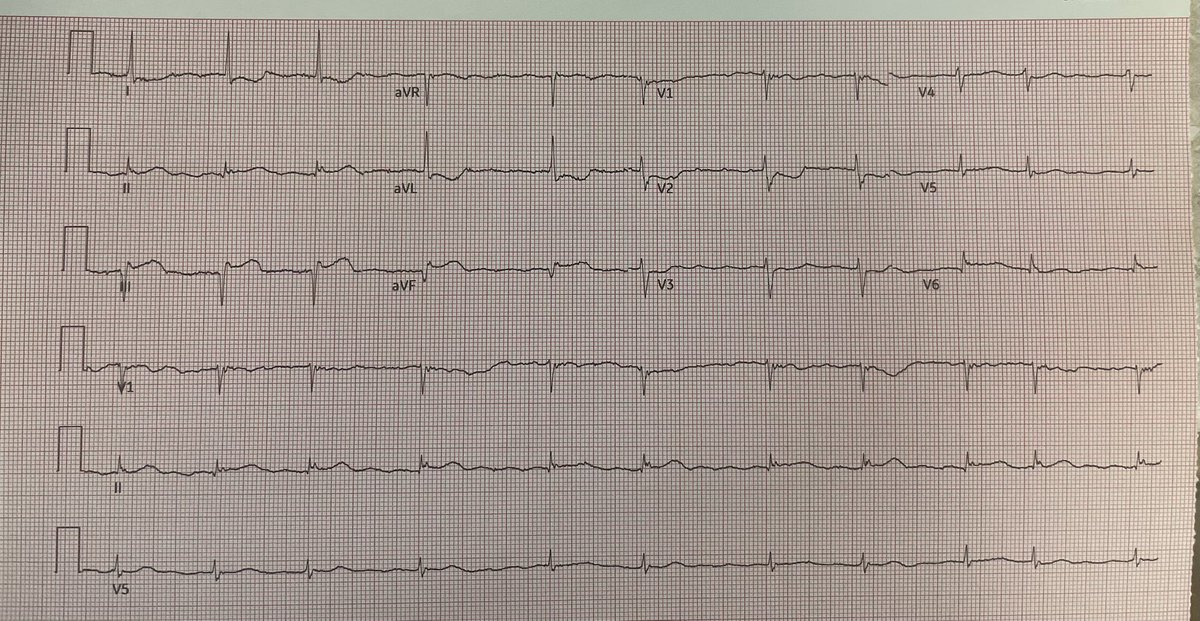
@smithECGBlog I took these trials together to mean “you don’t have to take everyone with OHCA to the lab immediately unless there is a compelling reason to”
https://t.co/5vrrjSAzOf
@smithECGBlog Thanks. OHCA is heterogenous. Shockable versus non-shockable, ECG, lactate, age etc. The first case wouldn’t have been enrolled in either trial due to ECPR. These need to be individualized decisions based on presentation and ECG. OMI paradigm very helpful in that regard.
I’m a cardiologist who started practicing in the years right before the ACA passed. At the time, I assumed the health policy professionals knew what they were doing and would design a system that improved things for patients and physicians.
I was wrong.
Watching the revisionism from the health policy class about what actually happened after passage has been something to behold.
Anyone who still claims the Affordable Care Act lowered the federal deficit or made health care more affordable cannot be taken seriously on this topic. They may believe it in good faith, but a credential plus that belief does not entitle them to more say on future health policy than a random person on the street.
The strongest positive claim one can make is narrow: a small group of previously uninsurable patients (roughly 3% of the population) gained access to insurance. Policymakers took a real problem affecting a small minority and used it to fundamentally redesign the entire health care system. The result made things worse for the other 97%.
That is not a hypothetical.
In practice, the law created a mechanism to funnel large sums of taxpayer money to insurance companies and Medicaid managed-care middlemen—on the order of $800 billion in subsidies for ACA plans and another $800 billion in federal dollars to states for Medicaid expansion. The CBO scored this as paid for primarily through higher taxes and reduced Medicare payments to hospitals.
Because the ACA mandated essential health benefits and community rating, and because insurers knew government subsidies would kick in, premiums rose sharply even as deductibles on these plans reached thousands of dollars. Individuals were then required to buy one of these products or pay a penalty.
For physicians, the law built the first major penalty-based quality-reporting apparatus. This added overhead and cost for a set of largely clinically meaningless metrics, which contributed to many doctors retiring early or selling their practices to hospitals.
On the fiscal side, the tax increases and Medicare payment cuts covered a portion of the new spending on paper. What the CBO did not adequately account for was the fraud and waste incentives created by a 90/10 federal match on expansion populations. When the state and managed-care organizations receive 90 cents on the dollar for every enrollee, the incentive to rigorously verify eligibility is weak. When federal dollars are flowing into home care, learning centers, and similar services that boost the local economy, states have little reason to aggressively pursue fictional or inflated claims.
Medicaid spending is now roughly 20% higher than earlier projections. Any serious attempt to slow that growth is met with academic preprints and media coverage warning that large numbers of people will die.
Helping a small number of previously uninsurable patients did not require redesigning the entire health care system around subsidies, mandates, community rating, and penalty-based reporting. That redesign raised costs, accelerated consolidation, and created spending dynamics that are now treated as untouchable. The results are visible. The revisionism is not.
@nyalborgesmd@Hragy This has been my experience as well. The technology is not widespread in the community. There is significant variation in quality reads and availability of scans. But generally, going straight to invasive angiography will be far less common.
👉Statin + Ezetimibe: Better Together
More real-world evidence supporting combination lipid-lowering therapy.
New study in European Heart Journal – Cardiovascular Pharmacotherapy.
1️⃣ 309,371 patients with dyslipidemia included in a nationwide Korean target trial emulation.
2️⃣ 13% lower risk of myocardial infarction with statin + ezetimibe versus statin monotherapy in early cardiovascular–kidney–metabolic (CKM) risk (HR 0.87; 95% CI 0.81–0.95).
3️⃣ 12% lower risk in patients with more advanced CKM risk (HR 0.88; 95% CI 0.79–0.98).
4️⃣ Greater LDL-C reductions with combination therapy, particularly relevant when comparing moderate-intensity statin regimens.
5️⃣ Higher prescription coverage with fixed-dose combination therapy, suggesting a potential advantage for treatment persistence.
☝️ The message is clear: targeting complementary cholesterol pathways may improve cardiovascular prevention.
☝️ Why wait to intensify treatment when we can achieve greater LDL-C reductions from the start?
🔗 🔓https://t.co/q2M3aT6vDj
@society_eas
Perhaps the AMA should also attempt to reign in costs of medical schools. It should not cost $400,000 to educate a physician after an undergraduate degree.
Medical students are reaching the new $200,000 lifetime cap on federal loans. This H.R.1 provision makes it harder for future doctors to pay for medical school at a time when the U.S. already faces a physician shortage. 1/5
many things wrong with this article
- functional dyspepsia is not that complex of a diagnosis to make
- great that AI figured it out but tbh this isn’t evidence that AI is solving medicine in ways that are revolutionary
- NEJM letting the CMO of Humana have a platform for something like this feels like the wrong use of an academic journal (https://t.co/BFegRHXypM)
we should be better than this come on now
Here are my initial thoughts on Lp(a)HORIZON. This is targeted to the people to whom it matters the most, my wonderful PATIENTS over the years in my Lp(a) Clinic. I have done my best to keep you healthy, and for the most part it worked. And I think this is reflected in the results of the Lp(a)HORIZON trial. This is also for those with elevated Lp(a) that been carrying significant anxiety and concern over their elevated levels.
1- Big picture: I do not see Lp(a)HORIZON as a failure, like many Monday morning quarterbacks out there who claim to have known the results all along after all. I see it as a MAJOR SUCCESS for our patients.
2- Why? Because we learned that there may be an alternative to reduce Lp(a) mediated risk: which is to: a) keep LDL-C below 65 or lower; b) keep blood pressure at 120 or lower; c) control all other risk factors as best as possible; d) take your medicines that have proven efficacy regularly.
3- I have called Lp(a)HORIZON testing the “Lp(a) Hypothesis”. Which means we did not know if lowering Lp(a) would benefit patients. If we knew Novartis would not have spent >1 billion dollars to do the trial and the FDA would have approved the drug simply on Lp(a) lowering.
4- Why did we not see a benefit in specifically lowering Lp(a) in Lp(a)HORIZON? I think we need to go back to “first principles” in how Lp(a) causes atherothrombosis. It is a minor contributor to atherosclerosis. It is a major contributor to inflammation, via OxPL. It is also anti-fibrinolytic- NOT pro-thrombotic. That means it contributes to vulnerable plaques but not to “plaque burden”. And it contributes to a blood clots enlarging and occluding blood vessels if clots are already made, but not in making blood clots per se.
5- So if one is intensively treated to remove the nidus for vulnerable plaques and clot formation, like the patients in HORIZON (and in the ongoing trials), then Lp(a) may become quiescent.
6- In my Lp(a) Clinic, this is my summary of how I treat my patients: 75% on statin, 50% of ezetimibe and 50% (!!) on PCSK9i, along with judicious use of aspirin in primary prevention and universal use in secondary prevention. This double/triple/quadruple combo is highly effective. If I see no coronary calcium or evidence of atherosclerosis, I am not aggressive with therapy if otherwise not indicated for another reason.
7- That being said, 1 out of 8 people still had an event in Lp(a) HORIZON. So, we need to figure out why beyond classical lipids and blood pressure. I am already thinking 10 yrs ahead and will have new concepts for this issue in near future.
8- I do not think the Lp(a)HORIZON results apply to Aortic Stenosis, as this is not affected by LDL-C or for the most part aspirin, but is more @OxPL_apoB driven in people with high Lp(a).
I think we owe a huge debt of gratitude for the Lp(a)HORIZON trial, to @novartis and to @ionispharma for leading the Lp(a) field.
And to circle back to people with elevated Lp(a): Lp(a)HORIZON has now armed us with actionable (and inexpensive) knowledge to help people with elevated Lp(a). Take a big breath and sigh of relief, Lp(a) risk can be managed. Treat it like you do other risk factors and your prognosis will be good, like many of my Lp(a) Clinic patients. We do need to do more work to figure out, among those with elevated Lp(a), who are highest risk, and target those in future studies,
I will provide more scientific comments at a later time and will be publishing my thoughts in a journal in the future.
With all that said, we still don't know the physiological function of Lp(a), if any, and why >99.99% have some circulating Lp(a) and why 1 in 5 have very high levels. Knowing this may give us the ultimate answer on Lp(a) and it role not only in CV disease but also in life and longevity. Along with my collaborators, we will have something on this also in near future.
Thank you all for following Lp(a)'s journey in these pages. The story is actually in the middle not at the end...a few more chapters are in the works.
@RakanINazer All of his books are like this. Cherry pick one case or one expert opinion. Ignore the counter arguments or dismiss them outright. Simple explanations for complicated phenomena that sound great on short clips but lack depth and true understanding.
Proud to have performed the first-in-USA case with the Paraclose (@AbbottNews) PVL occluder @HMHNewJersey. A purpose-built device after years of off-label options is a big step for our patients.
Case details below with @ryankaple, @PWengrofskyMD#StructuralHeart#PVL #CardioTwitter
@KennethJPerry@EricTopol If AI is going to be making decisions without physician supervision or oversight, the AI company should be held liable. Every new drug or device is subject to much higher scrutiny. AI integration into workflows should be deliberate and slow, imho.