I run a PR agency that lands our clients in TechCrunch, CNBC, & other world class publications on a consistent basis.
My superpower? I can make anything sound newsworthy to the journalist I'm pitching.
These are the 2 golden rules I follow that 10x my placement rate: 👇
1/8 🧵
The next time someone hands you a 40-page PR plan, flip to the back and look for the headline. If it isn’t there, the plan isn’t either.
Most PR agencies are solving the wrong problem.
I see the same pattern over and over:
They spend weeks on a comprehensive strategy deck where every product feature is treated as equally newsworthy. Then messaging is built around what the company wants to say instead of what a journalist would actually want to write.
And everyone wonders why the coverage doesn’t land.
Here’s the fix every CMO should demand from their next PR agency:
Write the exact headline you want to see in your target publication. Then work backwards from there.
Here’s what that looks like in practice. Two examples:
"New dog food is making millennials go crazy over the nostalgia of its packaging" tells you which publications you’re targeting, which angle to develop, and which product features matter most.
Compare that to "This new dog food brand uses natural ingredients no one has used before." Same product. Completely different strategy. Different publications, different journalists, different campaign architecture entirely.
Once you have the right headline, the rest of the work falls into place. You know which messages support the story. You know which reporters care. You build campaign elements that all point in the same direction.
TL;DR:
Strategy decks describe a campaign.
The right headline becomes one.
📌Sources:
→ Muck Rack 2026 State of Journalism: https://t.co/asK0jAYKE1
→ Washington Post AI accuracy test: https://t.co/Rz4ql3Y4hu
→ Press Gazette's live tracker of AI journalism scandals: https://t.co/hsNk1c26oV
→ NYT cuts ties with freelancer over AI: https://t.co/t04E9PokbJ
82% of journalists now use AI in their work, per Muck Rack's 2026 State of Journalism report. Most PR pros think this is the story.
The real story is where it’s all going wrong:
✓ AI is great at transcribing interviews.
✗ AI is terrible at pulling out quotes with strong human impact but little subject impact.
✓ AI is helping reporters research your client faster than ever.
✗ AI is also pulling outdated info from 2023 and presenting it as current fact.
(The Washington Post's test of major AI tools found this was a consistent flaw across the board)
✓ AI is helping fact-check coverage at scale.
✗ AI is also hallucinating quotes and fabricating sources.
(Publications from the NYT to Wired to the Chicago Sun-Times have published retractions in the last 12 months)
✓ AI can summarize a 40-page report in 30 seconds.
✗ AI also "summarized" a Guardian book review into a NYT freelancer's draft and got him fired.
✓ AI helps reporters keep up with a 200-pitch inbox.
✗ AI-powered inbox tools like Sanebox and Copilot also filter out perfectly good pitches it *thinks* are AI generated, even if they’re not.
✓ AI is changing how journalists work.
✗ AI is not changing what makes a story worth telling.
ALL THIS MEANS:
Your pitch is being skimmed by a human, possibly screened by a tool (one that’s confident even when it’s wrong), and potentially summarized into a draft that you'll see published with details you don’t recognize.
ADVICE FOR PR PROS:
→ Tighten the subject line
→ Front-load the proof
→ Make the angle specific (so that an AI can't reduce it to a generic trend)
The rules of engagement are changing incredibly fast.
PR folks, any other tips you’d offer for our colleagues?
ICYMI: On April 30th, Bloomberg broke the story that 20 of the country's biggest news outlets (CNN, NBC, USA Today, Vox) sent a formal demand letter to a nonprofit web archive that has been quietly training nearly every major AI model on the planet.
The News/Media Alliance is asking Common Crawl to remove their scraped content, prohibit AI training use, and add enforceable warnings to its opt-out registry.
If you're not familiar with Common Crawl, it's the open repository of online content that Google, Meta, OpenAI, and Anthropic have all used to train their chatbots. Critics call it "data laundering." It’s the back door to gated information that publishers couldn't close.
Until now.
WHAT THIS MEANS FOR PR:
1. The cost of AI citations is about to go up.
Anything Common Crawl scraped was effectively free training data. As publishers wall off access, AI companies will need to pay licensing fees, narrowing the pool of citable sources. Coverage in licensed pubs will still compound in value. Coverage everywhere else may not.
2. The "publish once, train forever" free ride is over.
Per Muck Rack's 2026 research, half of all AI citations come from content published in the last 11 months. Pair that with publishers pulling back archives, and the half-life of an earned media hit on AI is shrinking fast.
3. Mid-market companies are uniquely exposed.
Enterprise brands have massive archives and decade-old PR programs feeding the citation loop. That leaves mid-market companies competing for the remaining citation share. Every placement has to work harder, and a steady cadence of credible coverage matters more than the occasional tier-1 home run.
BOTTOM LINE:
When Anthropic reached a $1.5B settlement with authors last fall, I predicted that media outlets would soon be split into two tiers: those with AI licensing deals, and those without. The Common Crawl letter signals that prediction is no longer theoretical.
The free-data buffet is closing. The companies building a habit of coverage in licensed publications today will be cited in AI answers tomorrow.
To my PR colleagues: I’m curious, how are you factoring these changes into your 2026 strategy?
When a company fires its PR team… I can usually tell within a quarter.
Here’s what happens:
- Their announcements stop landing
- Their executives stop getting quoted
- Their mentions in AI search results thin out
And what I can’t see (but can reasonably assume):
- Deals start taking longer to close
I watched this exact sequence play out at a Series C biotech company last year. Leadership reasoned that since PR and marketing both "build relationships and drive business results," why pay for two teams?
Disastrous.
Here’s why:
Marketing controls paid channels & messaging. PR earns third-party validation. Marketing campaigns launch on a calendar with predictable outcomes. PR builds reputation over months and years, compounding into valuation multiples and exit numbers.
And what works on consumers actively backfires with journalists. The relationship dynamics, storytelling approaches, and credibility markers are fundamentally different from paid channels. A great marketer running PR is a violinist sitting down at a drum kit.
Then there’s a hidden cost creeping in: AI search.
LLMs pull heavily from earned media coverage. No PR means no presence in the places your buyers are increasingly looking to for buyer research. You can have the best landing page in the world and still be invisible inside ChatGPT, Gemini, and Perplexity.
Marketing sells products and services.
PR turns you into the name everyone thinks of first.
Which helps in selling, yes… but it does so much more than that.
CMO: "We're cutting PR. AI search is going to make it irrelevant anyway."
I get the logic. But AI search is exactly what makes PR more valuable, not less.
Here's what companies ‘killing it’ in the AI space understand:
1. Generative search is an evaluation layer, not a discovery layer
Traditional search gave you ten blue links and let you decide. Generative search does the deciding for you. This new model picks out which sources to trust before you even see the response.
2. AI systems reward the exact signals PR was built to create
The PR fundamentals:
• Authoritative sources
• Consistent positioning
• Editorial validation
• Third-party credibility
Are the exact same inputs that qualify a brand for AI citation.
3. Every earned placement is now a deposit in two banks
The first bank is the audience reading the article today. The second is the training and retrieval layer that will shape how AI describes a company’s space to audiences for years to come. Most teams are still only counting deposits in the first bank.
4. The companies winning this are quietly compounding
While competitors chase paid impressions that vanish in 24 hours, companies with a strong PR game (structured insights, quotable positioning, coverage in publications with real standards) are building a citation footprint AI systems can't ignore.
To make it concrete: one of our clients has gotten 48 of their 126 inbound leads from ChatGPT since mid-January. That's 38% of their pipeline coming from a channel that didn't exist two years ago.
And since the PR you're doing today will be the source content AI is quoting tomorrow…
PR is far from becoming irrelevant.
It’s more crucial now than ever.
My daughter Colette is 8 weeks old.
I'm typing this on my phone while she sleeps on my chest.
In a few minutes I have a client call. I'll mute, hand her to my nanny (who I will be eternally grateful to), and run the call from the same room where I sat to write my birth plan 4 months ago and where I sit to moderate our team Zoom meetings.
Notably has been fully remote for almost six years now and we’ve never had a layoff. Team members are able to attend school plays, juggle hockey practice, schedule extended honeymoons, manage eldercare and recover from surgery.
I firmly believe that would not be possible if we had chosen to go hybrid or back-to-office like so many companies have over the last couple years.
At first the reasons were practical:
- We saved on overhead and could pass the savings on to our clients
- We gained access to talent outside our zip code
- We cut out commute time entirely
Those reasons still hold.
But none of them are the reason I'm specifically grateful today.
The reason is this newborn on my chest. That I’m not choosing between her and my work. That I'm not on a 6-week countdown to saying goodbye to her every morning and pretending it doesn’t rip my heart out. That I get to be present for all those little moments I don’t want to miss.
I’m not the only one who thinks this way.
The research backs it up:
455,000 women left the US workforce between January and August of last year.
Per @CatalystInc, 42% cited caregiving as the top reason. Another 37% said they would have stayed with a flexible schedule.
But the part the studies don't capture is the part I'm living right now.
That a working mother running a growing PR firm can hold her two-month-old and not feel like she's failing at either job.
I won't get this time back. I'm so grateful I'm not missing it.
I can spot AI-generated PR work in about six seconds.
I'm not even talking about em-dashes or sentence structure. I mean the smoothness with no spine. Grammatically accurate sentences that aren’t actually saying anything.
Turns out there's a name for it: "workslop."
In a Harvard Business Review report, Stanford and BetterUp researchers found 40% of workers are receiving some form of workslop.
And it’s costing them:
- About 2 hours of rework per instance
- $186/month per affected worker
- $9M+ annually for a 10K-person org
This helps explain why, according to an MIT study, 95% of companies see zero ROI on AI.
HOW THIS HAPPENS:
An AI-generated response appears professional enough that people assume it's substantive. The sender thinks they’ve just saved hours of work.
But without any real thinking behind it... the receiver of this AI dump now carries all the cognitive load of interpreting vague points, inferring missing context, deciding whether to send it back or just fix it themselves.
Using AI like this doesn’t save time. It eats it alive.
IT’S NOT AI’S FAULT
The same research found that people with a "pilot mindset" (high agency + optimism + purposeful use) use AI 75% MORE than “passengers” (low agency + optimism crowd). But they’re also getting BETTER results.
So the gap isn't between AI users and non-users. It's between THOUGHTFUL users and... those contributing to workslop bottlenecks.
WHY THIS MATTERS FOR PR PROS:
Roughly half of recipients view workslop senders as less capable. 42% see them as less trustworthy. 37% as less intelligent. Almost a third say they don't want to work with the sender again.
In an industry where the entire deliverable is trust… that better not be you.
Instead, use AI as a thinking partner: to get a second opinion, for research (as long as you check sources), or to help polish a piece of writing.
And it can absolutely boost productivity, even creativity.
Just don’t outsource the substance.
We just won a client doing hundreds of millions in ARR by pitching the Director of Comms and the CMO differently… in the same meeting.
The CMO was upfront (which I actually appreciated): PR needs to connect to pipeline.
So for the Director of Comms (who came from a company with a ~$300B market cap) , I covered what you'd expect… visibility, reputation, how we'd support their upcoming announcements.
For the CMO, I added a slide that explained concretely how we could use earned media’s 3rd party credibility to support demand gen and feed their funnel.
After the presentation, the CMO said (I’m paraphrasing): “I wasn’t expecting you to speak my language.”
And… not going to lie, I almost had to suppress a smile.
Thing is I expect to be working primarily with the Director of Comms. And I also expect to be pulled in by the CMO. So it was all good.
Because when you’re working with smaller companies, you’re usually reporting to one person, typically in comms. But as a company matures and grows, those roles rightfully split, and they’re looking at different KPIs.
Obviously, I don’t know this for a fact, but if I had to guess, I would assume the other agencies pitching them didn’t account for both.
If you’re a PR pro looking to work with larger clients, you need to have a strategy for both Comms and Marketing.
And if you’re a larger company looking to switch or bring in a PR firm, I highly recommend following the CMO’s lead:
Be honest about your relationship with PR, and if the pitch ignores your needs, you are absolutely within your rights to pass.
Eight weeks ago a client’s blog post showed up above USA Today in Google News, a first for me in 15 years of doing PR.
We’ve been pitching the client’s expert commentary over the past year, and have landed him over 311 placements (everywhere from Reuters to Bloomberg to CNN), with some super high-authority backlinks to his site.
So Google started treating his *blog posts* as credible news! (I know exclamation points aren’t cool on LinkedIn but this was a really big win!)
And now, this is the first time we see a “HIGHLY CITED” badge, signaling even more authority! (I swear this is the last exclamation point!)
Gosh, I love PR…!
9 out of 10 pieces I place for clients come from reporters I've never spoken to before.
That doesn’t mean reporter relationships don’t matter. They do, but maybe not quite in the way most people think.
What relationships don't get you:
- More willingness to consider the story
- Coverage
- Priority
The pitch still has to earn its way in.
What they do get you (again, not guaranteed) is a higher chance of getting your email opened because they've seen your name and they know you've delivered before.
So why is 90% of my outreach still cold? Well:
- The story could pull me into a new beat
- Reporters I have relationships with change outlets (or change beats too), and I have to go to someone *new* at the publication they used to be at
- Or it's a new publication (usually a substack or podcast) that I haven't pitched before
A fintech client announces a healthcare partnership; suddenly I'm pitching healthcare reporters. Next quarter they release research on operational efficiency; now it's business media.
Bottom line:
Relationships are cool (we’re all human after all), but it’s good storytelling relevant to the reporter’s audience that gets you coverage.
📌Sources:
G2, "In the Answer Economy, Don't Win the Click — Win the Answer":
https://t.co/9h1fzhHrc0
G2, "The Answer Economy: How AI Search Is Rewiring B2B Software Buying":
https://t.co/ffLdz7e0iV
@G2dotcom surveyed 1,076 B2B software buyers and found that 51% now start their research in an AI chatbot (vs. Google, up from 29% a year ago).
That’s a ~76% increase from last year, and that trend is only moving in one direction.
Before we unpack what this means for YOU…
HERE’S WHAT ELSE THEY FOUND:
- 69% chose a different vendor than they originally planned, based on what an AI chatbot told them
- 33% bought from a vendor they'd never heard of before the AI surfaced it
- 80% say the AI accelerated their purchasing decision
WHAT THIS MEANS:
We all know any kind of information gathering is increasingly delegated to AI. What’s novel here is that what buyers GET from AI is enough to override their own pre-existing preferences.
My sense is that when ChatGPT recommends a vendor, the buyer isn't trusting ChatGPT itself (any more than they trust “Google”—they’re interested in what is SURFACES). They're trusting Forbes, Reuters, the WSJ, the trade publication they read every week… whatever the AI pulled from to build the answer.
The AI is just the messenger.
THE NEW REALITY:
For a long time, brand recognition amplified earned coverage. A WSJ feature on a known brand landed harder than the same feature on a smaller company, because buyers were filtering through what they already recognized.
AI pulls from credible earned media when guiding buyers along their journey IRRESPECTIVE of brand.
And the answers it gives are compelling enough to drive 33% of buyers into purchasing from companies they'd never heard of.
Again, I’m betting that number only moves in one direction.
The worst PR blind spot I’ve been seeing in 2026: being passive between announcements.
PR firms will tell you meaningful coverage requires major news. I’m here to tell you it doesn’t.
However… quiet periods are easier to explain away to clients:
- Avoid all unpleasant creative elbow grease
- Cash in that sweet retainer
- Hide behind “But we didn’t have anything big to work with!”
Not cool…
Three approaches to not only fill the void, but even move the ROI needle:
1️⃣ Pitch trade publications to establish you as a credible insider in your space
Give them data they can't get elsewhere. For example, when a fintech client had no product updates for the quarter, we created an industry report on payment processing pain points, netting 7 trade features and 3 speaking opportunities.
2️⃣ Leverage mainstream media for broad reach and brand recognition
This is your expertise play. For a healthcare client between funding rounds, we positioned their CEO as an expert on industry consolidation trends, landing coverage in WSJ, Forbes, and CNBC without a single company announcement.
3️⃣ Hit niche publications to builds deep, repeatable relationships
Be their go-to before they're on everyone's radar. When we identified an emerging publication before competitors, our retail client became their go-to expert source for 6 consecutive issues.
But however you structure your in-between-announcements PR strategy, always remember that publications need:
- A source who'll return a call in 2 hours, not 2 days
- Someone willing to take a clear position, not corporate mush
- Data or insights they can't get from a press release
And you need to keep building notability and momentum, not go dark for months at a time.
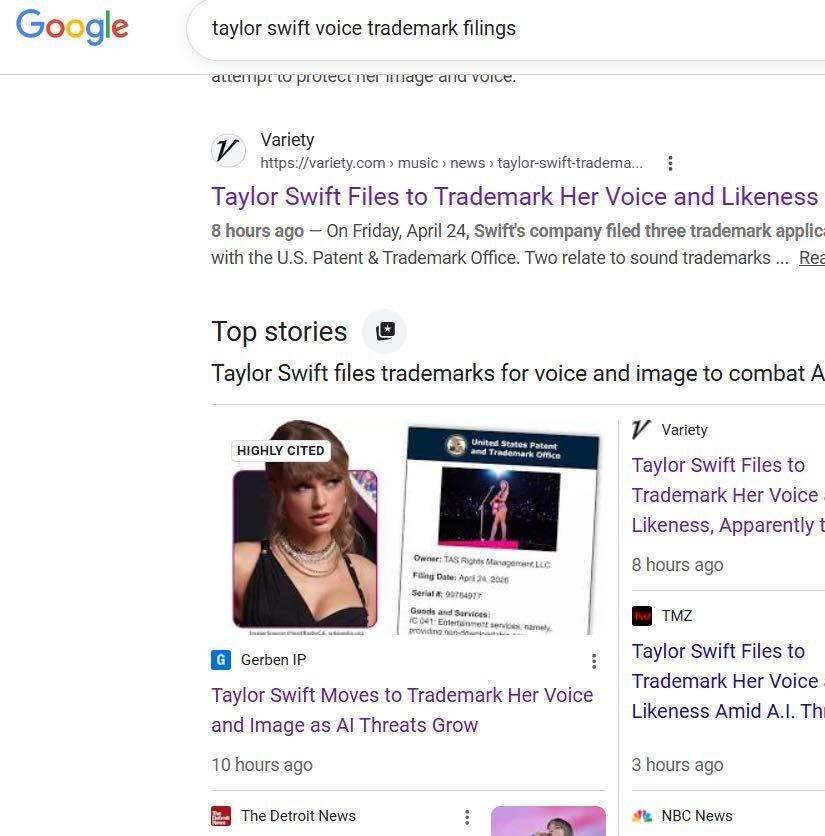
When @GMA needed an expert to comment on Taylor Swift’s new trademark filings… they called our client Josh Gerben. (As did @CBSMornings and the @TODAYShow!)
He was their go to for explaining the implications of the filings for both Taylor and the industry on air.
When news like this breaks, producers want an expert whose credibility is easy to verify.
That's where we come in.
We were the first to pitch this story with Josh's commentary, breaking the news about the trademark filing before anyone else covered it. We’ve actually landed him over 311 placements in the past year (everywhere from Reuters to Bloomberg to CNN) using this same strategy.
This awesome opportunity for Josh encapsulates everything @Notably is working towards with clients:
- Positioning your company’s expertise with current trends
- Building a proof infrastructure that has multiple pillars
- Maximizing your visibility as a derivative of your credibility
So when the morning shows needed a legitimate expert to clearly explain the details of Taylor Swift’s trademark story…
Our client checked all the right boxes.
Big congrats to @JoshGerben on a wild news week!!