Shame on the American Diabetes Association for calling the police on its own (‼️) Journal Editor & #ADA2026 presenters.
If I were a donor I would withdraw my donation today.
The board should issue an apology and resign now!
Watch clip, see details below 👇🏼
Exercise isn’t “off limits” in people with T2 diabetes and foot ulcers
In our current @NIHRARCs MiFoot RCT, people with diabetic foot ulcers told us they were getting confused regarding exercise
They were getting mixed messages from HCPs
So we developed these practical recommendations
Led by @vicki_johnson_w
• Screen risk first
• Individualise prescriptions
• Prioritise non-weight bearing exercise
• Emphasise foot care + self-monitoring
Safe movement = better cardiometabolic outcomes.
https://t.co/tZ4ikpSpJQ
@uniofleicester@NIHRARCs@ARC_EM@GoggleDocs
most of what we accept as inevitable ageing is actually the consequence of accumulated inactivity.
Looking at this study, it compared lifelong athletes to sedentary individuals, which is a pretty extreme comparison on both ends. Most people fall somewhere in the middle, and the good news from other research is that you do not need to have been training your whole life to benefit. People who begin resistance training in their 60s and 70s still show remarkable muscle preservation and even growth.
You do not need a lifetime head start. You just need to start.
The body responds to demand at almost any age. That is probably the most hopeful finding in all of exercise science.
HFpEF patients can’t jog. Most can barely carry groceries. Here’s why — and what actually helps 🧵
Peak VO₂ in HFpEF: ~13 mL/kg/min
For context, that’s BELOW the oxygen cost of:
🚶 Walking 5 km/h
🛒 Carrying groceries
🏃 Jogging 8 km/h (requires ~25 mL/kg/min)
Even dressing and making the bed pushes them near their limit.
And it’s not just the heart. Exercise intolerance in HFpEF is driven by 7 systems simultaneously:
• Myocardial stiffness & impaired relaxation
• Pulmonary vascular remodelling
• Lung disease
• Rhythm disturbances
• Renal dysfunction
• Obesity & fat maldistribution
• Peripheral muscle dysfunction
So what actually improves exercise capacity?
The winners (% change in VO₂):
🥇 Exercise + diet: ~+19%
🥈 IV iron: ~+16%
🥉 Exercise alone: ~+12%
GLP-1 agonists: ~+7%
SGLT2i: ~+4%
The cardiac drugs (ARNi, MRA, nitrates)? Near zero benefit on exercise capacity. Treating filling pressures alone isn’t enough.
The lesson: HFpEF is a peripheral and metabolic disease as much as a cardiac one. Treat the whole patient.
(Landsteiner et al., European Heart Journal)
#HFpEF #HeartFailure #Cardiology #MedTwitter #GLP1 #SGLT2i
The “inevitable” muscle loss with aging is largely a myth.
For years, we’ve been told that losing muscle mass is an unavoidable part of getting older — with the average person shedding up to 8% of muscle per decade after age 40.
But an MRI research tells a very different story. Scientists compared sedentary individuals with lifelong masters athletes (ages 40–81) who train intensely 4–5 times per week. The results were striking: the active athletes maintained remarkably stable muscle density and quality well into their 70s and 80s — often nearly identical to people decades younger.
The study strongly suggests that age-related muscle loss (sarcopenia) is driven far more by inactivity than by biology itself. Lifelong swimmers, cyclists, and other masters athletes preserved both muscle mass and strength, proving the powerful “use it or lose it” principle.
Even in their 70s and 80s, these athletes showed muscle structures that closely resembled those of much younger people. Their body fat increased modestly with age, but their functional muscle remained impressively intact.
[Wroblewski, A. P., Amati, F., Smiley, M. A., Goodpaster, B., & Wright, V. (2011). Chronic exercise preserves lean muscle mass in masters athletes. Physician and Sportsmedicine]
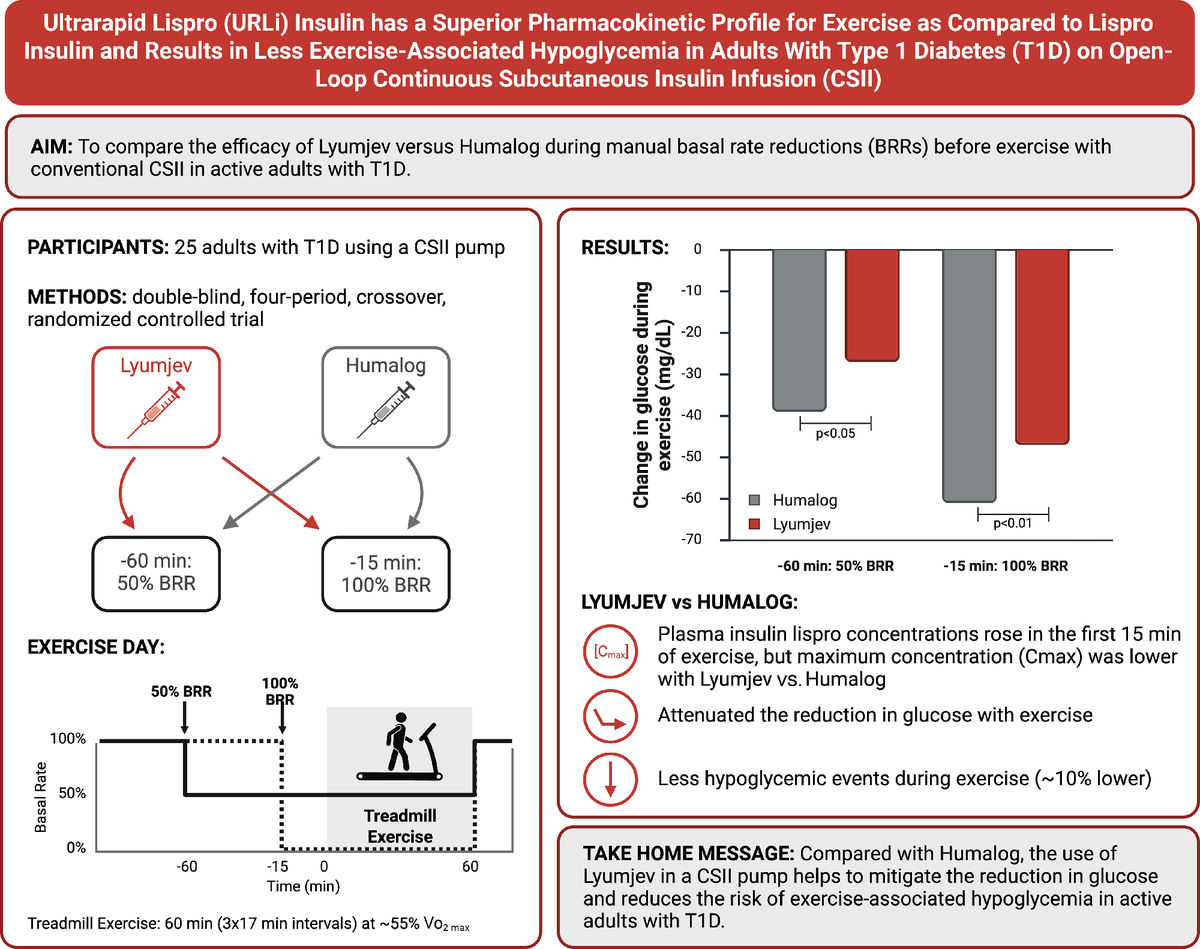
Using Lyumjev in conventional CSII pump therapy provides more effective BRRs prior to exercise compared with Humalog, with fewer hypoglycemic events in active adults with type 1 diabetes. #DCare#Article
Read here ➡️ https://t.co/QCiMbOSXDs
@AmDiabetesAssn@ADA_DiabetesPro
Could soft, gel‑like materials help transplanted beta cells feel more at home?
Beta cell replacement therapies offer real promise for improving and potentially curing - type 1 diabetes, but helping transplanted cells survive in the body remains a major hurdle.
Absolutely delighted to see our FreeDM2 randomised controlled trial published in The Lancet Diabetes & Endocrinology. A landmark UK study of the use of CGM in people living with T2DM #dukpc26@LalanthaL@drpratikc@MEvansCambridge@TomCrabtree90@DrAliLumb
https://t.co/YryzcXT7Rq
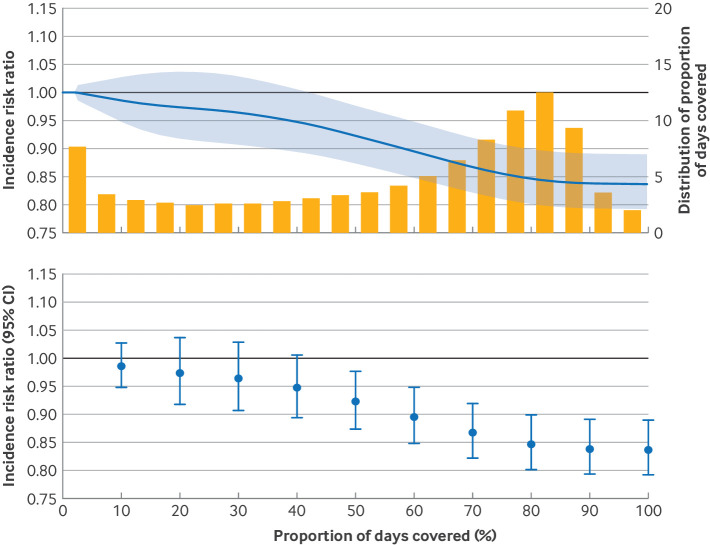
GLP-1RA cardiovascular protection is duration dependent.
In >330k people with T2D:
🫀 Risk reduction strongest with continuous 3-year use (IRR 0.82)
⏳ Short use (<1.5 yrs) → little CV benefit
⛔ Interruptions or discontinuation → progressively ↑ MACE risk
Consistency matters. Long-term treatment drives cardiovascular protection.
https://t.co/pA2SbFkh5e
@RenaudB31 I was absolutely ecstatic with Wout’s success but Christophe Laporte was incredible on Sunday-not enough said about his performance and what he delivered. I hope he too gets his time
The use of SGLT2is does not negatively impact amputation rate or healing rate of diabetic foot ulcers.
One-year mortality lower in people treated with an SGLT2i.
https://t.co/gp5l3l8qT3
#Tubeless automated insulin delivery versus multiple daily injections in children and adults with type 1 #diabetes with elevated HbA1c (RADIANT): a multicentre, international, parallel-group, open-label, randomised, controlled trial https://t.co/aiE1otsh9g
#T1D#CGM#AID
Beyond Euglycemia: Case Studies Using #CGM in Elite Athletes Without Diabetes During Record Athletic Events https://t.co/FH8Xo60OZY #mdpisensors via @Sensors_MDPI
Obesity isn’t just a metabolic risk.
It’s an infection risk.
Evidence suggests ~1 in 10 infection-related deaths worldwide may be attributable to obesity.
Obesity increases hospitalisations and mortality across many pathogens and populations.
#Obesity#InfectionRisk #PublicHealth
https://t.co/lPivSG4Gq7
@TheLancet





![Rainmaker1973's tweet photo. The “inevitable” muscle loss with aging is largely a myth.
For years, we’ve been told that losing muscle mass is an unavoidable part of getting older — with the average person shedding up to 8% of muscle per decade after age 40.
But an MRI research tells a very different story. Scientists compared sedentary individuals with lifelong masters athletes (ages 40–81) who train intensely 4–5 times per week. The results were striking: the active athletes maintained remarkably stable muscle density and quality well into their 70s and 80s — often nearly identical to people decades younger.
The study strongly suggests that age-related muscle loss (sarcopenia) is driven far more by inactivity than by biology itself. Lifelong swimmers, cyclists, and other masters athletes preserved both muscle mass and strength, proving the powerful “use it or lose it” principle.
Even in their 70s and 80s, these athletes showed muscle structures that closely resembled those of much younger people. Their body fat increased modestly with age, but their functional muscle remained impressively intact.
[Wroblewski, A. P., Amati, F., Smiley, M. A., Goodpaster, B., & Wright, V. (2011). Chronic exercise preserves lean muscle mass in masters athletes. Physician and Sportsmedicine]](https://pbs.twimg.com/media/HHONqfsXsAA5mCV.jpg)