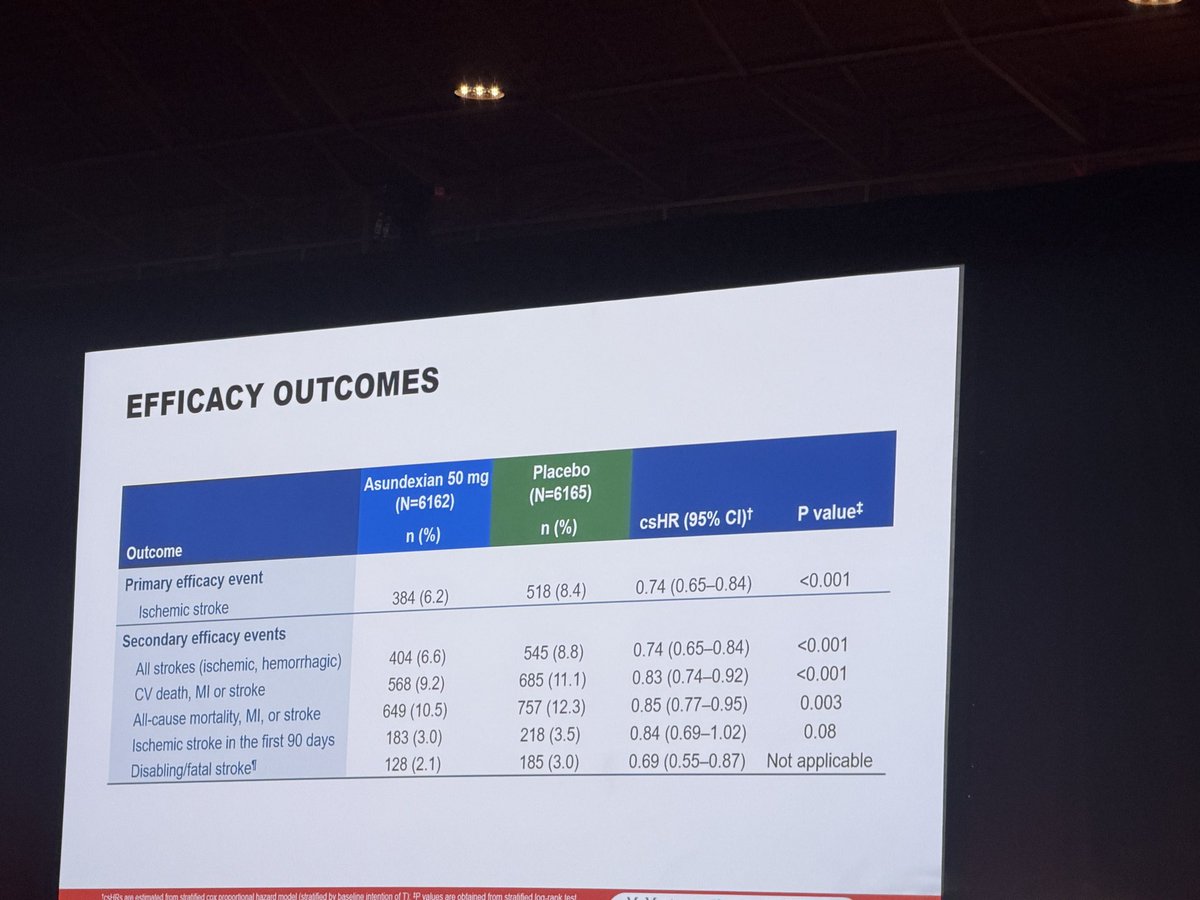
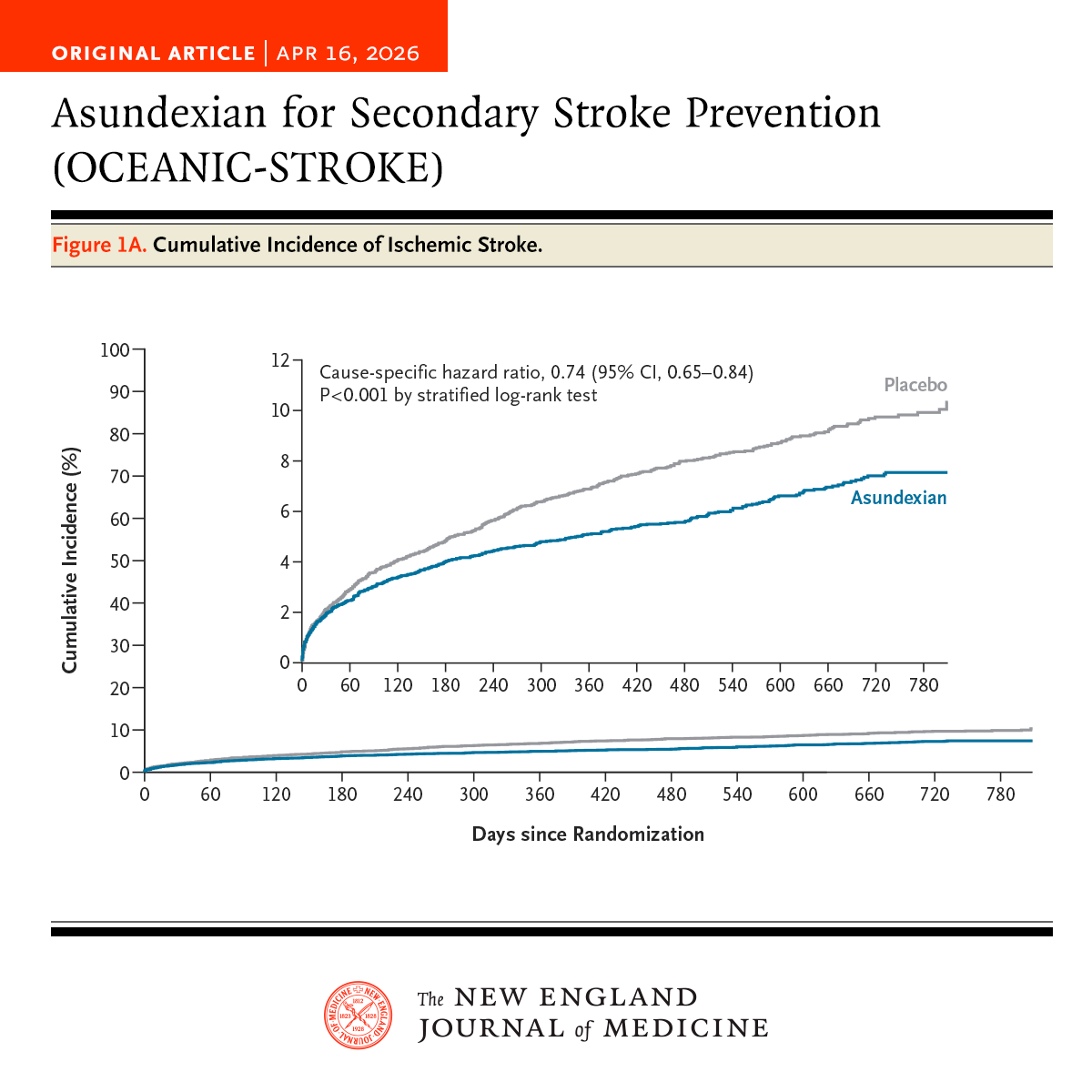
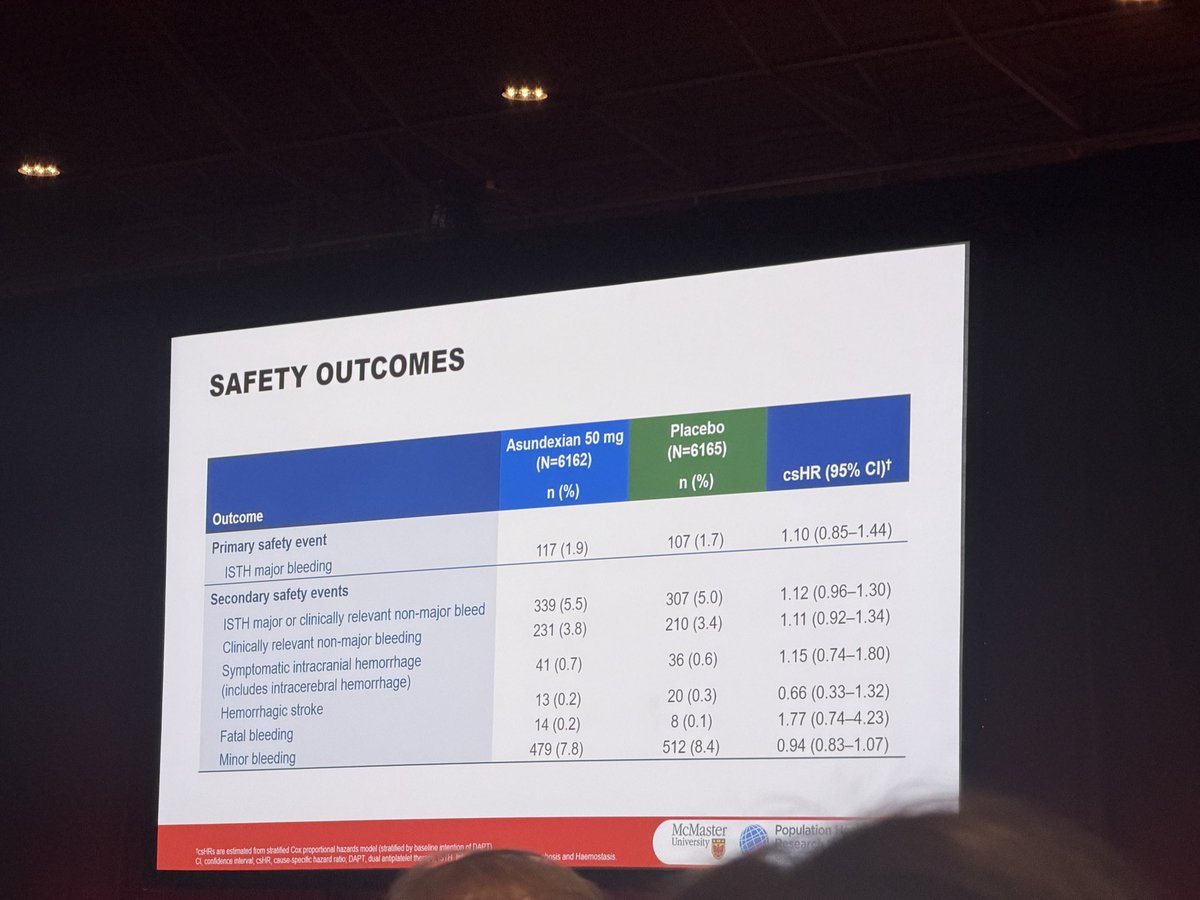
In the phase 3 OCEANIC-STROKE trial involving patients with noncardioembolic ischemic stroke or high-risk TIA, asundexian added to antiplatelet therapy led to a lower risk of ischemic stroke without increasing major bleeding. Full trial results: https://t.co/UPJGedYXFe
Editorial: Asundexian for Noncardioembolic Ischemic Stroke https://t.co/V1dVNbx4T8
Join us for our Post-International #Stroke Conference 2026 Highlights 🧠 💻
Featuring presentations & discussions on selected abstracts from the 2026 #InternationalStrokeConference (ISC) 🔦
🗓️ 25th March 2026 | 17:00-19:00 CET | 15:00-17:00 GMT | 10:00am-12:00pm CST
🎙️ Chair: @Simona_Sacco_ | Moderators: @VYogendrakumar & @HanneKCh
👉 https://t.co/NA2UxTLKjf
Covering:
📌 Session 1: Etiology, biology and mechanisms of stroke
📌 Session 2: Reperfusion strategies and adjunctive therapies for acute ischemic stroke
📌 Session 3: Updates in hemorrhagic stroke management and neurocritical care
📌 Session 4: Updates in prevention, risk reduction and long-term outcomes
📌 Session 5: Innovations in stroke health services and systems of care
REGISTER NOW ✍️ 👉 https://t.co/OcYrVVNbX2
🚨 Big day for #Stroke science!
Breakthrough results from OCEANIC-Stroke in secondary prevention of non-cardioembolic stroke.
🧠✨ 26% reduction in risk of recurrent stroke
Congratulations to Mike Sharma and @Ash_Shoamanesh on this outstanding work! 👏🎉 #phri@HamHealthSci
📣🧠Incidental Carotid Web or Stroke Culprit? New data on CTA based morphologic features of webs & recurrent stroke risk at #ISC26.
Learn from the Experts, Drs. @PargolBalali and Baris Alten at #ISC26! Presentations on Feb 4th & Feb 5th! @AHAScience@PennNeurology@PennRadiology
Patients with ischemic stroke & cancer didn't benefit when prescribed anticoagulants. Further research is needed to provide guidance on whether blood thinners should be given to stop cancer-associated stroke, per lead author @PargolBalali. @NeurologyToday https://t.co/7YYs0XeyCS
Presented at #SVIN25:
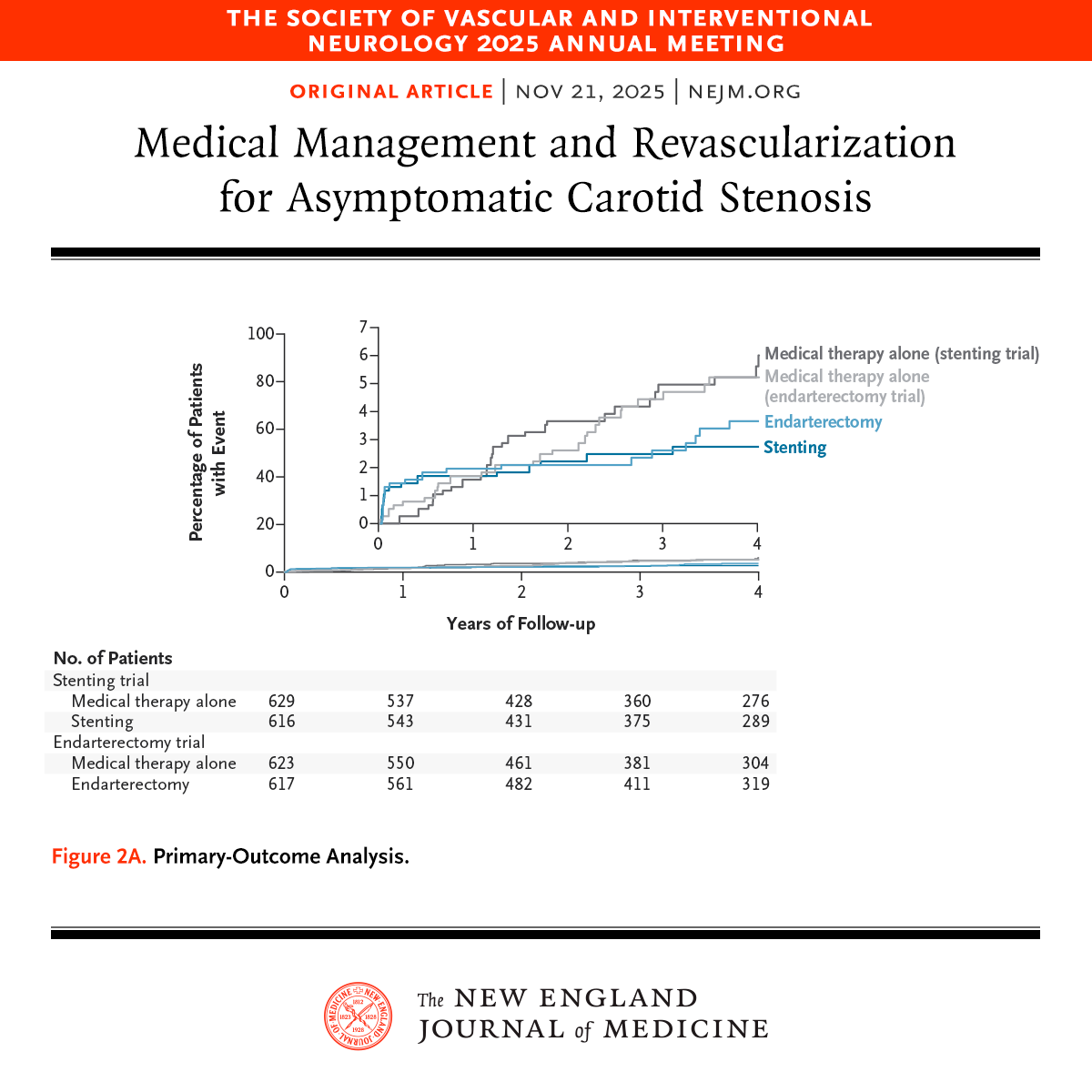
CREST-2: In high-grade asymptomatic carotid stenosis, addition of stenting to medical therapy led to a lower risk of stroke over a 4-year period. Endarterectomy did not lead to a significant benefit. Full results: https://t.co/ojge1CjqiU
Editorial: Managing Asymptomatic Carotid Stenosis https://t.co/D9LH89Edyk
@svinsociety
3 trials on AF with surprising results from the sessions:
1- DECAF: Caffeine consumption reduced the risk of AF post cardioversion
2- OCEAN: Rivaroxaban 15 mg not superior to aspirin in AF patients post ablation
3- CLOSURE-AF: Medical tx better than LAAO in high bleeding risk AF
📢 Check out our new paper in @GreenJournal!
Among ~86K patients with #Stroke, 10% had active #Cancer.
Only ~15% received anticoagulation.
Over 6 mo:
🧠🫀Thromboembolism IR=38.4 (AC vs no AC: HR 1.21, 95% CI 0.91–1.61)
🩸 Bleeding IR=20.9
@PennNeurology
🔗https://t.co/mw174rqKqY
Grateful for the opportunity to connect with our community in Northeast Philly at the Heart Healthy Health Fair @FrankfortPausePark and talk about stroke prevention and early recognition. Every conversation brings us one step closer to saving lives. 🧠🩺#StrokeAwareness#BEFAST
Hi #MedTwitter!
I’m Pargol, a postdoc researcher @PennNeurology & an IMG from @TehUofMed, applying to #Neurology in #Match2026.
Outside of Neurology, I enjoy traveling✈️, playing 🎹 & exploring nature🌳.
Looking forward to connecting with peers & mentors.
#NeuroMatch