Microbiology research group led by Prof Ian Paulsen at @MQNatSci. Research: synthetic biology and omics of yeast, nosocomial, environmental & marine microbes.
Starting off the year with a search for a new Technical Support Assistant for the @AusBiofoundry. Know anyone who might be interested?
#hiring#STEM#womeninSTEM
Second, by having multiple transporters for P (PhnDCE and Pst), picocyanobacteria could balance the need for rapid transport during transient episodes of higher P availability in the environment, with the need for efficient P utilisation in typical phosphate-deplete conditions.
We propose two possible physiological roles for PhnD1. First, it could function in phospholipid recycling, working together with the predicted phospholipase, TesA, and alkaline phosphatase.
📢 New @ISMEJournal paper!
We found 'Marine picocyanobacterial PhnD1 shows specificity for various phosphorus sources but likely represents a constitutive inorganic phosphate transporter'.
Check it out 👉 https://t.co/l3ongTACEY
Naturally evolved genomes tend to be large and redundant. Can we minimise genomes for better biotechnological or research applications? Our latest review paper on genome minimisation is now published online.
Are minimal genomes useful? How are they made? @labizero@PaulsenLab@ProfTomEllis, @BABlount, and I have published our thoughts on this intriguing topic https://t.co/LBEsY5RnxJ.
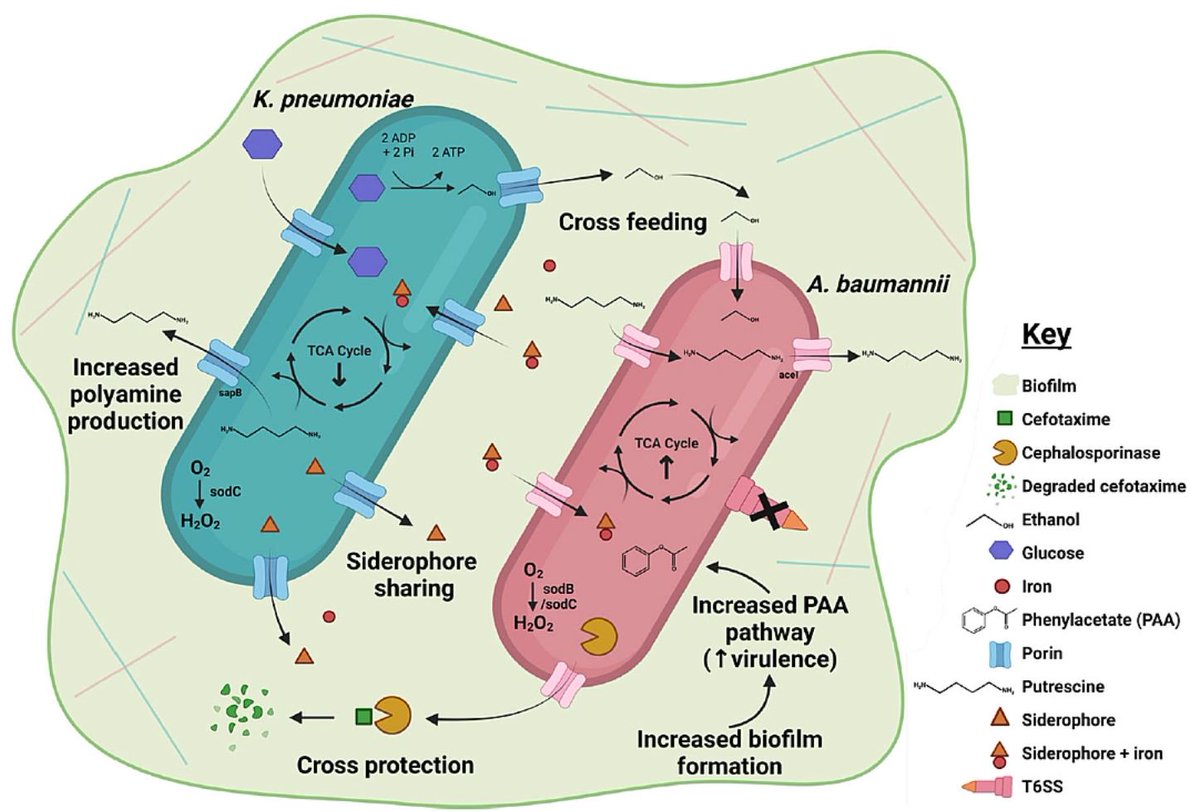
Together the world’s most deadly & drug-resistant pathogens become more powerful & infectious! @flamycain's team & the @BRaTlab found that pathogenic bacteria co-exist in ~40% of hospital patients; together they survive higher antibiotic concs than alone https://t.co/FW78O7T2vj
Our Centre Director, Professor Ian Paulsen was invited as a keynote speaker at the A*STAR Mini Symposium on Engineering Biology held from 2-3 February in Singapore. Professor Paulsen's talk was about the Centre and our various projects we are working on across the Centre #CoESB
Excited to share that the new https://t.co/jkwPp4RIcx is now live as part of @BioCyc. And, we are having a mini-symposium on Mar 1st! Register to attend: https://t.co/DpBFcQxgPI
@CyanoWorld1#cyanobacteria
We (@BRaTlab) found a new efflux pump, AdeG from the Drug:H+ antiporter 2 family circulating in plasmids of Acinetobacter. AdeG confers resistance to at least 8 diverse antimicrobials. @A_baumannii
Woodside are collaborating with LanzaTech, a #SyntheticBiology company specialising in carbon waste reuse for fuels & chemicals. Why aren't Aussies talking about this pathway to carbon neutrality for our oil & gas companies? Thought provoking piece from @thomdixon of @ARC_CoESB
Congratulations to our Centre Director, Distinguished Professor Ian Paulsen, who was finally able to attend the official ceremony for new fellows of the Australian Academy of Science, who was elected back in 2020. Due to covid, there has been no ceremonies until this year!
Excited to share a preprint of our work with Microbial Screening Technologies, @andrewpiggott@PaulsenLab and team
We profiled the skin microbiota of over 1000 cattle in Australia as the first step to developing sustainable therapies for pest infestation
https://t.co/5QHKvnve3Z
The Australian Genome Foundry is hiring! We're looking for an analytical chemist, automation engineer/data scientist, and a synthetic biologist to join us in our state-of-the-art facility in Sydney. International applicants welcome. https://t.co/nopzoNR7S6 Please RT!