Short-form content captures attention and brings immediate gratification, but it sacrifices lasting enrichment.
Watching a bunch of reels doesn’t match the full immersion of a movie.
Reading a series of posts doesn’t rival the depth of insight of a book.
Long live long-form.
1960, Orson Welles explained how he wrangled complete creative control for his first film, Citizen Kane, as well as the value of “ignorance” to break through old ideas.
In early 1992, an aspiring director asked James Cameron,
How do you become a successful director?
Cameron's movie "Terminator 2" was the top-grossing movie of 1991, so Cameron, who had no formal film education, was arguably the best person in the world to ask.
Cameron replied,
“If you have to ask somebody how to be a film director, you’ll probably never do it."
Cameron added that this is his reply to everyone who asks him that question. For 2 reasons:
Number 1...
In his books on screenwriting, Syd Field writes that the core trait of all great characters is the character's “dramatic need.”
With a “dramatic need” (to get something, to go somewhere, to beat someone, etc.), the character persists through the story’s relentless series of obstacles, problems, and conflicts.
To become a successful film director, Cameron says, you need to have a dramatic need.
Like a good story, the filmmaking process, Cameron explains, is a relentless series of obstacles, problems, and conflicts.
Someone who gets discouraged by his reply, Cameron says, clearly does not have the “dramatic need” needed to persist.
But “if [my reply] pisses you off, and then you go out and say, ‘I’m going to show that Jim Cameron; I am going to be a director’—that gives you the kind of true grit you need to have in order to go through with it.”
Number 2...
Of all the successful filmmakers Cameron knows, he said, “No two people ever did it the same way.”
Their career trajectories were each uniquely shaped by their unique strengths and weaknesses.
“Whatever your strengths and weaknesses,” Cameron says, “you have to find the path that’s going to work for you.”
This made me think of a line from the comparative mythologist Joseph Campbell:
“Where there’s a way or path, it is someone else’s path; each human being is a unique phenomenon. The idea is to find your own path."
- - -
“I’ve always felt that people seek out the information and knowledge they need. They seek it out and find it...Nobody will give you the pathway. It’s something you have to find yourself.” — James Cameron
Follow @bpoppenheimer for more content like this!
• Drake: 133 songs, 38 hits (28%)
• Beyonce: 89 songs, 22 hits (24%)
• Red Hot Chili Peppers: 265 songs, 13 hits (4.9%)
+70% of their output is NOT popular.
Meanwhile, you write 1 blog post and give up immediately...
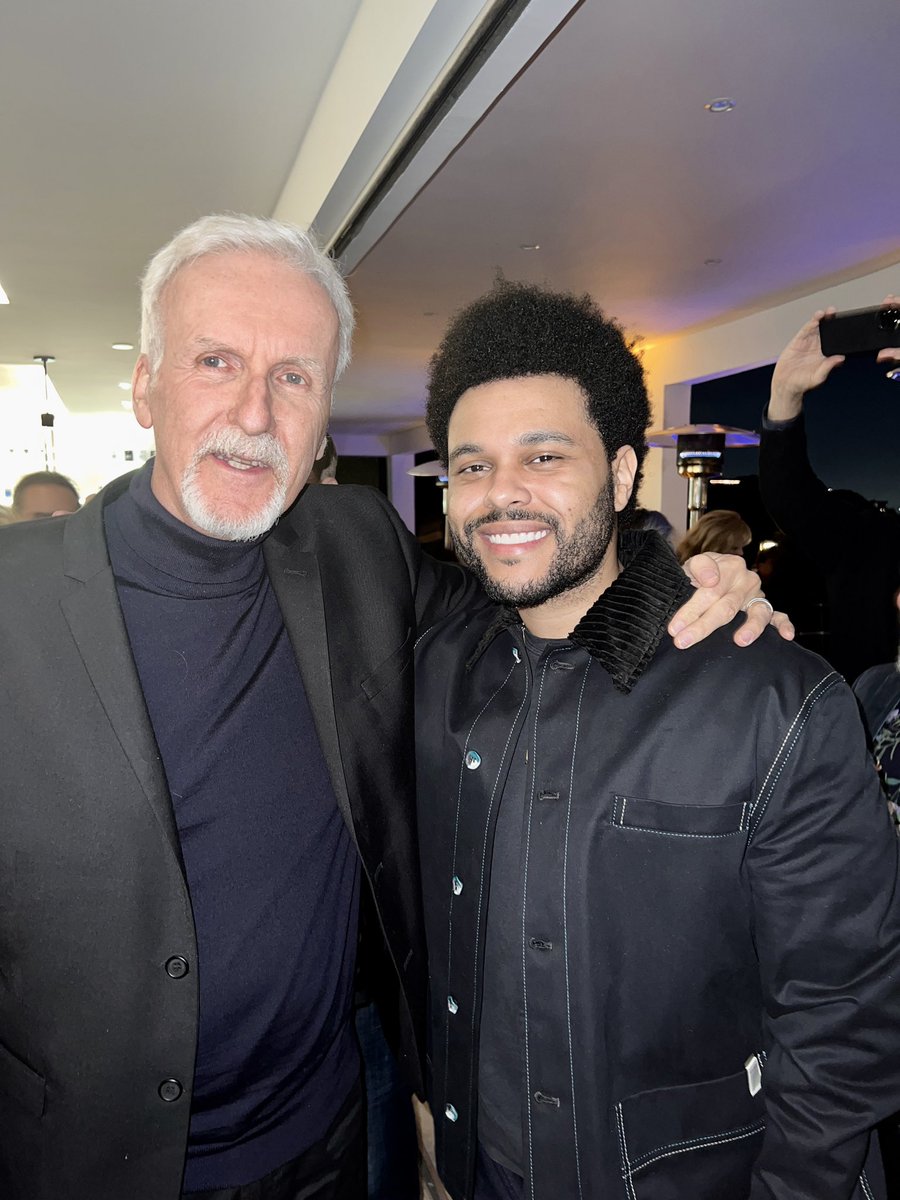
Great to see The Weeknd last night and celebrate his fantastic song, “Nothing is Lost (You Give Me Strength).” He’s the ideal artist and I can’t imagine a better song to end Avatar: The Way of Water.
This is what true diversity in film starts to look like.
Nigerian kids with smartphones writing, directing, producing, distributing their own stories. For domestic or global audiences.
Yes, Nollywood/Bollywood/etc do exist, but this is the next step. https://t.co/qZuvkFzuL3







![bpoppenheimer's tweet photo. In early 1992, an aspiring director asked James Cameron,
How do you become a successful director?
Cameron's movie "Terminator 2" was the top-grossing movie of 1991, so Cameron, who had no formal film education, was arguably the best person in the world to ask.
Cameron replied,
“If you have to ask somebody how to be a film director, you’ll probably never do it."
Cameron added that this is his reply to everyone who asks him that question. For 2 reasons:
Number 1...
In his books on screenwriting, Syd Field writes that the core trait of all great characters is the character's “dramatic need.”
With a “dramatic need” (to get something, to go somewhere, to beat someone, etc.), the character persists through the story’s relentless series of obstacles, problems, and conflicts.
To become a successful film director, Cameron says, you need to have a dramatic need.
Like a good story, the filmmaking process, Cameron explains, is a relentless series of obstacles, problems, and conflicts.
Someone who gets discouraged by his reply, Cameron says, clearly does not have the “dramatic need” needed to persist.
But “if [my reply] pisses you off, and then you go out and say, ‘I’m going to show that Jim Cameron; I am going to be a director’—that gives you the kind of true grit you need to have in order to go through with it.”
Number 2...
Of all the successful filmmakers Cameron knows, he said, “No two people ever did it the same way.”
Their career trajectories were each uniquely shaped by their unique strengths and weaknesses.
“Whatever your strengths and weaknesses,” Cameron says, “you have to find the path that’s going to work for you.”
This made me think of a line from the comparative mythologist Joseph Campbell:
“Where there’s a way or path, it is someone else’s path; each human being is a unique phenomenon. The idea is to find your own path."
- - -
“I’ve always felt that people seek out the information and knowledge they need. They seek it out and find it...Nobody will give you the pathway. It’s something you have to find yourself.” — James Cameron
Follow @bpoppenheimer for more content like this!](https://pbs.twimg.com/media/F0pFwg8X0AEXFaj.jpg)