I'm thrilled to share that I have been awarded an EMBO postdoctoral fellowship! I’m excited to continue my work in the lab of @thestrecker where I look forward to continuing my research in bacterial innate immunity. A special thank to Julian my PhD supervisor.
#EMBOFellows
I’m thrilled to share that I’ll start a lab at the CRG in Barcelona next spring! We’ll investigate how cells tune protein production by selective co-translational mRNA degradation to control protein homeostasis and microtubule dynamics! 😎🧪👇
The 2024 #NobelPrize laureates in chemistry Demis Hassabis and John Jumper have successfully utilised artificial intelligence to predict the structure of almost all known proteins.
In 2020, Hassabis and Jumper presented an AI model called AlphaFold2. With its help, they have been able to predict the structure of virtually all the 200 million proteins that researchers have identified. Since their breakthrough, AlphaFold2 has been used by more than two million people from 190 countries. Among a myriad of scientific applications, researchers can now better understand antibiotic resistance and create images of enzymes that can decompose plastic.
Read more about their story: https://t.co/nWxcZs6wqC
Work that once took years now takes just a few minutes thanks to this year’s chemistry laureates.
2024 #NobelPrize laureates Demis Hassabis and John Jumper have used their AI model AlphaFold2 to calculate the structure of all human proteins. They also predicted the structure of virtually all the 200 million proteins that researchers have so far discovered when mapping Earth’s organisms.
Google DeepMind has also made the code for AlphaFold2 publicly available, and anyone can access it. The AI model has become a gold mine for researchers. By October 2024, AlphaFold2 had been used by more than two million people from 190 countries.
The picture shows a few of the many examples of how AlphaFold2 helps researchers.
BREAKING NEWS
The 2024 #NobelPrize in Physiology or Medicine has been awarded to Victor Ambros and Gary Ruvkun for the discovery of microRNA and its role in post-transcriptional gene regulation.
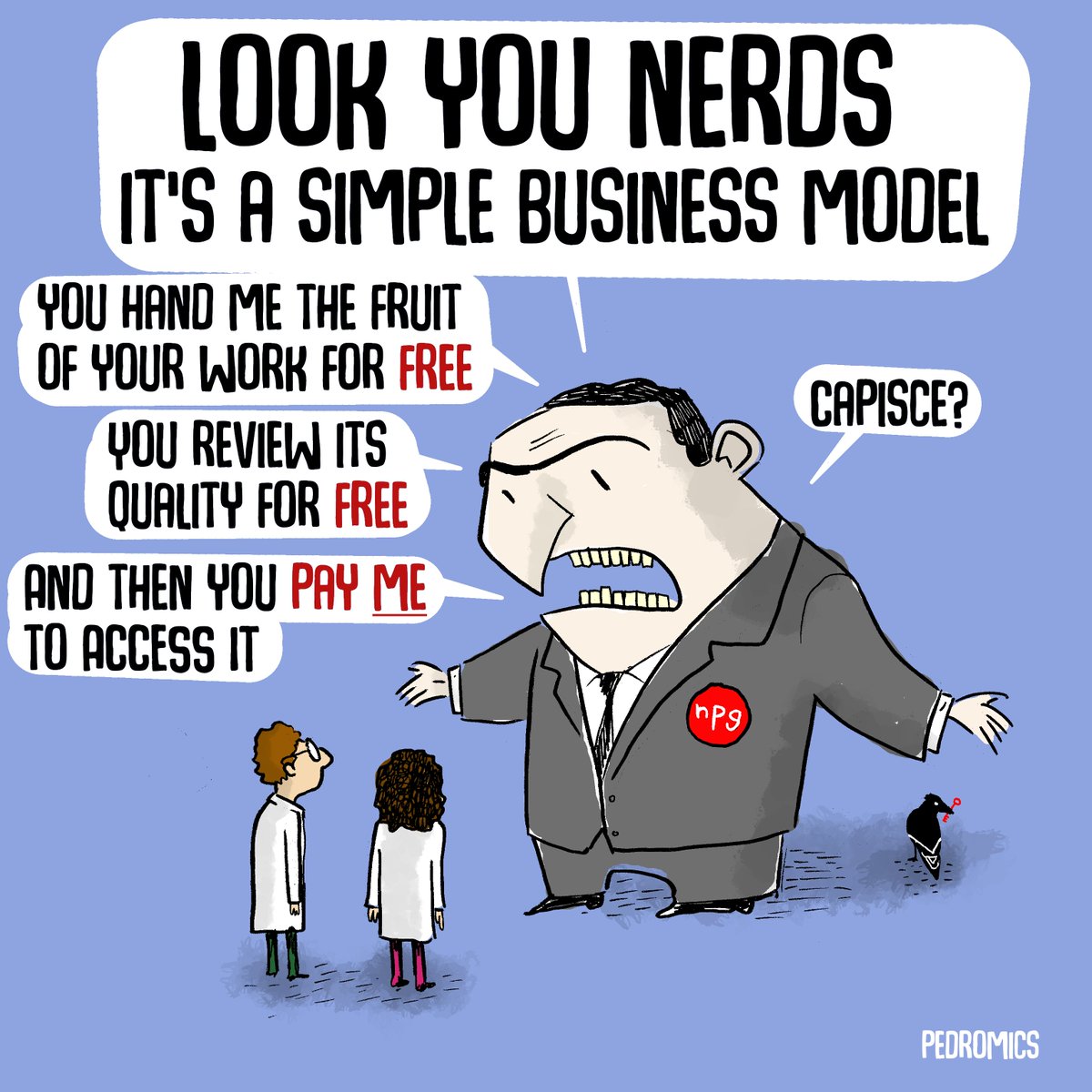
Sci Hub is a "pirate" website with 88M research papers freely available.
Using it is not advisable. We should all try to make billion-dollar acdemic publishers richer.
Here's a thread on integrating Zotero with Sci Hub to get free articles.
PLEASE DON'T DO THIS 😉
📢🥳Another exciting news from the @stingele_lab and @BeckmannLab before the weekend: They have discovered how ribosomes contribute to the recognition and removal of RNA crosslinking damage👏👏👏
https://t.co/6RNoate5Fh
@LMU_Muenchen#RNA#ribosome
HMCES formation of covalent crosslinks with abasic sites in ssDNA to prevent formation of toxic dsDNA breaks needs to be restricted to the minimum:
@stingele_lab @GeneCenter_LMU reports a non-proteolytic #HMCES release mechanism regulated by DNA context
https://t.co/vkGc59QSfE
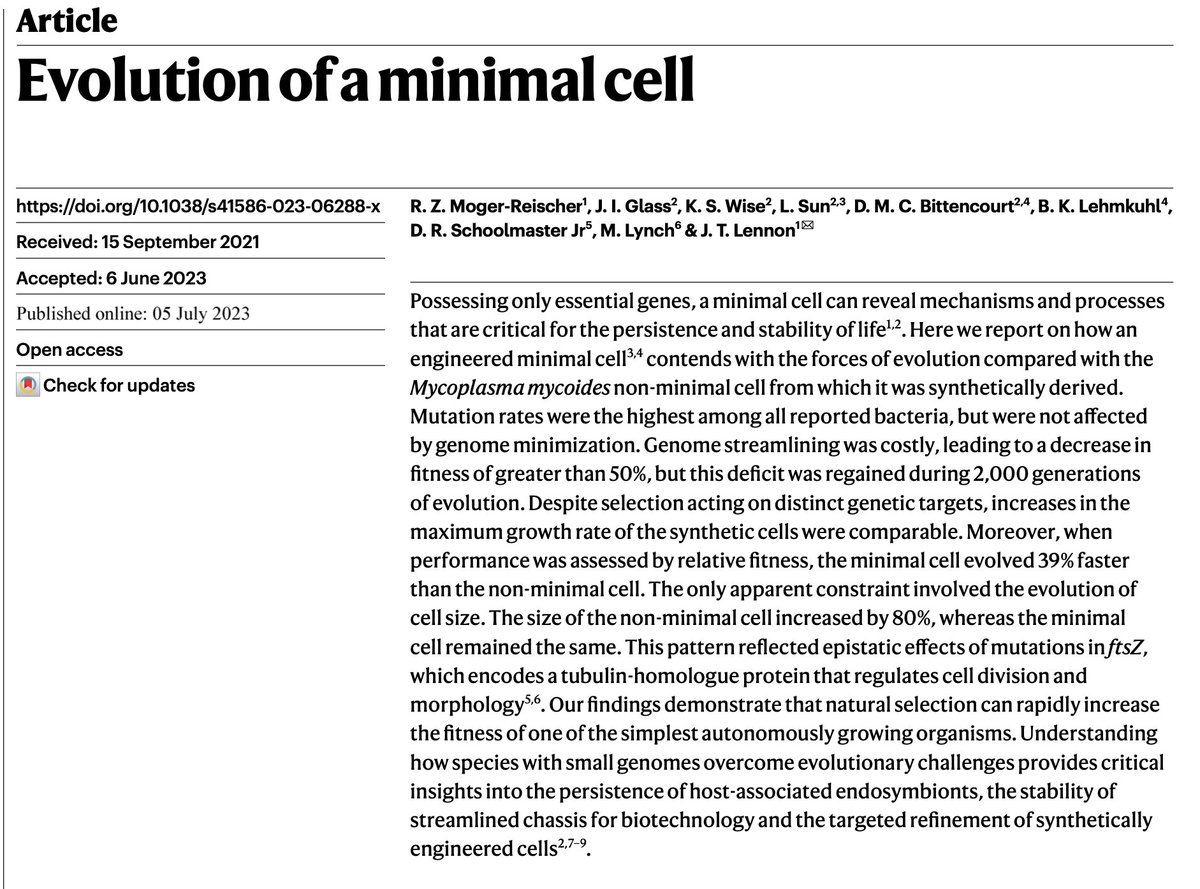
A mind-blowing paper has come out today in @Nature
In 2016, JC Venter Institute scientists trimmed a bacterial genome to its barest minimum required for life to synthesize what they called a "minimal genome" (https://t.co/Rk8oZJ0bUj).
Today, a group of scientists from Indiana University reports how that minimal genome evolved over 2000 generations in comparison to the non-minimal genome.
The authors found that even when you reduce a bacterial genome to its absolute minimum where every nucleotide matters, the genome undergoes mutational events generation after generation as much as the non-minimal genome. One simply cannot stop the evolution.
Just over 300 days of evolution (equivalent to 40,000 years in humans) the minimal cell has gained everything it lacked in fitness on day one in comparison to the non-minimal cell.
When comparing the evolved traits between the minimal and non-minimal cells, the scientists found something striking. The evolutionary process increased the cell size of non-minimal cells but not that of the minimal cell. But that is not the striking part.
The scientists were able to identify the key mutation that resulted in cell size evolution. And it turned out that the mutation that helped the non-minimal cells to grow bigger is the same that helped the minimal cells to stay smaller. Growing bigger had a survival advantage for non-minimal cells and not growing bigger had a survival advantage for minimal cells. So, the mutation had a context-dependent effect. This just demonstrates that the evolutionary effects on traits have no absolute direction. All that matter is what is beneficial for the organism's survival.
The conclusion of the paper is metaphorically a quote from the Jurassic Park movie:
“Listen, if there’s one thing the history of evolution has taught us is that life will not be contained. Life breaks free. It expands to new territories, and it crashes through barriers painfully, maybe even dangerously, but . . . life finds a way". (https://t.co/UlxRlb86CT)
https://t.co/zA9OAqSoAu
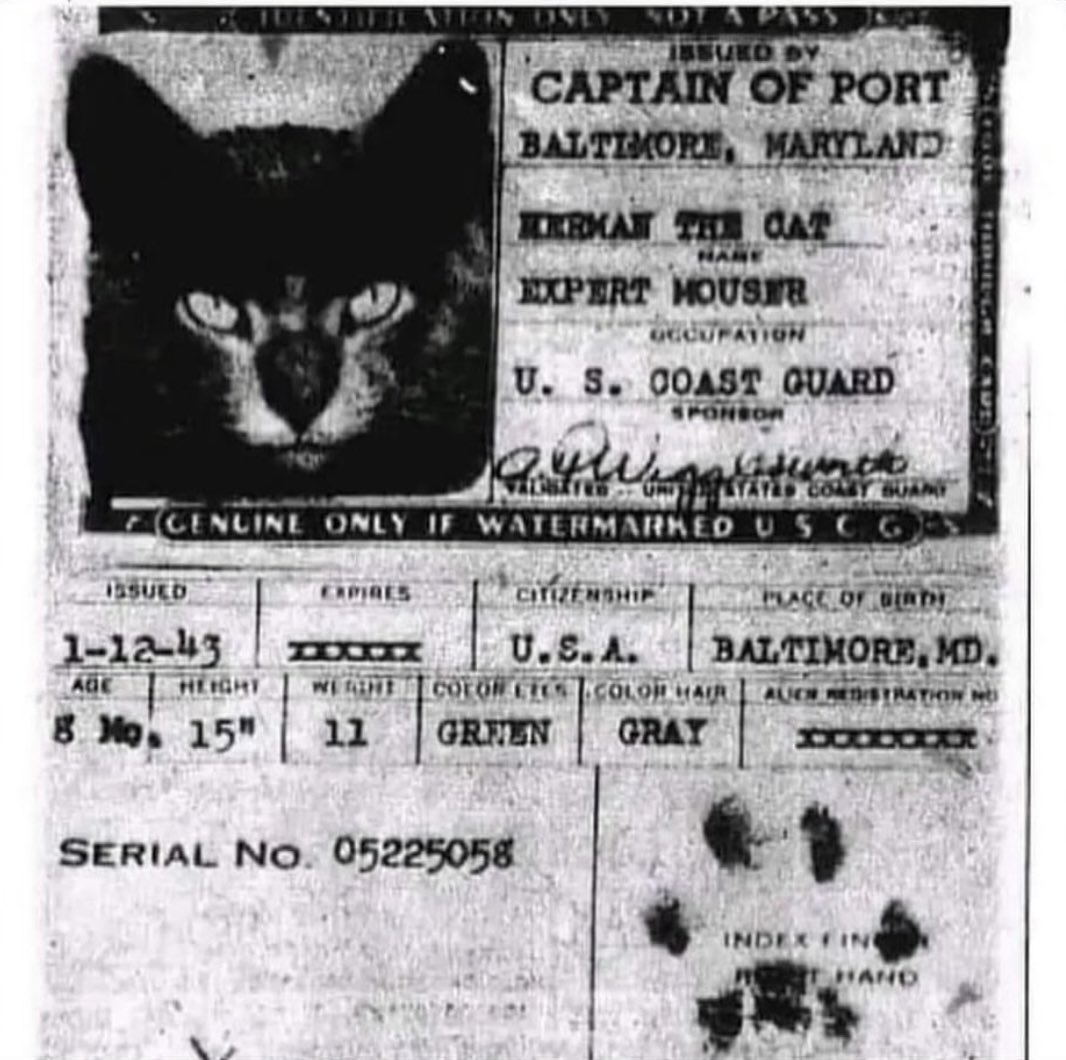
During the mid-20th century, cats played an important role on ships as skilled rodent catchers. Sailors realized that having cats aboard helped control the population of rats and mice, which were notorious for damaging supplies and spreading diseases. These ship cats became valued members of the crew and were even given passports to acknowledge their contribution and ensure their safety during international travels.
The passports for ship cats were a unique and lighthearted tradition. While they didn't serve any legal or official purpose, they were created to recognize the cats' role and provide a form of identification. The passports typically consisted of a small booklet with pages that included the cat's name, description, and an area for their paw print.
When it was time to depart or dock in a foreign port, the ship's captain or crew members would present the cat's passport to the authorities as a fun way to document the feline's presence onboard. The cat's paw print, obtained using ink or paint, was added to the designated page, providing a personalized and whimsical touch to the document. This practice not only amused the sailors but also showcased the camaraderie they shared with their feline companions.
While these ship cat passports were not legally recognized, they symbolized the close bond between humans and their feline shipmates. They served as a reminder of the cats' essential role in maintaining a clean and rodent-free ship, thus safeguarding the crew's provisions and health during long sea voyages.
However, as the mid-20th century progressed and maritime practices evolved, the reliance on ship cats diminished with the advent of more effective pest control methods. With the decline in the need for ship cats, the tradition of issuing passports gradually faded away. Nevertheless, the memory of these seafaring felines and their unique passports continues to fascinate and entertain those interested in maritime history and the unique relationships forged between humans and animals at sea.
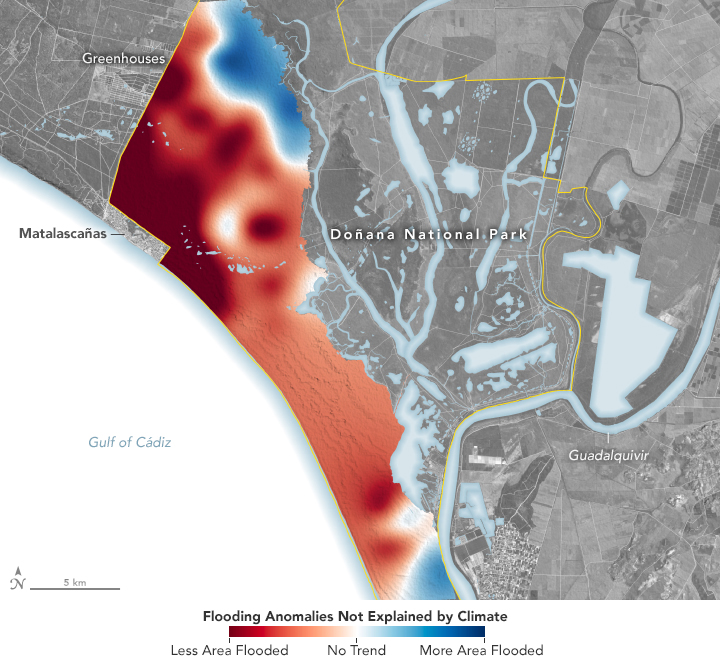
Wetlands in Spain’s Doñana National Park are drying up due to groundwater demands from agriculture, tourism and drought.
Scientists report that 83% of the wetland’s ponds are flooding less extensively and for less time than would be explained by climate. https://t.co/kzIiuRX5Fs