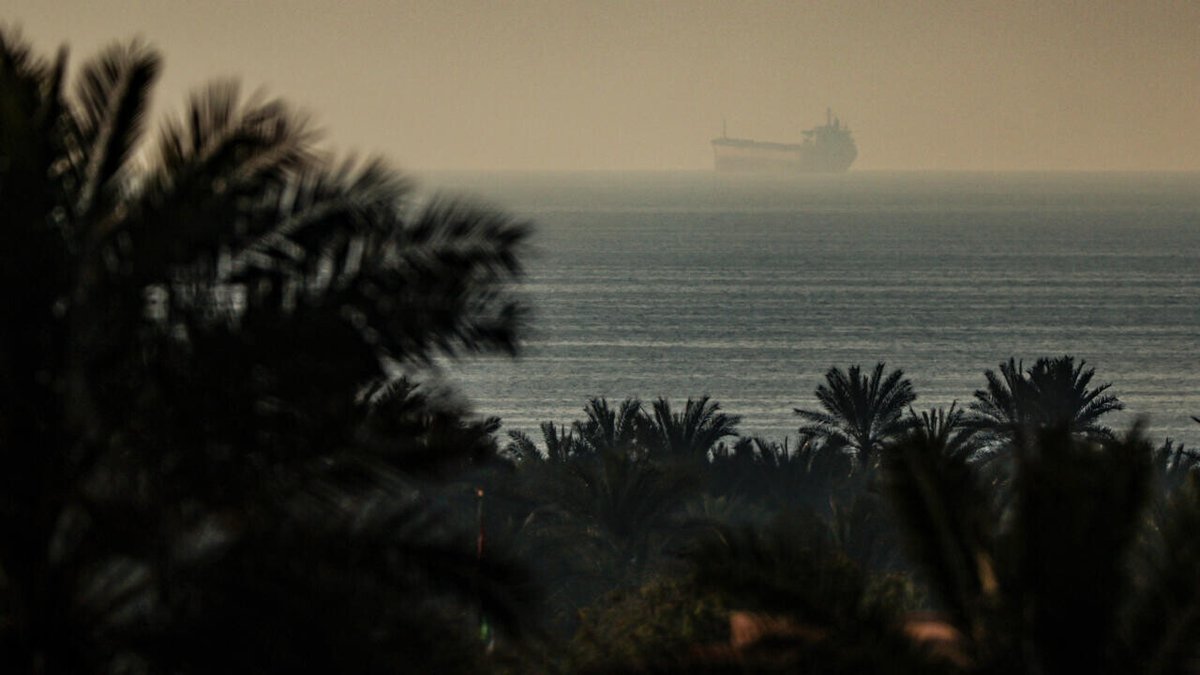
12 week anniversary of the Strait of Hormuz closing. Yet another riveting tweet of fertilizer price comparisons. Since the Strait closed:
Urea - +23%
UAN - +53%
NH3 - +28%
DAP - +27%
MAP - +18%
Potash - +15%
And for the real b.s.
Corn - +3%
Beans - +4%
Wheat - +8%
...damnit
Morocco's phosphates and fertilizer giant OCP raised $1.5 billion through its first international hybrid bond, becoming the first African group to issue a U.S. dollar-denominated hybrid on global markets, an OCP document showed on Thursday. https://t.co/bfmaBlpiTD
#Fertilizer prices climbed as the US/Israeli war with Iran moved into April with Hormuz traffic largely at a standstill. The hiatus in Middle East #sulphur shipments is beginning to bite. Morocco’s OCP, the world’s largest #phosphate producer, brought forward maintenance (1/3)
Position très intéressante de la @FNSEA de s’aligner sur la réglementation européenne où même @OCPNutricrops est largement au dessous des seuils avec des produits labellisés #LowCadmium
Cadium : « Pour nous, il est important de se mettre au seuil européen de 60 mg par kilo.
Et ensuite, toujours pour améliorer la protection de l’environnement et la santé des consommateurs, de baisser davantage.
C’est aussi dans notre intérêt de pouvoir le faire rapidement, à des prix abordables. » —@rousseautrocy, Président de la FNSEA sur @franceinter
1/ Today's @FarmPolicy News Summary covers how lawmakers "introduced a bill that would require mandatory price reporting of #fertilizer — a bid for more market information after the war in Iran prompted the biggest surge in crop nutrient costs in years."
https://t.co/vBzJYjVanZ
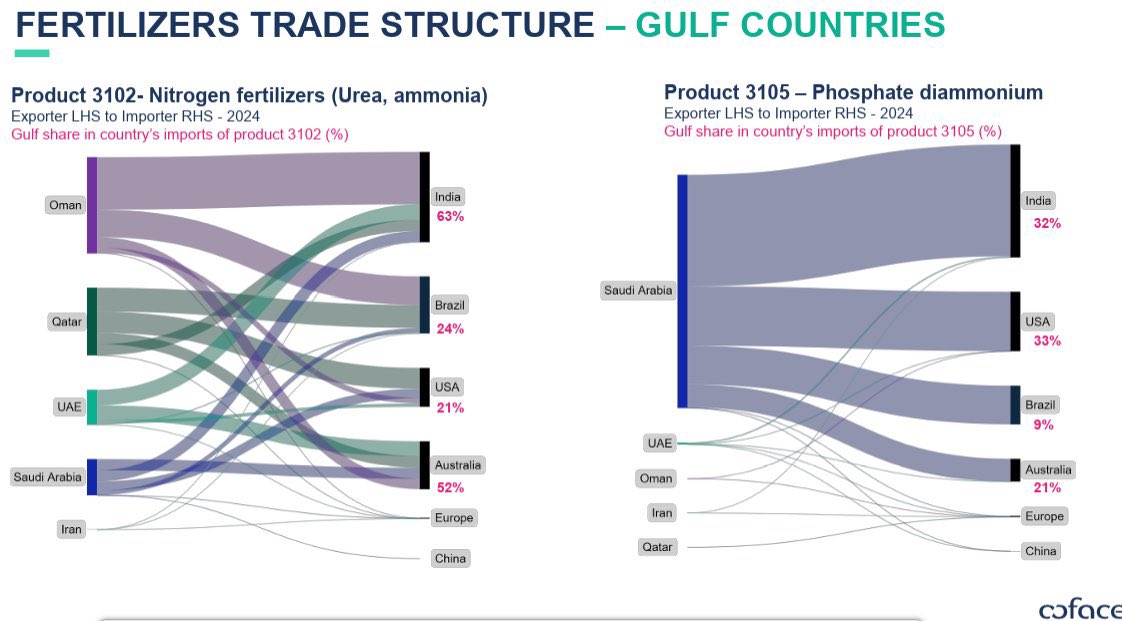
1/ India’s fertilizer imports are insanely concentrated. ~ 63% of nitrogen fertilizer imports come from Gulf producers (Saudi, Oman, Qatar, UAE). For DAP, the Gulf accounts for ~32%. Huge pc of India’s food production runs through this fertilizer corridor.
data:@sohbetkarbuz
Over the past weeks I’ve heard quite a few comments along the lines of: “Ports in Morocco reopened, so the issue is over.”
I’m not so sure. What happened in Morocco was not a one-off storm. It was a sequence of Atlantic swells, heavy winds and persistent rains that kept disrupting operations across key ports - particularly Jorf Lasfar (the heart of phosphate and fertiliser exports), Casablanca, and at times Tanger Med.
In Casablanca, operations were reportedly heavily reduced for a significant part of January. Vessels were waiting. Laycans were sliding. And once vessels start bunching, the system doesn’t politely reorganise itself.
At the same time, weather-related disruptions also affected sulphur discharge in Safi. And as we all understand, if sulphur doesn’t move smoothly, phosphate production rhythm inevitably feels it.
This is how the chain reaction works: Bad weather → Reduced port operations → Vessel queues →
Delayed loadings → Missed windows → Freight reshuffling → Demurrage → Pressure on the next shipment cycle.
Even Maersk introduced a Congestion Fee for Casablanca. Carriers don’t do that lightly. When they do, it means the disruption is tangible and measurable.
Now, here is the key point. Yes, weather improves. Yes, ports reopen. But logistics is not a switch you turn back on.
Lost operating days in December, compounded by January closures, have created a backlog that in certain fertiliser flows is translating into cumulative delays of roughly 4–6 weeks. That’s not a dramatic headline. That’s just arithmetic.
And when we talk about fertilisers heading into sub-season markets, timing is everything. You can have product. You can have demand. But if shipment windows shift by a month, the physical balance tightens quickly.
What we are starting to see - and what we may continue to see for several more weeks - is the “spring effect”. The market compressed by logistical delays does not instantly decompress. It releases gradually, and sometimes unevenly.
That may mean:
- Temporary tightness in certain destinations
- Increased premiums for secured prompt cargo
- Buyers accelerating decisions
- Price support that feels stronger than fundamentals alone would justify
Weather in Morocco has improved. The logistical consequences are still unwinding. And in fertilisers, logistics is not a side story. It is part of the pricing equation.
#imstory #prices #phosphates #fertilisers #fertilizers #china #india #market #analysis #supply #demand #mexico #morocco #russia #usa #duty #tariffs
This week's fertilizer video:
- How U.S./Iran war could significantly impact nitrogen/phosphate values globally
- Phosphate continues to struggle with low supplies, high production costs
- U.S. CVD rates against Morocco/Russia phosphate set for review
https://t.co/p7C32GZJj9
Marco Rubio : « Le Maroc peut jouer un rôle clé dans la sécurisation des chaînes mondiales des minéraux critiques » https://t.co/8GC9lVAh5V via @LeDesk_ma
NEW
Rethinking Soil Phosphate Chemistry: Towards a Shift in Conceptual Framework
Debnath
https://t.co/Tob7gYgjsf
@wileyearthspace @SUMjournal@Soil_Science#Soil#Research
Deputy Ag Secretary Stephen Vaden on Wednesday accused Nutrien and Mosaic of colluding to limit U.S. #fertilizer supply and control #prices, suggesting that the administration could take future action to inject more competition into markets, if necessary.
https://t.co/nJwott3Zme
No soil test? No problem. Start with the nutrient removal calculator. Fertilize smarter for 2026, understand your nutrient levels and get ahead of fertility planning: https://t.co/arS5wXJPuJ