Grateful to be recognized by @WolfPrize for the composite fermion, and to be in the company of two incredible physicists I greatly admire.
The honor truly belongs to my students, collaborators and numerous other researchers whose brilliant work transformed the composite fermion from an idea to reality.
Looking back, it is hard to believe how incredibly fortunate I have been. Growing up in a poor village in India, traumatized by an accident that left me on crutches with a lifelong disability, I did not think I would ever walk again or attend college, let alone pursue my dream of becoming a physicist. I don’t have words to express my profound gratitude to my family, friends, colleagues, mentors, and even strangers who have helped and supported me at every juncture.
My heartfelt thanks to @ncert for a science scholarship; to @BmvssJaipurFoot for enabling me to pursue higher studies; to Maharaja College @Uniraj_Jaipur, @IITKanpur, @stonybrooku, @condensed_the@UofMaryland, @Yale, @PSUScience@penn_state for taking a chance on me; and to @iiscbangalore, @IISERPune, @TIFRScience, @Infosys Professorship for providing me a home away from home.
Little did I know when the idea of composite fermion first struck me during the Christmas break of 1988 that it would occupy my mind for the next 37 years. My hope is that this prize will motivate the younger generation to experience the beauty of scientific laws and the thrill of discovery.
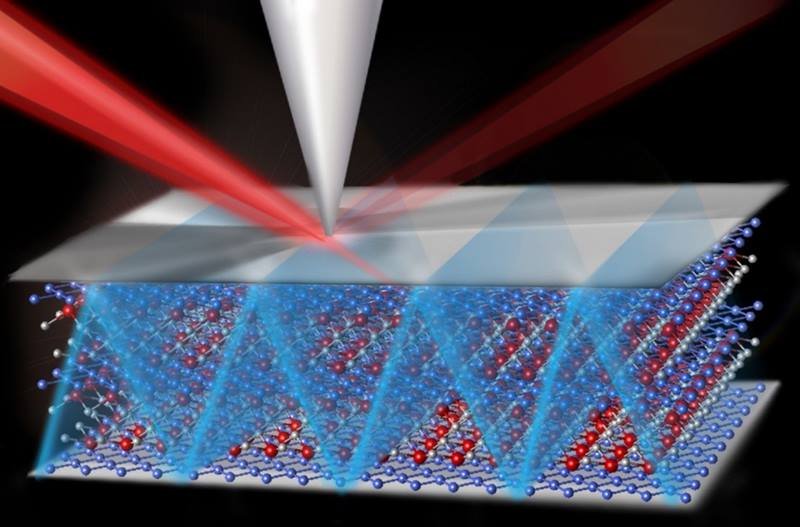
Beautiful findings and amazing collaborations! We observed that certain optical properties that were once unique to 2D atomic layers can now be realized even in bulk crystals. See our recent paper in Nature Materials: https://t.co/YpyP1sVaey & here https://t.co/Chjh9zhsAE
@vpardo_fisica Interesting to see these back-stories! For me, I first noticed the B^(2/3) scaling in the data back in 2020, but we didn't understand where it comes from. It takes another 3 years working with many theorists to finally figure out most of the puzzles.
Our work on semi-Dirac fermions has now been published in PRX! We found these exotic quasiparticles in an unexpected place and by serendipity. We demonstrated that "merging three Dirac points" can indeed happen in a real material and the results are really fascinating!
New study identifies semi-Dirac fermions at special crossings of nodal lines in zirconium silicon sulfide, with experimental evidence of two-thirds power law behavior of cyclotron energy with magnetic field revealing these exotic, elusive quasiparticles.
https://t.co/D7xT94WdPG
Long before this year's Nobel Prize-winning work in physics, John Hopfield also laid the foundation for 'polaritonics', a fascinating field that we're still exploring today! https://t.co/HtP3pew1VA
Normal metals reflect light. But some quantum metals can conduct light. That’s the finding of research on how electrons behave in the quantum metal ZrSiSe by scientists @Columbia, @UCSanDiego, @MPSDHamburg, @unipa_it, @penn_state & @FlatironInst: https://t.co/lBcz5rn4eX
Thrilled to see our work in print in @NatureComms! We relate how electrons can be polarized in insulators and how much energy is stored in a capacitor to quantum geometry. Find out how geometry and topology make diamonds pretty here: https://t.co/xpiWgrTkRV 💎😍 @PhysicsColumbia
I was able to closely mimic the “levitation” behavior of LK-99 with a ferromagnetic sample.
For comparison, see the original LK-99 video in the tweet below.
What the fax?! I guess faxing isn’t dead 🤷♂️ Use Dropbox Fax by @DropboxSign to send and receive faxes from anywhere. #DropboxFax https://t.co/ESM2RTD0Df