klaw is an open-source platform for deploying and managing AI agents at scale. Think of it as Kubernetes, but instead of containers, you're orchestrating intelligent agents that can code, research, communicate, and automate tasks. https://t.co/0TcKTvaRiY
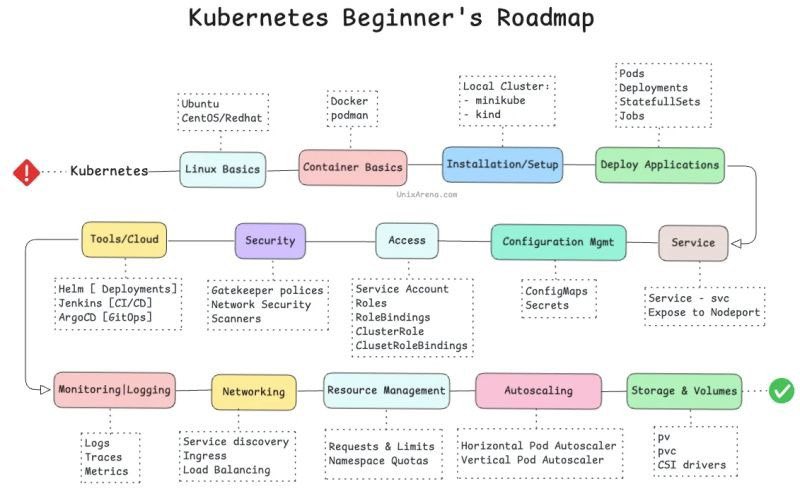
Kubernetes Beginner Roadmap
➡️ Why Kubernetes?
Orchestrates Containers: Helps you run and manage containers across multiple machines without manual effort.
Effortless Scaling: Automatically adjusts application capacity based on demand.
High Availability: Keeps your services running even when individual components fail.
Industry Essential: A key skill for DevOps, cloud, and system engineering careers.
1️⃣. Start With the Basics
Before jumping into Kubernetes, ensure you understand:
Containers: Especially Docker, since Kubernetes manages containerized apps.
YAML: Almost all Kubernetes configs are written in YAML.
2️⃣. Learn Core Kubernetes Concepts
Understand what Kubernetes is: a platform that automates deployment, scaling, and management of containerized applications.
Key building blocks:
Cluster: A group of machines controlled by Kubernetes.
Node: A physical or virtual server inside the cluster.
Pod: The smallest unit that can run your containers.
Service: A stable network endpoint to access pods.
Namespace: Logical separation within the cluster for resource isolation.
3️⃣. Install Kubernetes Locally or in the Cloud
Local Setup Options:
Minikube – Simple single-node cluster.
Kind – Kubernetes running inside Docker.
K3s – Lightweight distribution for low-resource systems.
Cloud Services:
GKE (Google)
EKS (AWS)
AKS (Azure)
4️⃣. Learn kubectl
kubectl is the command-line tool used for interacting with Kubernetes.
Common commands:
kubectl get nodes – Show all nodes
kubectl get pods – List pods
kubectl describe pod <pod> – Pod details
kubectl apply -f file.yaml – Apply configuration
kubectl delete pod <pod> – Remove a pod
5️⃣. Understand Kubernetes Objects
Pod: Runs one or more containers.
Deployment: Ensures pods run as expected and supports rolling updates.
Service: Exposes pods internally or externally.
ClusterIP, NodePort, LoadBalancer
ConfigMap & Secret: Store configuration and sensitive values.
PersistentVolume & PersistentVolumeClaim: Handle permanent storage.
6️⃣. Practice Writing YAML Files
apiVersion: apps/v1
kind: Deployment
metadata:
name: my-deployment
spec:
replicas: 3
selector:
matchLabels:
app: my-app
template:
metadata:
labels:
app: my-app
spec:
containers:
- name: my-container
image: nginx
ports:
- containerPort: 80
7️⃣. Understand Kubernetes Networking
Pod-to-pod communication works by default.
Services provide stable access to pods.
Ingress handles HTTP/HTTPS routing from outside the cluster.
8️⃣. Learn Scaling Mechanisms
HPA (Horizontal Pod Autoscaler): Scales the number of pods.
VPA (Vertical Pod Autoscaler): Adjusts CPU/memory per pod.
Cluster Autoscaler: Adds/removes nodes automatically.
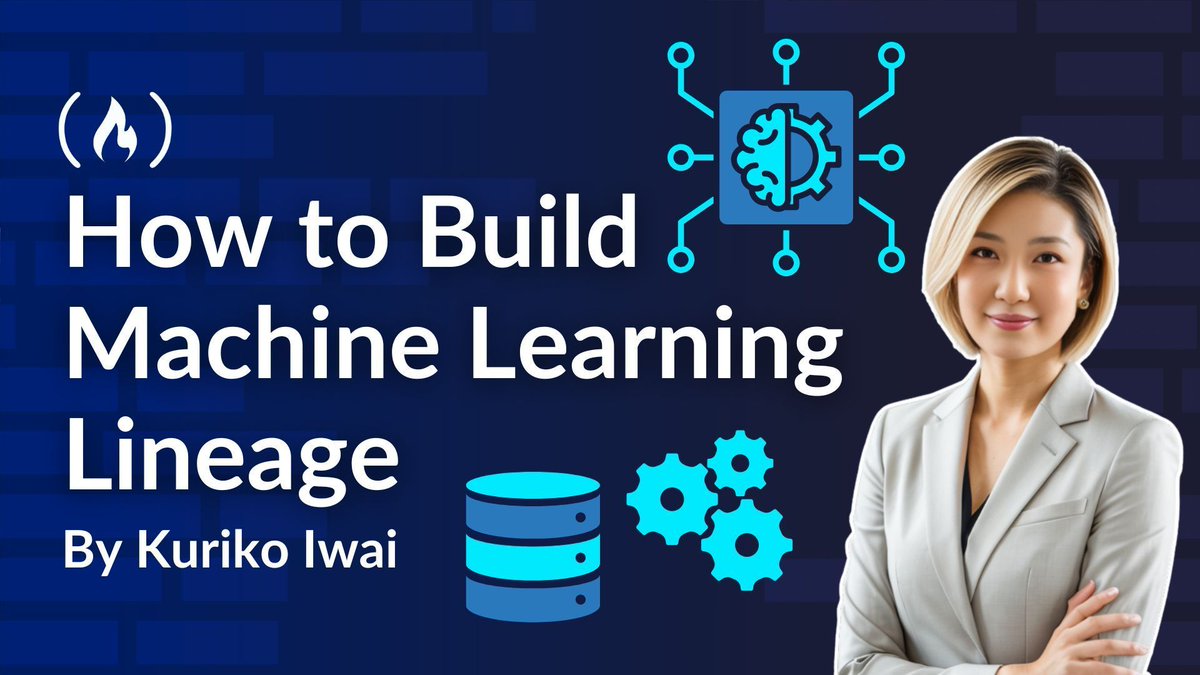
Machine learning lineage is a framework that helps you track and understand an ML model's whole lifecycle.
It helps with validation, tracing back through changes when models fail, providing proof of training, and more.
In this in-depth guide, Kuriko walks you through building an ML lineage using a price prediction model example.
https://t.co/DpECPzt3bk
Mikrotik has finally released a native winbox build for linux and macOS (beta), completely built from scratch.
Definitely feels smoother than running the old one with wine. And it supports dark mode ;)
Mixed feelings about the design though, it looks like a web interface.
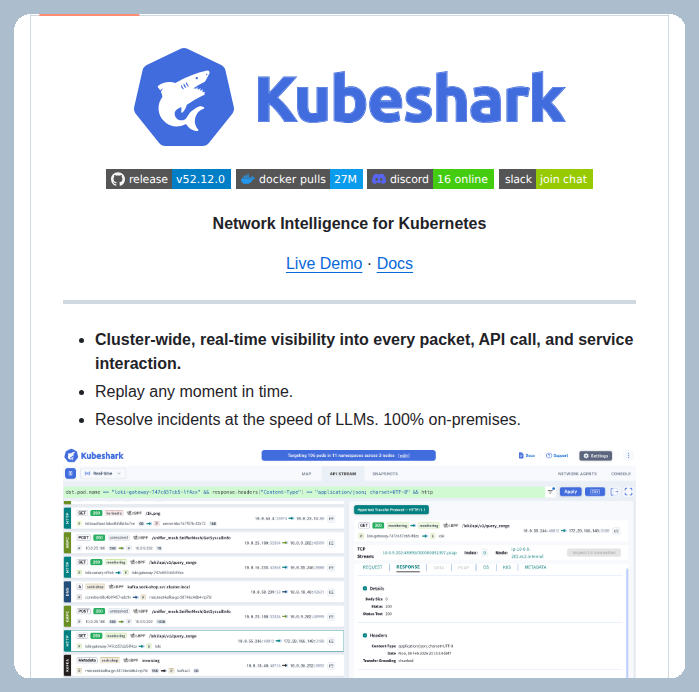
Kubeshark ~ Real-time Kubernetes protocol-level visibility, capturing and monitoring all traffic going in, out and across containers, pods, namespaces, nodes and clusters. https://t.co/1WwnTmOBLH
A web security gateway that serves as a reverse proxy to protect your websites from attacks and exploits.
#golang backend #infosecurity
https://t.co/pZ2g2GucVq
An advanced honeypot framework designed to provide a highly secure environment for detecting and analyzing cyber attacks
#golang based #ITSecurity by @m4r10c4nd3l4
https://t.co/lUNGGdz1Ew
In this article, you will explore how to write integration tests for your Kubernetes Operators using EnvTest to build a robust testing environment
➜ https://t.co/9olbze4OI1