#2020Census data is coming this week. Voting districts will be finalized based on this data, and these districts will be in place for the next 10 years.
Voters deserve #FairMaps. That's why CLC is relaunching https://t.co/j8LXDDqtai. [Thread🧵]
.@Chris_T_Kenny and @michalmigurski wrote a great API for @PlanScore in R. Enables you to easily extract a variety of data on new districting plans, including local government plans being developed now across the country. https://t.co/O55F4ywNqI
In today’s @washingtonpost @monkeycageblog, @hezaproject, @michalmigurski, and I show that in the most recent redistricting cycle commissions generally drew fairer and more competitive maps than politicians.
Now that redistricting is nearly done, @hezaproject, @michalmigurski, and I have a new paper forthcoming in Publius: The Journal of Federalism that provides an overview of the Congressional & state legislative districts that were drawn around the country. https://t.co/DSJpmR2F3e
Which party do new redistricting maps in each state favor against neutral benchmarks? Find out in our new @IPPSR Partisan Advantage Tracker, led by Jon Eguia
https://t.co/iTH4hVz1Mh
Nice use of @PlanScore showing the NY maps to be almost perfectly fair. This is unalloyed good news for the state senate, though not for Congress where a fair NY map fails to offset Republican gerrymanders elsewhere.
This is @PlanScore's evaluation of the plaintiffs' proposed NY congressional map: It's about as biased toward Republicans as the enacted plan was toward Democrats.
I could keep going all day about the problems with this map, but I need to stop tweeting and start lawyering, so here's my TL;DR: This map is a blatant partisan gerrymander, flying in the face of FL voters who made clear at the ballot box that they want fair, nonpartisan maps.
Good @boltsmag article on 2022's state Supreme Court elections, which could lead to courts that green-light Republican gerrymanders in NC and OH later this decade. https://t.co/SSMDd5UVGZ
Two notably well-balanced US Congressional district plans have entered the chat.
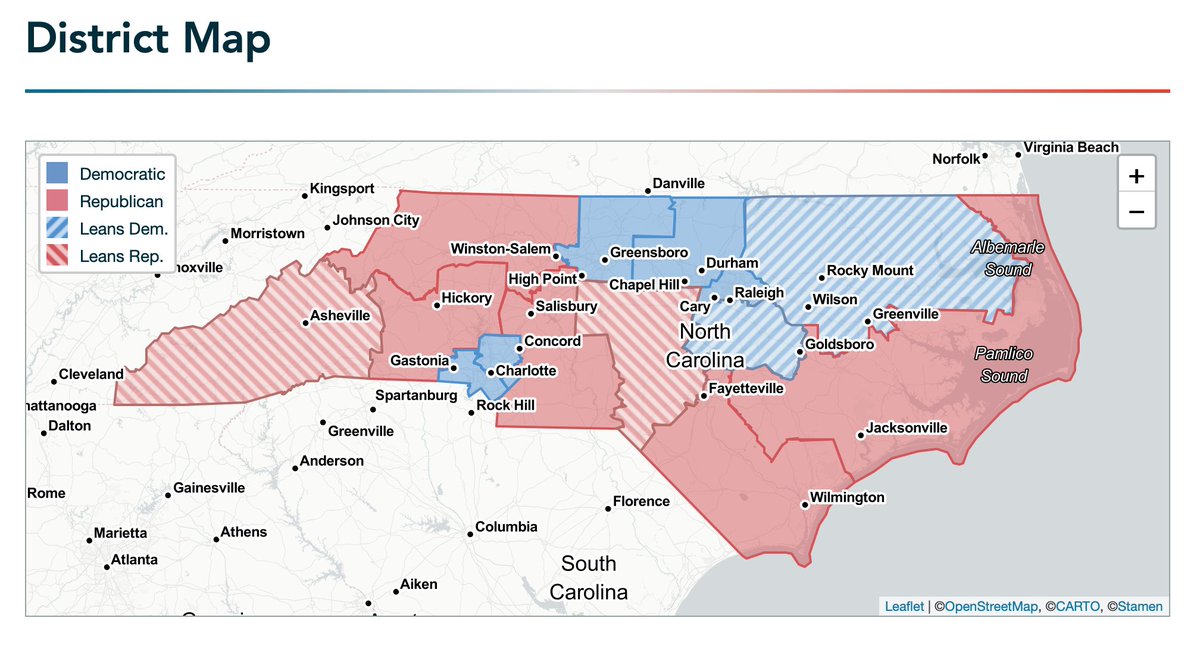
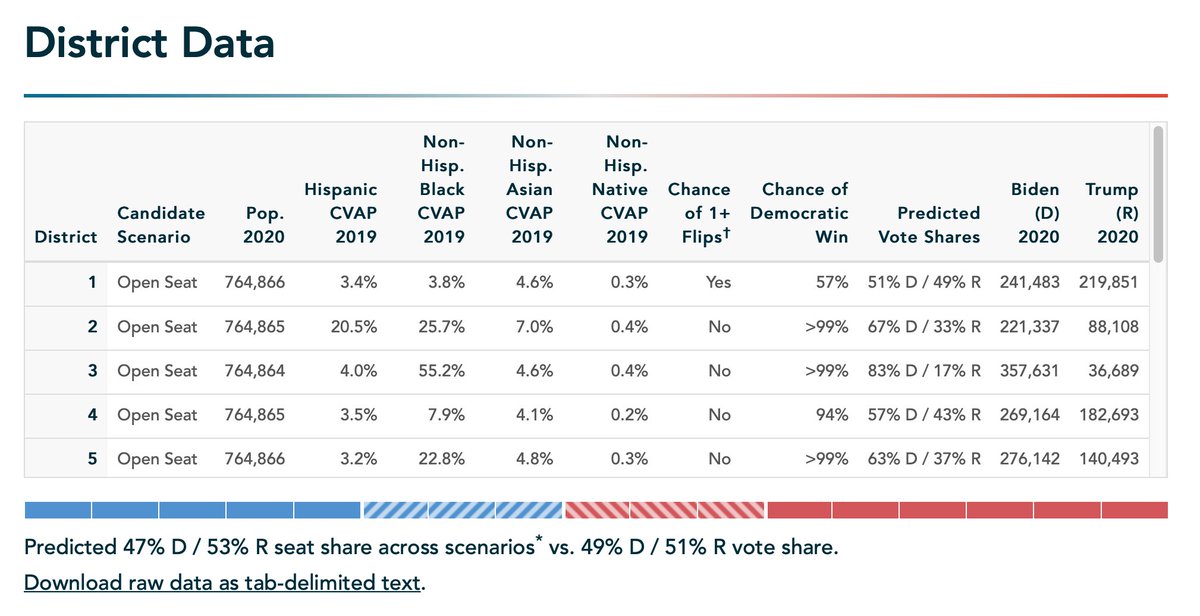
North Carolina’s court-ordered 13 seats with an efficiency gap of just 1.4%: https://t.co/mp8NPa31VQ
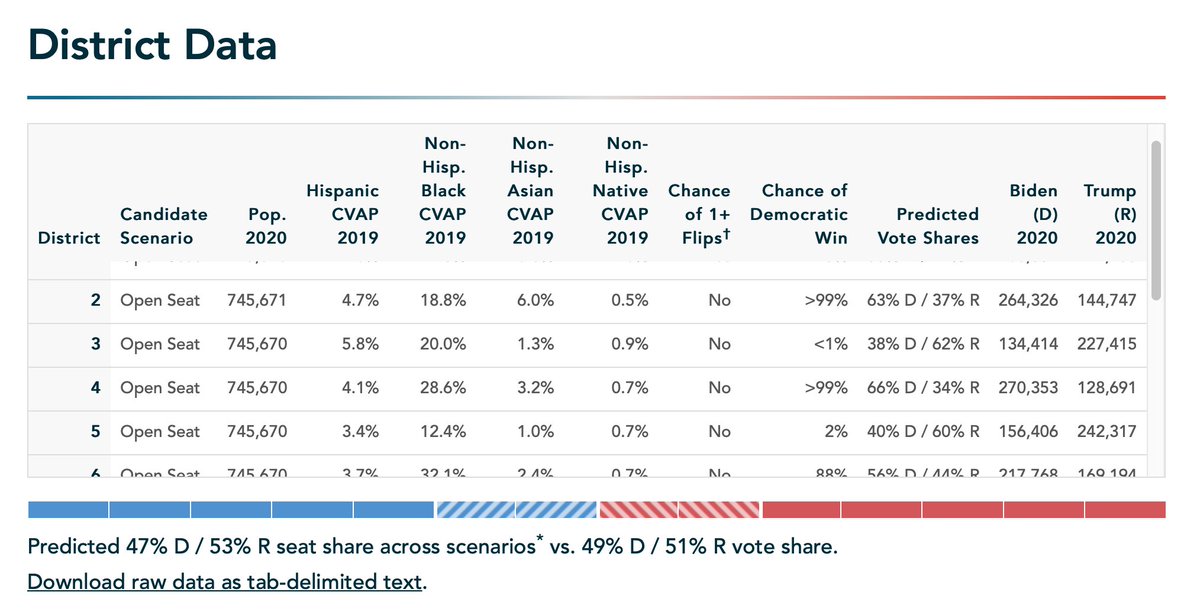
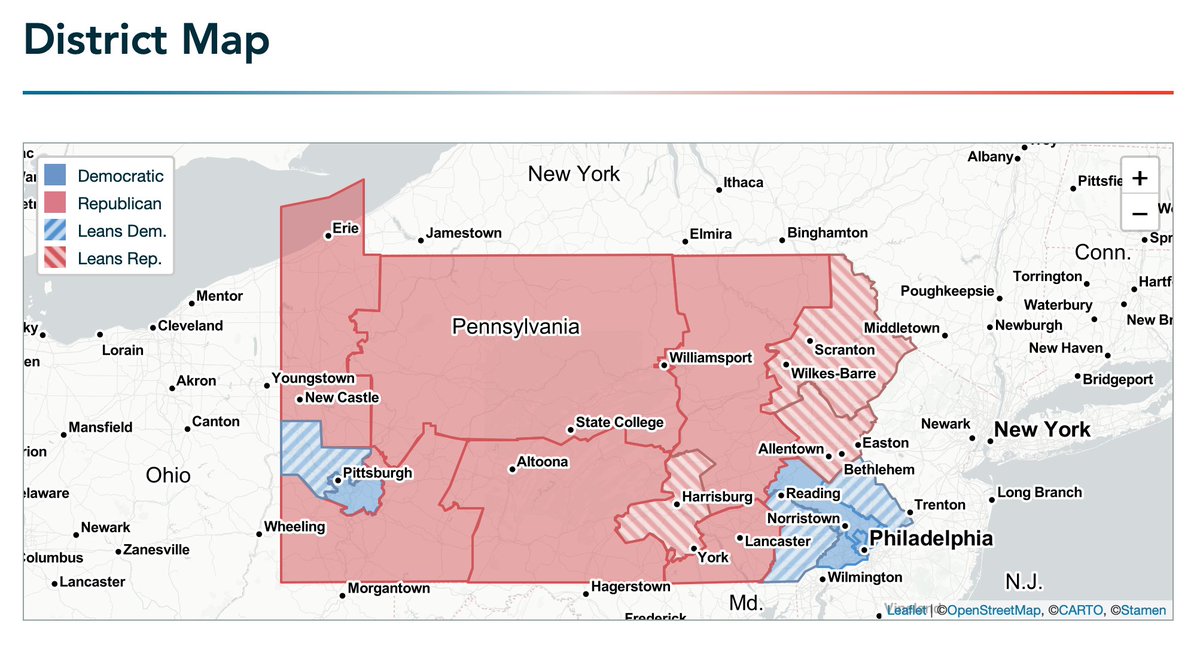
Pennsylvania’s 17 seats with a tiny 1.8% EG: https://t.co/eLQBbOoB1s
210 years ago today, the map that gave us the term gerrymandering became law (though the famous cartoon wouldn’t be published until March 26 - they didn’t have @davesredist or @PlanScore back then)
This is very cool: In an expert report for a new lawsuit challenging MI's legislative maps brought by the League of Women Voters, @cwarshaw cites data calculated by @DKElections https://t.co/rcXicGnNUW
Nick succinctly reviews findings from a paper evaluating US House plans in the current cycle with PlanScore: More fair on partisanship, commissions are good, competitiveness has dropped in GA, IN & TX, and black voters are losing representation in AL & SC
https://t.co/2ONHLyM4kX
Check out this awesome new paper by @hezaproject@michalmigurski@cwarshaw. It's the most rigorous study of the current redistricting cycle -- covering congressional AND state legislative maps.
https://t.co/XW3eiuVaWk
Pennsylvania Legislative Reapportionment Commission (@PaLegis) released their final approved state legislative plans last Friday - find their partisan skew analyzed across several metrics on @PlanScore's library:
https://t.co/QoHDq2D5Sx
The Alabama plaintiffs made use of @vest_team data. The Virginia special masters used VEST data. The NC court calls for gerrymandering measures found on @PlanScore, which uses VEST data. Really proud to see our behind-the-scenes work over the past 4 years result in fair maps